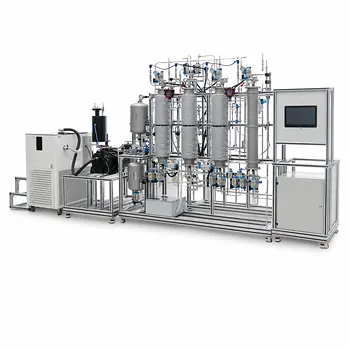
When you ask about the chemical principles governing noble metal catalysts for tail gas purification, you’re really asking: What makes platinum, palladium, and rhodium so uniquely effective at destroying multiple pollutants in a single reactor? The immediate answer lies in their ability to facilitate simultaneous oxidation and reduction—a feat few other materials can achieve with the necessary speed and durability. In a three-way catalyst, these metals adsorb pollutant molecules, weaken their internal bonds, and guide their transformation into harmless N₂, CO₂, and H₂O, all while resisting the extreme heat and poisons found in real exhaust streams.
The core chemical advantage of noble metals is their unrivalled capacity to activate both O₂ for oxidation reactions and NO for reduction reactions, even in the constantly fluctuating oxidizing/reducing atmosphere of tail gas. This dual-functionality, combined with exceptional thermal stability, makes them the practical standard for multi-pollutant abatement in pilot-plant studies.
Understanding the Catalytic Surface: Where the Chemistry Happens
The chemical principles begin at the atomic level, where gas molecules meet the metal surface. Noble metals do not simply heat the pollutants; they participate directly in breaking and forming chemical bonds through a sequence of elementary steps.
The Process of Chemisorption and Bond Activation
The first and most critical step is chemisorption. When a pollutant molecule like NO, CO, or a hydrocarbon collides with a Pt, Pd, or Rh atom on the catalyst surface, it doesn’t just bounce off. It forms a temporary chemical bond with the metal’s d-orbitals, sharing electrons.
This interaction is not passive. It weakens the internal bonds of the pollutant. For example, the triple bond in CO or NO becomes stretched and more reactive once the molecule is anchored to the metal. The catalyst’s role is to lower the activation energy for dissociation by providing an alternative, lower-energy pathway.
The Electronic Structure: Why the Noble Metals are Special
The effectiveness of Pt, Pd, and Rh is rooted in their electronic band structure. They possess partially filled d-orbitals that sit at just the right energy level to both donate electrons into empty anti-bonding orbitals of adsorbates (weakening their bonds) and accept electrons back, strengthening the metal-adsorbate anchor.
This “donation-back donation” mechanism is the engine of catalysis. Rhodium, in particular, excels at dissociating the N-O bond, the vital first step in NOx reduction. Palladium and platinum excel at activating molecular oxygen, lifting it from the stable triplet ground state to a reactive species that can attack CO and unburned hydrocarbons.
The Three-Way Function: A Delicate Chemical Balancing Act
The term “three-way” refers to a single catalytic bed handling three pollutants simultaneously. This requires a precise chemical environment, and the noble metals provide the versatility to manage it.
The Catalyst’s Oxygen-Storage and Redox Buffer Role
In a real exhaust, the air-to-fuel ratio oscillates between slightly lean (oxygen-rich) and slightly rich (fuel-rich). This is a major problem: the reduction of NOx to N₂ is thermodynamically favored in oxygen-poor conditions, while the oxidation of CO and HC needs oxygen.
Pilot plants often study how the catalyst’s support (e.g., aluminosilicate with ceria-zirconia) provides oxygen storage capacity (OSC) . However, the chemical principle governing the noble metal is its ability to rapidly shuttle between oxidation states. Palladium, for instance, can form a surface oxide layer that releases oxygen during a fuel-rich swing, keeping the oxidation reactions alive long enough for the NOx reduction to complete.
Selective Catalytic Reduction vs. Non-Selective Oxidation on a Single Site
The final chemical challenge is selectivity. The catalyst must turn NO into harmless N₂, not into N₂O (a potent greenhouse gas) or back into NO₂. Rhodium’s specific surface chemistry is tuned to favor the recombinative desorption of two nitrogen atoms as N₂.
Meanwhile, platinum and palladium ensure that the oxidation of hydrocarbons and CO goes to full completion to CO₂, not to partially oxidized, toxic intermediates like aldehydes. This simultaneous selectivity for different reaction pathways on closely coupled metal sites is the defining chemical principle that pilot-plant experiments are designed to measure and optimize.
From Lab Principle to Pilot-Plant Reality
Pilot plants bridge the gap between pure chemistry and engineering. The chemical principles you can derive from a textbook need to be verified under practical constraints like high flow rates, thermal gradients, and long-term aging.
The Implication of Space Velocity and Mass Transfer
In a pilot reactor, space velocity (h⁻¹) is a key parameter. A higher flow rate reduces the time a pollutant molecule spends near the catalytic surface. The principle of chemisorption tells us that if the residence time in the reactor is shorter than the time needed for adsorption and surface reaction, conversion plummets.
Students and engineers analyze this by measuring catalyst bed temperature profiles. A hot spot at the inlet indicates fast, exothermic oxidation governed by diffusion. The chemical principle at play is a shift from the kinetic regime (where reaction rate on the surface is limiting) to a mass-transfer regime (where bringing the molecule to the surface is the bottleneck).
Thermal Stability and the Sintering Barrier
The reference notes catalyst testing at temperatures around 1300°C, an extreme condition that reveals a crucial principle: thermodynamic versus kinetic stability. Noble metals have a high Tamman temperature—the point at which surface atoms become mobile—compared to base metals.
Chemically, this means the active sites resist agglomerating into larger, less active particles (sintering). The high metal-metal bond strength in the noble metal lattice directly translates to a longer operational lifetime. Pilot-plant studies that thermally age catalysts are essentially measuring the kinetic stability of these atomic bonds under relentless thermal stress.
Understanding the Trade-offs
No catalytic solution is perfect. Acknowledging the limitations of noble metal chemistry is essential for sound pilot-plant design and data interpretation.
Susceptibility to Chemical Poisoning
The same d-orbitals that make these metals exceptional catalysts also make them vulnerable. Sulfur compounds, even at trace levels, outcompete reactant molecules for adsorption sites. Sulfur binds so strongly to the metal surface that it permanently blocks active sites, a process called poisoning.
In a pilot plant, observing a gradual, irreversible decline in conversion efficiency is often a lesson in poisoning chemistry. The chemical principle is the formation of a strong, covalent-like metal-sulfur bond that renders the site catalytically dead.
The Rhodium-Palladium Trade-off in a Dynamic Cycle
There is an inherent chemical tension. Rhodium is the star for NOx reduction, but it forms very stable surface oxides during lean operation that are slow to reduce back to the active metal form. Palladium is a superior oxidation catalyst but a less selective one for NOx reduction, often producing more N₂O.
Pilot-plant tests that vary the air-fuel ratio are directly probing this chemistry. Engineers observe a “lambda window” where conversion of all three pollutants peaks, and then decays outside it. This window is the practical manifestation of the rate constants for oxygen stripping from Rh versus oxygen activation by Pd reaching a usable balance.
Making the Right Choice for Your Pilot-Plant Goal
Your focus in studying these principles will guide how you configure and interpret your experiments. The chemistry dictates the practical steps you take.
- If your primary focus is mechanistic understanding: Design experiments to collect kinetic data at low conversion rates, well below mass-transfer limitations. Use transient flow switching (lean to rich) to isolate the redox dynamics of the metal surface and oxygen storage components.
- If your primary focus is durability and aging: Accelerate sulfur and thermal aging protocols to probe sintering and poisoning resistance. Analyze the spent catalyst using microscopy and spectroscopy, not just performance metrics, to connect the chemical principle of metal atom mobility to the engineering outcome of deactivation.
- If your primary focus is optimizing a practical catalytic formulation: Screen different Pt:Pd:Rh ratios, recognizing that Pd provides cost-effective oxidation, while Rh is the non-negotiable driver of NOx reduction selectivity that you must protect from oxygen saturation.
Exploit the unique d-orbital chemistry of each noble metal not as a static laboratory curiosity, but as a tunable toolkit you can measure and master in your pilot-plant to create the cleanest possible exhaust.
Summary Table:
| Noble Metal | Primary Chemical Function | Key Catalytic Mechanism |
|---|---|---|
| Platinum (Pt) | CO & Hydrocarbon Oxidation | Lowers activation energy for O₂ activation and pollutant breakdown |
| Palladium (Pd) | Oxidation & Redox Buffering | Shuttles oxygen via surface oxides during air-fuel ratio fluctuations |
| Rhodium (Rh) | Selective NOx Reduction | Excels at N-O bond dissociation and highly selective N₂ formation |
Bring Advanced Catalytic Research to Your Lab with LABPARK
Testing complex chemical principles like chemisorption, space velocity, and thermal sintering requires highly controllable, real-world testing environments. LABPARK designs and manufactures premium Educational and Vocational Unit Operations Pilot Plants in chemical engineering, bioprocess & biotech, and environmental & water treatment for universities, research institutes, and enterprises.
Our pilot systems allow your students and researchers to safely and accurately model dynamic tail gas purification, catalytic reaction kinetics, and mass-transfer limits.
Ready to elevate your chemical engineering training and research capabilities?
Contact LABPARK today to discuss your custom pilot plant requirements!
Related Products
- Thermal Desorption Exhaust Gas and Tail Water Treatment Educational Pilot Plant
- Fixed-Bed Chemical Reaction and Gas Dust Tar Removal Unit Operations Pilot Plant
- Bench Scale Carbon Dioxide Capture Educational Unit Operations Pilot Plant
- Ion Exchange Water Purification Educational Pilot Plant for Engineering Unit Operations
- Steam Methane Reforming Hydrogen Production and Purification Educational Pilot Plant
People Also Ask
- How is the number of transfer units (N_OL) calculated and verified? Master Desorption Mass Transfer
- How is P, M, and B alkalinity applied in pilot plants? Prevent Boiler Scaling & Corrosion
- How do anodic & cathodic inhibitors protect heat exchangers? Optimize Your Water Treatment Pilot Plant
- How do water treatment pilot plants help teach heavy metal removal? Master precipitation & filtration.
- How Water's Hydrogen Bonding Impacts Pilot Plant Energy Balances & Thermal Efficiency