Broad yet predictable. The laccase-based bienzyme recycling sensor exhibits a strong response to a wide array of substrates—including diphenols, aminophenols, catecholamines like epinephrine and norepinephrine, and ferrocene derivatives—but it offers essentially no selectivity between them. Because both the laccase and the glucose dehydrogenase (GDH) components accept multiple redox mediators, the sensor translates a complex mixture into a single, amplified signal that reflects total oxidizable substrate load rather than any one specific compound.
The sensor’s amplification cycling is its primary strength, but the lack of selectivity is its defining constraint. It will convert your sample’s redox-active content into one composite reading, which is only directly useful when the sample contains a single active analyte or a matrix with a constant substrate ratio. Leveraging this sensor successfully in bioprocess analysis means designing your workflow around that binary reality, not fighting it.
Why the Sensor Lacks Selectivity
The sensor’s broad response profile is not a design flaw—it is a direct consequence of the catalytic mechanisms driving the amplification cycle. Both core enzymes act on structural features common to many bioprocess-relevant molecules, making a specific, single-analyte signal the exception rather than the rule.
The Laccase’s Promiscuous Active Site
Laccase oxidizes a wide range of phenolic and non-phenolic substrates via a copper-containing active site that is inherently tolerant to structural variation.
Any diphenol, aminophenol, or catecholamine that fits the catalytic pocket can act as an electron donor. This means epinephrine, norepinephrine, L-DOPA, and p-aminophenol (PAP) all generate a response, with PAP producing the highest sensitivity.
The GDH Component Multiplies the Problem
The bienzyme cycle relies on GDH to re-reduce the oxidized substrates, creating signal amplification. But GDH is also promiscuous with respect to redox mediators.
Because both steps of the recycling loop accept multiple substrates and mediators, selectivity is lost at two distinct points. The final signal represents a sum of contributions, not a resolved analyte concentration.
Sensitivity Hierarchies Don’t Equal Selectivity
Sensitivity varies by substrate—PAP gives the highest response, followed by epinephrine, certain ferrocene derivatives, L-DOPA, and norepinephrine. However, these different sensitivities overlap in a real mixture and cannot be deconvoluted without additional separation or chemometrics.
The presence of a strong interferent can completely mask a less sensitive analyte. The sensor cannot distinguish whether a high current originates from a low concentration of PAP or a high concentration of norepinephrine.
Managing the Selectivity Gap in Bioprocess Analysis
The sensor’s utility hinges entirely on the composition of the sample you are measuring. In the right context, the lack of selectivity becomes irrelevant; in the wrong context, it leads to unusable data.
When Broad Specificity Works for You
In a single-analyte immunoassay, where only one active compound is generated or present, the sensor’s broad response becomes an asset. It will sensitively detect that one molecule with high gain and no interference from other targets because they simply aren't there.
Similarly, if you are monitoring a process where the substrate ratio is constant—such as a defined mixture with fixed proportions—the composite signal remains proportional to the overall concentration. You can calibrate the total signal against the parameter you care about, and the lack of specificity becomes a calibration problem, not a selectivity problem.
When It Doesn’t
Complex fermentation broths or bioprocess samples that contain multiple fluctuating diphenols, catecholamines, or redox-active species will produce a tangled, uninterpretable sum signal.
The sensor cannot report the concentration of a single marker like L-DOPA if epinephrine and other catecholamines also vary independently. Any attempt to directly measure one analyte in a dynamic mixture without prior separation will misrepresent process state.
Understanding the Trade-offs
Every sensing approach involves a compromise, and this bienzyme system trades selectivity for cyclically amplified sensitivity and a wide mediator acceptance range. Being aware of these trade-offs prevents misapplication.
Amplification vs. Discrimination
The signal recycling loop provides exceptional gain, pushing detection limits down to very low concentrations. However, the chemical cycle that creates that amplification also erases molecular identity—it operates on the functional group level, not on a single compound.
You effectively trade the ability to differentiate substrates for the ability to see them all together at very low levels.
Interference Absence Is Not Selectivity
A common misconception is that the absence of a specific interference means the sensor is selective. While ascorbic acid shows no cyclic amplification in this system, that does not imply selectivity among the substrates that do participate.
Other diphenols and aminophenols still produce responses and will conflate the measurement. The sensor is merely inert to certain non-substrate interferences, not selective within its substrate family.
Making the Right Choice for Your Bioprocess Goal
The sensor’s characteristics suit some analytical strategies but fundamentally undermine others. The decision comes down to how precisely you need to resolve individual analytes in your sample.
- If your primary focus is single-analyte detection in a clean matrix: Use this sensor to achieve amplified, high-sensitivity readouts. Its broad specificity becomes irrelevant when only one active substrate is present.
- If your primary focus is monitoring a process with a constant substrate ratio: Calibrate the composite signal against the total parameter of interest. The sensor provides a reliable aggregate measurement as long as the proportional composition remains stable.
- If your primary focus is profiling fluctuating, multicomponent bioprocess samples: Pair the sensor with an upfront separation technique (such as HPLC or capillary electrophoresis) or switch to an array-based approach. Direct immersion will yield an uninterpretable sum.
This sensor is a high-gain tool that sees classes of molecules, not individuals. Design your bioprocess analytical strategy around that fundamental nature, and it will deliver the sensitivity you need without misleading you.
Summary Table:
| Aspect | Key Characteristics | Bioprocess Application Impact |
|---|---|---|
| Substrate Specificity | Broad (reacts with diphenols, aminophenols, catecholamines, PAP) | Ideal for single-analyte detection or matrices with stable, constant ratios. |
| Selectivity | Low/None (generates a composite reading of all redox-active substrates) | Unsuitable for dynamic, multi-component mixtures without prior separation (e.g., HPLC). |
| Amplification | High gain via GDH/Laccase redox recycling | Lowers detection limits significantly but erases individual molecular identities. |
Enhance Your Bioprocess & Chemical Engineering Training with LABPARK
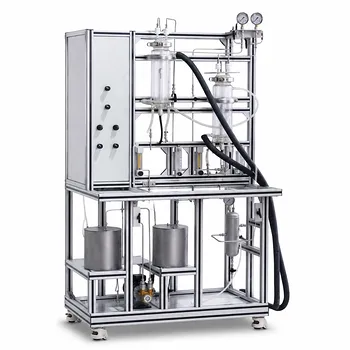
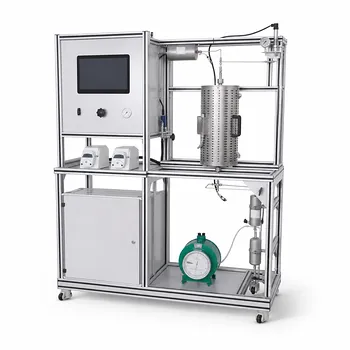
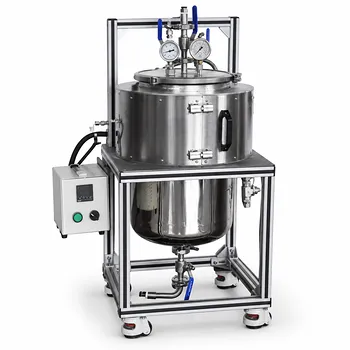
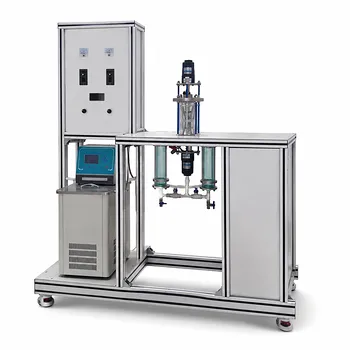
Are you looking to bridge the gap between theoretical biotechnology and practical industrial application? LABPARK provides state-of-the-art Educational and Vocational Unit Operations Pilot Plants in chemical engineering, bioprocess & biotech, and environmental & water treatment for universities, research institutes, and enterprises.
Our pilot scale systems empower students and researchers to master enzymatic processes, sensor integration, and reaction kinetics in a real-world setup.
Contact LABPARK today to find the perfect pilot plant solution for your institution!
Related Products
- Multi Functional Catalytic Reaction and Reactor Evaluation Educational Unit Operations Pilot Plant
- Multifunctional Membrane Separation Educational Pilot Plant with Ultrafiltration, Nanofiltration, Reverse Osmosis
- Photocatalytic Membrane Separation and Degradation Unit Operations Pilot Plant
- Multi-Functional Membrane Separation Educational Pilot Plant for Unit Operations Lab
- Bio-fermentation Ethanol Production Practical Training Unit Operations Pilot Plant
People Also Ask
- What reaction engineering principles are shown in a catalytic reactor pilot plant? SO2 Oxidation Guide
- Why is FTIR integration in catalytic pilot plants important? Real-Time Student Insights
- How to analyze active metal distribution & identify catalyst poisoning in pilot plants? Expert Diagnostic Guide
- How do temperature limits and WHSV influence catalytic reactor optimization? Scale-Up Guide
- What operational insights do catalyst pellet concentration profiles provide? Optimize Reactor Yield