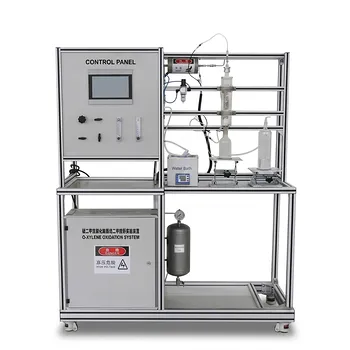
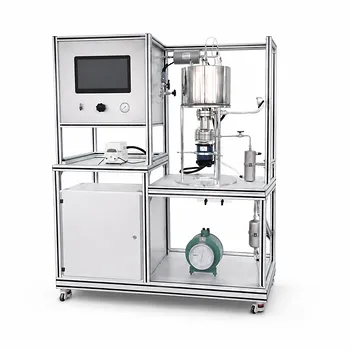
In a fixed-bed reactor, temperature control is a make-or-break responsibility—it directly dictates catalyst life, product selectivity, and operational safety. The primary methods fall into three categories: adjusting feed conditions (concentration and inlet temperature), injecting cold quench streams between reactor stages, and removing heat through the reactor walls or internal cooling surfaces. In chemical engineering training pilot plants, these strategies are brought to life using automated cascade control loops, multi-point thermocouples, interstage injection ports, and jacketed cooling systems, allowing students and researchers to safely replicate and optimize industrial behavior.
Balancing heat generation with heat removal is the central challenge in a fixed-bed reactor. While feed manipulation and interstage quenching offer direct intervention, the most versatile training pilot plants integrate all three methods—enabling hands-on exploration of how hot spot management and control system dynamics affect catalyst stability and reaction yield.
The Three Pillars of Temperature Control
Manipulating Feed Conditions
Changing what enters the reactor is often the fastest lever. Adjusting reactant concentration—for example, raising the ammonia-to-air ratio in nitric acid production—alters the total heat released per unit of feed. This directly limits the adiabatic temperature rise that the catalyst bed will experience.
Adjusting the feed temperature is equally powerful. By preheating reactants or diverting flow around a feed-effluent heat exchanger, operators can shift the starting point of the exothermic profile. In a pilot plant, these adjustments are executed through feed heaters and automated bypass valves, demonstrating how sensitive a fixed-bed reactor is to inlet conditions.
Interstage Quench Cooling
For multistage fixed-bed reactors, the most direct intervention is injecting a cold quench stream between catalyst beds. This can be a portion of the cold reactant or an inert gas/steam. The method instantly lowers the temperature before the gas enters the next bed, effectively resetting the thermal profile.
In pilot-scale units, this is implemented via dedicated quench nozzles with precise flow control. A typical example is the gas-phase alkylation of benzene with ethene, where injecting cold ethene between stages prevents excessive temperature rise and suppresses coke formation on the zeolite catalyst. This technique not only protects the catalyst but also gives students a clear visual of how hot spots are physically quenched in real time.
Reactor Heat Removal and Cooling Media
Many fixed-bed reactors, especially multi-tubular designs, rely on continuous heat removal through the reactor walls. This is achieved by circulating a heat transfer medium—thermal oil, pressurized water, or molten salt—through a jacket or shell. The medium’s flow rate and inlet temperature directly control the axial temperature profile.
A specialized and highly efficient method is evaporative cooling, where the coolant (often boiling water on the shell side) absorbs heat as latent heat of vaporization. By controlling the system pressure, the boiling point—and thus the coolant temperature—is precisely regulated. This approach provides near-isothermal conditions and is frequently demonstrated in pilot plants as an elegant, self-stabilizing cooling strategy.
Implementation in Training Pilot Plants
Cascade Control Loops
Single-loop temperature control often falls short because of the system’s thermal inertia. Pilot plants therefore use cascade control to reject disturbances faster. A typical configuration places the reactor bed temperature as the primary (outer) loop and the coolant flow, jacket temperature, or quench gas flow as the secondary (inner) loop.
For example, if a hot spot develops, the bed temperature controller adjusts the setpoint of the coolant flow controller, which immediately increases the cooling rate—long before the reactor wall temperature changes appreciably. This industrial-grade strategy teaches how control dynamics stabilize highly sensitive exothermic reactions.
Multi-Point Temperature Measurement
Knowing where the hot spot is matters as much as controlling it. Training reactors are equipped with thermowells inside the catalyst tubes, housing multiple thermocouples at different axial and radial positions. This generates a real-time thermal map of the bed.
Students can observe how the temperature peak moves downstream as the catalyst slowly deactivates—a phenomenon known as hot spot migration. Watching this in practice reinforces the link between catalyst aging, heat release rate, and the need to continually adjust operating parameters.
Interstage Injection and Bed Dilution
Beyond quench flows, pilot plants often allow learners to dilute the catalyst bed at the reactor inlet with inert particles like alumina or spent catalyst. This physical modification flattens the initial temperature spike by reducing the local concentration of active sites.
Combined with segmented cooling zones, this demonstrates an integrated approach: chemical methods (feed ratio, quench) and physical methods (dilution, coolant manipulation) are used side by side. Such flexibility is a hallmark of a well-equipped training facility, enabling direct comparison of different hot spot mitigation tactics.
Simulating Real-World Scenarios
Pilot plants do more than maintain a setpoint—they recreate realistic fault conditions. A classic exercise involves deliberately triggering a temperature excursion and then observing how injecting carbon dioxide (a common catalyst poison in polymerization) instantly stops the reaction to prevent thermal runaway. This safety drill instills the discipline of anticipating failure, not just optimizing steady-state performance.
Understanding the Trade-offs
No single temperature control method is without costs. Adjusting feed ratio often sacrifices per-pass conversion—for instance, high benzene-to-ethene ratios in alkylation require substantial downstream separation and recycle, increasing energy consumption. Using interstage quench with cold reactants dilutes the reactive mixture, potentially reducing overall reaction rates and shifting selectivity.
Cooling through jackets or coils introduces thermal lag if the medium’s flow or temperature response is slow, while boiling-water cooling, though effective, demands precise pressure control to avoid hammer or instability. Additionally, over-diluting the catalyst bed decreases catalyst utilization and increases reactor volume requirements, trading safety for productivity. A robust training pilot plant exposes these compromises, forcing learners to choose a control strategy based on the most important priority—safety, yield, or catalyst lifetime.
Making the Right Choice for Your Learning Goal
The best approach depends entirely on the skill you aim to develop. Use the following guide to align your pilot plant experiments:
- If your primary focus is safety and runaway prevention: Emphasize cascade control with fast-acting inner loops (coolant flow or pressure) and practice emergency quench injection. Master the use of multi-point thermocouples to detect hot spots before they escalate.
- If your primary focus is reaction selectivity and yield optimization: Concentrate on feed ratio manipulation and inlet temperature profiling. Use the pilot plant to map how subtle changes in concentration shift the temperature peak and alter product distribution.
- If your primary focus is understanding catalyst deactivation: Run extended campaigns while tracking the hot spot migration. Practice compensating through gradual adjustments in coolant temperature, feed preheat, or quench flow, and learn to identify when it is time to regenerate or replace the catalyst.
- If your primary focus is advanced control strategy design: Experiment with cascading different variable pairs—for example, cascading bed temperature to jacket temperature versus jacket pressure. Evaluate which configuration best rejects a simulated utility pressure drop.
A well-designed chemical engineering training pilot plant is not just a reactor; it is a sandbox for the critical decisions that shape safe, efficient industrial operation. By mastering the interplay of feed manipulation, quenching, and heat removal, you gain the intuition to protect both the catalyst and the process.
Summary Table:
| Temp Control Method | Pilot Plant Implementation | Key Operational Benefit |
|---|---|---|
| Feed Manipulation | Feed heaters & automated bypass valves | Quick control of inlet concentration & temp |
| Interstage Quenches | Dedicated nozzles & flow control loops | Instantly lowers temperatures between beds |
| Jacket/Shell Cooling | Thermal oil jackets & evaporative systems | Continuous heat removal & isothermal control |
Bring Industrial-Scale Control to Your Lab
Looking to equip your students and researchers with hands-on reactor control experience? LABPARK provides state-of-the-art Educational and Vocational Unit Operations Pilot Plants in chemical engineering, bioprocess & biotech, and environmental & water treatment. Designed for universities, research institutes, and enterprises, our pilot plants feature industry-grade cascade control, multi-point thermal mapping, and automated safety systems.
Contact LABPARK today to customize a pilot plant solution that meets your exact learning and research goals!
Related Products
- Fixed Bed Gas Solid Catalytic Reaction Educational Pilot Plant
- Fixed-Bed Chemical Reaction and Gas Dust Tar Removal Unit Operations Pilot Plant
- Multi-Reactor Educational Pilot Plant for Reaction Engineering Unit Operations
- Multi Functional Catalytic Reaction and Reactor Evaluation Educational Unit Operations Pilot Plant
- Ethylbenzene Dehydrogenation Educational Unit Operations Pilot Plant
People Also Ask
- How do reactor pilot plants safely study gas-solid reactions? Master kinetics with thermal & flow control.
- How does the Mears criterion evaluate transport resistance? Key Guide to Intrinsic Kinetics
- Fluidized vs. Fixed Bed Reactors: Comparing Heat & Complexity in Pilot Plants
- Why is a multibed configuration necessary for exothermic reactions? Optimize your pilot plant trajectory.
- How is the friction factor determined for fixed-bed pilot plants? Select the best pressure drop correlation.