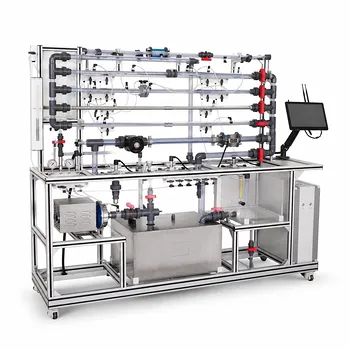
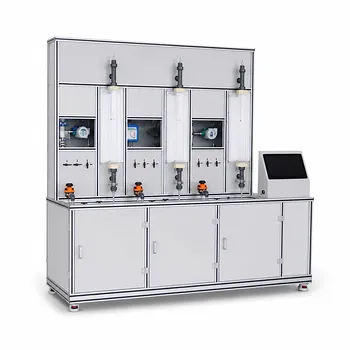
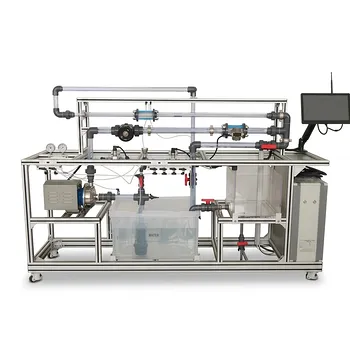
Channel flow cells deliver a uniquely compelling value proposition in electrochemical pilot plants—they strip away complexity to provide a low-cost, easy-to-operate route to continuous production while simultaneously serving as an unmatched educational tool for mass-transport fundamentals.
The operational advantage is straightforward: a simple two-plate geometry that runs continuously with minimal capital outlay and maintenance burden. The educational advantage is equally profound: the same geometry creates a perfectly defined hydrodynamic and current-distribution environment where students can directly see the Lévêque approximation in action, watch mass-transfer limit cathodic deposition, and connect those observations instantly to real-world processes like copper refining or electro-organic synthesis.
Channel flow cells are not just a practical pilot‑plant workhorse; they are a teaching reactor that turns abstract transport theory into a visible, measurable reality. Their clean, orthogonal arrangement of fluid flow and current makes them the ideal platform to train engineers on the interplay of convection, diffusion, and electrode kinetics—without the obscuring complexity of three-dimensional, turbulent bundles.
Operational Advantages of Channel Flow Cells
The operational strengths of channel flow cells stem from their elegantly minimal design and their alignment with modern process‑intensification principles.
Continuous Production without Complicated Engineering
A channel flow cell is, at its heart, two parallel plates with electrolyte pumped between them.
Continuous operation is built in by design. Unlike batch cells that require start‑stop cycles, fresh reactant flows steadily past the electrodes, enabling steady‑state production and uniform product quality. This aligns directly with process‑intensification trends where continuous processing eliminates batch‑to‑batch variability.
Simplicity and Low Capital Investment
Because the mechanical design is just a plate‑and‑frame arrangement, manufacturing, assembly, and maintenance costs are dramatically lower than for more complex reactor geometries.
There are no intricate porous bed structures, rotating parts, or three‑dimensional flow distributors to fabricate. Low capital cost means you can test a new electro-synthesis idea without committing to expensive custom equipment. The ease of cleaning and replacement further reduces operational downtime.
Enhanced Safety and Controllability
The narrow, well‑defined flow channel gives an exceptionally high surface‑to‑volume ratio for heat transfer.
This translates into excellent temperature control, minimizing hot spots that could degrade products or trigger side reactions. And because the instantaneous reacting volume is small, any potential exothermic runaway remains inherently limited—a stark contrast to the bulk inventory of a batch vessel. Operators can run the cell safely at elevated pressures or temperatures that would be riskier in a large tank.
Educational Advantages of Channel Flow Cells
The same physical simplicity that makes the channel flow cell operationally attractive becomes a pedagogical superpower in an educational pilot plant.
A Clear Platform for Studying Transport Phenomena
Current flows perpendicular to the electrolyte flow, while mass transport happens along the channel length.
This clean separation eliminates the convoluted current‑mass‑transport coupling found in many electrochemical reactors. Students can isolate variables with confidence: change flow rate and directly observe how the diffusion layer thickness changes near the cathode. It’s a living illustration of convective diffusion—no guesswork, no hidden three‑dimensional effects.
Applying the Lévêque Approximation and Thin‑Diffusion‑Layer Analysis
The parallel‑plate geometry is one of the few configurations where the Lévêque approximation can be applied straightforwardly.
For sufficiently thin diffusion layers, the mass‑transfer coefficient becomes a simple function of flow rate and physical properties. Students can calculate expected limiting currents, then measure them experimentally. The match—or the deliberate mismatch when the layer is not thin—turns textbook equations into an intuitive fingerprint. This hands‑on validation cements a deep, lasting understanding of mass‑transfer scaling laws.
Bridging Theory and Industrial Practice
Many real‑world electrochemical processes operate under conditions where mass transfer is the rate‑limiting step.
In a channel flow cell, students can deliberately force cathodic deposition into the mass‑transport‑limited regime and watch the current plateau, all while the anode dissolution continues unaffected. This directly mimics industrial copper electrorefining, where maintaining sufficient copper ion flux to the cathode is critical, or electro‑organic syntheses where intermediate transport determines selectivity. The cell becomes a miniature, transparent version of the factory floor, connecting fundamental principles to practical outcomes.
Understanding the Trade‑offs
No reactor geometry is perfect, and the channel flow cell carries its own set of limitations that must be weighed.
Lower Conversion Per Pass
The short residence time and moderate electrode area in a single‑pass channel cell often result in limited conversion.
This is acceptable in a pilot plant where the goal is to study kinetics and mass transport, but if the objective is high single‑pass production, multiple cells in series or recycling loops become necessary—adding complexity that partially offsets the initial simplicity.
Flow Distribution and Edge Effects
The ideal parallel‑plate assumption assumes a perfectly uniform velocity profile.
In practice, inlet and outlet manifolds can create maldistribution, leading to local stagnant zones or skewed current densities. Scaling up the channel width to increase throughput often introduces these non‑idealities, requiring careful inlet design and sometimes baffles, which erode the simple‑geometry advantage.
Not Universally Applicable
The thin‑diffusion‑layer model works beautifully for fast, consecutive, or unstable reactions where mass transfer dominates, but for intrinsic‑kinetics‑limited reactions the channel flow cell offers no special insight over a simple beaker cell. Also, if a process inherently requires high electrode surface per unit volume (e.g., packed‑bed electrodes), the planar geometry will underperform.
Making the Right Choice for Your Pilot‑Plant Goal
Which role you prioritize for the channel flow cell will determine whether its strengths outweigh its constraints.
- If your primary focus is minimizing capital and operational overhead: Choose a channel flow cell for rapid, low‑cost prototyping. Its simplicity lets you test electrochemical concepts without heavy investment, and you can add auxiliary loops later if higher conversion is needed.
- If your primary focus is educating engineers on mass‑transport fundamentals: The channel flow cell is the gold standard. Its separable fluid flow and current paths, combined with the direct applicability of the Lévêque approximation, create an unparalleled teaching reactor that builds intuition students will carry into any future design.
- If your primary focus is safe handling of fast or heat‑sensitive electro‑syntheses: The cell’s high surface‑to‑volume ratio and small reactive inventory make it an inherently safer platform for exploring high‑temperature or thermally sensitive reactions at the pilot scale.
Channel flow cells shine brightest when you need a transparent, cost‑contained laboratory that both produces continuously and teaches the physics at the core of electrochemical engineering—a rare dual capability that few other reactors can match.
Summary Table:
| Aspect | Key Advantages | Major Limitations |
|---|---|---|
| Operational | Continuous processing, low capital cost, superior thermal control & safety | Lower conversion per pass, potential edge & flow distribution issues |
| Educational | Clear isolation of transport phenomena, direct application of Lévêque approximation | Not ideal for intrinsic kinetics-limited or high-surface-area reactions |
Elevate Your Chemical Engineering Lab with LABPARK
Looking to bridge the gap between electrochemical theory and industrial reality? LABPARK provides state-of-the-art Educational and Vocational Unit Operations Pilot Plants in chemical engineering, bioprocess & biotech, and environmental & water treatment.
Designed specifically for universities, research institutes, and enterprises, our advanced pilot plants simplify complex transport phenomena and deliver hands-on training for the next generation of engineers.
Contact LABPARK today to find the perfect pilot plant solution for your facility!
Related Products
- Residence Time Distribution and Reactor Flow Characteristics Determination Educational Pilot Plant
- Multi-Reactor Educational Pilot Plant for Reaction Engineering Unit Operations
- Tubular Reactor Flow Characteristics Determination Educational Unit Operations Pilot Plant
- Electrochemical Water Treatment Educational Unit Operations Pilot Plant
- Aspirin API Synthesis Unit Operations Training Pilot Plant
People Also Ask
- Why is temperature regulation via a cooling jacket a critical feature in CSTR pilot plants used for laboratory training?
- How does steady-state multiplicity affect the operation and safety of exothermic reactions within a CSTR pilot plant? - Guide
- What parameters to monitor transitioning from Batch to CSTR? Master Pilot Plant Setup
- What role do customizable reactor pilot plants play in evaluating heat and catalyst performance? Scale-up Guide
- Importance of heat balance calculations in reactor pilot plants & how they are taught via unit ops equipment.