The key advantage of a Laccase-GDH bienzymatic biosensor is that it eliminates the core bottlenecks of HPLC—complex sample preparation, large sample volumes, and long run times—while still providing selective catecholamine detection.
In busy bioprocess and biochemical labs, this means moving from expensive, instrument-heavy workflows to a rapid, low-volume analysis that fits directly into routine monitoring and teaching environments. You get results in about 5 minutes from just 10 µL of sample, with no prior cleanup steps.
Core takeaway: Laccase-GDH biosensors trade HPLC’s broad multi-analyte separation power for a dramatically streamlined, point-of-use assay. The primary wins are speed, minimal sample requirements, and the removal of sample pretreatment—making them a practical fit for real-time bioprocess tracking and educational settings where simplicity and rapid feedback matter more than exhaustive separation.
Why HPLC Creates Friction in Bioprocess and Research Labs
Traditional catecholamine measurement is often a logistical challenge. The technique itself is powerful, but the workflow surrounding it limits where and how often you can run assays.
The Hidden Cost of Sample Pretreatment
HPLC methods for epinephrine and norepinephrine typically demand sample cleanup to protect the column and detector from fouling. Biological buffers and media contain proteins, salts, and other electroactive molecules that would otherwise dominate the signal. Even a simple filtration step adds time, cost, and the potential for analyte loss.
Instrument Access and Turnaround
Not every lab has a dedicated HPLC system. Shared core facilities often mean scheduling delays. The separation run itself can take tens of minutes, and when you add calibration, column equilibration, and data processing, the real-time feedback loop for a bioprocess engineer or researcher slows to a crawl. This isn’t just inconvenient—it can miss transient metabolic shifts that matter in process development.
How Laccase-GDH Biosensors Rewrite the Workflow
The bienzymatic construct directly tackles the friction points by fusing two enzyme activities on an electrode surface. This design eliminates the need for physical separation because the detection is built on biological recognition, not just electrochemical behaviour.
No Sample Pre‑treatment Required
Laccase and GDH work in a concerted fashion to generate a signal that is highly specific to catecholamines. The sensor can be dipped directly into the biological buffer. This removes the centrifugation, precipitation, or solid-phase extraction steps that normally gate-keep an HPLC analysis, cutting the entire front-end workload to zero.
Microscopic Sample Volumes
The reference design needs as little as 10 µL of sample. For labs working with precious small-scale cultures, microfluidic bioreactors, or frequent sampling from a single vessel, this is transformative. You conserve the bulk of your culture and can take many more data points without perturbing the process volume.
Results in Five Minutes
The catalytic cascade produces a rapid current change. The entire measurement—from sample introduction to a stable reading—requires only about 5 minutes. Compare that to a typical HPLC cycle of 20–40 minutes (plus sample preparation), and you gain the ability to run nearly real-time monitoring during a fermentation or enzymatic reaction.
Sufficient Selectivity Without a Column
The enzymes’ inherent substrate preference allows the biosensor to distinguish catecholamine signals from other components present in biological buffers. You don’t need a chromatographic column to separate norepinephrine from ascorbic acid or uric acid. That doesn’t mean it ignores everything—there will be cross‑reactivity with structurally related compounds—but for the stated application, the selectivity is sufficient to make the measurement meaningful without a separation step.
Ideal for Education and Rapid Assays
Because the sensor is small, simple to operate, and gives immediate visual feedback, it becomes a natural teaching tool. Students can see the direct link between enzyme activity and analytical signal without navigating complex software or troubleshooting column pressure. For research labs that need a quick yes/no answer on catecholamine presence or relative trends rather than a full metabolomics profile, this simplicity accelerates decision‑making.
Understanding the Trade‑offs
No technique is perfect. While the biosensor delivers an elegant shortcut, certain limitations must be weighed against the benefits to make a responsible choice.
Enzyme Stability and Shelf Life
Laccase and GDH are proteins. Their activity degrades over time, especially with repeated exposure to the sample matrix or extreme pH/temperature. The sensor may need recalibration more frequently than an HPLC column needs regeneration, and the bioactive layer can eventually require replacement. This introduces consumable costs that differ from HPLC’s solvent and column expenses.
Narrower Analyte Panel
The bienzymatic specificity that eliminates a column also means you measure a group of similar catecholamines collectively, unless additional discrimination is built in. HPLC, by contrast, can resolve epinephrine, norepinephrine, dopamine, and their metabolites in a single optimized run. If your research demands quantifying all these species individually from the same injection, the biosensor alone won’t suffice.
Substrate Interference Limits
The primary reference claims sufficient selectivity “without needing separation steps,” but this is likely validated against typical background interferences in biological buffers. If your medium changes significantly—for example, a new additive with a similar phenolic structure—you may encounter unexpected positive or negative interference. A quick validation run against your specific matrix is always wise.
Detection Limit and Dynamic Range
Enzymatic sensors often have a narrower linear range than a well-optimized HPLC-electrochemical detector. For ultra‑low (picomolar) or very high concentrations, you may need to dilute or confirm with a separation method. The biosensor excels at rapid mid‑range measurement, not so much at trace analysis.
Making the Right Choice for Your Laboratory
Which approach fits best depends on what problem you’re really trying to solve. Use the following goal-based guide to align the technology with your actual workflow.
- If your primary focus is real‑time bioprocess monitoring and rapid feedback: Implement the Laccase‑GDH biosensor for frequent, low‑volume sampling. It will give you the trend data you need without stealing hours on the HPLC schedule.
- If your primary focus is educational training or teaching bioanalysis fundamentals: Choose the biosensor as your hands‑on platform. Its simplicity and visual immediacy make abstract concepts concrete, whereas HPLC would bury the principle under operational complexity.
- If your primary focus is high‑resolution quantitation of multiple catecholamines in a complex unknown sample: Stick with HPLC as your primary tool, and consider the biosensor only as a quick pre‑screening or orthogonal method for a fast read of total catecholamine load.
- If your primary focus is resource‑limited labs that lack HPLC infrastructure: The biosensor fills a gap that otherwise would mean no data at all. A 5‑minute, prep‑free assay is infinitely more valuable than no measurement.
By matching the sensor’s speed and simplicity to the right jobs—and knowing when to fall back on separation‑based methods—you get the best of both worlds without over‑engineering the problem.
Summary Table:
| Feature | Laccase-GDH Biosensor | HPLC |
|---|---|---|
| Sample Pretreatment | None required | Complex (filtration/cleanup) |
| Sample Volume | Microscopic (~10 µL) | Large volumes required |
| Analysis Time | ~5 minutes | 20–40 minutes + setup |
| Selectivity | Sufficient (enzymatic recognition) | High (chromatographic separation) |
| Best Suited For | Real-time tracking & teaching | High-resolution multi-analyte profiling |
Elevate Your Biotech Lab and Training with LABPARK
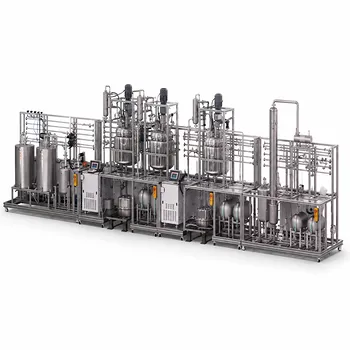
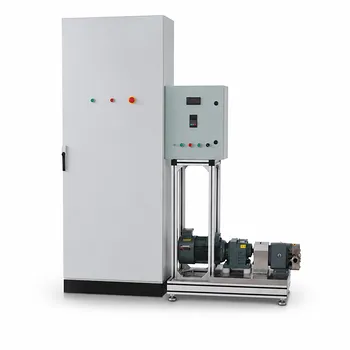
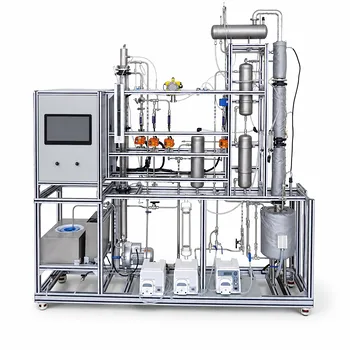
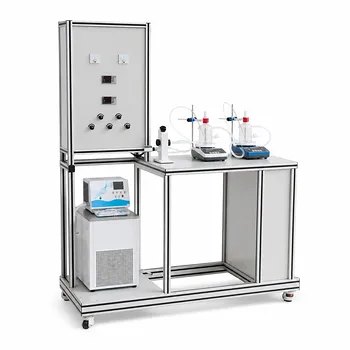
Are you looking to enhance hands-on learning and research efficiency in chemical engineering, bioprocess & biotech, or environmental treatment? LABPARK offers specialized Educational and Vocational Unit Operations Pilot Plants tailored for universities, research institutes, and enterprises. Our systems help students and researchers transition seamlessly from benchtop assays—like biosensor testing—to pilot-scale process operations.
Ready to transform your laboratory training? Contact LABPARK today to discuss your custom pilot plant needs!
Related Products
- Ethylbenzene Dehydrogenation Educational Unit Operations Pilot Plant
- Methanol Synthesis and Catalyst Performance Evaluation Educational Unit Operations Pilot Plant
- Multi Functional Catalytic Reaction and Reactor Evaluation Educational Unit Operations Pilot Plant
- Carbon Dioxide Hydrogenation Methanol Synthesis Educational Unit Operations Pilot Plant
- Micro-Scale Gas-Solid Catalytic Reaction Educational Pilot Plant
People Also Ask
- What parameters & reactor configurations are needed for ethylbenzene dehydrogenation pilot plants?
- Why is steam dilution critical in dehydrogenation? Pilot Plant Control Guide
- Isothermal vs Adiabatic Reactors: Key Differences in Ethylbenzene Dehydrogenation Pilot Plants
- How do pilot plants help students verify material balances? Bridge Theory with Real-world Data
- Why is the steam-to-feedstock ratio critical in catalytic dehydrogenation? Learn the 3 key roles of steam.