Steam is far more than a process diluent—it’s the thermodynamic, thermal, and chemical key that unlocks a stable and productive dehydrogenation pilot plant. In catalytic dehydrogenation, the steam-to-feedstock ratio is critical because steam simultaneously shifts reaction equilibrium toward higher conversion, supplies the massive sensible heat required by the endothermic reaction, and continuously gasifies carbon deposits to preserve catalyst activity. Educational pilot plants must control this ratio with high precision to faithfully replicate the industrial balancing act between yield, energy efficiency, and catalyst longevity.
The central insight: In a dehydrogenation reactor, steam acts as an equilibrium shifter, a heat carrier, and a decoking agent all at once. The steam-to-feedstock ratio is the single knob that tunes these three functions against energy consumption—and in a pilot plant, it becomes the direct demonstration of industrial mass and energy optimization.
The Multi-Functional Role of Steam in Dehydrogenation Reactors
Thermodynamic Driving Force: Shifting Equilibrium with Inert Dilution
Dehydrogenation is a molecule‑increasing reaction (e.g., ethylbenzene to styrene, or alkanes to olefins). Adding steam as an inert diluent lowers the partial pressure of the hydrocarbon reactants. According to Le Chatelier’s principle, this shifts the equilibrium position toward the product side, increasing conversion without changing temperature.
Thermal Management: Delivering Heat to an Endothermic Reaction
The reaction absorbs a large amount of heat. Steam serves as a high‑heat‑capacity thermal carrier, bringing sensible heat directly into the catalyst bed. This minimises the temperature drop that would otherwise quench the reaction, especially in adiabatic reactor configurations.
Catalyst Longevity: Continuous Decoking via the Water-Gas Shift
Carbon deposits (coke) inevitably form on the catalyst surface, blocking active sites. Steam reacts with this carbon through the water‑gas shift reaction (C + H₂O → CO + H₂). By continuously gasifying coke, steam acts as an in‑situ decoking agent, extending catalyst life and maintaining pressure drop.
Why the Ratio Must Be Precisely Controlled in Educational Pilot Plants
Balancing Conversion Gains Against Energy Costs
Every extra unit of steam improves equilibrium but also demands more energy for vaporisation and heating. The steam-to-hydrocarbon mass ratio (typically 1.0–2.0 for isothermal systems and 1.3–1.8 for adiabatic systems) represents the optimal trade‑off. In a teaching pilot plant, deviating from this window quickly reveals the consequences—either a drop in yield or a spike in utility consumption.
Demonstrating Industrial-Scale Mass and Energy Balances
Educational pilot plants must mirror real‑world constraints. Precise metering of steam and organic feed with mass flow controllers or vaporisers allows students to close mass and energy balances. The ratio becomes a pedagogical tool to illustrate how a seemingly simple parameter governs reactor performance and operating cost.
The Risk of Carbon Deposition at Low Ratios
When the ratio falls too low, the partial pressure of the hydrocarbon rises, not only limiting equilibrium but also accelerating coking. With insufficient steam for gasification, carbon builds up, deactivating the catalyst and increasing pressure drop—a failure mode commonly studied to define the operating limits of the unit.
Understanding the Trade‑offs
The Energy Penalty of Excessive Steam
Operating at an unnecessarily high steam ratio dilutes the product stream, dramatically increasing downstream separation and preheat duties. In a pilot plant, this translates to higher utility loads that can mask the true reaction kinetics and distort economic assessments.
Temperature Profile Distortions from Inadequate Heat Supply
In adiabatic beds, if the steam flow is too low, the sensible heat reservoir is insufficient. The reactor experiences a steep temperature drop, leading to a sharp decline in reaction rate and a low overall conversion—even if the equilibrium appears favourable.
Catalyst Deactivation from Sub‑Optimal Ratios
Prolonged operation outside the design ratio leads to irreversible catalyst damage. Educational campaigns designed to study catalyst lifetime deliberately vary the ratio to pinpoint the coking boundary and demonstrate the direct link between steam management and catalyst stability.
Making the Right Choice for Your Pilot Plant Demonstration
The optimal steam-to-feedstock ratio is never a fixed number; it is a decision that must align with the learning objective. Adjust your setpoint based on what you intend to demonstrate.
- If your primary focus is demonstrating maximum conversion: Target a ratio at the higher end of the typical range to exploit the equilibrium shift and ample heat supply, while accepting the higher energy cost.
- If your primary focus is energy efficiency and downstream processing: Operate at the lower end of the range, meticulously documenting how far you can push before yield losses or coking become unacceptable.
- If your primary focus is catalyst longevity and deactivation kinetics: Run a deliberate sweep from low to high ratios, capturing the clear transition from rapid coking to stable, decoked operation.
By treating the steam-to-feedstock ratio as your most powerful experimental variable, you transform the pilot plant from a simple demonstration into a rigorous, industrial‑relevant learning platform.
Summary Table:
| Role of Steam | Mechanism / Action | Pilot Plant Impact |
|---|---|---|
| Thermodynamic Diluent | Lowers partial pressure of reactants | Shifts equilibrium to increase conversion without raising temperature. |
| Thermal Carrier | Supplies sensible heat directly to the catalyst bed | Counteracts the endothermic temperature drop to prevent reaction quenching. |
| Decoking Agent | Gasifies carbon deposits via water-gas shift | Extends catalyst life and maintains stable pressure drop. |
Elevate Your Chemical Engineering Lab with LABPARK
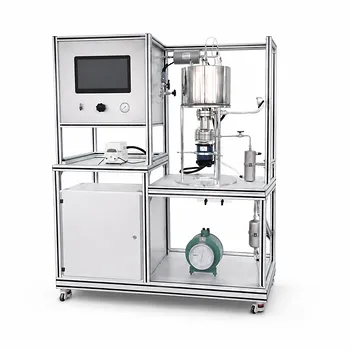
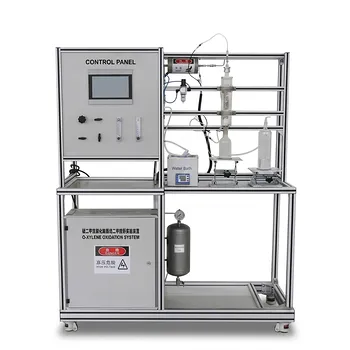
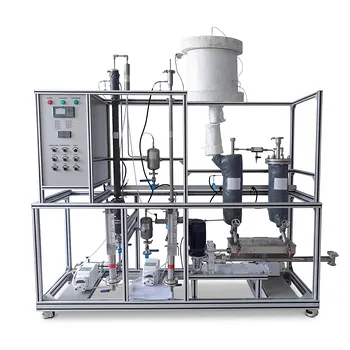
Looking to demonstrate complex reactor kinetics and industrial mass-energy balances to your students or research teams? LABPARK provides state-of-the-art Educational and Vocational Unit Operations Pilot Plants in chemical engineering, bioprocess & biotech, and environmental & water treatment.
Our custom-engineered pilot units empower universities, research institutes, and enterprises to:
- Simulate Real-World Parameters: Train students on precise control loops like the steam-to-feedstock ratio.
- Enhance Learning Outcomes: Deliver hands-on understanding of thermodynamics, heat transfer, and catalyst kinetics.
- Ensure Research Reliability: Conduct advanced studies with high-precision control systems built to industrial standards.
Ready to upgrade your laboratory capabilities? Contact LABPARK today to discuss your project requirements!
Related Products
- Ethylbenzene Dehydrogenation Educational Unit Operations Pilot Plant
- Crude Benzene Hydrogenation Educational Unit Operations Pilot Plant
- Carbon Dioxide Hydrogenation Methanol Synthesis Educational Unit Operations Pilot Plant
- Micro-Scale Gas-Solid Catalytic Reaction Educational Pilot Plant
- Fluidized Bed Gas Solid Catalytic Reaction Educational Pilot Plant
People Also Ask
- What parameters & reactor configurations are needed for ethylbenzene dehydrogenation pilot plants?
- Why is steam dilution critical in dehydrogenation? Pilot Plant Control Guide
- Isothermal vs Adiabatic Reactors: Key Differences in Ethylbenzene Dehydrogenation Pilot Plants
- How do pilot plants help students verify material balances? Bridge Theory with Real-world Data
- How do collocation methods assist in pilot plant scaling? Simplify complex chemical engineering models.