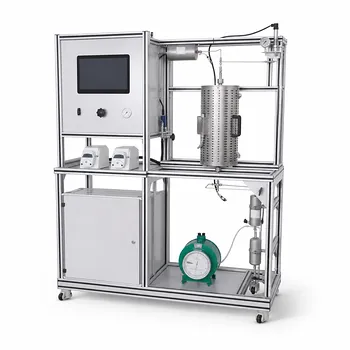
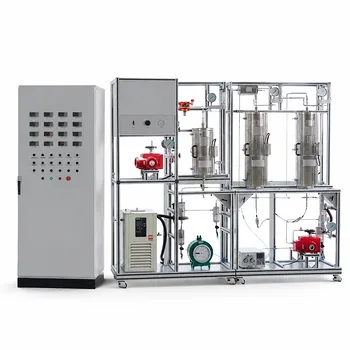
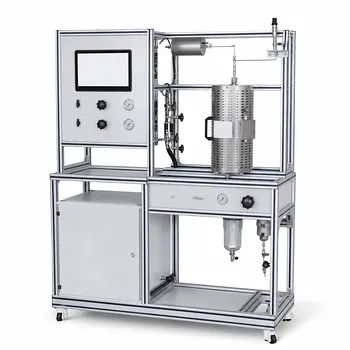
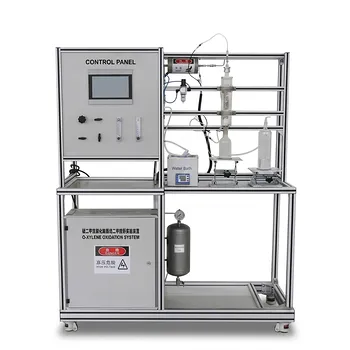
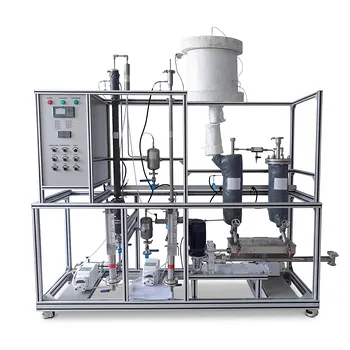
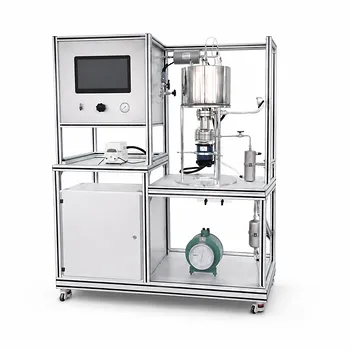
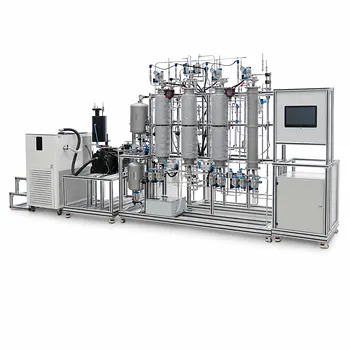
Setting up a pilot-scale ethylbenzene dehydrogenation unit is about balancing thermodynamic demands with pedagogical clarity. The key process parameters are a tightly controlled reaction temperature (580–600°C), a steam-to-ethylbenzene mass ratio of 1–1.5:1, and an iron-based catalyst with an optimized particle size (3.2 or 4.8 mm extrudates). The reactor configuration must be chosen between an isothermal multi-tubular design or an adiabatic bed arrangement, both fabricated from alloy steel (Cr-Mo) to resist high-temperature hydrogen attack, and equipped with multi-point temperature sensors and gas sampling ports.
Every parameter you set — temperature, steam ratio, catalyst dimension — directly shapes the conversion, selectivity, and safety boundary of the pilot plant. The choice of reactor type further defines the thermal profile students can explore and the complexity you must manage. Your task is to align these decisions with your specific educational objectives while faithfully reproducing the industrial dehydrogenation environment.
Understanding the Reaction’s Thermal Heartbeat
The Endothermic Imperative
Ethylbenzene dehydrogenation absorbs a huge amount of heat. Without continuous energy input, the reaction stalls. In a pilot plant, this means the heating system must deliver heat exactly where it’s needed — along the catalyst bed. Any cold spot drops conversion sharply, while any uncontrolled hot spot leads to excessive coking and loss of selectivity.
Temperature as a Selectivity Gatekeeper
The inlet temperature is typically set between 580°C and 600°C. Below 580°C, conversion falls to levels that poorly illustrate industrial performance. Above 600°C, thermal cracking accelerates, styrene selectivity plummets, and the catalyst quickly fouls with carbon. Teaching students to interpret this narrow window is one of the most valuable lessons the pilot plant can deliver.
Choosing the Right Reactor Configuration
Isothermal Multi-Tubular Reactors – Precision at a Cost
An isothermal multi-tubular reactor surrounds catalyst‑filled tubes with a heating medium (often flue gas or molten salt). Heat flows through the tube walls along the entire bed, maintaining a nearly uniform temperature profile. This design allows a lower steam-to-hydrocarbon mass ratio (1–1.5:1) because heat is supplied externally. It gives students a clear, stable temperature map to study kinetics and heat transfer. The downside is a complex, expensive reactor structure — it can be over‑engineered for purely instructional use.
Adiabatic Reactors – Simplicity with a Drop
Adiabatic reactors have no external heating along the bed. The reaction’s heat demand causes a progressive temperature drop as reactants move through the catalyst. They are simpler, cheaper, and thus excellent for demonstrating the basic thermodynamics of an endothermic reaction. However, to maintain acceptable conversion (65–70% in multi‑stage setups), you must reintroduce heat between beds and use significantly more steam — often 50% higher than in an isothermal unit — to carry sensible heat into each stage. The temperature gradient also teaches students about equilibrium shifts and interstage heating, but it does not deliver the clean isothermal picture.
The Critical Role of Steam and Catalyst Design
Steam-to-Hydrocarbon Ratio – More Than a Diluent
Steam is co‑fed at a mass ratio of 1–1.5:1 for isothermal operation. It performs three roles:
- It supplies sensible heat to the bed.
- It lowers the partial pressure of ethylbenzene and styrene, shifting equilibrium toward products.
- It suppresses coke formation through gasification and dilution.
In adiabatic trains, the steam rate must be higher because steam is the primary heat carrier. Teaching students to vary this ratio and see its effect on conversion and carbon lay‑down is central to any dehydrogenation curriculum.
Iron-Based Catalysts and the Particle Size Trade-off
The standard catalyst is an iron-oxide-based formulation promoted with potassium and chromium (Fe-K-Cr). For a pilot plant, the particle size — typically 3.2 mm or 4.8 mm extrudates — is a deliberate compromise. Smaller particles reduce internal diffusion resistance and raise the apparent reaction rate, but they increase bed pressure drop. Larger particles keep the pressure drop low but can limit reactant access to the catalyst interior, masking kinetic effects. Choosing the right size lets you demonstrate the interplay of mass transfer, pressure drop, and observed activity in a tangible way.
Safety and Materials – Designing for Hydrogen and High Temperature
Material Selection to Prevent Hydrogen Attack
The dehydrogenation environment produces hydrogen gas at high temperature. Ordinary carbon steel cannot be used because hydrogen reacts with carbon in the steel, causing decarbonization and embrittlement. The reactor and all hot hydrogen-wetted parts must be fabricated from chromium-molybdenum alloy steels (e.g., 1.25Cr‑0.5Mo or 2.25Cr‑1Mo). This material selection is non‑negotiable for safety, and it becomes a powerful teaching point about materials science in process design.
Instrumentation and Sampling for Educational Insight
A university pilot plant must be a miniature laboratory. Essential instrumentation includes multi-point thermocouples along the catalyst bed to map temperature profiles, and gas chromatography sampling ports at the reactor inlet and outlet. These tools allow students to measure conversion, selectivity, and the temperature gradients that drive them. Additional safety systems — automatic nitrogen purging, pressure relief valves, and hydrogen leakage detectors — are mandatory to handle the wide explosion range of hydrogen (4–74% in air).
Understanding the Trade-offs
Every design choice in the pilot plant is a lesson in balancing competing goals:
- Isothermal vs. adiabatic: Isothermal gives clean temperature control and lower steam rates but at higher cost and complexity; adiabatic is simpler and teaches real temperature‑drop behavior but requires more steam and interstage heating.
- Steam ratio: Lower ratios save energy and simplify heat management but can accelerate coking; higher ratios suppress coke and improve equilibrium but increase downstream condensation load.
- Catalyst particle size: Small particles improve kinetic data but raise pressure drop; large particles reduce pressure drop but obscure intrinsic kinetics.
- Temperature setpoint: Pushing to 600°C boosts conversion but risks selectivity loss; staying at 580°C preserves selectivity but may disappoint on conversion numbers.
Explicitly discussing these compromises helps students move from textbook theory to real‑world decision‑making.
Making the Right Choice for Your Educational Goal
The ideal setup depends on what you want your students to learn most. Use the following recommendations as a starting point.
- If your primary focus is heat transfer and detailed kinetic studies: Choose an isothermal multi-tubular reactor with small (3.2 mm) catalyst particles and a closely controlled steam ratio to obtain clear, stable temperature data.
- If your primary focus is thermodynamic principles and process simplicity: Opt for a single‑bed adiabatic reactor with larger catalyst particles and a higher steam rate; the temperature profile becomes the core teaching point.
- If safety and material science are key learning objectives: Highlight the Cr-Mo alloy construction and integrate hydrogen detection and purge systems as deliberate, hands‑on components of the pilot plant.
- If you need to illustrate catalyst deactivation and regeneration: Install precise steam‑flow control and detailed bed‑temperature monitoring so students can correlate coke formation with operating conditions and perform regeneration cycles.
Build your pilot plant around the principle that every design choice — from the reactor metal to the catalyst particle size — is a lesson in its own right, teaching not just how styrene is made, but how engineers manage heat, mass, and safety under extreme conditions.
Summary Table:
| Feature | Isothermal Multi-Tubular Reactor | Adiabatic Bed Reactor |
|---|---|---|
| Heat Control | External heating (salt bath/flue gas) | No external heating (progressive temp drop) |
| Steam-to-EB Ratio | Lower (1–1.5:1) | Higher (typically 50% more) |
| Complexity & Cost | High (complex multi-tube design) | Low (simpler, cost-effective structure) |
| Key Teaching Value | Precise kinetics & heat transfer | Thermodynamic equilibrium & temperature drops |
Bring Industrial-Scale Learning to Your Laboratory
Looking to equip your department with advanced, safe, and highly educational chemical engineering systems?
LABPARK provides premium Educational and Vocational Unit Operations Pilot Plants in chemical engineering, bioprocess & biotech, and environmental & water treatment. Designed specifically for universities, research institutes, and enterprises, our pilot plants—including ethylbenzene dehydrogenation setups—are engineered with industrial-grade Cr-Mo alloy safety standards, precise multi-point instrumentation, and flexible configurations to match your curriculum.
Empower your students and researchers with hands-on chemical engineering experience.
Contact LABPARK today to request a custom quote or consult with our engineering team!
Related Products
- Ethylbenzene Dehydrogenation Educational Unit Operations Pilot Plant
- Crude Benzene Hydrogenation Educational Unit Operations Pilot Plant
- Methane Cracking Educational Unit Operations Pilot Plant
- Green Anhydrous Ethanol Purification Extractive Distillation Unit Operations Training Pilot Plant
- Carbon Dioxide Hydrogenation Methanol Synthesis Educational Unit Operations Pilot Plant
People Also Ask
- Why is steam dilution critical in dehydrogenation? Pilot Plant Control Guide
- Isothermal vs Adiabatic Reactors: Key Differences in Ethylbenzene Dehydrogenation Pilot Plants
- How do pilot plants help students verify material balances? Bridge Theory with Real-world Data
- Why is the steam-to-feedstock ratio critical in catalytic dehydrogenation? Learn the 3 key roles of steam.
- How do collocation methods assist in pilot plant scaling? Simplify complex chemical engineering models.