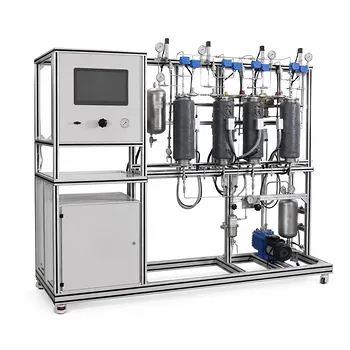
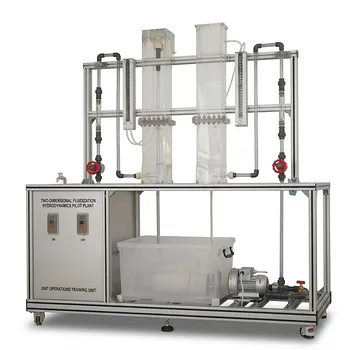
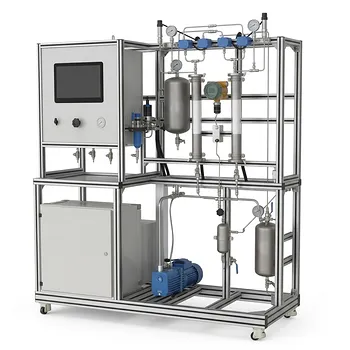
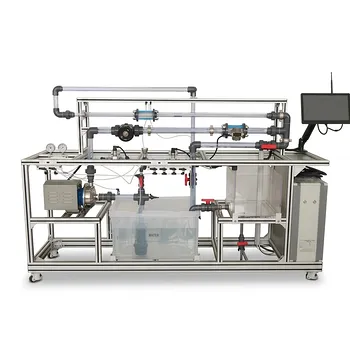
Online acoustic monitoring transforms particle size analysis from a delayed laboratory report into an immediate, actionable stream of data. Unlike traditional offline sieving—where operators must manually extract samples from the product exit and wait for central lab results—acoustic chemometric sensors predict average particle size in real time, directly at the pilot plant. This capability is especially powerful in vocational training environments, where the speed of feedback directly determines how effectively students connect cause and effect in unit operations.
Vocational training pilot plants gain a massive pedagogical and operational leap by moving from reactive, sample-based sieving to proactive, multi-chamber acoustic monitoring. The shift enables instant detection of off-spec particles, immediate process adjustments, and a hands-on understanding of real-time process analytical technology (PAT) that prepares students for modern industrial practice.
The Educational and Operational Limits of Offline Sieving
The Problem of Time-Lagged Information
Traditional sieving requires physical sample collection, transport to a laboratory, and a waiting period for results. This delay can span from minutes to hours. In a teaching environment, that gap breaks the immediate feedback loop essential for learning.
When students adjust a process parameter, they need to see the outcome promptly. Offline data turns a dynamic, teachable moment into a historical report. The disconnect makes it harder to internalize the relationship between machine settings and product quality.
Missed Learning Opportunities Through Intrusive Sampling
Manual sampling is not just slow—it’s intrusive. Extracting material from a pilot-scale granulator or mill disrupts the process and may introduce operator exposure risks. For students, the act of sampling itself becomes a distraction rather than a learning objective.
Furthermore, a single grab sample may not represent the entire batch. Sampling location bias can lead to conclusions that don’t reflect the true particle size distribution, undermining the educational goal of producing reliable, repeatable results.
The Real-Time Advantage of Online Acoustic Monitoring
Instant Multi-Chamber Feedback
Acoustic chemometric sensors positioned at strategic points in equipment like fluidized bed granulators capture the sound signatures of moving particles. By calibrating these signatures against reference sieve measurements (e.g., D50) using Partial Least Squares (PLS) regression, the system predicts average particle size on-line.
This approach provides simultaneous, real-time feedback from multiple chambers or zones. Instead of waiting for a single lab result, students and instructors can see how size evolves across the entire unit in seconds.
Early Detection and Dynamic Correction
Real-time data lets operators spot off-specification particles the moment they form. In a vocational pilot plant, this means students can immediately adjust airflow, spray rate, or feed speed and observe the corrective effect right away.
That closed-loop learning cycle—change a parameter, see the outcome now—cements the principles of process control far more effectively than retrospective analysis. It also reduces material waste, as trends toward out-of-spec product are caught before large batches are compromised.
Hands-On Experience with Process Analytical Technology
Online acoustic monitoring is a form of Process Analytical Technology (PAT). By integrating it into a pilot plant, educators give students direct exposure to the kind of advanced instrumentation that defines smart manufacturing and Industry 4.0.
Students learn to interpret continuous data streams, understand model-based predictions, and appreciate the calibration demands of chemometrics. This prepares them to enter facilities where real-time quality control is the standard, not the exception.
Understanding the Trade-offs of Acoustic Monitoring
Initial Calibration Requires Offline Reference
Acoustic models do not stand alone. They must be built using a library of reference measurements—typically obtained through offline sieving. The PLS model that maps acoustic signatures to particle size needs a robust, representative dataset to be accurate.
This means acoustic monitoring is not a plug-and-play replacement for sieving from day one. It demands an upfront investment in parallel sampling and model validation, which can extend the startup phase of a training module.
Sensitivity to Environmental and Process Noise
Acoustic sensors pick up all vibrations, not just those from particle impacts. Background noise from pumps, motors, or adjacent equipment can interfere with the signal. Filtering out that interference and maintaining model robustness across different operating conditions is an ongoing engineering task.
In a teaching setting, this complexity becomes a learning point: students must understand not only the benefits of PAT but also the rigorous signal processing and model maintenance that keep it reliable.
Cost and Infrastructure Considerations
Installing acoustic sensors, data acquisition hardware, and chemometric software on a pilot plant adds capital expense. For programs with extremely tight budgets, the cost of multiple sensors and the expertise to maintain the model may outweigh the real-time benefit.
However, as sensor technology becomes more affordable and industrial adoption accelerates, the educational value of training students on the same tools they will encounter professionally often justifies the investment.
Making the Right Choice for Your Pilot Plant Training Goals
Your decision should be guided by what you want students to internalize and how you structure your unit operations curriculum. Use the priorities below to frame your thinking.
- If your primary focus is immediate cause-and-effect learning: Online acoustic monitoring is unmatched. It closes the feedback loop in seconds, making every process adjustment a vivid, memorable lesson.
- If your primary focus is teaching fundamental reference methods and validation: Keep offline sieving as your core technique, but introduce acoustic monitoring in parallel so students learn how real-time PAT models are built and trusted.
- If your primary focus is resource minimization and simplicity: Start with offline sieving for reliable, low-cost measurement, then gradually add a single acoustic channel as a demonstration of Industry 4.0 principles without overhauling the entire plant.
- If your primary focus is industrial readiness and PAT proficiency: Invest in a fully integrated acoustic chemometric system. Let students operate the plant with the same data-rich, real-time feedback loop they will encounter in modern granulation, milling, or agglomeration facilities.
The true advantage of online acoustic monitoring isn’t just faster data—it’s the transformation of a pilot plant from a static demonstration into a dynamic, responsive learning instrument that builds the confident, forward-thinking operators industry needs.
Summary Table:
| Feature | Online Acoustic Monitoring | Offline Sieving |
|---|---|---|
| Feedback Speed | Real-time prediction (seconds) | Time-lagged (minutes to hours) |
| Process Impact | Non-intrusive continuous sensing | Intrusive manual grab sampling |
| Learning Loop | Immediate cause-and-effect adjustments | Delayed, retrospective analysis |
| Industry Target | Modern Industry 4.0 / PAT standards | Traditional manual reference methods |
| Setup & Calibration | Requires initial calibration & model validation | Simple, immediate plug-and-play |
| Operational Cost | Higher initial investment in sensors/software | Lower initial cost, higher manual labor |
Upgrade Your Lab with Modern Process Analytical Technology
Are you looking to bridge the gap between classroom theory and modern industrial practice? LABPARK designs and delivers state-of-the-art Educational and Vocational Unit Operations Pilot Plants in chemical engineering, bioprocess & biotech, and environmental & water treatment.
We help universities, research institutes, and enterprises build dynamic, hands-on learning environments equipped with real-time process monitoring solutions that prepare students for the future of smart manufacturing.
Ready to transform your training facilities? Contact us today to discuss your pilot plant requirements!
Related Products
- Educational Unit Operations Pilot Plant for Intraparticle Diffusion Effective Factor Measurement
- Gas-Solid Heterogeneous Separation Demonstration Educational Unit Operations Pilot Plant
- Orifice and Venturi Flowmeter Calibration Educational Pilot Plant for Fluid Mechanics Laboratory
- Liquid-Liquid Mass Transfer Coefficient Determination Educational Pilot Plant
- 100L Continuous Loop Hydrogenation Educational Unit Operations Pilot Plant
People Also Ask
- How do educational unit operations pilot plants bridge theory and design? Bridge the Engineering Gap
- How do educational unit operations pilot plants address safety and waste management when scaling up?
- Why is the chemical plant startup schedule crucial? De-risk scale-up with pilot plants.
- Why Use PTFE & Hastelloy in Chemical Pilot Plants? Prevent Corrosion & Ensure Safety
- How to study gasification in pilot plants? Compare exit gas composition & efficiency