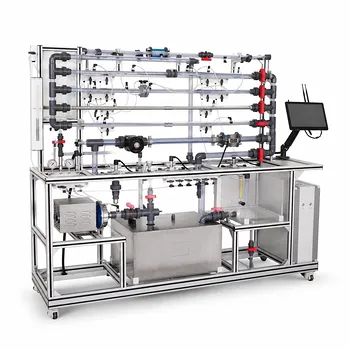
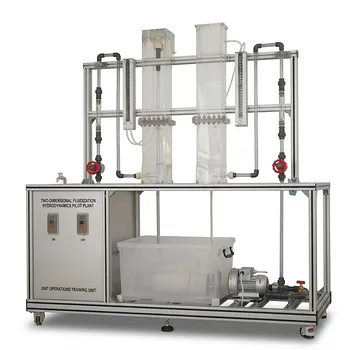
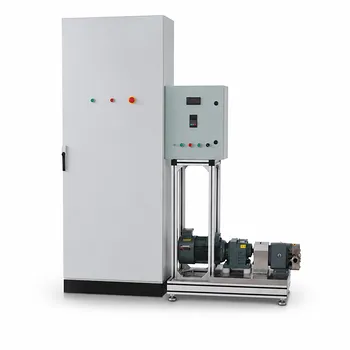
Pilot plants are the missing link between theory and industry. By operating scaled-down versions of real industrial equipment, chemical engineering students gain firsthand experience of the fundamental operational and equipment differences between pilot-scale and commercial manufacturing environments. They learn that moving from a pilot plant to a full-scale factory is not simply a matter of using a bigger vessel—it involves a profound shift in equipment configuration, operating philosophy, and process control strategy.
Educational unit operations pilot plants force students to confront the real-world complexities that separate a lab experiment from a factory. They bridge the gap by making tangible the constraints that define commercial manufacturing: 24/7 operations, standardized multi-product equipment trains, slow analytical feedback loops, and the multivariate nature of product quality.
The Core Operational and Equipment Differences
Equipment Size and Capacity: From Kilos to Tons
The most obvious difference is vessel size. Pilot plants typically operate with reactors ranging from 50 to 4,000 liters, while commercial manufacturing uses capacities between 400 and 12,000 liters, and often much larger for bulk chemicals.
However, the educational value lies not in the number itself, but in what the size change does to the process. Students quickly discover that doubling a vessel’s volume does not double its heating or cooling surface area. This triggers a cascade of engineering challenges—like mixing inefficiencies and temperature gradients—that are invisible in a benchtop flask but dominate at scale.
Setup Flexibility vs. Standardization: The Multipurpose Challenge
Pilot plants are inherently flexible. They are designed as sequential, reconfigurable setups that allow students to test different process routes on the same equipment. This mirrors the reality of kilo labs and process development environments.
Commercial fine chemical and pharmaceutical plants, however, rely on multi-purpose equipment in a highly standardized layout. The focus shifts from flexibility to campaign efficiency. Educational pilot plants show students how moving from an exploratory mindset to a production mindset means mastering scheduling, cleaning validation, and recipe-based control—critical skills for operating real Multipurpose Plants (MPPs).
Operating Schedule: 5-Day Campaigns vs. 24/7 Continuous Production
Pilot operations rarely run around the clock. A university pilot plant might run a single batch during a five-day work week, with shifts ending in the afternoon. In manufacturing, assets are expected to run 24 hours a day, 365 days a year.
This difference is not trivial. Students experience how a stoppage on a Friday afternoon can delay analytical results for days, forcing them to manage process hold points and raw material stability. They internalize why manufacturing organizations value reliability and throughput above absolute flexibility, and how operating philosophy drives equipment design choices like redundancy and parallel trains.
Gaining Hands-On Insight into Hidden Process Behaviors
Heat Transfer, Mixing, and Mass Transport: Why Bigger Isn’t Always the Same
Laboratory glassware offers near-perfect thermal control and fast mixing. The moment students move to a pilot-scale jacketed reactor, those assumptions break. Heat transfer surface area-to-volume ratios drop dramatically, leading to hot spots, prolonged heating/cooling times, and mixing dead zones.
Students can physically measure residence time distributions, observe vortex formation, and witness how fluid dynamics dictate reaction selectivity. These hands-on demonstrations of transport limitations are impossible to replicate in a textbook, yet they are precisely the phenomena that dictate whether a process will scale successfully or fail catastrophically.
Analytical Feedback Loops: Bridging the Data Gap
In a teaching lab, students often get real-time or near-real-time analytical data. In a pilot plant, sampling a large vessel and sending it to a remote lab can introduce delays of hours or even days. This mirrors industrial reality, where process analytical technology (PAT) is used to close that gap.
By managing these slower turnaround times, students learn to use statistical process control and soft sensors. They understand why commercial facilities invest heavily in inline spectroscopy and automated sampling systems—investments that seem unnecessary until you’ve experienced the pain of waiting for offline HPLC results to release a batch.
Process Automation and Control: From Manual Tweaks to Industrial Logic
Pilot plants often strike a balance between manual control and basic automation. Students can operate valves by hand and adjust setpoints locally. In contrast, commercial plants are managed through distributed control systems (DCS) with hundreds of interlocking safety trips and advanced regulatory control loops.
Educational pilot plants let students compare both worlds. They practice manual operation to understand the physics, then graduate to PLC or DCS interfaces to learn the logic of industrial automation. This progression builds an instinct for why control strategies are designed the way they are and how automation rigidity protects product quality at scale.
Bridging Theory and Practice: Key Engineering Concepts Brought to Life
Mapping Product Quality in a Multivariate Space
Scale-up is not a univariate problem. Students often believe that if the final product’s purity matches the lab standard, the process is successfully scaled. Educational pilot plants teach them otherwise.
By gathering data from sensors and tracking raw materials, energy inputs, and waste streams, students learn to map product quality as a multivariate signature. They use latent variable methods to see that identical endpoint quality might have been reached through completely different process paths—a realization that fundamentally changes how they think about robustness and process development.
Modeling the Process Signature and Predictive Scale-Up
The modern industry relies on predictive models, not iterative trial-and-error. Pilot plants are the proving ground for these mathematical models. Students validate heat transfer correlations, kinetic models, and fluid dynamics simulations against real data.
When the model’s prediction diverges from what the pilot plant actually produces, it sparks a critical investigation into assumptions and scale dependencies. This iterative loop of modeling and experimentation is the core skill that employers seek in process development engineers.
Understanding the Chemical Supply Curve and Cost Drivers
Pilot plants aren’t just for physics—they teach economics. By measuring utility consumption (steam, electricity, cooling water), labor hours, and raw material usage in a pilot campaign, students can build a real cost model.
They then scale the model up to a commercial facility and observe how unit costs plummet through economies of scale, proximity to raw materials, and energy integration. This hands-on exercise turns the abstract chemical supply curve into a concrete tool for justifying capital investment and site selection.
Understanding the Trade-offs: Limitations and Common Misconceptions
Educational pilot plants are not miniature replicas of commercial factories. They intentionally trade off some realism for learning flexibility. For example, a pilot plant may use a simpler utility system, lack full-scale safety instrumented systems, or skip the rigorous cleaning validation required in a GMP environment.
Students must recognize that a textbook scale-up factor still requires deep engineering judgment. The pilot plant teaches them which parameters are the true risk drivers—such as heat removal or mixing intensity—and which can be predicted with confidence. Overselling the pilot plant as a perfect predictor is as dangerous as ignoring its lessons entirely.
Another common pitfall is focusing solely on technical success. Real manufacturing involves supply chain logistics, human factors, and maintenance strategies that a university pilot plant cannot fully replicate. Acknowledging these gaps helps students appreciate why industrial “scale-down” experiments are designed to match specific plant constraints, not just shrink a batch size.
Making the Right Choice for Your Learning Goal
How you leverage a unit operations pilot plant depends entirely on what you want your students to master.
- If your primary focus is fundamental process engineering: Use the pilot plant to demonstrate heat and mass transfer limitations, fluid dynamics, and mixing. Let students physically feel the torque on an agitator as viscosity rises—it connects the equations to reality.
- If your primary focus is industrial operations management: Configure the plant to run multi-product campaigns over several weeks. Emphasize scheduling, cleaning protocols, and recipe management to simulate the workflow of a fine chemical MPP.
- If your primary focus is process development and scale-up: Make modeling central. Have students build a digital twin from first principles, validate it against pilot plant runs, and then use it to predict a hypothetical 10x scale-up’s performance and cost structure.
- If your primary focus is quality-by-design and regulatory thinking: Introduce a defined product quality target and ask students to identify critical process parameters (CPPs) using design of experiments on the pilot plant. This teaches multivariate quality mapping and risk assessment.
The true power of an educational unit operations pilot plant is that it transforms abstract scale-up principles into physical, memorable lessons that stay with students long after the equipment is cleaned and shut down.
Summary Table:
| Operational Parameter | Educational Pilot-Scale | Commercial Manufacturing-Scale |
|---|---|---|
| Vessel Capacity | 50 to 4,000 Liters | 400 to 12,000+ Liters (Bulk scale) |
| Setup & Layout | Flexible, sequential, & reconfigurable | Standardized, campaign-oriented multipurpose plants |
| Operating Schedule | Intermittent (e.g., 5-day shifts, daytime) | Continuous 24/7/365 operations |
| Process Control | Manual tweaking to basic PLC control | Distributed Control Systems (DCS) with safety interlocks |
| Heat & Mass Transfer | High surface area-to-volume ratio | Low ratio, leading to hot spots & mixing dead zones |
| Analytical Feedback | Near-real-time or delayed offline sampling | In-line Process Analytical Technology (PAT) & soft sensors |
Empower the Next Generation of Engineers with LABPARK
Bridge the gap between classroom theory and industrial reality. LABPARK designs and manufactures premium Educational and Vocational Unit Operations Pilot Plants tailored for universities, research institutes, and enterprises.
We provide advanced pilot systems across three core fields:
- Chemical Engineering (distillation, extraction, and reactor systems)
- Bioprocess & Biotech (fermentation and downstream processing)
- Environmental & Water Treatment (membrane filtration and wastewater systems)
Equip your laboratory with tools that replicate real-world industrial constraints, process automation, and scale-up challenges.
Contact LABPARK today to discuss your laboratory requirements and request a quotation.
Related Products
- Multi-Reactor Educational Pilot Plant for Reaction Engineering Unit Operations
- Multi-Functional Drying Educational Unit Operations Pilot Plant
- Polymerization Granulation and Pellet Processing Educational Unit Operations Pilot Plant
- Comprehensive Fluid Mechanics Educational Unit Operations Pilot Plant
- Electrolytic Hydrogen Production Educational Unit Operations Pilot Plant
People Also Ask
- What role do educational pilot plants play in scaling green chemistry? Bridging the Lab-to-Industry Gap
- How do educational unit operations pilot plants address safety and waste management when scaling up?
- How do educational unit operations pilot plants bridge theory and design? Bridge the Engineering Gap
- Why Compare Predicted and Experimental Excess Enthalpy? Key to Accurate Pilot Plant Scale-up
- Why Use PTFE & Hastelloy in Chemical Pilot Plants? Prevent Corrosion & Ensure Safety