At the core of catalytic reaction engineering, you face a deceptively simple question: where does the chemical transformation actually happen? The Langmuir-Hinshelwood (LH) and Eley-Rideal (EL) models offer two distinct answers. The LH model insists that a reaction proceeds only when two reactant molecules are both adsorbed on the catalyst surface, while the EL model allows the reaction to happen when a gas- or liquid-phase molecule collides directly with a single, surface-bound reactant. In pilot units, this difference is not academic—it dictates the rate law you should fit, the reactor behavior you predict, and the catalyst you optimize.
The LH model demands a surface crowded with both reactants before the rate-determining step, whereas the EL model bypasses dual adsorption, relying on a direct hit from the fluid phase. This single mechanistic fork reshapes everything from kinetic data interpretation to scale‑up strategy.
The Surface Reaction: The Core Distinction
The most direct answer to your question lives in the elementary step. Heterogeneous catalysis breaks into adsorption, surface reaction, and desorption. LH and EL differ at the surface reaction stage.
The Langmuir-Hinshelwood Pathway
The LH mechanism requires two surface-adsorbed species to find each other.
Imagine a ballroom floor where both dancers (reactants) must first step onto the surface. Only when they are both adsorbed and mobile do they encounter one another, react, and then desorb as product.
In kinetic terms, the reaction rate depends on the product of two surface coverages. That coverage usually follows Langmuir isotherms, so the denominator of the rate law contains a squared or cross-term dependence on partial pressures.
The Eley-Rideal Pathway
The EL mechanism occurs between an adsorbed species and a molecule coming straight from the fluid phase.
Think of one dancer already on the floor, and a second dancer still in the wings throwing a prop onto the stage. The collision itself triggers the transformation, without the second dancer ever needing to stick to the surface.
Here, the rate law features only one surface coverage term multiplied by a partial pressure or concentration term from the fluid phase. The denominator is simpler, often lacking the competitive adsorption term of the LH expression.
Why the Distinction Matters in Pilot Units
When you run a catalytic unit operation pilot plant, the surface mechanism isn’t just theory—it’s the key that unlocks your data.
Deriving Kinetic Rate Laws
You adjust reactant concentrations and analyze outlet compositions. The shape of your experimental rate vs. pressure curve will point to one model over the other.
For LH, the rate often goes through a maximum as one reactant’s pressure increases (competitive adsorption). For EL, the rate typically increases monotonically toward an asymptote as the fluid-phase reactant pressure rises, without the same inhibition.
Fitting the wrong model leads you to misidentify activation energies and active site requirements, corrupting any scale‑up predictions.
Impact on Catalyst Optimization
A catalyst designed for an LH mechanism must provide pairs of adjacent active sites. Sintering or poisoning that breaks up ensembles will kill activity.
In contrast, an EL catalyst can function with isolated sites, because only one reactant needs to be adsorbed at the reaction moment. This influences your choice of support, metal loading, and poisoning-resistance strategies during catalyst development.
Understanding the Trade-offs: Limitations of Each Model
Both models are idealized snapshots of a much messier reality. Recognizing their blind spots builds the trust any engineer needs before locking in a design.
LH Model Limitations
The classic LH derivation assumes all surface sites are identical and energetically equivalent, with no lateral interactions between adsorbates. In real catalysts, surface heterogeneity and co‑adsorbate repulsion often distort the predicted rate law.
Moreover, the model demands that surface diffusion or reaction of two adsorbed species is the rate-limiting step. If adsorption or desorption controls instead, the kinetic expression mutates into something the bare LH equation cannot capture.
EL Model Limitations
The EL mechanism ignores precursor states where the incoming molecule may be weakly held before striking the surface. It also treats the collision as a single‑step event, yet many systems show an intermediate “hot” adsorbed state that blurs the line.
Crucially, EL kinetics often fail at high surface coverages, where the adsorbed partner becomes crowded by byproducts or solvents that block the incoming molecule’s access.
The Danger of Picking One Too Early
In many pilot studies, data can be fitted moderately well by both models over a narrow pressure window. The true mechanism might even be a dual‑pathway system or a Mars‑van Krevelen oxidation. Committing prematurely locks you into an incorrect rate expression that will fail upon scale‑up.
Making the Right Choice for Your Kinetic Study
You can now translate this nuance into a deliberate experimental and modeling strategy. Focus your efforts based on what you need to achieve.
- If your primary focus is discriminating the mechanism from pilot data: Design a broad matrix of pressures that includes the low-coverage and high-coverage extremes. Look for rate maxima and competitive adsorption signatures—these are unique LH fingerprints.
- If your primary focus is scaling up with a robust model: Fit both LH and EL variants and select the one that holds across temperature and pressure ranges, not just for a single operating point. Validate with transient response tests (e.g., step changes in feed) to see if the mechanism holds dynamically.
- If your primary focus is catalyst synthesis and durability: Determine whether your active sites need to be in ensembles (LH) or can operate in isolation (EL). This insight guides the choice of metal dispersion, bimetallic formulation, and sintering‑resistant architectures.
You are not merely choosing between two rate equations. You are diagnosing the choreography of your catalyst, and that diagnosis is what turns pilot‑plant data into a predictable, profitable full‑scale reactor.
Summary Table:
| Feature | Langmuir-Hinshelwood (LH) | Eley-Rideal (EL) |
|---|---|---|
| Mechanism | Reaction between two co-adsorbed species | Reaction between fluid-phase molecule and adsorbed species |
| Rate Behavior | Often exhibits a maximum due to competitive adsorption | Typically increases monotonically toward an asymptote |
| Active Sites | Requires adjacent pairs of active sites | Can function effectively on isolated active sites |
| Sintering Impact | High sensitivity (disrupts active site ensembles) | Low sensitivity (isolated sites remain active) |
Scale Up Your Kinetics Studies with LABPARK
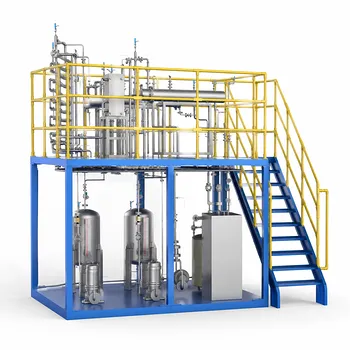
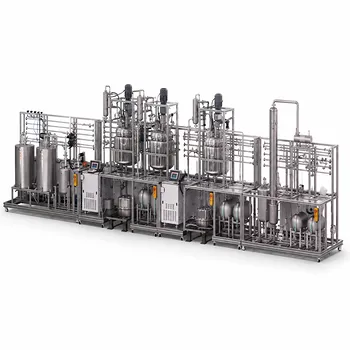
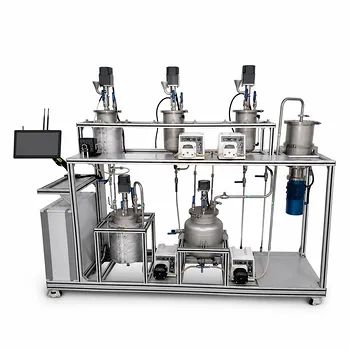
Accurate kinetic modeling relies on precise, reliable pilot data. LABPARK provides high-quality Educational and Vocational Unit Operations Pilot Plants in chemical engineering, bioprocess & biotech, and environmental & water treatment.
Designed specifically for universities, research institutes, and enterprises, our pilot plants enable you to confidently analyze LH and EL reaction kinetics, optimize catalysts, and streamline process scale-up.
Contact LABPARK today to find the perfect pilot plant solution for your facility!
Related Products
- Multi-Reactor Educational Pilot Plant for Reaction Engineering Unit Operations
- Fixed-Bed Chemical Reaction and Gas Dust Tar Removal Unit Operations Pilot Plant
- Fixed Bed Gas Solid Catalytic Reaction Educational Pilot Plant
- Multi Functional Catalytic Reaction and Reactor Evaluation Educational Unit Operations Pilot Plant
- Fluidized Bed Gas Solid Catalytic Reaction Educational Pilot Plant
People Also Ask
- How do educational unit operations pilot plants address safety and waste management when scaling up?
- How do educational unit operations pilot plants bridge theory and design? Bridge the Engineering Gap
- Why Compare Predicted and Experimental Excess Enthalpy? Key to Accurate Pilot Plant Scale-up
- How to study gasification in pilot plants? Compare exit gas composition & efficiency
- Why Use PTFE & Hastelloy in Chemical Pilot Plants? Prevent Corrosion & Ensure Safety