Precision in precipitation determines purity. In chemical engineering lab training, the dropwise addition rate of cupferron is critical because it directly governs the physical form of the precipitating metal complexes. Adding the reagent too rapidly during group separations from process deposits yields large, gummy masses that entrap impurities and resist washing, making accurate quantitative filtration nearly impossible.
The criticality of dropwise addition boils down to precipitate morphology: slow, chilled, and stirred conditions produce finely divided, easily filterable solids; rushing the reagent creates sticky agglomerates that destroy separation accuracy and waste valuable time.
The Chemistry of Precipitation Control
When you separate metals like iron, vanadium, or molybdenum from complex scale deposits, you’re not just triggering a reaction—you’re engineering a solid. Nucleation and crystal growth must be carefully managed to ensure the precipitate can be worked with downstream.
Why Agglomeration is the Enemy
Fast addition of cupferron creates a sudden, high local concentration of reagent. This forces the metal complexes to crash out of solution in a disordered, rapid aggregation. The result is a colloidal, tarry mass rather than a crystalline solid.
This gummy texture physically enwraps solution containing other ions. Once these entrapped impurities are locked inside the precipitate, no amount of rinse water can displace them. Your final mass will be inflated by contaminants, destroying the quantitative basis of the separation.
How Dropwise Addition Solves the Problem
Slow, dropwise addition under vigorous stirring and chilled conditions gives each formed nucleus time to grow orderly. The constant mixing prevents local supersaturation, ensuring the precipitant reacts evenly with the target metals.
The product is a dense, granular, and easily filterable precipitate. This material can be washed thoroughly to remove any adsorbed impurities, delivering a pure solid that truly represents the metal content of the original deposit.
The Practical Consequences of Poor Technique
Overlooking the addition rate doesn’t just lower accuracy—it can halt your workflow entirely.
The Filtration Bottleneck
A gummy precipitate will quickly clog the pores of filter paper or a sintered-glass crucible. You’ll face impossibly long filtration times and may even need to start the analysis over. The separation stops being a quantitative unit operation and becomes a messy recovery problem.
Invisible Errors in Final Results
Even if you manage to filter a sticky mass, the entrapped salts will remain. When you ignite the precipitate to weighing form, those impurities become a non-volatile residue that falsely inflates the metal content, yielding a percentage that is not just wrong but dangerously misleading for process control.
Understanding the Trade-offs and Pitfalls
While dropwise addition is non-negotiable, the technique demands patience, and there are situations that can still trip you up.
The Temptation to Rush
The biggest pitfall is psychological: the protocol feels slow, and adding the full volume in a controlled stream takes discipline. Impatient addition is the number-one cause of failed separations in a teaching lab. Speed ruins the very selectivity you are trying to achieve.
Temperature and Dilution Trade-offs
Chilling the solution helps slow the reaction kinetics, but if you go too cold you risk incomplete precipitation. The dropwise rate must be paired with adequate dilution and constant, efficient stirring. If any of these three factors (temperature, concentration, agitation) drift out of spec, you can still get poor-quality precipitates even with a perfect addition rate.
Reagent Age and Stability
Cupferron itself decomposes over time, especially in warm, light-exposed conditions. Using degraded reagent can produce the same sticky precipitates as fast addition does, because the active species is no longer present in the right form. Always verify your reagent’s quality before blaming your technique.
How to Apply This to Your Laboratory Protocol
The dropwise addition rate is not a minor detail; it’s a fundamental control point you can adjust based on your primary analytical goal.
- If your primary focus is quantitative accuracy: Adhere strictly to the slow, dropwise protocol at 0–5°C with vigorous mechanical stirring. Sacrifice speed for a crystalline, impurity-free precipitate that will yield true mass values.
- If your primary focus is training and demonstration: Use this step as a classic lesson in particle engineering. Show students the dramatic difference between a well-formed, sandy solid and a tar-like mess, making the concept of controlled precipitation unforgettable.
- If your primary focus is troubleshooting a failing separation: Stop and examine your precipitate morphology immediately. If the solid is sticky or gelatinous, you likely added cupferron too fast or worked at too high a temperature; redissolve and start again with a disciplined dropwise rate.
Mastering the dropwise addition of cupferron transforms a frustrating, error-prone precipitation into a reliable, quantitative engineering tool.
Summary Table:
| Parameter | Slow Dropwise Addition | Rapid Addition |
|---|---|---|
| Precipitate Form | Dense, granular, and crystalline | Gummy, sticky, and colloidal mass |
| Purity Level | High (impurities easily washed away) | Low (entraps contaminating salts) |
| Filtration Speed | Fast and efficient | Clogs filters; extremely slow |
| Analytical Accuracy | High quantitative precision | Poor (inflates final mass measurements) |
Bring Industrial-Grade Precision to Your Training Labs
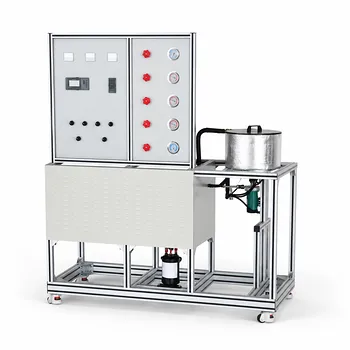
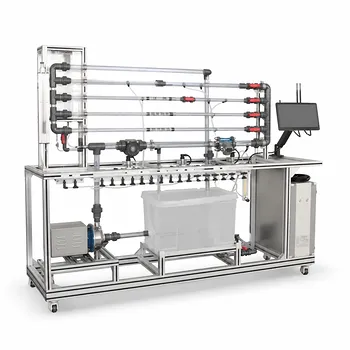
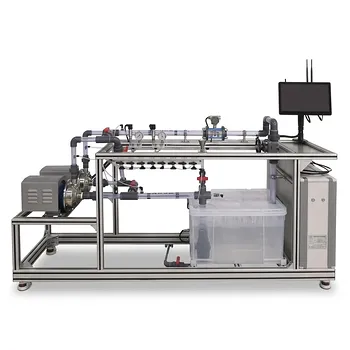
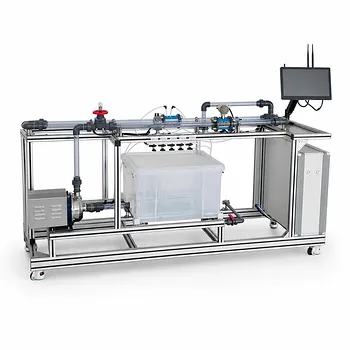
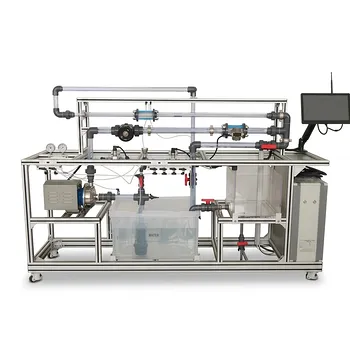
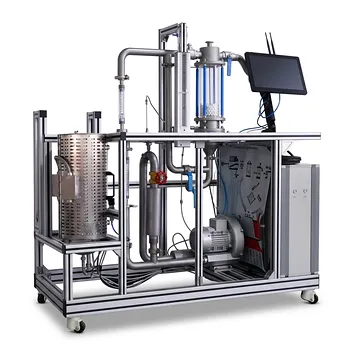
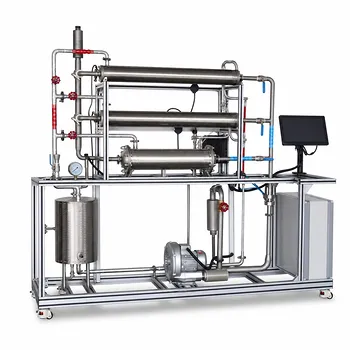
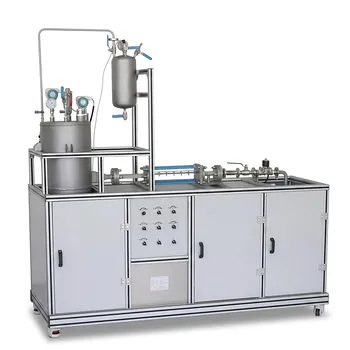
Mastering unit operations like precipitation and separation requires hands-on experience with industry-standard equipment. LABPARK provides state-of-the-art Educational and Vocational Unit Operations Pilot Plants in chemical engineering, bioprocess & biotech, and environmental & water treatment designed specifically for universities, research institutes, and enterprises.
Equip your students and researchers with the tools they need to master complex chemical processes. Contact LABPARK today to find the perfect pilot plant for your lab!
Related Products
- Educational Compression Refrigeration Performance Determination Unit Operations Pilot Plant
- Constant Pressure Filtration Educational Unit Operations Pilot Plant
- Rising and Falling Film Evaporation Educational Unit Operations Pilot Plant
- Fluid Friction Resistance Determination Educational Unit Operations Pilot Plant
- Multi Functional Catalytic Reaction and Reactor Evaluation Educational Unit Operations Pilot Plant
People Also Ask
- Why Switch Unit Operations Flow Configurations? Impact on Experimental Measurements
- Why is distinguishing between elastic and plastic deformation critical? Prevent tablet capping.
- How is unsteady-state flow analyzed & taught? Master Transient Systems in Unit Ops
- What are the differences between set-point, servo, and program control? Master unit operations training.
- How to use pilot plants to estimate gas compression costs? Master scale-up economics.