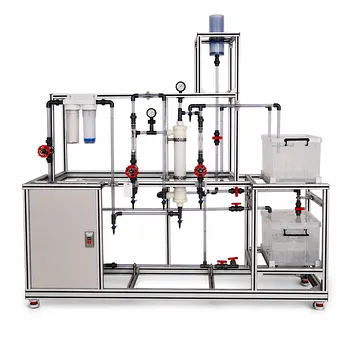
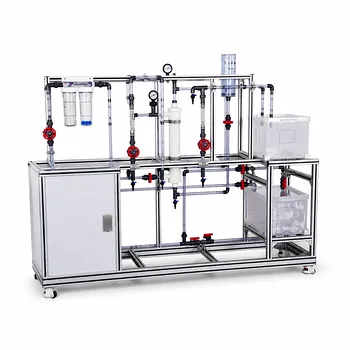
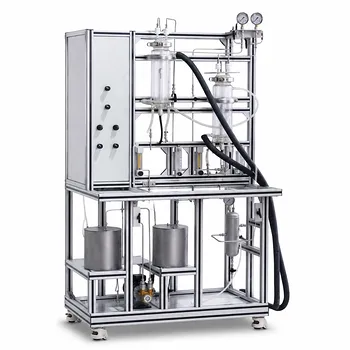
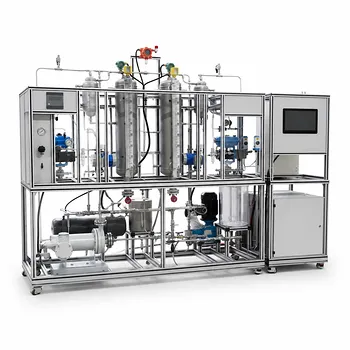
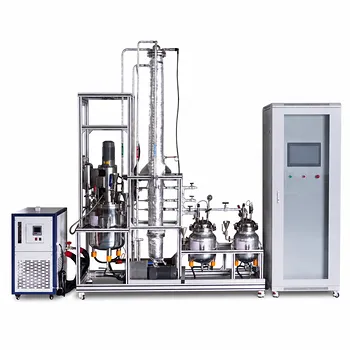
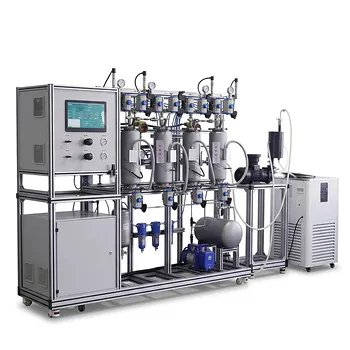
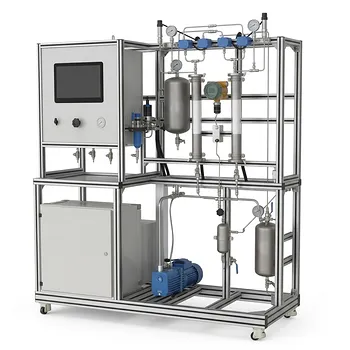
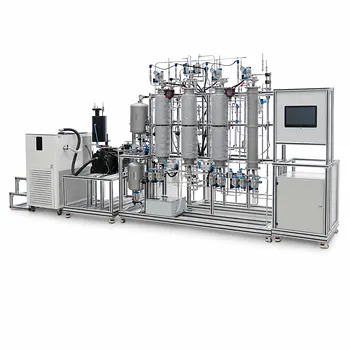
The core of effective membrane research begins not with a protocol, but with a classification system. For laboratory and pilot-scale research, membrane separation pilot plants should be systematically classified by their physical pore size—ranging from microfiltration (MF) and ultrafiltration (UF) to nanofiltration (NF) and reverse osmosis (RO)—and, more fundamentally, by their primary driving force. The selection of an appropriate plant hinges on matching the system's driving force (pressure, concentration, temperature, or electrical potential) and membrane characteristics to the target feed’s chemical potential gradient and the required selectivity.
Classifying a pilot plant by its driving force reveals the fundamental separation mechanism, but selecting the right one requires looking deeper. The goal is not just to separate, but to do so efficiently and durably. The best choice is dictated by the transport rate of your target species, its sensitivity to heat, and the plant’s ability to withstand real-world chemical stressors without succumbing to irreversible fouling.
Decoding the Classification System by Driving Force
The primary way to understand any membrane pilot plant is by identifying the energy gradient that induces mass transport. This classification defines the plant's core capabilities.
Pressure-Driven Processes: The Workhorses of Liquid Separation
Pressure-driven systems are the most common in research settings. They apply a hydraulic pressure differential to force a solvent through a semi-permeable membrane, retaining solutes based on size and charge.
These plants are categorized by their membrane pore size. MF and UF units use porous membranes to fractionate suspended solids and macromolecules via a sieving mechanism. NF and RO units use dense, non-porous membranes to reject dissolved ions and small organics through a solution-diffusion mechanism, requiring significantly higher pressures to overcome the natural osmotic potential. The versatility of a single pressure-driven pilot plant that can demonstrate MF, UF, and RO in sequence is a critical design factor, allowing researchers to analyze energy requirements and pump efficiencies across different filter types.
Concentration-Driven Processes: Gentle Separation for Complex Molecules
When hydraulic pressure is destructive or ineffective, a concentration gradient becomes the driving force. These processes are intrinsic to dialysis, pervaporation, and liquid membrane systems.
Liquid membranes are a prime example where this mechanism excels. These units use a selective liquid phase immobilized in a porous membrane support. They facilitate the transport of a target species from a high-concentration feed to a low-concentration permeate side, often coupled with a chemical reaction for enhanced selectivity. This makes them uniquely suited for niche separations like metal ion recovery, although their operational complexity is higher than that of pressure-driven systems.
Temperature and Electrically-Driven Processes: Specialized Problem Solvers
For specific feed streams, thermal or electrical energy provides the optimal driving force. Membrane distillation uses a vapor pressure difference created by a thermal gradient, making it ideal for treating highly saline water where RO would be energetically prohibitive. Electro-dialysis uses an electrical potential to migrate ions through selective ion-exchange membranes, effectively de-ionizing a process stream. Selecting these systems is a direct response to feeds with high osmotic pressure or charged target species.
Selecting a System: From Theory to Practical Operation
Classifying a plant is the first step. The selection process then becomes a critical evaluation of operational realities against your research goals.
The Critical Gap Between Idealized Tests and Real-World Feeds
A membrane material that performs flawlessly on a pure nitrogen stream in the lab can fail rapidly when exposed to a real raw gas feed. When commissioning a pilot plant, you must explicitly design experiments to study this performance gap.
Real feeds contain heavy hydrocarbons and aromatics that plasticize or swell polymeric membranes, destroying their selectivity. Cellulose acetate remains a predictable workhorse due to its stable, though lower, performance, while advanced polyaramides offer higher flux but require careful chemical compatibility checks. Exposing your pilot unit to simulated real-world feeds allows you to make a data-driven decision between a predictable material and a fragile, high-performance one. This approach allows you to observe phenomena like compaction and plasticization, which directly inform membrane lifetime predictions.
Engineering the Next-Generation Membrane
Your pilot plant selection should also support material innovation. A system designed for flexibility is essential for testing mixed-matrix membranes (MMMs).
MMMs embed inorganic molecular sieves like zeolites into a polymer matrix to boost both flux and selectivity. However, theoretical and practical work shows that the base polymer's permeability must be carefully selected. Using the Maxwell model as a guide, maximum selectivity is achieved when the polymer's permeability is several times lower than the filler's permeability. If the polymer is too permeable, the transport bypasses the selective filler, and you lose the benefit of the nanocomposite. A well-instrumented pilot plant is the only way to validate these theoretical models and assess the durability of these novel materials under dynamic operating conditions.
Understanding the Trade-offs of Membrane Systems
Objectivity demands a clear-eyed view of the limitations. A well-designed research program doesn't hide from these trade-offs but integrates them into the learning process.
- The Inevitability of Fouling: All membranes foul. This phenomenon causes a gradual decline in permeate flux and, if unchecked, permanently alters the membrane's selectivity. Your pilot plant selection must prioritize the ability to monitor pressure drops across stages, implement pre-treatment protocols, and test mitigation strategies like backwashing or chemical cleaning. Teaching researchers to identify and manage fouling is arguably more valuable than teaching the separation itself.
- Chemical Resistance and Lifespan: Polymeric membranes have limited resistance to pH extremes, organic solvents, and oxidative agents. A wrong chemical choice in the feed or during cleaning can void a promising result. Building regular membrane replacement and maintenance protocols into the pilot plant's standard operating procedure transforms this limitation from a research failure into a controllable variable that teaches operational sustainability.
Making the Right Choice for Your Research Goal
Which membrane pilot plant you invest your research time and budget in depends entirely on your primary objective. The classification system provides the map, but your goal determines the route.
- If your primary focus is separating heat-sensitive biologicals like proteins: Prioritize a pressure-driven pilot plant. An MF/UF system with precise, low-temperature control will fractionate without causing chemical or thermal denaturation, and it offers a direct scalability path for bioprocess simulation.
- If your primary focus is water desalination or removing dissolved ions: Your selection must be an integrated NF/RO pilot plant. Look for a system that allows you to compare the energy requirements and pre-treatment demands of both technologies side-by-side, while critically evaluating the impact of feed composition on efficiency.
- If your primary focus is high-performance gas separations: A pilot plant capable of handling pressurized gas feeds and testing carrier-facilitated transport or MMMs is essential. Design your study to explicitly measure the long-term chemical stability and resistance to heavy hydrocarbons, moving well beyond idealized pure-gas permeability tests.
- If your primary focus is separating suspended solids from a liquid-continuous phase: Choose a versatile MF pilot plant that can also demonstrate conventional physical separation methods. This allows a direct comparison of throughput and energy efficiency, creating a complete picture that integrates membrane technology within a broader processing curriculum.
By seeing the classification of membrane systems as a guide to understanding the fundamental driving forces—and selection as a critical study of real-world material stability, fouling, and energy trade-offs—your research program moves from simply running experiments to generating predictive, industrial-level insight.
Summary Table:
| Driving Force | Membrane Process | Separation Mechanism | Key Applications |
|---|---|---|---|
| Pressure | MF, UF, NF, RO | Size exclusion & solution-diffusion | Desalination, bio-fractionation, wastewater treatment |
| Concentration | Pervaporation, Dialysis, Liquid Membranes | Chemical potential gradient | Metal recovery, gas separation, organic extraction |
| Temperature | Membrane Distillation | Vapor pressure difference | High-salinity water treatment, thermal separation |
| Electrical Potential | Electrodialysis | Ion migration through selective membranes | Process stream de-ionization, salt recovery |
Bridge the Gap from Lab Scale to Industrial Operation
At LABPARK, we empower universities, research institutes, and enterprises with state-of-the-art Educational and Vocational Unit Operations Pilot Plants. Our systems are precision-engineered to facilitate hands-on learning and advanced research across chemical engineering, bioprocess & biotech, and environmental & water treatment.
Whether you need to study fouling mitigation, evaluate novel mixed-matrix membranes under real-world conditions, or demonstrate diverse separation driving forces, our flexible, modular pilot plants provide the reliable data and durability your laboratory demands.
Ready to elevate your research and training capabilities? Contact LABPARK today to discuss your project requirements!
Related Products
- Multifunctional Membrane Separation Educational Pilot Plant with Ultrafiltration, Nanofiltration, Reverse Osmosis
- Ultrafiltration Membrane Separation Educational Pilot Plant
- Multi-Functional Membrane Separation Educational Pilot Plant for Unit Operations Lab
- Hollow Fiber Ultrafiltration Membrane Separation Educational Pilot Plant
- Photocatalytic Membrane Separation and Degradation Unit Operations Pilot Plant
People Also Ask
- Pervaporation vs. Vapor Permeation: Handling Suspended Solids in Membrane Pilot Plants
- How do PEI, PVDF, and PSU membranes compare in pilot plants? Find the best fit.
- What are the trade-offs of polymer vs inorganic membranes in teaching pilot plants? Key laboratory comparison.
- How can operators optimize operating conditions and cleaning protocols in membrane separation pilot plants to mitigate fouling?
- What are the advantages of membrane separation in pilot plants? Efficient Organic Vapor Recovery