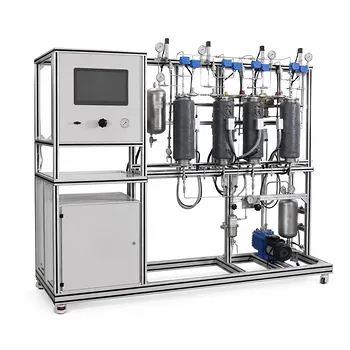
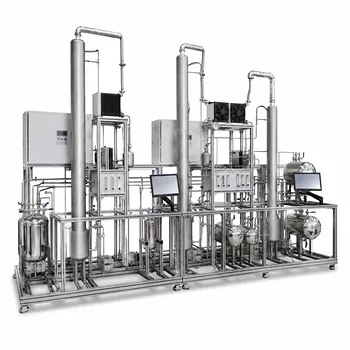
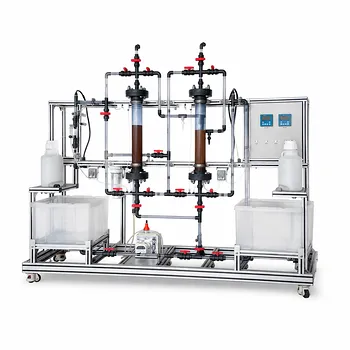
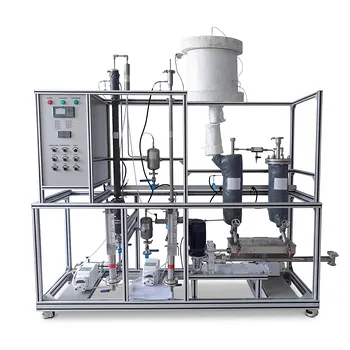
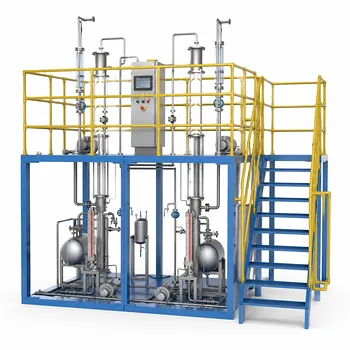
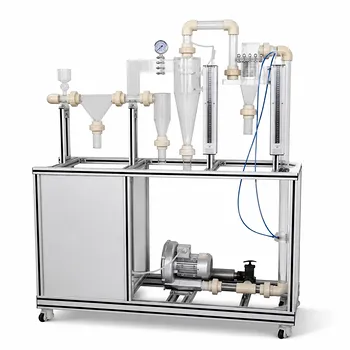
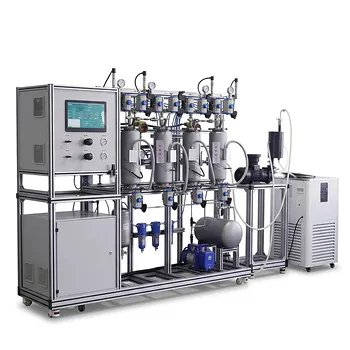
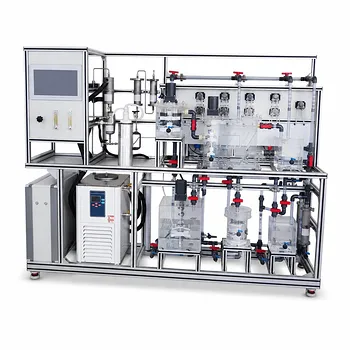
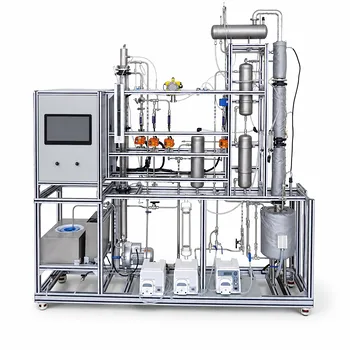
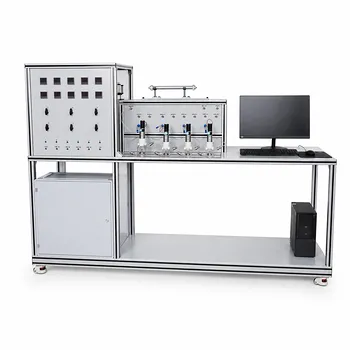
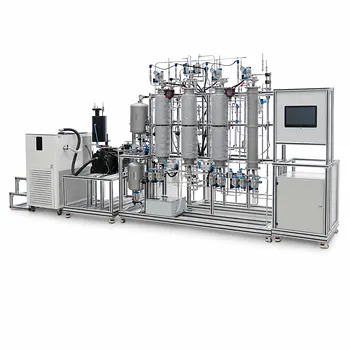
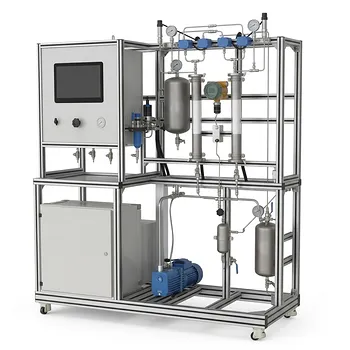
The most practical choice for a student laboratory is almost always a chemical absorption system. For a chemical engineering department designing a gas purification pilot plant, amine-based chemical absorption (using solvents like MEA or MDEA) is the recommended foundation. It operates at low pressure (near atmospheric), moderate temperatures (20–40°C for absorption, >105°C for regeneration), and avoids the extreme cryogenic conditions and high-pressure vessels required by physical absorption setups like Rectisol. This choice directly addresses the surface need: a safe, cost-effective, and industrially relevant training tool.
While physical absorption elegantly demonstrates pressure-driven solubility, a chemical absorption pilot plant delivers deeper, safer, and more versatile learning. It allows students to directly observe reaction-enhanced mass transfer, heat effects, and process control—while also being capable of illustrative physical absorption experiments with simple solvent swaps. This dual capability makes it the superior educational investment.
Why the Primary Choice Must Serve the Deep Educational Need
The explicit question frames a binary choice. But the driving concern is deeper: how to build a pilot plant that maximizes robust, safe, and layered learning for future chemical engineers. That plant must be an intuitive, scalable platform for teaching core unit operations—not a fragile, high-risk scientific instrument.
The Overriding Prerequisites of a Student Lab
In a university environment, safety and operational simplicity are non-negotiable. High-pressure gas systems and flammable, sub-zero solvents introduce unacceptable risk profiles for unsupervised or trainee operation.
A chemical absorption loop using aqueous amines runs at pressures just above ambient and at easily managed elevated temperatures. Maintenance is straightforward, and leaks are far less hazardous. This foundation lets instructors focus on education rather than constant safety policing.
Maximizing Instructional Value per Square Foot
The pilot plant must function as a live textbook. With a chemical absorption column, students can measure the dramatic jump in absorption efficiency when a reactive solvent replaces an inert one—directly comparing physical and chemical principles inside the same column.
By running a simple gas (like CO₂) into water one day and into an alkaline solution the next, the plant teaches both Henry’s Law and reaction-enhanced kinetics. This dynamic versatility is impossible to achieve with a single-mode high-pressure physical absorption unit on a typical university budget.
Comparing the Two Absorption Mechanisms in a Lab Setting
It’s critical to understand the fundamental differences the students will observe. This clarity guides the design choices.
The Physics of Physical Absorption
Physical absorption relies purely on gas solubility in a liquid solvent. It follows Henry’s Law: solubility increases with pressure and decreases with temperature.
In a lab, using water to absorb CO₂ demonstrates this cleanly. Students see minimal temperature change and a modest absorption rate. The process is highly reversible by pressure reduction or heating, but achieving high purification depths requires substantial pressure (often 2–5 MPa in industrial systems). This is dangerous and expensive to implement at a pilot scale.
The Chemistry of Chemical Absorption
Chemical absorption involves a fast, often reversible, reaction between the dissolved gas and an active component in the solvent. The reaction consumes the solute in the liquid film, slashing the equilibrium partial pressure and eliminating mass transfer resistance.
When students run an alkaline solution (like NaOH) through the same column, they observe a sharp temperature rise in the liquid phase, a far greater concentration drop in the exiting gas, and a dramatic increase in mass transfer coefficient. This directly shows how reaction kinetics supercharge a physical process.
A Single Column, Two Curricula
The real genius of a well-designed chemical absorption pilot plant is its dual-use capability. Because the column operates safely at low pressure, you can simply swap the solvent tank from an amine solution to deionized water.
In doing so, students can quantify the “enhancement factor” themselves—calculating the mass transfer coefficient with and without reaction. This directly addresses the supplementary reference’s emphasis on the educational value of comparing both mechanisms within one system.
Key Design Criteria for an Educational Pilot Plant
Selecting the chemical absorption base is just the start. The system’s components must be chosen to illuminate theory, not just process gas.
Solvent Selection for Teaching Flexibly
The absorbent should be a compromise between industrial relevance and lab safety. Aqueous MDEA (methyldiethanolamine) is excellent: it’s less corrosive and less volatile than MEA, reacts selectively with acid gases, and the reaction is fully reversible upon heating.
For the purely physical comparison experiments, water is ideal. It’s non-hazardous, its solubility data is widely published, and it makes the transition from “physical diffusion” to “chemical reaction” starkly visible.
Instrumentation That Tells a Story
The pilot plant must be heavily instrumented at points that reveal the fundamental phenomena:
- In-line gas analyzers at the inlet and outlet to quantify removal efficiency instantaneously.
- Thermocouples spaced along the column height to display the non-isothermal profile—a temperature bulge is a classic signature of exothermic chemical absorption.
- Liquid-phase sampling ports for titration, letting students track the reactive species depletion.
This data stream transforms the plant from a “black box” into a transparent testbed for mass and energy balances.
Safety-as-a-Teaching-Tool
For a chemical system, safety features like pressure relief valves, temperature cut-offs on the regenerator, and leak detectors are mandatory. But in an educational context, these features become explicit teaching modules.
Students can be tasked with conducting a HAZOP analysis on their own pilot plant, or understanding why the regeneration temperature is locked below the solvent’s degradation point. This embeds process safety culture directly into the unit operations lab.
Understanding the Trade-offs: Why a Dedicated Physical Absorption Plant is Usually Unsuitable
The supplementary references mention high-pressure, low-temperature physical systems. It’s essential to objectively explain the real-world obstacles that make them a poor fit for most academic departments.
The Inescapable Complexity of High-Pressure Cryogenics
Industrial physical absorption processes like Rectisol rely on chilled methanol (operating at -54°C) and pressures up to 5 MPa. Replicating this at pilot scale requires a Class 1 pressure vessel, a robust refrigeration cascade, and rigorous purging systems to handle flammable vapors.
These demands explode both capital investment and ongoing utility costs. For the same budget, a department could build two or three versatile chemical absorption rigs and provision a decade of consumables.
The Dangers of Distilled Learning
When a solvent’s efficacy depends purely on pressure, the temptation is to simply “crank the compressor” to see a result. This masks the underlying mass transfer principles.
Students learn far more from a system where a small, deliberate change—like switching from a 0.1 M alkaline solution to a 1 M one—produces a fivefold jump in absorption rate. The cause-and-effect chain is transparent, tangible, and rooted in reaction engineering fundamentals.
When a Physical Absorption Focus Might Be Justified
There are niche cases where a dedicated physical setup adds value. If the department has an existing high-pressure gas infrastructure and a dedicated safety team, a small, pre-pressurized cell demonstrating physical solubility at varying pressures can augment the main chemical plant.
However, this would be a supplementary module, not the core pilot unit. The primary plant should remain chemical absorption-based to guarantee daily uptime and broad curriculum coverage.
Making the Right Choice for Your Department’s Goals
The final decision should be anchored to the specific educational outcomes you prioritize. Use these goal-driven filters to guide your design.
- If your primary focus is student safety and minimal operational cost: Build a low-pressure amine-based chemical absorption system. It eliminates the cryogenic and high-pressure risks while consuming fewer utilities, and still allows safe physical absorption demos with water.
- If your primary focus is teaching the full spectrum of mass transfer phenomena: Design a single column with the capability to easily swap between reactive (amine/alkaline) and non-reactive (water) solvents. This one-plant strategy lets students quantify the mass transfer enhancement factor directly.
- If your primary focus is preparing students for the modern energy industry: Center the plant on a reversible acid gas removal cycle (CO₂ capture with MDEA) complete with a hot regeneration loop. This mirrors the largest-scale chemical absorption application globally and makes graduates immediately relevant.
- If your primary focus is research flexibility for future projects: Opt for a modular, heavily instrumented chemical absorption column with bypass loops and variable packing types. The ability to study liquid distribution, flooding points, and reaction kinetics on one platform will serve student projects for a decade.
A chemical absorption pilot plant is not just the safer choice—it is the pedagogically richer, more versatile, and ultimately more honest tool for teaching the inseparable link between physical transport and chemical reaction that defines modern gas purification.
Summary Table:
| Feature | Chemical Absorption (Amine-based) | Physical Absorption (High-pressure) |
|---|---|---|
| Operating Pressure | Near atmospheric (Low safety risk) | High (2–5 MPa, High safety risk) |
| Temperature Range | Moderate (20–40°C absorption, >105°C regen) | Often cryogenic (down to -54°C) |
| Safety & Maintenance | High safety, simple maintenance | Complex, high risk, requires purging |
| Educational Versatility | High (runs both chemical and physical tests) | Low (limited to pressure-solubility) |
| Capital Cost | Cost-effective, ideal for academic budgets | Very high (requires pressure vessels) |
Bring Hands-On Industrial Learning to Your Lab with LABPARK
Designing the perfect unit operations laboratory requires balancing educational depth, student safety, and budget constraints. LABPARK delivers high-quality Educational and Vocational Unit Operations Pilot Plants in chemical engineering, bioprocess & biotech, and environmental & water treatment for universities, research institutes, and enterprises.
Our custom-engineered gas purification systems allow students to safely explore the boundary between physical transport and chemical reactions. Ready to elevate your department's training capabilities? Contact LABPARK today to find the ideal pilot plant solution for your facility!
Related Products
- Fixed-Bed Chemical Reaction and Gas Dust Tar Removal Unit Operations Pilot Plant
- Bench Scale Carbon Dioxide Capture Educational Unit Operations Pilot Plant
- Green Anhydrous Ethanol Purification Extractive Distillation Unit Operations Training Pilot Plant
- Electrolyte Distillation Purification and Formulation Educational Pilot Plant
- Ion Exchange Water Purification Educational Pilot Plant for Engineering Unit Operations
People Also Ask
- When to transition from PID to adaptive control in pilot plants? Key process indicators.
- How do deviations in estimating latent heat impact pilot plant thermal systems? Avoid hardware mis-sizing.
- Why Compare Predicted and Experimental Excess Enthalpy? Key to Accurate Pilot Plant Scale-up
- Why Use PTFE & Hastelloy in Chemical Pilot Plants? Prevent Corrosion & Ensure Safety
- How to study gasification in pilot plants? Compare exit gas composition & efficiency