Sulfate scaling is a silent operational killer in water treatment pilot plants. To estimate sulfate in water-formed deposits, researchers use a gravimetric precipitation method. A dissolved deposit sample is acidified, heated, and reacted with barium chloride to precipitate sulfate as barium sulfate. The precipitate is then filtered, ignited, and weighed, providing a direct quantitative measurement of sulfate that reveals the severity of scaling potential and drives treatment adjustments.
Precise sulfate determination via gravimetric analysis is the cornerstone of diagnosing scaling issues, but its real value in pilot plant work comes from integrating it with interference management and a full understanding of the deposit’s chemistry. Without addressing factors like phosphate interference and ignition control, the numbers can mislead rather than guide.
Why Sulfate Analysis Is Non-Negotiable in Pilot Plant Scaling Studies
The Insidious Nature of Sulfate Scaling
Sulfate scales, particularly calcium sulfate, form hard, adherent layers on heat exchangers, boiler tubes, and membrane surfaces. These deposits reduce heat transfer efficiency, increase energy consumption, and can lead to premature equipment failure. Quantifying sulfate in the recruited deposit tells you directly how much of the scaling problem comes from this specific foulant.
From Lab Bench to Operational Decisions
In pilot plants, every data point feeds back into process optimization. When students or engineers analyze the sulfate content of a deposit, they aren’t just doing a lab exercise—they are correlating chemical composition with real operating parameters like temperature, flow rate, and anti-scalant dosage. This connection allows you to evaluate the effectiveness of water softening or chemical treatment programs and make evidence-based decisions to prevent future scaling.
The Gravimetric Method: Step by Step
Preparing the Deposit for Analysis
The water-formed deposit—often a mixture of phosphates, carbonates, silicates, and iron oxides—is first dissolved. The primary protocol uses an acid dissolution to create a homogeneous liquid from which a 100-ml aliquot is taken. This step is critical because the subsequent precipitation must occur in a clean, acidic medium to prevent co-precipitation of other unwanted salts.
The Precipitation and Digestion Dance
The 100-ml aliquot is treated with a few drops of hydrochloric acid, diluted to about 250 ml, and heated to boiling. While the solution is near boiling, a 10% barium chloride solution is added dropwise, slowly, with constant stirring. This slow addition promotes the formation of larger, easily filterable barium sulfate crystals. The mixture is then digested on a steam plate for 2 hours. Digestion allows smaller crystals to dissolve and reprecipitate on larger ones, improving purity and filterability.
Capturing the Barium Sulfate Precipitate
After digestion, the solution is cooled to room temperature and filtered through a fine-porosity filter paper. The precipitate is washed thoroughly with distilled water to remove any soluble chlorides. The filter paper and precipitate are then placed in a pre-weighed crucible and ignited at 750°C. The primary reference specifies 30 minutes of ignition, while supplementary protocols sometimes extend this to 1 hour to ensure complete charring of the filter paper and conversion to pure crystalline barium sulfate. The crucible is cooled in a desiccator and weighed. The weight difference, multiplied by the appropriate gravimetric factor, gives the sulfate content in the original deposit.
Overcoming the Hidden Enemy: Phosphate Interference
Why Phosphate Can Sabotage Your Results
Water-formed deposits in boilers and cooling systems frequently contain phosphate-based treatment chemicals or precipitates. Phosphate interferes directly with the gravimetric sulfate determination because it can co-precipitate with barium as barium phosphate, leading to falsely high sulfate readings. If you ignore this, your scaling diagnosis will be fundamentally flawed.
The Ion-Exchange Safety Net
To get accurate sulfate data in phosphate-rich deposits, an ion-exchange separation step must be introduced before the precipitation. This step selectively removes phosphate anions, isolating sulfate for clean precipitation. While the primary reference describes a straightforward procedure, the deep need in pilot plant analytics is to recognize when this extra step is necessary—typically when the deposit is known or suspected to contain calcium or magnesium phosphates. Teaching this integration reveals how real-world analytical chemistry is an exercise in problem-solving, not just recipe-following.
Understanding the Trade-offs and Common Pitfalls
Precision vs. Practicality: Gravimetric vs. Other Methods
The gravimetric method is the most precise standard for sulfate, but it is slow. For rapid field screening during pilot plant runs, the turbidimetric method (using a spectrophotometer at low sulfate concentrations) or the volumetric method (using a THQ indicator and titration) offer faster, though less absolute, answers. The trade-off is clear: you sacrifice accuracy for speed. In pilot plant troubleshooting, a quick turbidimetric test might flag a sulfate spike, but the gravimetric method is needed to confirm and calibrate the other methods.
The Ignition Time and Temperature Tightrope
Barium sulfate begins to decompose at temperatures above 800°C. Igniting at 750°C is safe, but the duration matters. Insufficient ignition (e.g., 30 minutes) may leave carbon residues from the filter paper, causing a positive error. Excessive ignition or repeated heating above 800°C can decompose the BaSO4 itself, causing a negative error. Achieving constant weight on repeated drying-ignition cycles is the ultimate check, but many teaching protocols settle for a fixed 30-minute or 1-hour ignition after demonstrating it yields consistent results for typical deposits.
The Complexity of Mixed Mineral Scales
Real-world scales are never pure sulfate. They are a complex matrix of calcium carbonate, magnesium hydroxide, silica, and iron oxides. The sulfuric acid method for sulfate determination assumes that all barium-precipitable sulfur originates from sulfate. Yet, some deposits contain sulfides or sulfites that could interfere if not oxidized during dissolution. A holistic understanding of the deposit is essential; sulfate quantification alone does not tell the whole scaling story.
Making the Right Choice for Your Pilot Plant Diagnostics
Your analytical approach must mirror your goals—whether you are optimizing a full-scale treatment program, teaching fundamental principles, or troubleshooting a sudden scaling event.
- If your primary focus is generating accurate, protocol-defining data for treatment optimization: Use the gravimetric method with an ion-exchange cleanup if phosphate is present. Insist on ignition to constant weight rather than a fixed time to ensure absolute precision.
- If your primary focus is real-time process monitoring or quick screening in the field: Deploy the turbidimetric or volumetric method. Use the gravimetric method periodically to validate these rapid tests and build a correlation curve.
- If your primary focus is education and building foundational skills: Stick to the standard gravimetric procedure. Use it as a springboard to discuss interferences, digestion theory, and the link between deposit composition and operational parameters—transforming a simple lab into a powerful diagnostic lesson.
A single sulfate number, correctly obtained, turns an inert scale sample into a roadmap for pilot plant success, revealing exactly where chemical treatment must adapt to conquer scaling.
Summary Table:
| Method | Accuracy & Precision | Speed | Best Used For |
|---|---|---|---|
| Gravimetric | High (Industry Standard) | Slow (requires digestion & ignition) | Protocol calibration & precise scaling diagnostics |
| Turbidimetric | Moderate | Fast | Real-time process screening & field monitoring |
| Volumetric | Moderate | Fast | Rapid titration checks and quick screening |
Optimize Your Water Treatment Research & Training with LABPARK
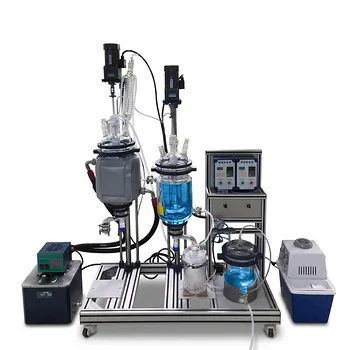
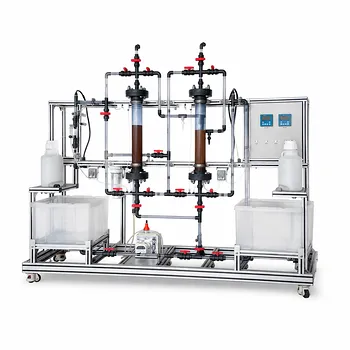
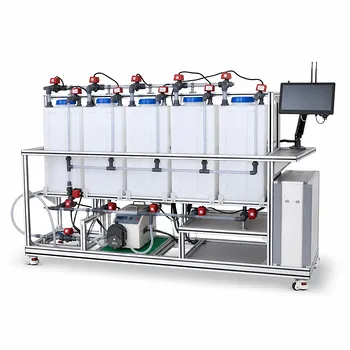
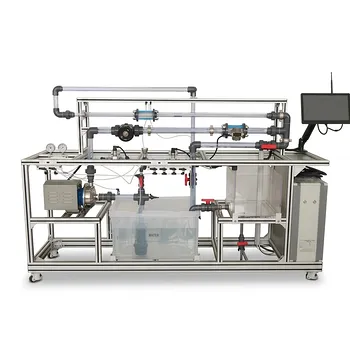
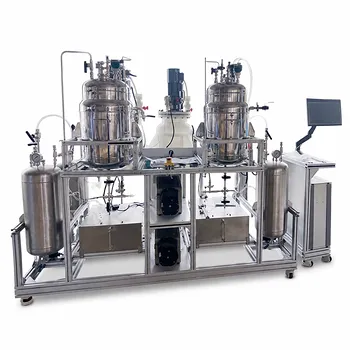
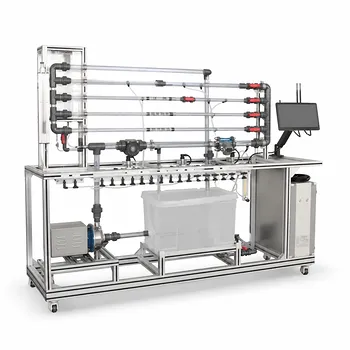
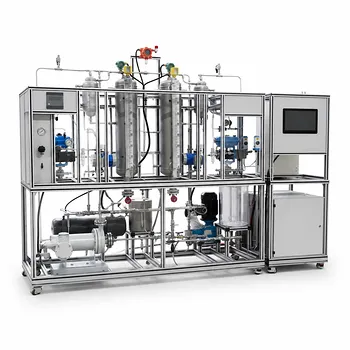
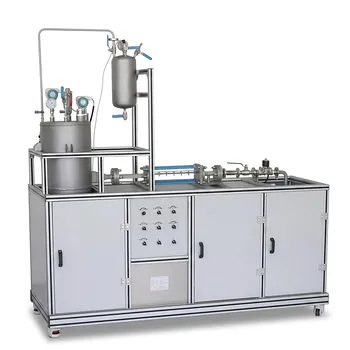
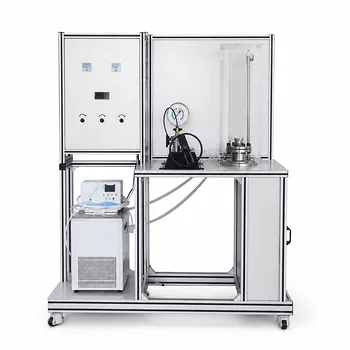
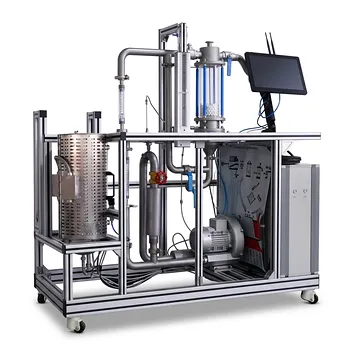
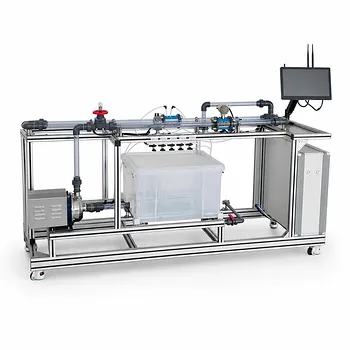
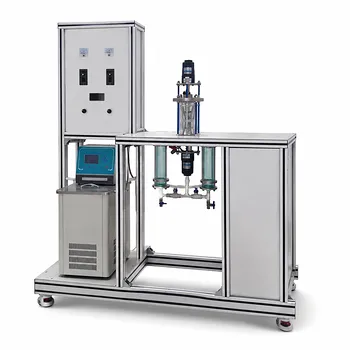
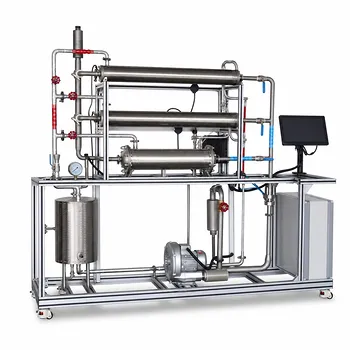
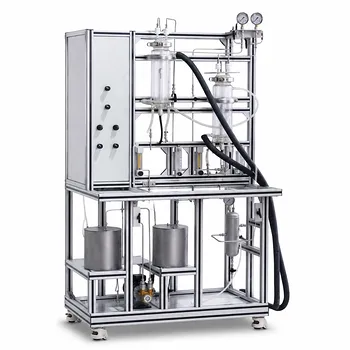
Are you looking to enhance your laboratory diagnostics, optimize water treatment processes, or scale up your engineering curriculum? LABPARK provides state-of-the-art Educational and Vocational Unit Operations Pilot Plants in chemical engineering, bioprocess & biotech, and environmental & water treatment.
We empower universities, research institutes, and enterprises with robust, industrial-grade systems designed to simulate real-world scaling, filtration, and chemical treatment challenges.
Ready to elevate your research and training capabilities? Contact us today to find the perfect pilot plant solution for your organization!
Related Products
- Potassium Salt Thermal Dissolution and Crystallization Separation Educational Unit Operations Pilot Plant
- Ion Exchange Water Purification Educational Pilot Plant for Engineering Unit Operations
- Electrochemical Water Treatment Educational Unit Operations Pilot Plant
- Electrolyte Distillation Purification and Formulation Educational Pilot Plant
- Centrifugal Pump Performance and Orifice Flowmeter Calibration Educational Pilot Plant
People Also Ask
- What are the benefits of integrating online PAT tools like ATR-FTIR into crystallization unit operations pilot plants?
- How do crystallization pilot plants improve student learning? Shift from manual observation to process control.
- Control Crystallization Pilot Plant Secondary Nucleation: 4 Key Adjustments
- Why is precise temperature control critical in crystallization pilot plants? Key to Scale-Up Success
- What key factors should be considered when configuring a crystallization unit operations pilot plant?