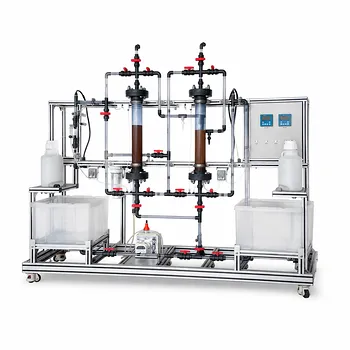
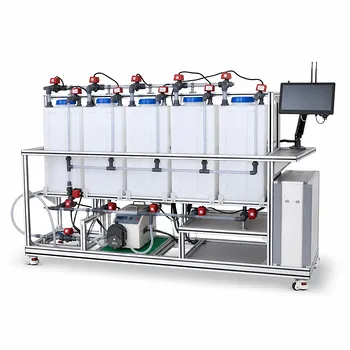
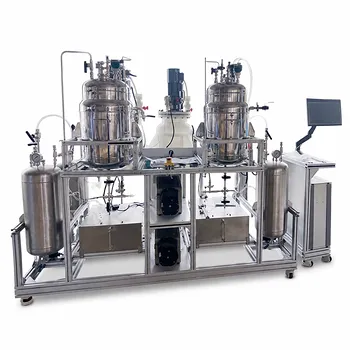
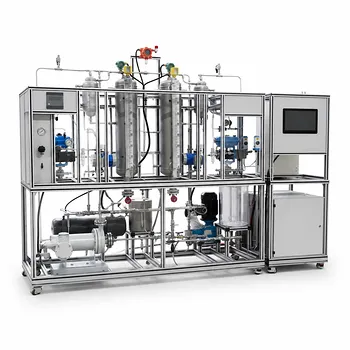
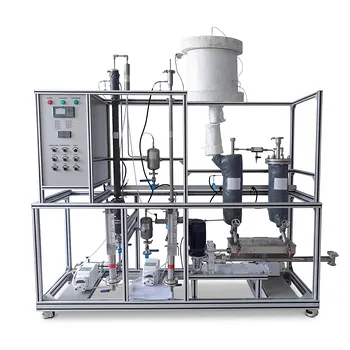
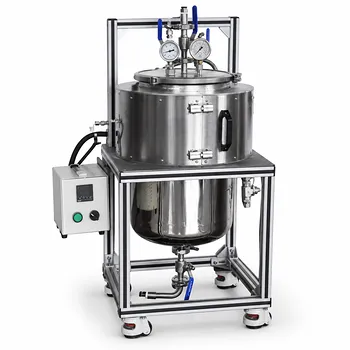
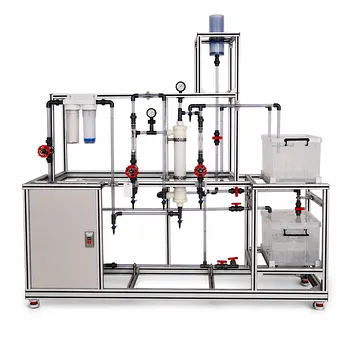
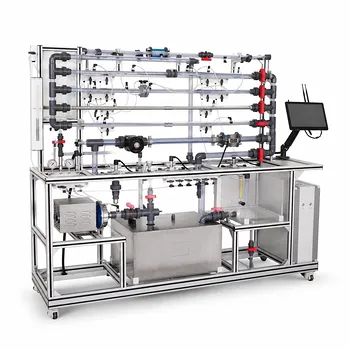
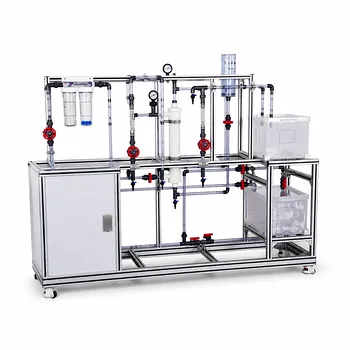
The chemical equilibrium of carbonic acid and calcium carbonate is applied in pilot plants by giving students a hands-on laboratory to measure, model, and manipulate water chemistry. Through real-time monitoring of pH, alkalinity, and dissolved carbon dioxide—and by observing precipitation and scale—learners design effective softening processes like decarbonation and chemical precipitation. These pilot-scale systems transform abstract equilibrium equations into tangible operational skills for industrial water treatment.
Teaching water softening in a pilot plant goes far beyond textbook theory. Students directly correlate changes in pH and alkalinity with calculated (CO_2) concentrations, then use that data to dose chemicals that shift the carbonate equilibrium, intentionally precipitating hardness minerals. This closed-loop experience builds the diagnostic and control intuition required to prevent scaling in full-scale plants.
The Chemical Foundation of Water Softening
Why Calcium Carbonate Dissolution and Precipitation Matters
Carbonate hardness (temporary hardness) stems from dissolved calcium and magnesium bicarbonates. In industrial systems, this leads to insulating scale on heat exchangers and in boilers, dramatically reducing efficiency.
To soften water, operators must convert soluble (Ca^{2+}) and (HCO_3^-) ions into solid (CaCO_3) that can be settled or filtered out. The underlying equilibrium is sensitive to pH, temperature, and dissolved (CO_2) concentration.
The Key Equilibrium and pH-Sensitivity
The core reaction governs scale formation and removal alike: [ Ca^{2+} + 2HCO_3^- \rightleftharpoons CaCO_3\downarrow + H_2CO_3 ]
Increasing pH (by adding a base like lime or soda ash) depletes carbonic acid, converting it to bicarbonate and then to carbonate. The rise in carbonate ion concentration pushes the equilibrium to the right, precipitating (CaCO_3) once the solubility product ((K_{sp} \approx 4.8 \times 10^{-9})) is exceeded.
Conversely, low pH conditions—often from dissolved (CO_2)—shift the equilibrium left, keeping calcium in solution and potentially causing corrosion. This tight coupling between pH and carbonate speciation is the analytical entry point used in pilot plants.
The Pilot Plant as a Learning Instrument
From pH and Alkalinity to Actionable Water Chemistry
In a pilot plant, the first hands-on step is determining total alkalinity (M-alkalinity) via acid titration with a mixed indicator (e.g., methyl red‑bromocresol green). This measures the water’s buffering capacity from carbonates, bicarbonates, and hydroxides.
Paired with a high-accuracy pH measurement, students calculate the concentration of dissolved (CO_2) in the useful process range of pH 5.3–8.2. That number is not trivial—it defines the chemical demand for softening. For example, excess (CO_2) must be neutralized before you can effectively precipitate calcium carbonate.
Designing and Validating a Softening Strategy
Once initial water characteristics are known (pH, calcium hardness, total carbonates), students apply equilibrium constants to model dosing. Using the solubility product of calcium carbonate and the second dissociation constant of carbonic acid ((K_{a2} = 4.7 \times 10^{-11})), they calculate the residual soluble calcium at a target pH—say from 4.5 to 8.5.
The difference between initial and residual calcium directly yields the mass of calcium carbonate that will precipitate. This allows students to compute the exact daily dosage of sodium carbonate (or lime) based on the pilot plant’s feed flow rate. They then set up a chemical dosing system, treat a batch of water, and compare predicted versus actual precipitate, tuning the model in real time.
Observing Process Kinetics and Unit Operations
Beyond chemistry calculation, pilot plants reveal the engineering side of softening: mixing intensity, hydraulic retention time, flocculation, and sedimentation. Typical configurations include rapid-mix coagulation, flocculation basins, and settling tanks.
Students run jar tests to visualize how lime reacts with bicarbonates, then scale up to continuous-flow pilots. They monitor sludge accumulation, measure settling velocities, and adjust pH post-treatment. To simulate real-world distribution challenges, they may even dose sodium hexametaphosphate downstream to prevent post-precipitation scale—linking equilibrium theory to plant-wide scale management.
Calibrating Automation with Manual Baselines
Pilot plants increasingly rely on online pH sensors and automated dosing pumps. The titration-based alkalinity determination serves as the manual gold standard. Students learn to compare their calculated equilibrium-based expectations with sensor readings, identifying drift or calibration errors. This feedback loop is essential for configuring reliable, unattended softening systems in actual treatment plants.
Understanding the Trade-offs and Common Pitfalls
The Limits of pH-Driven Precipitation
While increasing pH efficiently removes calcium carbonate, magnesium hardness requires higher pH to precipitate as (Mg(OH)_2). Over-dosing lime can raise pH excessively, leading to post-precipitation sludge and elevated chemical costs. Pilot plant runs demonstrate these boundaries concretely—when a slight overdosing creates a sludge that overflows the settling tank, the lesson sticks.
Sludge Handling and Environmental Considerations
Chemical softening generates a waste stream of carbonate sludge. Pilot plants make this unavoidable issue visible, forcing students to consider dewatering, disposal volume, and potential recovery. Neglecting sludge management is one of the most common scale-up failures in industrial water treatment.
Temperature and Kinetic Realities
Equilibrium calculations assume steady-state conditions, yet cold water slows reaction rates. In pilot plants, students see that theoretical residence times may be insufficient in winter, requiring operational adjustments. This practical insight tempers textbook equilibrium with real-world thermodynamics and mass transfer.
Making the Right Choice for Your Teaching or Pilot Plant Goal
Depending on your educational objective, you can adapt how deeply you incorporate the carbonic acid/calcium carbonate equilibrium.
- If your primary focus is fundamental water chemistry: Prioritize manual alkalinity titrations and pH‑based (CO_2) calculations. Let students plot the carbonate species distribution diagram and see the equilibrium shift firsthand.
- If your primary focus is industrial operator training: Center the pilot plant experience on precise dosage calculation, precipitation prediction, and sludge management—linking chemical equilibrium constants directly to pump stroke settings and operating cost.
- If your primary focus is process control and automation: Use the equilibrium model as the setpoint logic. Have students calibrate online pH sensors against manual titrations and program a dosing algorithm that targets a pre-calculated residual calcium concentration.
By treating the pilot plant not as a simple demo but as a calibrated analytical tool, you transform the abstract equilibrium of carbonic acid and calcium carbonate into a powerful, repeatable method for teaching real-world water softening.
Summary Table:
| Key Parameter / Stage | Operational Action | Educational & Practical Outcome |
|---|---|---|
| Carbonate Equilibrium | pH adjustment & chemical dosing | Triggers precipitation of calcium carbonate hardness |
| Alkalinity & pH | Manual titration & online sensing | Calculates dissolved CO2 & calibrates automation systems |
| Process Kinetics | Jar tests & settling basin runs | Teaches retention time, hydraulic flow, & sludge management |
Elevate Your Engineering Lab with LABPARK
Ready to bridge the gap between chemical equilibrium theory and industrial water treatment practice?
LABPARK provides state-of-the-art Educational and Vocational Unit Operations Pilot Plants in:
- Environmental & Water Treatment (including water softening, filtration, and sedimentation)
- Chemical Engineering
- Bioprocess & Biotech
We help universities, research institutes, and enterprises build hands-on competency, improve operator training, and scale up research with reliable, industrial-grade pilot systems.
Contact LABPARK today to discuss your lab requirements!
Related Products
- Ion Exchange Water Purification Educational Pilot Plant for Engineering Unit Operations
- Electrochemical Water Treatment Educational Unit Operations Pilot Plant
- Water Electrolysis Hydrogen Production and Storage Educational Pilot Plant
- Alkaline Membrane Water Electrolysis Educational Pilot Plant Unit Operations Training System
- Multi-Functional Special Distillation Educational Pilot Plant
People Also Ask
- How to Prevent Ion Exchange Channeling? Expert Solutions for Pilot Plants
- How does ion exchange work in water treatment pilot plants? Cost & process guide.
- What operational precautions should lab operators take for resin volume changes and air pockets? Key Guide
- How to use ion exchange pilot plants to verify alkalinity? A hands-on guide for engineering students.
- Why does iron degrade cation resin & how to demonstrate capacity recovery? Step-by-Step Lab Guide