The selection of working potential and electrode modification directly dictates whether your biosensor will be highly selective or crippled by interference, and whether its response time is fast enough for real-time control.
For hydrogen peroxide-based biosensors in pilot plants, using a traditional platinum electrode at a high oxidizing potential (0.6–0.7 V) triggers the oxidation of interfering species like ascorbic acid and uric acid, severely compromising selectivity. In contrast, modifying the electrode surface—for example, with a poly(anilinomethylferrocene) film on glassy carbon—shifts the detection to a low-potential reduction (-50 mV). This dramatically minimizes interference while maintaining a fast response time because it eliminates the need for thick, diffusion-slowing membranes.
Core Takeaway: Your choice of electrode modification and working potential is a master switch. High-potential oxidation on bare platinum demands a painful trade-off between selectivity and speed. Low-potential reduction on a purpose-modified electrode solves this conflict at its root, delivering both the clean signal and the rapid response that dynamic bioprocess monitoring demands.
The Fundamental Challenge: Balancing Selectivity and Speed
Bioprocess media are complex soups of nutrients, metabolites, and cells. Any H₂O₂ sensor you deploy must cope with electroactive contaminants while delivering data fast enough to enable process control.
The Drawbacks of Traditional Platinum Electrodes at High Potential
Standard amperometric enzyme electrodes rely on a platinum working electrode held at 0.6–0.7 V vs. Ag/AgCl. At this potential, H₂O₂ oxidizes readily, giving a measurable current. However, this high potential is non-selective: it also oxidizes common biological reducing agents such as ascorbic acid and uric acid.
The resulting parasitic current masquerades as H₂O₂ signal, making it impossible to distinguish the target analyte from background noise. Selectivity collapses. For a pilot plant where media composition varies, this leads to false readings and flawed process decisions.
The Trade-off: Membranes for Selectivity vs. Diffusion-Limited Response Time
To compensate, many designs layer a thick, perm-selective membrane over the platinum. The membrane blocks larger interfering molecules while allowing smaller H₂O₂ to pass. This restores some selectivity, but at a steep cost.
That barrier introduces significant diffusion resistance. H₂O₂ molecules now need more time to travel from the bulk solution to the electrode surface. The result is a sluggish response time—often seconds or tens of seconds longer than the naked electrode. In a fast-evolving bioprocess, that lag can cause you to miss critical peaks or overdosing events.
A Modern Solution: Electrode Modification for Low-Potential Detection
An electrode modification strategy breaks this classic trade-off by changing the fundamental electrochemistry.
How Poly(anilinomethylferrocene) Coatings Shift the Operating Potential
Rather than oxidizing H₂O₂ at a high voltage, a poly(anilinomethylferrocene) film applied to a glassy carbon electrode enables the electroreduction of H₂O₂. Crucially, this reduction occurs at a dramatically lower potential—down to -50 mV vs. Ag/AgCl.
This shift isn’t incremental; it’s transformative. By moving the operating potential into a range where few biologically relevant molecules are electroactive, the sensor simply stops “seeing” most interferents. The polymer coating acts as both an electrocatalyst and a permselective gate.
Achieving High Selectivity Without Sacrificing Speed
Because the low-potential reduction is inherently selective, you no longer need a thick, diffusion-hindering membrane to block interferents. You can use a thin, fast-responding barrier—or even operate with the modified surface directly exposed to the sample in some configurations.
The outcome is dual: high selectivity (minimal interference from oxygen, ascorbic acid, and other electroactive compounds) and a fast response time that reflects the true dynamics of H₂O₂ concentration in the bioreactor. For pilot-plant teams, this means real-time data you can trust without compromise.
Understanding the Trade-offs
No solution is perfect. The modified electrode brings its own set of boundary conditions you must respect.
The pH-Current Relationship and Enzyme Compatibility
The cathodic response of the poly(anilinomethylferrocene) film increases as the pH decreases, because the polyaniline backbone becomes more conductive in acidic environments. If you were measuring pure H₂O₂, you’d favor a low pH.
However, in a biosensor, enzymes like glucose oxidase are co-immobilized on the surface. Their activity typically peaks between pH 5.5 and 6.0. Operating far below this range would boost the polymer’s signal but crush the enzyme’s activity, reducing overall sensitivity. Therefore, you must select an operating pH that balances polymer conductivity with enzymatic turnover—usually around the enzyme’s optimum. This balancing act is not required for bare platinum electrodes, but the overall performance gain still heavily favors the modified design.
Stability and Long Runs
For extended pilot-plant campaigns, you also need to consider lifetime. While the primary reference shows the modified electrode delivers rapid, selective response, supplementary research on optical sensors reveals that prolonged chemical exposure can slowly degrade sensor elements—for instance, dye protonation can limit continuous monitoring after 20–100 hours.
Though electrochemical H₂O₂ sensors are generally more robust, any surface modification or enzyme layer can exhibit drift over time. Calibration protocols and periodic sensor renewal are prudent, especially in multi-day continuous cultivations. The key advantage remains: you start with a fast, selective baseline, which makes any correction simpler than compensating for an inherently slow, noisy system.
Making the Right Choice for Your Pilot Plant Goal
Your specific monitoring priority will determine the optimal setup.
- If your primary focus is maximum selectivity in a variable media: Choose the poly(anilinomethylferrocene) modified electrode at a low reduction potential. It inherently sidesteps the interference that plagues high-voltage platinum, delivering a clean H₂O₂ signal without aggressive membrane layers.
- If your primary focus is fast response time for process control: Again, the modified electrode wins. Eliminating the thick, diffusion-limiting membrane restores a sub-second to few-second response, letting your control automation react to transients in near real time.
- If your primary focus is a simple, low-cost setup with stable media: A traditional platinum electrode with a well-chosen membrane can suffice if your broth composition is constant and no fast dynamics need to be tracked. Be prepared to accept the slower response and occasional interference.
The choice of working potential and electrode modification is not a minor technical detail—it is the single decision that determines whether your H₂O₂ biosensor becomes a precise, responsive instrument or a bottleneck in your bioprocess development.
Summary Table:
| Feature | Traditional Pt Electrode | Modified Electrode (Polymer-Coated) |
|---|---|---|
| Working Potential | High oxidizing potential (0.6–0.7 V vs. Ag/AgCl) | Low reduction potential (-50 mV vs. Ag/AgCl) |
| Selectivity | Low (highly susceptible to ascorbic & uric acid interference) | High (inherently avoids common electroactive interferents) |
| Response Time | Sluggish (requires thick diffusion-barrier membrane) | Fast (operates with thin membrane or exposed surface) |
| Main Trade-offs | Severe trade-off between selectivity and response speed | Requires balancing pH for polymer and enzyme activity |
Elevate Your Bioprocess & Biotech Experiments with LABPARK
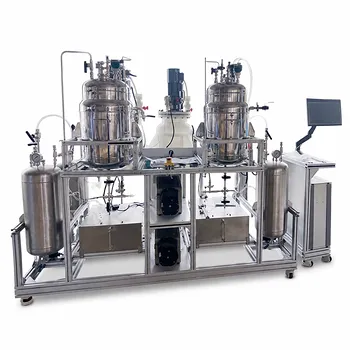
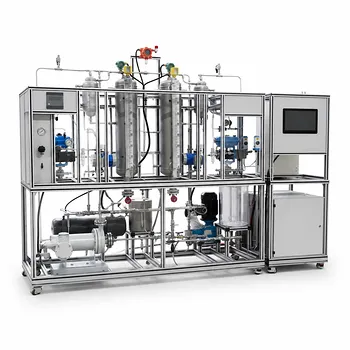
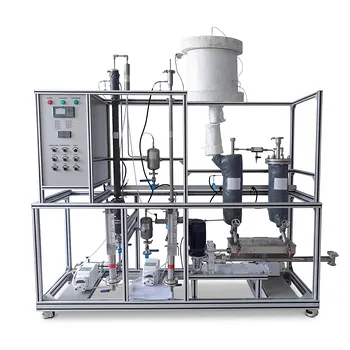
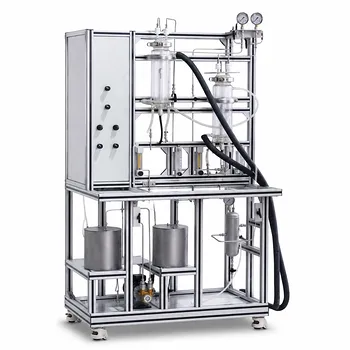
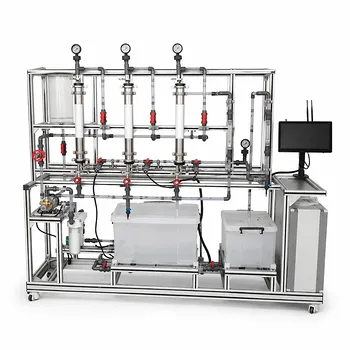
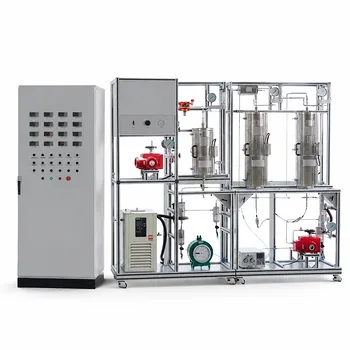
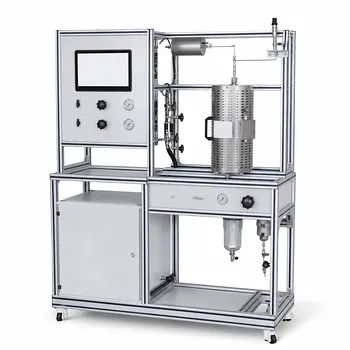
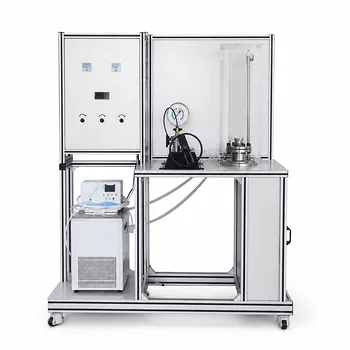
Scaling up biological processes requires precise monitoring and reliable pilot equipment. LABPARK provides state-of-the-art Educational and Vocational Unit Operations Pilot Plants in chemical engineering, bioprocess & biotech, and environmental & water treatment tailored for universities, research institutes, and enterprises.
Whether you are designing advanced electrochemical biosensors or optimizing bioreactor kinetics, our custom pilot solutions deliver the exact control, accuracy, and scalability your research demands.
Ready to upgrade your laboratory or training facility infrastructure? Contact LABPARK today to consult with our engineering experts and request a custom quote!
Related Products
- Electrolytic Hydrogen Production Educational Unit Operations Pilot Plant
- Water Electrolysis Hydrogen Production and Storage Educational Pilot Plant
- 100L Continuous Loop Hydrogenation Educational Unit Operations Pilot Plant
- Alkaline Membrane Water Electrolysis Educational Pilot Plant Unit Operations Training System
- Steam Methane Reforming Hydrogen Production and Purification Educational Pilot Plant
People Also Ask
- How do educational unit operations pilot plants address safety and waste management when scaling up?
- How do educational unit operations pilot plants bridge theory and design? Bridge the Engineering Gap
- Why is the chemical plant startup schedule crucial? De-risk scale-up with pilot plants.
- When to transition from PID to adaptive control in pilot plants? Key process indicators.
- How to study gasification in pilot plants? Compare exit gas composition & efficiency