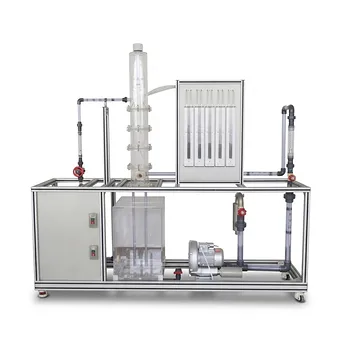
When an absorption column's temperature and liquid-to-gas ratios shift dramatically from tray to tray, the simple shortcut methods break down. The Edmister method steps in as a practical shortcut by condensing all that internal variation into a single effective absorption factor, calculated from conditions at only the top and bottom of the column.
The core advantage of the Edmister method is that it lets you accurately predict non-isothermal, variable-flow column performance without tedious stage-by-stage iterative calculations. It replaces a whole column of changing absorption factors with one equivalent factor derived exclusively from inlet and outlet data.
The Inherent Challenge with Variable Profiles
In many real absorbers — especially those handling high-concentration solutes or multicomponent mixtures — flow rates and temperature are never constant. As gas dissolves and heat is released, the liquid-to-gas ratio (L/G) and the equilibrium constant (K) change on every stage.
Why Constant Absorption Factors Fail
The classic Kremser equation assumes a constant absorption factor A = L/(KG) throughout the column. When L and G fluctuate and temperature alters K, a single stage-based A cannot capture the true mass-transfer driving force. Using a simple average factor in Kremser leads to significant error in the predicted outlet compositions.
The Real-World Complexity
A rigorous stage-by-stage model would require energy and material balances for every tray, along with vapor-liquid equilibrium recalculations. That iterative process is time-consuming, especially during early-stage design, pilot-plant data interpretation, or when exploring multiple operating scenarios.
How the Edmister Method Simplifies the Analysis
Instead of grinding through every stage, the Edmister method wraps all the variation into a single effective absorption factor (A_e). This effective factor, when plugged into the standard Kremser-type equations, yields a very good approximation of the column’s overall performance.
The Effective Absorption Factor
The method defines A_e based solely on the absorption factors at the top tray (A₁) and the bottom tray (A_N):
A_e = [A_N(A_1 + 1) + 0.25]^0.5 – 0.5
An analogous expression gives the effective stripping factor S_e for stripping calculations. These formulas inherently account for the profiling of flows and temperature by weighting the extremes of the column.
Leveraging Top and Bottom Data Only
You need to compute A only twice — at the inlet gas/liquid conditions and at the outlet gas/liquid conditions. Even though the interior changes are complex, the Edmister factor mathematically approximates their cumulative effect. This eliminates the need for internal stage profiles and cuts computational effort drastically.
Practical Use in Pilot Plants and Research
In pilot-scale columns, where instruments directly measure terminal compositions, the Edmister method allows engineers to back-calculate an effective factor, validate the column’s separation efficiency, or quickly size a full-scale tower. It’s the go-to shortcut when you have reliable endpoint data but want to avoid a full-blown simulation.
Understanding the Trade-offs
No shortcut is perfect. The Edmister method trades a bit of precision for enormous simplicity, and knowing its boundaries builds your confidence in the results.
Approximation, Not Rigorous Simulation
The effective factor formula is semi-empirical; it works by mimicking the behavior of a column with a linearly varying absorption factor. If your column’s flow and temperature profiles are highly non-linear — for example, when a strong heat effect creates a sharp pinch zone — the predicted outcome may drift from reality.
When Accuracy Demands Rigor
For final detailed engineering, safety-critical separations, or columns with multiple feeds and side-streams, a stage-by-stage simulator remains mandatory. The Edmister method shines in the front-end design, feasibility studies, and quick troubleshooting phases, not as a replacement for full rigor.
Making the Right Choice for Your Analysis
The decision between Edmister and a rigorous stage-by-stage method depends entirely on your goal and the accuracy you need.
- If your primary focus is early-stage design or quick performance estimates: Use the Edmister method to get a reliable answer in seconds from terminal data, and avoid the setup cost of a full simulator.
- If your primary focus is pilot-plant data reconciliation with limited internal measurements: Apply the effective absorption factor to match overall recovery and identify whether the observed separation is consistent with expectation.
- If your primary focus is final equipment sizing or a column with extremely sharp temperature gradients: Rely on stage-by-stage rigorous simulation to capture non-linear effects the shortcut may miss.
By understanding what the Edmister factor truly represents, you can move fast when speed matters and switch to rigor only when necessary.
Summary Table:
| Feature | Edmister Method | Rigorous Stage-by-Stage |
|---|---|---|
| Data Required | Terminal conditions only (top & bottom) | Material & energy balances for every stage |
| Calculation Effort | Very low (shortcut formula, no iteration) | High (iterative VLE calculations) |
| Accuracy | Good approximation (assumes linear profile) | High precision (captures non-linear pinch zones) |
| Best Application | Feasibility studies, quick troubleshooting | Final design, safety-critical sizing |
Validate Theory with LABPARK Unit Operations Pilot Plants
Transitioning from shortcut calculations like the Edmister method to real-world applications requires reliable experimental validation. LABPARK designs and manufactures premium Educational and Vocational Unit Operations Pilot Plants in chemical engineering, bioprocess & biotech, and environmental & water treatment.
We help universities, research institutes, and enterprises bridge the gap between classroom theory and industrial reality with hands-on, high-quality pilot systems. Ready to elevate your laboratory’s training and research capabilities? Contact us today to explore our tailored pilot plant solutions!
Related Products
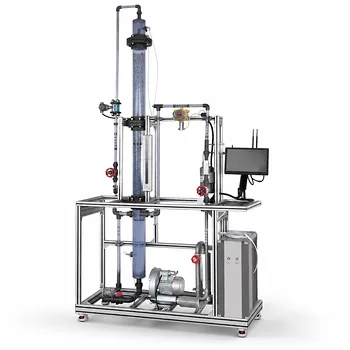
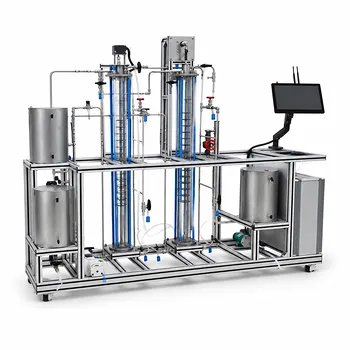
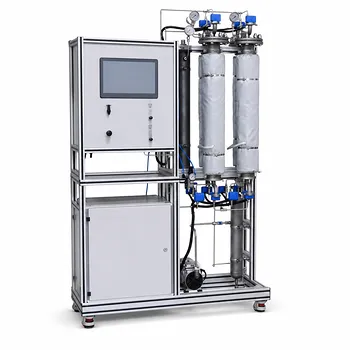
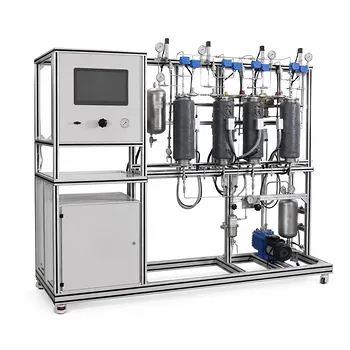
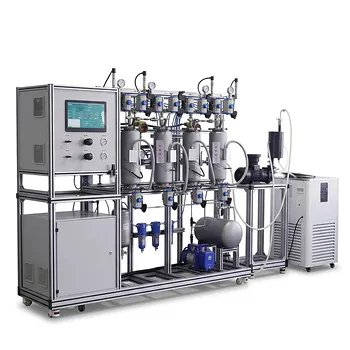
- Packed Bed Absorption Educational Unit Operations Pilot Plant
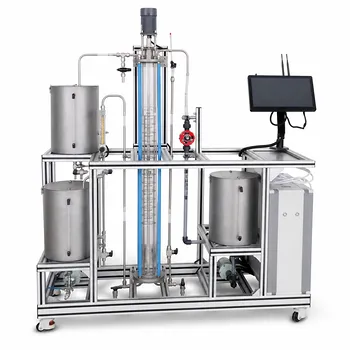
- Absorption and Desorption Educational Unit Operations Pilot Plant
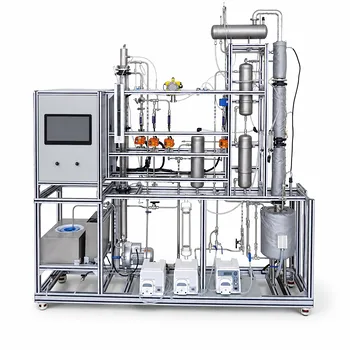
- Multimodal Absorption and Desorption Pilot Plant for Unit Operations Training
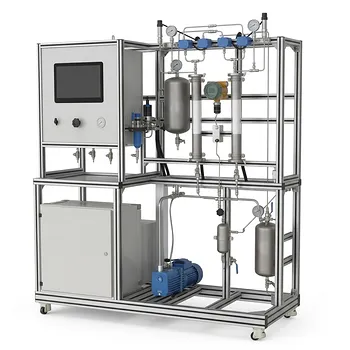
- Pressure Swing Adsorption Educational Unit Operations Pilot Plant
- Bench Scale Dual Column Gas Separation and Capture Educational Pilot Plant
People Also Ask
- How Do Flow Regimes Transition in Packed Bed Pilot Plants? Key Scale-up Insights
- How does reactant concentration determine absorption column control? Gas-film vs. dual-film.
- How is the packing height of an absorption column calculated? Master HTU & NTU Concepts
- How does static vs. operating holdup affect pilot plant calibration? Avoid Critical Scale-Up Errors
- Why is counter-current flow selected for gas absorption? Maximize Pilot Plant Efficiency