Knowledge Environmental and Water Treatment Education How does NF compare to UF and RO? Why pilot plants are key to process design
Author avatar

Tech Team · LABPARK

Updated 1 month ago

How does NF compare to UF and RO? Why pilot plants are key to process design


NF occupies a distinct middle ground between UF and RO. It rejects divalent ions and organic molecules in the 200–1000 Dalton range while letting monovalent salts pass through, making it ideal for selective softening and partial desalination. Membrane pilot plants are not optional extras—they are the only reliable way to measure real-world flux, fouling behavior, and pre-treatment demands before a full-scale facility is built.

Wastewater is never a pure laboratory solution. The true value of a pilot plant lies in its ability to expose the gap between a membrane’s idealized specifications and its performance on a real, variable feed—turning a risky capital decision into a predictable, optimized design.

Understanding the Membrane Filtration Spectrum

Pore Size and Separation Mechanisms

Membrane processes form a gradient of selectivity. At the loose end, ultrafiltration (UF) uses pores of 2–100 nm to sieve out colloids, proteins, bacteria, and viruses. It relies on size exclusion and operates at low pressure (1–10 bar).

Nanofiltration (NF) tightens the barrier to approximately 1 nm, functioning through a combination of size sieving and charge interaction. This dual mechanism allows it to reject multivalent ions (like calcium and sulfate) while allowing many monovalent ions (like sodium and chloride) to pass.

Reverse osmosis (RO) employs dense, non-porous membranes with effective openings below 1 nm. It operates at high pressure (10–80 bar) and rejects nearly all dissolved solids, including monovalent salts, heavy metals, and organic micropollutants.

What Each Technology Removes

UF is a particulate and microbial barrier. It excels at removing turbidity, suspended solids, colloids, and pathogens like bacteria and viruses. It does not remove dissolved salts or small organic molecules.

NF is the selective softener. With a molecular weight cut-off (MWCO) between 100 and 1000 Daltons, it removes divalent ions (Ca²⁺, Mg²⁺, SO₄²⁻) at 90–98% rejection while monovalent ions (Na⁺, Cl⁻) are rejected at only 20–80%. This makes NF effective for TDS reduction, organic-inorganic separation, and producing usable permeate without full desalination.

RO is the total dissolved solids barrier. It rejects monovalent salts, heavy metals like arsenic, fluorides, and even small organic compounds. RO is the choice when the goal is high-purity water or meeting the strictest discharge limits.

Why a Pilot Plant is Non-Negotiable for Process Design

Validating Flux and Rejection Under Real Conditions

Membrane data sheets are based on standard test waters. Wastewater streams contain variable mixtures of hardness, organics, silica, and biological activity. A pilot plant reveals the actual permeate flux and specific ion rejection your membrane will achieve on your water—not just on deionized salt solutions.

Uncovering Fouling Propensity and Pre-treatment Needs

Fouling is the primary cause of performance loss. A pilot unit exposes how quickly organic, colloidal, or scaling foulants accumulate on the membrane surface. This lets you quantify the resulting flux decline, test different cleaning protocols, and define the exact pre-treatment—such as upstream UF, anti-scalant dosing, or pH adjustment—required to protect the membrane investment.

Optimizing Energy and Operating Pressure

The pressure you choose directly impacts lifecycle cost. NF membranes operate between 3.5 and 16 bar (50–225 PSI), while RO systems require significantly higher driving force. By testing incremental pressure steps, a pilot plant identifies the lowest viable trans-membrane pressure that meets your separation targets, minimizing energy consumption and preserving membrane life.

De-risking Capital Investment

Scale-up from laboratory data alone is financially dangerous. A pilot plant lets you confirm long-term membrane integrity, clean-in-place (CIP) frequency, and the stability of rejection profiles over time. This data feeds directly into accurate sizing of pumps, vessels, and pre-treatment systems, turning a full-scale design into a predictable asset rather than an expensive experiment.

Understanding the Trade-offs

UF is an incomplete solution for dissolved contaminants. While it protects downstream membranes and removes pathogens beautifully, it cannot address salinity, hardness, or dissolved organic carbon on its own.

NF offers selective removal, not total desalination. Its partial monovalent passage is a strength when you need to reduce hardness without producing brine with the same intensity as RO. However, if your discharge permit demands near-zero salinity or you must remove specific monovalent contaminants like nitrate or arsenic, NF alone will be insufficient.

RO delivers purity at a cost premium. The high rejection capability of RO comes with higher energy demands, more intensive pre-treatment, and a greater fouling risk due to the concentration of all species at the membrane surface. Its complete desalination is over engineering if your goal is simply to lower TDS or soften water.

Making the Right Choice for Your Wastewater Treatment Goal

At every stage, the correct membrane choice hinges on what you need to keep out—and what you can afford to let through. Pilot testing is the only way to confirm that choice under your unique conditions.

  • If your primary focus is removing hardness and moderately reducing TDS: Use NF. Its selective divalent rejection softens water while avoiding the high energy and brine disposal burdens of RO.
  • If your primary focus is producing high-purity water or meeting strict limits for monovalent salts and heavy metals: Choose RO. It is the only option for complete desalination, but you must budget for robust pre-treatment and higher operating pressure.
  • If your primary focus is protecting downstream NF or RO from suspended solids and colloids: Integrate UF as a pre-treatment step. This hybrid configuration sharply reduces fouling potential and extends the life of the tighter membranes.

By letting a carefully designed pilot study reveal how these membranes truly interact with your specific waste stream, you move from assumption to certainty—and build a treatment plant that performs exactly as promised.

Summary Table:

Membrane Type Pore Size / MWCO Key Rejections Operating Pressure
Ultrafiltration (UF) 2–100 nm Suspended solids, colloids, bacteria, and viruses 1–10 bar (Low)
Nanofiltration (NF) ~1 nm (100–1000 Da) Divalent ions (Ca²⁺, Mg²⁺), organic molecules, partial monovalent salts 3.5–16 bar (Medium)
Reverse Osmosis (RO) <1 nm Almost all dissolved solids, monovalent salts, heavy metals 10–80 bar (High)

Scale Up with Confidence using LABPARK Pilot Plants

Designing membrane separation processes requires reliable real-world data to prevent costly scaling errors. LABPARK provides premium Educational and Vocational Unit Operations Pilot Plants in chemical engineering, bioprocess & biotech, and environmental & water treatment.

Engineered specifically for universities, research institutes, and enterprises, our pilot plants allow you to accurately measure flux, analyze fouling behavior, and optimize operating pressures before full-scale implementation.

Ready to de-risk your process design? Contact LABPARK today to explore our pilot plant solutions!

Related Products

People Also Ask

Related Products

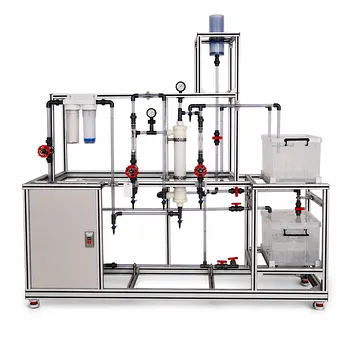
Multifunctional Membrane Separation Educational Pilot Plant with Ultrafiltration, Nanofiltration, Reverse Osmosis

Multifunctional Membrane Separation Educational Pilot Plant with Ultrafiltration, Nanofiltration, Reverse Osmosis

An integrated laboratory bench-scale membrane separation system for higher education engineering labs combining Ultrafiltration, Nanofiltration, and Reverse Osmosis processes. Features industrial PLC control with touch-screen HMI, transparent piping, and academic assessment software. Ideal for chemical and environmental engineering curricula.

Ultrafiltration Membrane Separation Educational Pilot Plant

Ultrafiltration Membrane Separation Educational Pilot Plant

This ultrafiltration membrane separation educational pilot plant enables undergraduate students to process PVA solutions, study hollow fiber membrane dynamics, and perform quantitative analysis with spectrophotometry for hands-on learning of unit operations and industrial maintenance and membrane cleaning protocols.

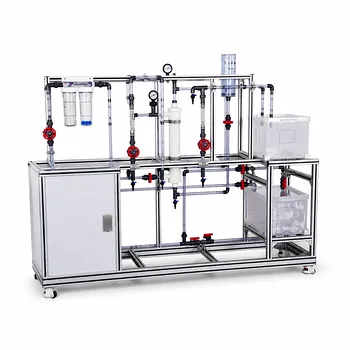
Multi-Functional Membrane Separation Educational Pilot Plant for Unit Operations Lab

Multi-Functional Membrane Separation Educational Pilot Plant for Unit Operations Lab

The Multi-functional Membrane Separation Educational Unit Operations Pilot Plant is an integrated bench-scale laboratory system designed for teaching undergraduate engineering education. It features Ultrafiltration, Nanofiltration, and Reverse Osmosis modules in a compact, mobile unit for practical hands-on learning.

Hollow Fiber Ultrafiltration Membrane Separation Educational Pilot Plant

Hollow Fiber Ultrafiltration Membrane Separation Educational Pilot Plant

Explore our hollow fiber ultrafiltration membrane separation educational pilot plant for hands-on learning of industrial ultrafiltration processes, flux analysis, fouling mitigation, and process control. Compact, customizable, and built for engineering labs.

Photocatalytic Membrane Separation and Degradation Unit Operations Pilot Plant

Photocatalytic Membrane Separation and Degradation Unit Operations Pilot Plant

Bench-scale pilot plant integrating photocatalytic degradation with membrane separation for engineering education. Study advanced oxidation, microfiltration, and hybrid processes using industrial sensors. Features safety light-blocking curtain, low-noise compressor, and durable stainless-steel construction.

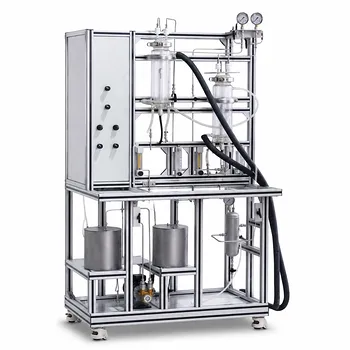
Multi Functional Membrane Crystallization Educational Unit Operations Pilot Plant

Multi Functional Membrane Crystallization Educational Unit Operations Pilot Plant

Integrated bench-scale membrane crystallization pilot plant for engineering education. Provides hands-on training in advanced separation technologies, combining membrane distillation crystallization and process intensification. Features variable scaling vessels, industrial-grade flow control, and interactive digital data acquisition. Customizable for university labs.

Alkaline Membrane Water Electrolysis Educational Pilot Plant Unit Operations Training System

Alkaline Membrane Water Electrolysis Educational Pilot Plant Unit Operations Training System

Hands-on educational pilot plant for alkaline membrane water electrolysis hydrogen production, integrating unit operations training with industrial PLC control, real-time data logging, customizable design, durable 316L stainless steel construction, explosion-proof safety, and modern 5G connectivity for university laboratories.

Bench Scale Dual Column Gas Separation and Capture Educational Pilot Plant

Bench Scale Dual Column Gas Separation and Capture Educational Pilot Plant

This dual-column educational pilot plant provides hands-on teaching of gas adsorption, separation, and capture processes. It features stainless steel columns, regeneration up to 400°C, and a 15.6-inch touchscreen PLC for TSA and PSA studies in chemical engineering curricula, process simulation.

Gas-Solid Heterogeneous Separation Demonstration Educational Unit Operations Pilot Plant

Gas-Solid Heterogeneous Separation Demonstration Educational Unit Operations Pilot Plant

Comprehensive visual transparent gas-solid separation pilot plant for chemical engineering labs. Demonstrates gravity settling inertial settling cyclone and bag filter technologies. Enables real-time analysis of fluid-particle mechanics pressure drop and collection efficiency. Ideal for undergraduate unit operations courses.

Carbon Material Thermal Pretreatment Multiphase Separation Educational Pilot Plant

Carbon Material Thermal Pretreatment Multiphase Separation Educational Pilot Plant

Educational pilot plant for carbon material thermal pretreatment and multiphase separation. Features jacketed agitated reactor, separation column, and modern controls for hands-on unit operations training in heat transfer, fluid flow, and process safety with industrial-grade materials and wireless data acquisition.

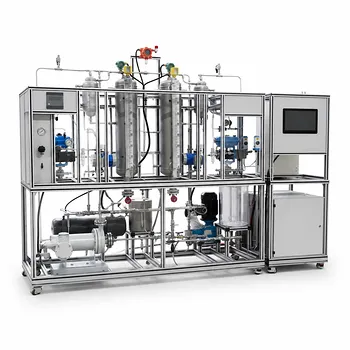
Multi-Component Gas Pressure Swing Adsorption Pilot Plant for Unit Operations Education

Multi-Component Gas Pressure Swing Adsorption Pilot Plant for Unit Operations Education

Multi-component gas pressure swing adsorption pilot plant designed for unit operations education. Features four-tower configuration, IoT touchscreen control, dual regeneration, and real-time breakthrough curve analysis for engineering training with safety interlocks and mobile frame simulates industrial PSA processes.

Pressure Swing Adsorption Educational Unit Operations Pilot Plant

Pressure Swing Adsorption Educational Unit Operations Pilot Plant

Integrated bench-scale pressure swing adsorption pilot plant for hands-on teaching of gas-solid separation, mass transfer, and process optimization using nitrogen-oxygen model, featuring dual-column design, industrial touchscreen control, digital assessment suite, and customizable hardware and software configurations for educational laboratories.

Educational Pressure Swing Adsorption Ethylene Capture Unit Operations Pilot Plant

Educational Pressure Swing Adsorption Ethylene Capture Unit Operations Pilot Plant

Advanced educational pilot plant for pressure swing adsorption ethylene capture provides comprehensive hands-on training in industrial gas separation processes, featuring an eight-column PSA system, real-time data acquisition, and fully customizable design for chemical engineering unit operations laboratories and research.

Bio-fermentation Ethanol Production Practical Training Unit Operations Pilot Plant

Bio-fermentation Ethanol Production Practical Training Unit Operations Pilot Plant

Bio-fermentation ethanol production pilot plant for hands-on training in unit operations: fermentation, solid-liquid filtration, membrane separation, and distillation. Bridges theory with industrial practice using industrial-grade components, customizable for university labs. Hybrid automated and manual control for comprehensive learning.

Natural Product Extraction Unit Operations Training Pilot Plant

Natural Product Extraction Unit Operations Training Pilot Plant

Integrated natural product extraction pilot plant for chemical engineering training bridges theory and industrial practice with modular extraction and evaporation/concentration units, hybrid touchscreen and manual control, realistic process simulation, and self-contained softened water and vacuum utilities.

Absorption and Desorption Educational Unit Operations Pilot Plant

Absorption and Desorption Educational Unit Operations Pilot Plant

Dual packed column absorption and desorption pilot plant for chemical engineering education, offering real-time mass transfer coefficient measurement, durable mobile frame, industrial touch-screen interface, and customizable design for varied laboratory curricula, enabling hands-on study of gas absorption and stripping.

Fixed-Bed Chemical Reaction and Gas Dust Tar Removal Unit Operations Pilot Plant

Fixed-Bed Chemical Reaction and Gas Dust Tar Removal Unit Operations Pilot Plant

Integrated educational pilot plant for studying catalytic gas-solid reactions and downstream gas purification. Features dual fixed-bed reactor, three-stage heating, and touchscreen control for hands-on engineering training. Ideal for chemical and environmental engineering curricula.

Supercritical High-Gravity Flash Evaporation Educational Unit Operations Pilot Plant

Supercritical High-Gravity Flash Evaporation Educational Unit Operations Pilot Plant

Bench-scale integrated teaching system for advanced separation and mass transfer, combining supercritical high-gravity flash evaporation with heating, chemical reaction, and material collection, featuring modular design, Stainless Steel 316L construction, transparent visualization, touchscreen control, and safety systems for chemical engineering education.

Multi-Functional Special Distillation Educational Pilot Plant

Multi-Functional Special Distillation Educational Pilot Plant

Versatile multi-functional special distillation pilot plant for chemical engineering education. Supports continuous, vacuum, azeotropic, reactive, extractive distillation. Transparent glass columns enable real-time visual observation of hydrodynamics and separation processes.

Dual-Mode Rectification Pilot Plant for Practical Training Unit Operations

Dual-Mode Rectification Pilot Plant for Practical Training Unit Operations

Industrial-scale dual-mode rectification pilot plant for chemical engineering practical training. Features real-material and simulated-material operation modes, sieve-plate column with sight glasses for visual observation of hydrodynamics, and customizable SCADA control for safe, hands-on learning of unit operations and mass transfer.


Leave Your Message