Pilot plants handling flammable chemicals demand a proactive, data-driven safety strategy. A structured hazard survey like the Dow Fire and Explosion Index (F&EI) provides exactly that by quantifiably prioritizing fire and explosion risks, guiding essential design choices—such as equipment layout, containment, and safety instrumentation—and justifying mitigation investments before a single pipe is welded. It transforms a complex, emotional safety conversation into an objective, repeatable engineering decision.
While pilot plants are inherently small-scale, their fire and explosion potential from flammable solvents or reactive chemistries is very real. The F&EI’s core benefit is to give engineers a systematic, numbers‑based method to identify which unit operations carry the greatest hazard, estimate potential physical and financial consequences, and then apply the right mix of layout, hardware, and procedural safeguards—all at the design stage where changes are least expensive.
Why a Structured Hazard Survey Transforms Pilot Plant Safety
The true value of the F&EI lies in how it reorients risk assessment from a late‑stage, compliance‑driven activity into an early‑design optimization tool. For a pilot plant, this means safety is built into the facility, not bolted on later.
The Power of Early Hazard Identification
The F&EI should be calculated just after the piping and instrumentation diagrams (P&IDs) and initial equipment layouts are complete. At this stage, you have enough data on materials, pressures, and vessel sizes, yet you still have the flexibility to change process routes or alter physical arrangements. Identifying a “heavy” hazard rating for a particular reactor now allows you to relocate it to a more distant corner of the bay or switch to a solvent with a lower Material Factor—a decision that would be prohibitively expensive after procurement.
Quantifying Risk for Objective Decision‑Making
The method turns subjective worry into a comparative score. By first determining a unit’s Material Factor (MF) based on the chemical’s flammability and reactivity, and then multiplying it by General Process Hazard factors (like exothermic conditions) and Special Process Hazard factors (like high pressure or large inventory), you obtain a single F&EI number. That number classifies the hazard level from light to severe, giving the design team a shared, defensible prioritization. When management asks why a particular distillation column needs extra blast protection, the index and its underlying calculation provide the unambiguous answer.
Guiding Mitigation and Layout Optimization
Once the F&EI pinpoints the most hazardous units, a host of protective measures become logically justified. The index helps calculate exposure radii—the credible physical distance for damage—directly informing equipment spacing, location of firewalls, and evacuation routes. It then drives specific hardware choices: nitrogen blanketing on solvent feed tanks to keep vapor spaces inert, fixed gas detectors with alarms to warn before reaching the lower flammability limit, and high‑integrity welded joints instead of flanged connections to minimize leak points. For pilot plants with open‑frame structures, the index validates whether the existing natural ventilation is sufficient or if forced exhaust is required. In educational settings, this translates to a clear list of capital needs that protect students and faculty, such as relief valves, bunds, and corrosion allowances.
Meeting Institutional and Educational Safety Standards
In a university or research environment, a pilot plant must satisfy rigorous institutional safety review boards. The F&EI provides an audit‑ready, objective record that due diligence was performed. It demonstrates that the lab manager systematically reviewed every unit operation, calculated the worst‑case fire and explosion potential, and then selected safety compensation factors to bring residual risk to an acceptable level. Moreover, the calculation itself becomes a powerful teaching tool—students who learn to partition a pilot plant into process units, look up Material Factors for real chemicals like acetone or toluene, and compute the F&EI gain an intuitive understanding of process safety that no textbook alone can deliver.
Understanding the Trade-offs and Limitations of Index‑Based Methods
No tool is perfect, and the F&EI’s real‑world value is enhanced by being honest about what it cannot do. Ignoring these limitations can create a false sense of security.
Not a Substitute for Operational Discipline
Indices like the F&EI excel at identifying hazards embedded in equipment design, physical layout, and material storage. They do not detect risks that arise from incorrect human operations, improper procedures, or unexpected process deviations. A perfectly indexed plant can still suffer a catastrophic release if a student opens the wrong valve. Therefore, the F&EI must be paired with rigorous standard operating procedures, hands‑on safety training, and administrative controls that address the human element.
Dependence on Accurate Early‑Stage Data
The F&EI is only as good as the inputs. If the P&IDs are incomplete or the process conditions change later, the calculated index may be misleadingly optimistic. For a pilot plant that often evolves rapidly as research directions shift, the design team must commit to recalculating the index whenever solvents, temperatures, or inventories are modified after the initial assessment.
The Illusion of Precision
A single dimensionless number can hide important nuances. Two units with the same F&EI might require very different mitigation strategies because one involves a light, easily dispersed vapor while the other involves a heavy, lingering gas. The index is best used for relative ranking and prioritization, not as the sole arbiter of safety. It should always be complemented by broader hazard and operability reviews where experienced engineers apply qualitative insights to the numbers.
Making the Right Choice for Your Pilot Plant
How you integrate the F&EI depends on your specific goals. Use this framework to decide what to prioritize.
- If your primary focus is early‑stage design flexibility: Calculate the F&EI as soon as the P&IDs are stable to flag high‑hazard units. Use the result to explore lower‑risk solvents, reduce inventories, or select inherently safer process routes before capital is committed.
- If you are managing a university or teaching laboratory: View the F&EI both as a due‑diligence document and a student exercise. The index justifies safety-critical hardware—like relief systems, bunds, and gas detection—to your institution, while the calculation itself becomes a powerful hands‑on lesson in process safety.
- If your budget is limited: Let the F&EI focus your resources. Spend your safety budget first on the unit with the highest exposure radius and the severest damage potential. The index provides a rational, defensible argument for why that investment takes priority over lower‑risk areas.
- If you need to balance design safety with operational reality: Use the F&EI to engineer out hazards wherever possible, then invest in documented standard operating procedures, interlocks, and ongoing training to cover the human‑factors gap that the index cannot address.
A pilot plant’s small scale should never tempt you into small thinking about safety. The Dow F&EI gives you a systematic language to turn early‑design awareness into concrete, life‑saving protections.
Summary Table:
| Aspect | Application in Pilot Plants | Key Benefit |
|---|---|---|
| Early Design | Applied right after P&IDs are completed | Flags hazards early, allowing low-cost design modifications. |
| Risk Quantification | Calculates Material Factor (MF) & process hazards | Replaces subjective opinions with objective, repeatable safety scores. |
| Layout & Mitigation | Determines exposure radii & hardware needs | Optimizes equipment spacing, relief systems, and ventilation. |
| Educational Value | Used as an audit-ready record & student exercise | Fulfills compliance standards and teaches practical process safety. |
Build Safe, Compliant, and High-Performing Pilot Plants with LABPARK
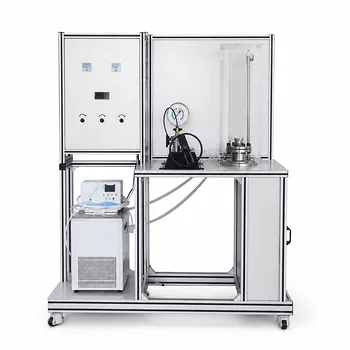
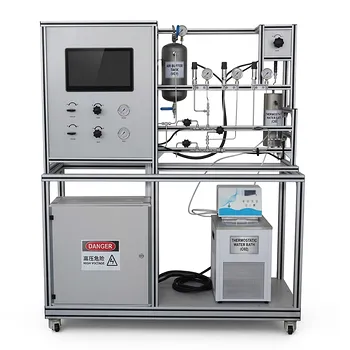
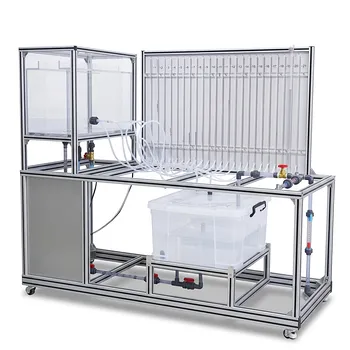
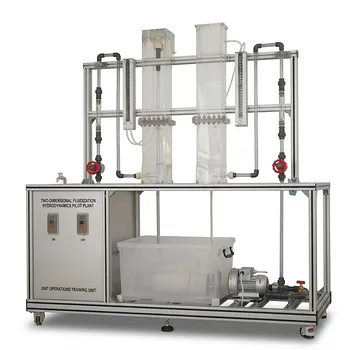
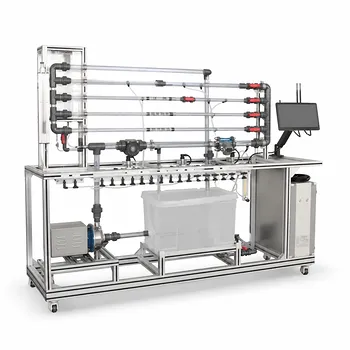
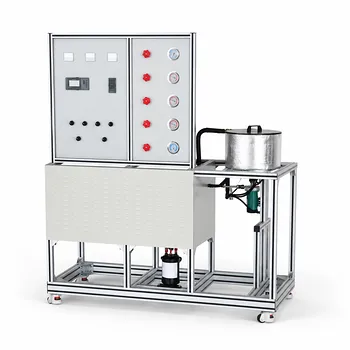
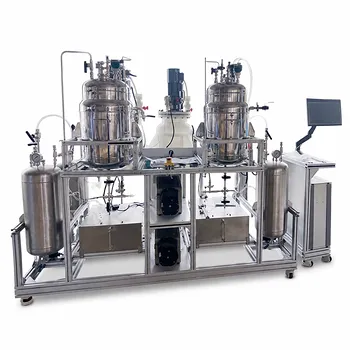
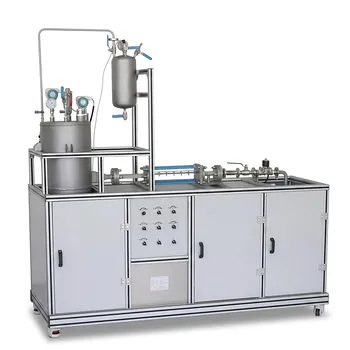
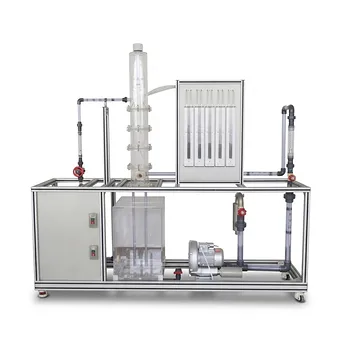
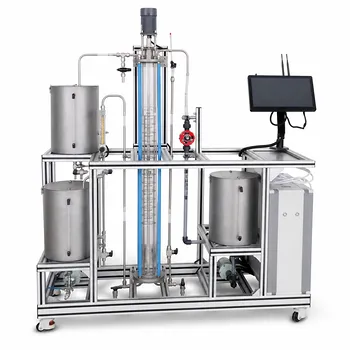
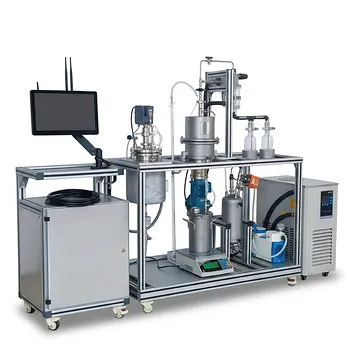
Designing a safe pilot plant requires both rigorous risk assessment and the right hardware. LABPARK provides premium Educational and Vocational Unit Operations Pilot Plants in chemical engineering, bioprocess & biotech, and environmental & water treatment. Specially designed for universities, research institutes, and enterprises, our systems integrate advanced safety features to ensure hands-on learning and research are conducted with absolute peace of mind.
Ready to elevate your engineering lab safety and performance? Contact us today to discuss your pilot plant needs.
Related Products
- Carbon Dioxide PVT Curve Determination Educational Unit Operations Pilot Plant
- Rising and Falling Film Evaporation Educational Unit Operations Pilot Plant
- Throttling Effect Determination Educational Unit Operations Pilot Plant
- Bernoulli Equation Demonstration Unit Operations Pilot Plant
- Multi-Functional Special Distillation Educational Pilot Plant
People Also Ask
- How do temperature variations affect CO2 transport models in pilot plants? Model vs Reality
- What unit operations are critical for CCUS training pilot plants? Build hands-on engineering expertise.
- What are the applications and limitations of the Virial EOS? Enhance Your Pilot Plant Lab
- What precautions prevent sample loss when volatilizing silica with HF? Crucial Steps for Safe Lab Training
- Why is selecting the correct EOS critical in pilot plants? PR vs. SRK compared.