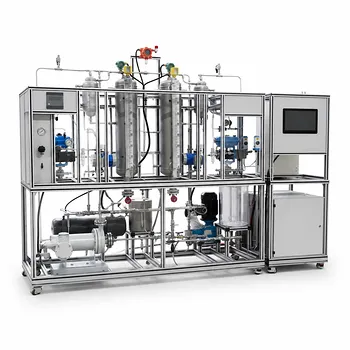
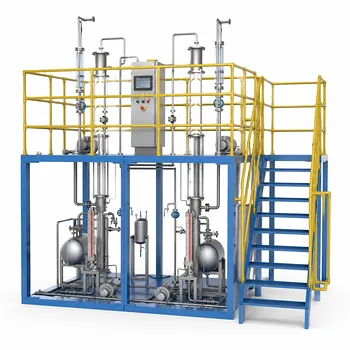
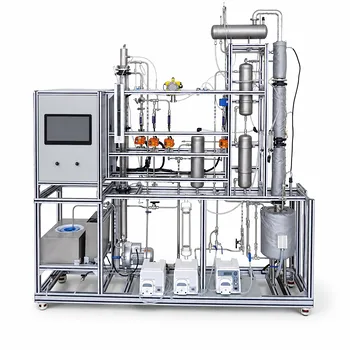
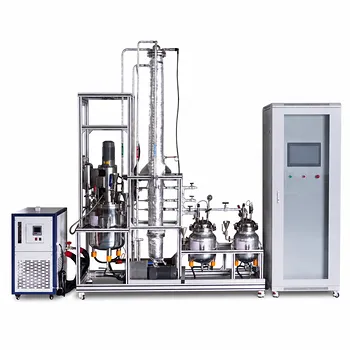
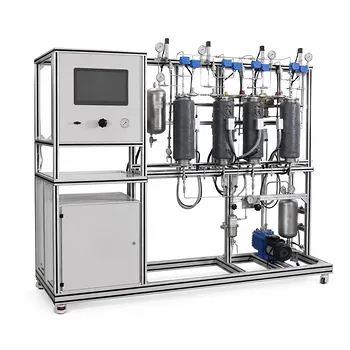
Operating temperature and feed pressure are the two most powerful levers you can pull to control separation performance in a membrane gas separation pilot plant. Lowering the operating temperature increases the solubility of organic vapors in the rubbery membrane, dramatically boosting their flux and delivering the highest selectivity over permanent gases. Increasing the feed pressure—specifically the partial pressure of the organic vapor—plasticizes the membrane, sharply accelerating organic vapor transport, while leaving the permeation of permanent gases nearly unchanged.
The core insight for pilot plant operation: Selectivity is maximized at the lowest practical temperature, while organic vapor recovery is multiplied by raising its partial pressure. However, both variables come with material and energetic trade-offs that demand careful pilot-scale experimentation.
The Role of Temperature: Solubility vs. Diffusivity
In dense rubbery membranes, the separation of organic vapors from permanent gases (like nitrogen or air) is ruled by solubility selectivity. This makes temperature control essential.
How Temperature Governs Organic Vapor Flux
Organic molecules permeate a rubbery membrane by first dissolving into the polymer and then diffusing through it. The dissolution step is exothermic—it releases heat.
Lowering the temperature therefore increases vapor solubility, pulling more organic molecules into the membrane surface. This surge in sorbed concentration directly raises the organic vapor flux. For this reason, pilot plants studying volatile organic compound (VOC) recovery routinely operate at the coolest feasible temperature to push separation efficiency upward.
The Trade-off with Permanent Gas Permeation
Permanent gases like nitrogen do not rely on solubility to the same extent; their permeation is predominantly diffusion-controlled and follows an Arrhenius-type activation. As temperature rises, the polymer chains gain mobility, and the diffusion coefficient increases.
The result: higher temperatures increase the permeability of permanent gases. Because organic vapor permeability simultaneously benefits from lower temperatures, heating the system unfairly favors the permanent gas flux, eroding selectivity. The takeaway for researchers is clear—running the pilot plant at the lowest safe temperature gives the cleanest separation.
Practical Limits in a Pilot Plant
Polymer membranes, whether rubbery or glassy, are thermally fragile. Most gas separation modules must be operated well below 100°C to prevent irreversible structural damage and loss of performance.
This upper limit sets a hard boundary in educational and research pilot plants. Designing experiments to map flux and selectivity across a safe temperature range lets you derive activation energies and correlation coefficients specific to your membrane-gas pair, turning a simple operating variable into a rich learning opportunity.
The Impact of Feed Pressure: Plasticization and Flux
While temperature sets the selectivity stage, feed pressure dictates the magnitude of the organic vapor flux and can even reshape the membrane material itself.
Why Permanent Gases Don’t Care About Pressure
In a rubbery membrane, the flux of a permanent gas is practically independent of its partial pressure. The small, poorly condensing molecules experience minimal sorption enhancement when pressure rises.
This means that increasing the overall feed pressure—or just the partial pressure of the permanent gas components—will not appreciably change their transport rate. The membrane’s resistance to these gases stays near-constant, making pressure a targeted tool for organic recovery.
How Organic Vapor Pressure Drives Performance
Organic vapor flux, by contrast, is highly dependent on its own partial pressure. As the vapor’s thermodynamic activity rises, more molecules sorb into the polymer, swelling its free volume and plasticizing the rubbery matrix.
This plasticization loosens the polymer chains, boosting the diffusion coefficient of the sorbed organic species. The combined effect—higher sorption plus easier diffusion—creates a powerful amplification loop. In a pilot plant, a small increase in organic feed concentration or total pressure can yield a disproportionately large gain in organic vapor flux density.
The Coupled Effect of Temperature and Pressure
The two variables act synergistically. A low temperature maximizes solubility, while high organic partial pressure amplifies plasticization. Together they can push the membrane into an ultra-high-flux state for target vapors.
However, excessive plasticization can degrade selectivity if the loosened membrane lets permanent gases slip through more easily. Pilot plant operators must therefore map the performance envelope—varying temperature and pressure—to locate the sweet spot where organic flux is maximized and selectivity remains acceptable.
Understanding the Trade-offs
No operating condition offers a free lunch. Every benefit comes with a corresponding risk or cost.
- Very low temperatures can lead to condensation of organic vapors on the membrane surface, causing wetting or phase separation that damages the selective layer. They also require chilling equipment, increasing energy use.
- High feed pressures increase mechanical stress on thin-film modules and can accelerate compaction of porous support layers, permanently reducing permeability.
- Plasticization from high organic loads is a double-edged sword. While it boosts flux, it can erode selectivity by 10–30% or more, and if left unchecked, may cause irreversible loss of membrane differentiation.
- Temperature and pressure interactions mean that a condition optimized for flux may push the membrane outside its material stability window. Pilot plants must therefore constantly monitor pressure drop and gas composition to detect membrane distress early.
Making the Right Choice for Your Goal
Use the following decision map to steer your pilot plant experiments.
- If your primary focus is maximizing selectivity for VOC recovery: Run the unit at the lowest practical temperature permitted by your cooling system and membrane rating, while keeping the organic partial pressure high but just below the condensation point. Continuously verify that plasticization isn’t letting permanent gases break through.
- If your primary focus is achieving the highest organic vapor throughput: Increase the feed partial pressure of the organic component as much as system integrity allows. Accept a modest selectivity loss in exchange for a large jump in flux, and schedule more frequent membrane inspections for plasticization creep.
- **If your primary focus is eluc
Summary Table:
| Variable | Change | Impact on Organic Vapor | Impact on Permanent Gas | Key Trade-off / Risk |
|---|---|---|---|---|
| Temperature | Lowering | Increases solubility & flux | Decreases diffusion (boosts selectivity) | Condensation risk; higher chilling energy requirements |
| Feed Pressure | Raising | Increases partial pressure & flux | Minimal impact on transport rate | Plasticization can degrade selectivity by 10-30% |
Bring Practical Membrane Separation Expertise to Your Institution
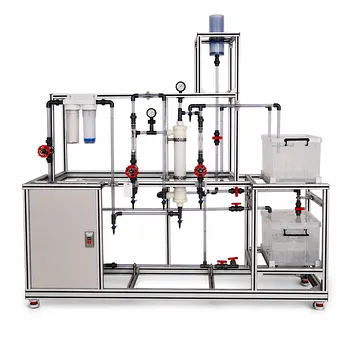
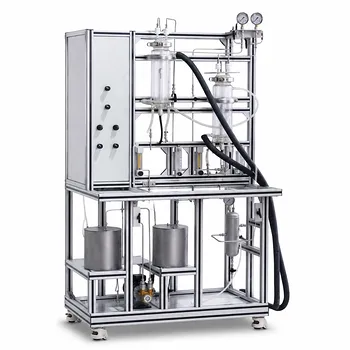
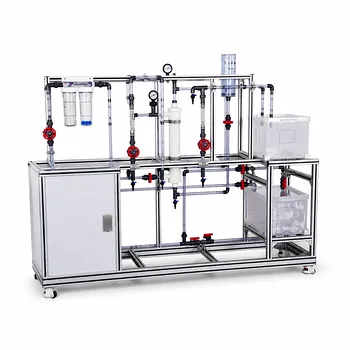
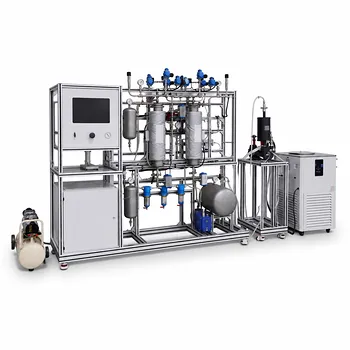
Mastering complex process variables requires robust, reliable equipment. LABPARK provides state-of-the-art Educational and Vocational Unit Operations Pilot Plants across chemical engineering, bioprocess & biotech, and environmental & water treatment.
Engineered for universities, research institutes, and enterprises, our pilot plants allow researchers and students to hands-on analyze critical interactions like temperature control and pressure-driven plasticization.
Ready to upgrade your laboratory capabilities? Contact LABPARK today to discuss your custom pilot plant needs and get a tailored solution!
Related Products
- Multifunctional Membrane Separation Educational Pilot Plant with Ultrafiltration, Nanofiltration, Reverse Osmosis
- Ultrafiltration Membrane Separation Educational Pilot Plant
- Multi-Functional Membrane Separation Educational Pilot Plant for Unit Operations Lab
- Photocatalytic Membrane Separation and Degradation Unit Operations Pilot Plant
- Hollow Fiber Ultrafiltration Membrane Separation Educational Pilot Plant
People Also Ask
- Pervaporation vs. Vapor Permeation: Handling Suspended Solids in Membrane Pilot Plants
- How do PEI, PVDF, and PSU membranes compare in pilot plants? Find the best fit.
- What are the trade-offs of polymer vs inorganic membranes in teaching pilot plants? Key laboratory comparison.
- What are the advantages of membrane separation in pilot plants? Efficient Organic Vapor Recovery
- How can operators optimize operating conditions and cleaning protocols in membrane separation pilot plants to mitigate fouling?