The heart of modern scale-up optimization is a strategic hybrid. Rather than the slow, sequential build-up of increasingly larger pilot plants, today’s chemical engineering laboratories directly combine precise, bench-scale pilot data with advanced computer modeling. This enables teams to confidently leap from a small, well-characterized setup to an industrial demonstration unit, drastically slashing both development timelines and capital expenditure.
Traditional scale-up built each intermediate stage as a costly physical insurance policy. The modern approach replaces that uncertainty with predictive, model-based insight—using pilot plants not as oversized prototypes, but as high-accuracy calibration and validation platforms that let you skip multiple intermediary steps while controlling reaction rates and transport phenomena.
The Costly Legacy of Sequential Scale-Up
The Slow March Through Kilo-Lab and Pilot Stages
For decades, scaling up a chemical reactor meant building a series of semi-works facilities, each increasing production by one or two orders of magnitude. That sequential approach was inherently slow and capital-intensive. Every new stage introduced its own engineering, construction, and experimental overhead, stretching the journey from lab to commercial reality across many months or even years.
Why Bigger Isn’t Just… Bigger
A reaction that behaves perfectly in a few grams of material can fail—or turn hazardous—at scale. Mass transfer, heat transfer, and fluid dynamics shift non-linearly as dimensions grow. Relying only on empirical trial-and-error without a predictive framework meant that scale-up surprises were common, expensive, and a direct threat to both product quality and process safety.
The Modern Hybrid: Data Meets Models
Using Pilot Plants as Calibration Engines, Not Mini-Factories
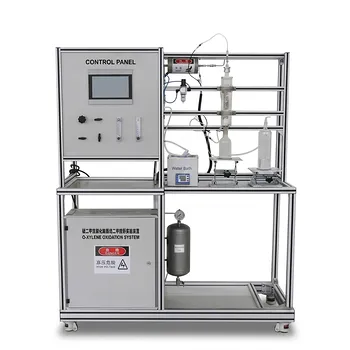
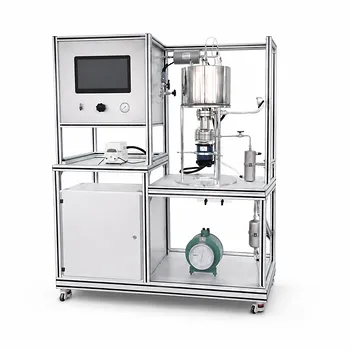
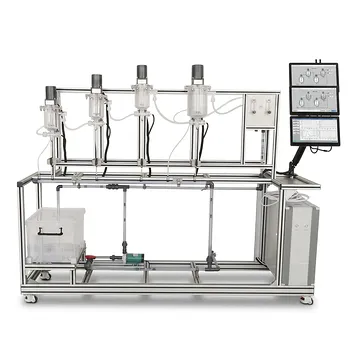
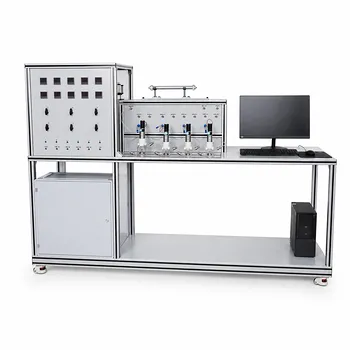
Modern methodology reframes the purpose of the pilot plant. It is no longer a simple intermediate production trial. Instead, a unit operations pilot plant is a high-fidelity data generator. Engineers run deliberate experiments to measure kinetic constants, mixing behavior, heat transfer coefficients, and mass transfer limitations at a scale large enough to capture real physical effects, yet small enough to be fast and economical.
Validating Mathematical Models to Bypass Multiple Steps
These empirical measurements feed directly into nonisothermal reactor models based on material, equilibrium, and enthalpy balances. Once a model is calibrated against pilot data—accurately predicting hydrodynamics and mass transfer rates—you gain the ability to simulate performance at far larger scales. The result: you skip the kilo-lab and intermediate pilot stages entirely, moving straight from bench-scale validation to a full-scale demonstration unit with a high probability of “right-first-time” operation.
The Critical Toolkit Inside a Unit Operations Pilot Plant
Optimizing with Desirability Functions
Reactor scale-up is a multi-objective puzzle. You need to balance yield, impurity levels, reaction time, and energy use. Pilot plant engineers use Desirability Functions to convert each response into a score from 0 to 1. An overall desirability index (geometric mean) is then mapped across the entire experimental design space—temperature, agitation speed, feed rate—to mathematically pinpoint the operating sweet spot that satisfies all constraints.
Gathering Hard Data for Economic Scaling Laws
Cost estimation isn’t guesswork. Industrial data shows that investment scales by a capacity ratio raised to an exponent of roughly 0.6. By running mass and energy balances on pilot-scale reactors, engineers can produce the throughput and equipment-size data needed to plug into these scaling formulas. This yields early-stage capital cost projections that directly inform go/no-go decisions, shaving months off the project front-end.
Selecting the Right Scale-Up Criteria
Perfect similarity across geometry, hydrodynamics, heat, and mass transfer is usually impossible. So engineers focus on the dominant scaling law. For solid-liquid suspensions, constant power per unit volume ($P_v = \text{constant}$) or a correlation like $P_v \propto D^{-0.55}$ is often the decisive criterion. For reactions sensitive to blending uniformity, constant mixing time ($\theta_M$)—validated with Computational Fluid Dynamics (CFD)—is used. These targeted criteria keep transfer rates predictable without requiring impractical geometric replication.
Understanding the Trade-offs and Pitfalls
The Model Is Only as Good as Its Calibration
Skipping intermediate stages places immense pressure on model accuracy. If pilot data is sparse or kinetic parameters are extrapolated beyond the tested range, predictions can fail. Process risk shifts from physical trial-and-error to computational fidelity, demanding deep expertise in both data analysis and reaction engineering.
Pilot Plant Investment Still Matters
The hybrid approach doesn’t eliminate pilot plants—it makes them smarter and smaller. You still need well-instrumented, flexible unit operations setups that can gather high-quality data. Cutting corners on sensor precision or experimental design undermines the entire modeling chain. This requires upfront investment in both hardware and skilled personnel.
When Empirical Experience Overrules Simulation
Some complex multiphase systems or novel chemistries defy current modeling capabilities. In such cases, a judicious mix is required: use one intermediate scale-up step to generate a reliable dataset, then apply the hybrid method for further jumps. Blindly trusting a model where physical understanding is immature is a recipe for costly failures.
Making the Smart Scale-Up Decision for Your Project
Your optimization strategy must align with your most critical project driver. Use the guide below to tailor your approach.
- If your primary focus is minimizing time-to-market: Prioritize maximum model leverage. Build a single, highly instrumented pilot plant and invest heavily in calibrating a comprehensive reactor model. Validate it thoroughly, then skip directly to a commercial demonstration unit.
- If your primary focus is minimizing upfront capital cost: Use the scaling law exponent ($n \approx 0.6$) alongside detailed pilot plant mass balances to create early, realistic cost estimates. Run a few targeted experiments only on the parameters that dominate your overall desirability score, and avoid over-instrumenting beyond what is essential.
- If your primary focus is de-risking a novel chemistry: Resist the temptation to bypass all intermediate steps. A disciplined hybrid with one cautious intermediate scale check—where you validate against CFD and mixing-time criteria—provides the insurance you need without falling back into the old sequential trap.
- If your primary focus is training and process understanding: Operate a pilot plant as an educational bridge. Use it to teach thermodynamic and fluid dynamic behaviors, validate mathematical models hands-on, and build the team’s intuition—ensuring that when you do scale up, the know-how is already in place.
The modern optimization of reactor scale-up isn’t about doing fewer experiments; it’s about making every data point count so you can leap forward with confidence, not step forward with uncertainty.
Summary Table:
| Feature | Traditional Scale-Up | Modern Hybrid Scale-Up |
|---|---|---|
| Approach | Sequential physical stages (Kilo-lab to pilot) | Pilot data integrated with predictive modeling |
| Cost & Time | High capital cost and long timelines | Drastically reduced time and minimized CAPEX |
| Scale-Up Risk | High risk from empirical trial-and-error | Managed risk via computational calibration |
| Pilot Plant Role | Oversized intermediate production trial | High-fidelity calibration & data generation platform |
Bridge the Gap from Lab to Industry with LABPARK
Accelerate your process scale-up and ensure accurate model validation. LABPARK provides premier Educational and Vocational Unit Operations Pilot Plants specializing in chemical engineering, bioprocess & biotech, and environmental & water treatment.
Whether you are a university, research institute, or enterprise, our high-precision equipment helps you gather critical thermodynamic and fluid dynamic data to eliminate costly scale-up steps.
Contact LABPARK today to find the ideal pilot plant solution for your facility!
Related Products
- O-Xylene Oxidation to Phthalic Anhydride Educational Unit Operations Pilot Plant
- Fixed-Bed Chemical Reaction and Gas Dust Tar Removal Unit Operations Pilot Plant
- Residence Time Distribution and Reactor Flow Characteristics Determination Educational Pilot Plant
- Tubular Reactor Flow Characteristics Determination Educational Unit Operations Pilot Plant
- 100L Continuous Loop Hydrogenation Educational Unit Operations Pilot Plant
People Also Ask
- What materials fit high-temp oxidation pilot plants? Key Hastelloy & Titanium Requirements
- Under what conditions can axial diffusion be neglected? Reactor Simulation Guide
- What limitations exist in high-temp pilot reactor design? Key Material & Safety Rules
- What pressure parameters ensure pilot plant safety? Analyze reactor profiles & gas evolution.
- How are sensitivity functions applied to parameter estimation in chemical reactor pilot plants? Guide