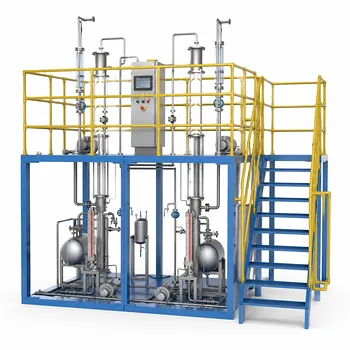
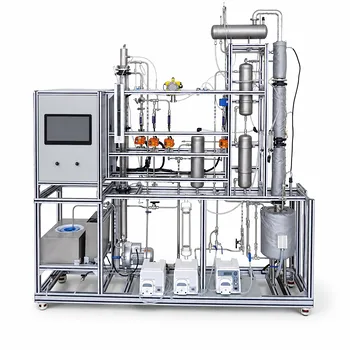
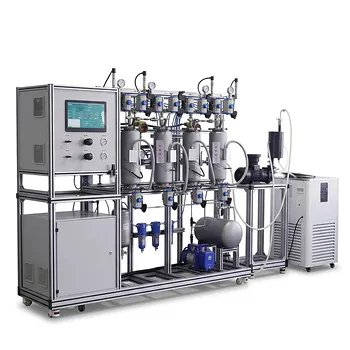
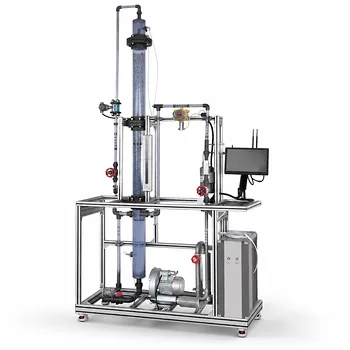
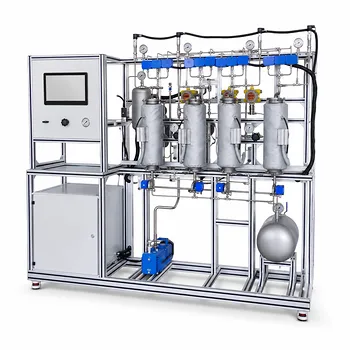
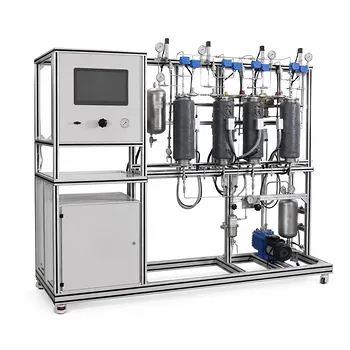
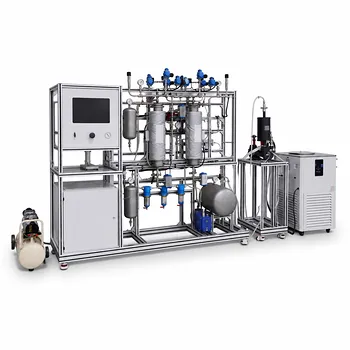
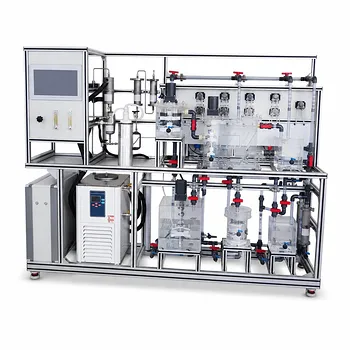
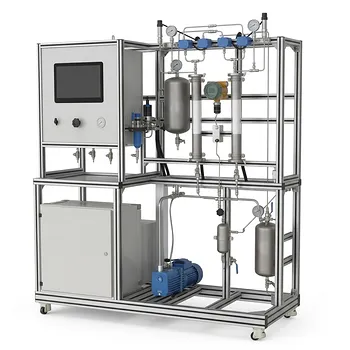
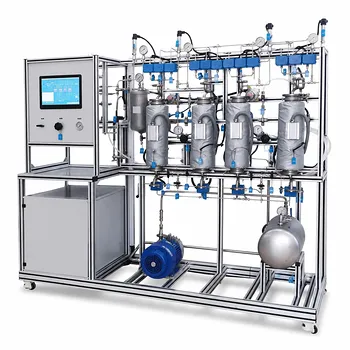
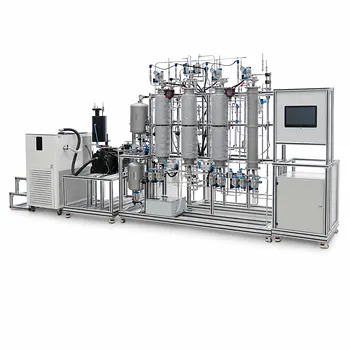
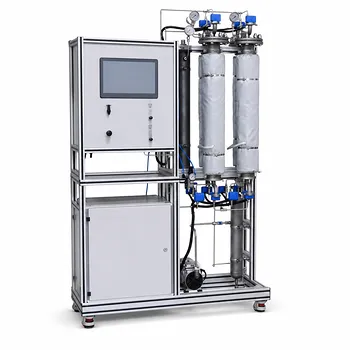
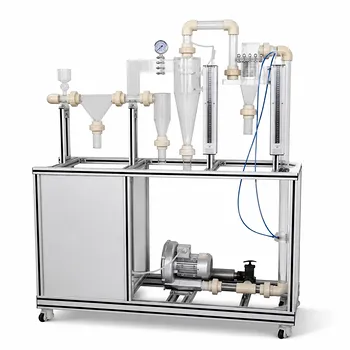
The answer lies in mastering the exact unit operations found in industrial gas cleaning. Gas absorption and scrubbing pilot plants directly prepare students by letting them operate packed columns and spray towers that mirror the spray washing, demisting, and chemical absorption stages of a Koppers‑Totzek (K‑T) gasification train. Through hands-on manipulation of gas flow, liquid rates, and solvent types, students learn to control pressure drop, optimize absorption efficiency, and manage gas‑liquid phase equilibria—the core operational knowledge needed to run processes using solvents like Sulfinol or Rectisol.
While K-T gasification uses harsh conditions and proprietary solvents, pilot‑scale absorption columns teach the same mass‑transfer fundamentals and troubleshooting skills. The key is learning how phase equilibria, pressure drop, and solvent selection interact—insights that directly translate to safely managing the multi‑stage purification systems behind syngas production.
What a Koppers‑Totzek Purification Train Actually Demands
The K-T gasifier produces raw syngas laden with particulates and acid gases (H₂S, CO₂). Cleaning that stream to meet downstream synthesis requirements forces you to master three distinct physical and chemical steps in sequence.
The Three-Stage Cleaning Sequence
After the gasifier, the syngas first enters a spray washing section. This rapidly quenches the gas and knocks out coarse particulates using high‑pressure water jets. Immediately after, a demisting stage—often a mesh pad or vane pack—captures fine droplets before they can damage downstream equipment. Finally, a chemical absorption column strips out acid gases using a selective solvent like Sulfinol (a hybrid chemical‑physical solvent) or Rectisol (physical, methanol‑based). The primary reference makes clear that students must understand each stage’s operating window to keep the whole train balanced.
Where Pilot Plants Create Transferable Competence
A well‑designed gas absorption pilot plant bundles these stages into a single, instrumented loop. You might operate a pre‑wash tower for particulate removal, an absorber packed with structured packing, and a regenerator stripping column—all connected. By running this miniaturized train, you learn to:
- Coordinate inter‑stage pressures and liquid levels to avoid liquid carryover or flooding.
- Adjust solvent circulation rates in response to changing gas feed composition.
- Monitor temperature profiles across the absorber to spot equilibrium pinch points early.
The supplementary notes on multi‑stage educational pilot plants reinforce that sequential purification vessels—including safety traps, reagent wash bottles, and drying columns—teach the same “train” mentality without the hazardous chemicals, yet the operational logic is identical.
Mastering the Core Variables on a Safe Scale
The real power of a pilot plant is that it lets you deliberately push boundaries that would be too risky or expensive on a live gasifier. This safe experimentation builds the deep operational intuition every gas purification engineer needs.
Gas‑to‑Liquid Ratio and Flooding Limits
When you crank up the gas flow rate while holding the liquid rate constant, you eventually hit the flooding point—the column fills with liquid and pressure drop spikes catastrophically. The supplementary packed‑column reference explains that students can directly visualize liquid holdup and measure the exponential increase in ΔP. Recognizing the early signs of flooding (a sudden rise in pressure drop, a change in the sound of the bed) is a skill you’ll use daily in a K‑T operation to protect expensive packing and maintain throughput.
Pressure Drop as a Process Health Indicator
Industrial spray washers and demisters must maintain a narrow pressure drop range. Too low, and particulate removal suffers; too high, and you waste compression energy or choke the gasifier. In a pilot plant, you systematically vary gas velocity and liquid spray density while logging ΔP, learning to build a pressure drop curve that predicts performance. This is exactly how you set operating windows for a K‑T train’s venturi scrubber or final demister.
Absorption Efficiency and Solvent Saturation
The primary reference highlights that students “adjust gas flow rates, liquid absorption rates, and solvent types” to optimize absorption efficiency. On a pilot column, you measure acid gas concentration at the inlet and outlet while stepping the solvent flow. You watch the dissolved-gas‑loading curve climb toward equilibrium, and you learn what “pinch” feels like. This translates directly to operating a Sulfinol absorber: you need to know when to send more lean solvent or when to raise the regeneration temperature.
Bridging the Gap: From Amines to Rectisol
The solvents used in a university pilot plant (often amines like MEA or MDEA, or even simple sodium hydroxide) are not the same as Sulfinol or Rectisol. Yet the principles you absorb are universal.
Chemical vs. Physical Absorption in Context
The supplementary reference on choosing a pilot plant type explains the distinction elegantly. Chemical absorption (amines) relies on a fast acid‑base reaction, so you gain deep purification depth at low pressure and moderate temperature—ideal for educational settings. Physical absorption (Rectisol, Selexol) follows Henry’s Law, requiring high pressure and/or cryogenic temperatures. A K‑T plant uses physical solvents to handle the high syngas pressure and to regenerate the solvent by simple pressure reduction. When you run an amine‑based pilot plant, you still learn:
- How a reactive solvent shifts the equilibrium and why reaction stoichiometry sets a minimum circulation rate.
- How to design the stripping section and balance the heat duty (even if you use steam and not pressure‑letdown).
- What temperature bulges mean and why intercooling might be needed.
These are the same questions you’ll face with Rectisol, just at a different point on the phase diagram.
Process Control Logic Transcends the Chemistry
The real skill you build is configuring and tuning the fluid loops. Whether the solvent is methanol or MDEA, you still need to manage liquid level in the sump, prevent foaming, compensate for gas density changes, and sequence the regeneration loop. The pilot plant’s supervisory control system forces you to think in terms of cascade loops (level‑to‑flow, temperature‑to‑steam) and alarm management—exactly the mental model you’ll need in a control room overlooking a K‑T purification aisle.
Understanding the Trade-offs
Pilot‑scale training is not a carbon copy of the industrial environment, and recognizing the limitations is what separates true competence from superficial familiarity.
The Pressure and Temperature Gap
Most amine‑based pilot plants operate at near‑atmospheric pressure and regeneration temperatures around 120°C. A Rectisol unit, by contrast, absorbs at 2–5 MPa and regenerates at -54°C under vacuum. You will not experience cryogenic material challenges or the massive solubility swing that makes physical solvents so efficient. That knowledge gap must be closed through theory and desktop studies, but the pilot plant gives you the right mental hooks: you already understand why flooding limits gas velocity and how pressure drop relates to solubility, so the jump to high‑pressure physical absorption becomes an extension, not a mystery.
Solvent Stability and Corrosion
Industrial solvents degrade over time, form heat‑stable salts, and corrode carbon steel if not managed. A pilot plant with fresh chemicals and short run times masks these long‑term operational headaches. However, by running regeneration cycles and deliberately stressing the solvent (e.g., by over‑heating the reboiler), you can still observe how degradation byproducts affect foaming or pH, building awareness you’ll need when managing a Sulfinol inventory.
Scale‑Down of Multi‑Stage Integration
A real K‑T train has multiple wash stages, knock‑out drums, and guard beds in series. A compact pilot plant often combines them into two or three columns. You may miss the subtle pressure‑balancing act required when a demister partially plugs and shifts gas to a parallel train. To compensate, use the pilot plant to study the interactions between the spray section and the packed bed within a single column; that mini‑integration teaches the same system‑thinking muscle.
Making the Right Choice for Your Goal
If you aim to walk into a gasification plant confident in your ability to manage the purification unit, structure your pilot‑plant experience intentionally.
- If your primary focus is deep understanding of mass transfer fundamentals: Spend your time mapping gas‑to‑liquid ratios against absorption efficiency and pressure drop, deliberately flooding the column, and then recovering it. This builds the “feel” for column hydraulics that textbooks can’t give.
- If your primary focus is solvent selection and regeneration strategy: Compare a chemical (amine) run with a simple physical (water) run to internalize the difference between reaction‑enhanced and solubility‑limited absorption. Then study the stripping column’s energy balance under different reboiler duties.
- If your primary focus is process safety and multi‑stage control: Use a pilot plant with a pre‑wash, absorber, and regenerator in series. Practice start‑up sequencing, emergency shutdowns triggered by high ΔP, and maintaining seal integrity to prevent gas leaks—the same discipline you’ll apply daily on a K‑T pressure circuit.
By treating the pilot plant not as a demonstration but as a miniaturized Koppers‑Totzek purification bench, you’ll develop the operational instincts and analytical framework to manage real gas purification systems with confidence.
Summary Table:
| K-T Purification Stage | Pilot Plant Equivalent | Key Operational Skills Mastered |
|---|---|---|
| Spray Washing | Pre-wash / spray tower | Controlling L/G ratio, particulate quenching |
| Demisting | Vane pack / mesh pad | Managing pressure drop, preventing liquid carryover |
| Chemical Absorption | Packed absorber column | Phase equilibria, solvent saturation, flooding limits |
| Regeneration | Stripping column / reboiler | Energy balancing, solvent recycling, thermal control |
Bring Industrial Gas Purification Training to Your Lab
Bridge the gap between textbook theory and real-world chemical engineering. LABPARK provides state-of-the-art Educational and Vocational Unit Operations Pilot Plants in chemical engineering, bioprocess & biotech, and environmental & water treatment designed for universities, research institutes, and enterprises.
Why Partner with LABPARK?
- Hands-On Experience: Enable students to safely master complex unit operations like gas absorption, column hydraulics, and process control.
- Customized Solutions: Tailored pilot plants to match your specific curriculum and research goals.
- Industrial Relevance: Train future engineers on systems that mirror actual industrial trains (like K-T gas purification).
Ready to upgrade your department's training capabilities? Contact LABPARK today to discuss your laboratory equipment needs and get a custom quote!
Related Products
- Dual-Mode Gas Absorption and Desorption Unit Operations Training Pilot Plant
- Absorption and Desorption Educational Unit Operations Pilot Plant
- Carbon Dioxide Absorption and Desorption Educational Pilot Plant for Carbon Capture Studies
- Multi-Component Gas Pressure Swing Adsorption Pilot Plant for Unit Operations Education
- Packed Bed Absorption Educational Unit Operations Pilot Plant
People Also Ask
- How do two-film & penetration theories apply to gas absorption pilot plant teaching? Key pedagogical insights.
- How is the direction and driving force of mass transfer determined in a gas absorption unit operations pilot plant?
- How does partial pressure behavior influence gas absorption pilot plants? Master Mass Transfer
- How to model chemical absorption as physical absorption? The pilot plant simplification criterion.
- What are the limitations of Henry's Law in gas absorption pilot plants? Avoid critical lab errors.