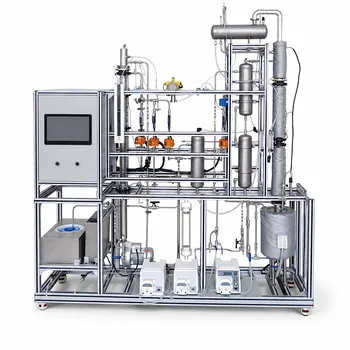
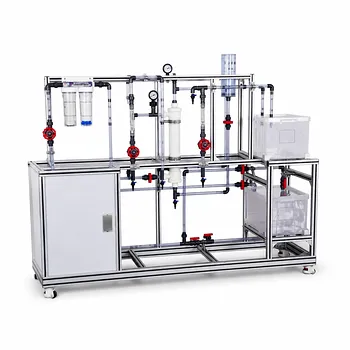
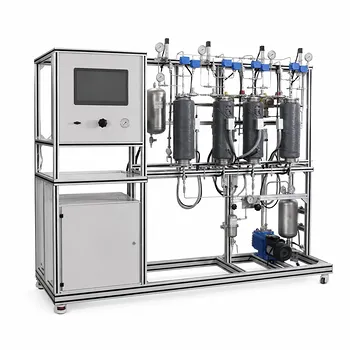
DAF and gravity separation pilot plants help determine the right physical treatment conditions for industrial FOG removal before full-scale design. Gravity separation removes free-floating grease and heavy solids by using density differences and residence time, while dissolved air flotation (DAF) uses microbubbles to lift finely dispersed or emulsified FOG and suspended particles to the surface for skimming. Pilot plants allow engineers to test these processes under realistic hydraulic and solids-loading conditions, reducing design uncertainty and improving pretreatment performance.
The central insight is that gravity separation and DAF address different FOG conditions. Gravity units are effective for free oil and settleable solids, while DAF is better suited to fine, dispersed, or emulsified material; pilot testing shows how the technologies should be configured, combined, and operated.
Why FOG Requires More Than One Separation Method
Free FOG Behaves Differently From Emulsified FOG
Industrial wastewater may contain large concentrations of fats, oils, and grease along with suspended solids. These materials can accumulate in treatment systems and clog sewer lines when they are discharged without adequate pretreatment.
Free-floating FOG separates relatively easily because it is less dense than water. Finely dispersed or emulsified FOG, however, may remain suspended in the wastewater and resist simple gravity-based removal.
Heavy Solids Create a Second Treatment Problem
Heavy suspended solids move downward when the wastewater is held under sufficiently calm conditions. These solids can settle in the same vessel where free grease rises, but both processes depend on adequate residence time and hydraulic conditions.
A treatment system that removes only floating grease may still allow excessive solids to pass downstream. Effective pretreatment therefore considers both the upward movement of FOG and the downward settling of heavier particles.
How Gravity Separation Pilot Plants Address FOG
Density Differences Drive the Separation
Gravity separation vessels, including catch-basin-style units, provide a relatively quiescent volume in which materials separate according to density. Heavy solids settle to the bottom, while free FOG rises to the surface.
Accumulated solids and floating grease can then be removed manually or mechanically. This approach is comparatively simple and does not require the air injection or chemical conditioning associated with some DAF applications.
Residence Time Controls Performance
The vessel must provide enough fluid residence time for solids to settle and free FOG to rise. Excessive hydraulic loading can carry grease and solids through the unit before separation is complete.
A pilot plant makes this relationship measurable. Engineers can vary flow rate and vessel conditions to identify a practical hydraulic loading range and determine whether the proposed separation volume is adequate.
Gravity Separation Can Serve as Pretreatment
Gravity units are often valuable as an initial treatment step. Removing settleable solids and free-floating grease upstream can reduce the load placed on DAF systems, biological treatment, membranes, or downstream polishing equipment.
This staged approach can improve overall process stability, although it cannot replace DAF when the wastewater contains substantial emulsified or finely dispersed FOG.
How DAF Pilot Plants Address Difficult FOG
Microbubbles Lift FOG and Fine Particles
DAF systems introduce micro air bubbles into the wastewater. The bubbles attach to grease droplets and suspended particles, increasing their effective buoyancy and carrying them rapidly to the surface.
The resulting floating layer is removed by mechanical skimming. This enables DAF to target material that would otherwise remain suspended or separate too slowly under gravity alone.
DAF Handles Dispersed and Emulsified Material
The key advantage of DAF is its ability to improve the separation of fine FOG and particulates. When gravity separation cannot produce the required removal efficiency, DAF can provide a more effective solids-liquid separation mechanism.
The actual performance depends on wastewater characteristics and operating conditions. Pilot testing is therefore important before selecting DAF as a full-scale solution.
Air-to-Solids Ratio Affects Results
The air-to-solids ratio influences how much material can be floated effectively. Too little available air may produce incomplete flotation, while excessive air can increase operating requirements without proportionate treatment benefits.
A pilot plant allows operators to adjust air delivery and observe changes in flotation, sludge-layer formation, and skimmed-solids quality. These observations support the selection of an appropriate operating range.
What Pilot Plants Make Possible
Hydraulic Loading Can Be Tested Directly
Pilot systems allow researchers and engineers to evaluate performance at different flow rates and hydraulic loading conditions. This helps reveal whether a unit can maintain separation efficiency during normal and peak wastewater flows.
The results are more useful than relying only on theoretical calculations because industrial wastewater often varies in FOG concentration, solids content, temperature, and flow.
Bubble-Particle Interactions Can Be Evaluated
DAF performance depends partly on whether bubbles successfully collide with and attach to FOG droplets and suspended solids. Pilot-scale operation provides a practical setting for studying these bubble-particle collision kinetics and their effect on flotation.
This information helps determine whether the wastewater requires additional conditioning or whether changes to air delivery and mixing are necessary.
Pretreatment Configurations Can Be Compared
Pilot plants can compare gravity separation alone, DAF alone, or a staged combination of both. The testing can also indicate whether additional pretreatment is needed to improve separation.
For example, removing heavy solids and free grease by gravity before DAF may reduce the flotation load. Conversely, wastewater dominated by fine or emulsified FOG may require DAF earlier in the treatment train.
Full-Scale Design Risk Is Reduced
Pilot testing helps establish realistic design inputs, including residence time, flow range, air requirements, solids removal rates, and expected separation efficiency. It also exposes operational problems before they become expensive full-scale failures.
The resulting data supports equipment sizing and improves confidence that the selected process can meet discharge or downstream-treatment requirements.
Understanding the Trade-offs
Gravity Separation Is Simple but Limited
Gravity units generally have lower mechanical complexity, but they require sufficient residence time and favorable density differences. They are not well suited to FOG that is finely dispersed, stabilized, or emulsified.
Increasing vessel size may improve residence time, but it also increases the equipment footprint and capital requirements. Pilot testing helps determine whether the additional volume is justified.
DAF Is More Capable but More Operationally Demanding
DAF can remove fine FOG and suspended solids more effectively than gravity separation in difficult wastewaters. However, it requires air-handling equipment, recirculation or pressurization arrangements, skimming equipment, and closer operational control.
DAF may also produce a concentrated float stream that requires appropriate collection, handling, and disposal. These downstream requirements should be included in pilot evaluations.
Pilot Results Must Reflect Real Wastewater
A pilot study based on a single, unusually clean or concentrated sample may not represent actual plant conditions. Industrial wastewater composition can change with production schedules, cleaning cycles, temperature, and raw-material usage.
Testing should therefore include representative operating conditions and, where practical, expected variability. Otherwise, the final design may perform well during the pilot but poorly during routine operation.
Making the Right Choice for Your Goal
Pilot plants are most valuable when they connect unit-operation performance to the actual wastewater problem and the intended full-scale treatment objectives.
- If your primary focus is removing free-floating grease and heavy settleable solids: Start by evaluating gravity separation residence time, hydraulic loading, and solids and grease removal practices.
- If your primary focus is removing finely dispersed or emulsified FOG: Use DAF pilot testing to optimize microbubble generation, air-to-solids ratio, flotation conditions, and surface skimming.
- If your primary focus is protecting downstream treatment equipment: Compare staged gravity separation and DAF configurations to reduce solids and FOG loading before biological, membrane, or polishing processes.
- If your primary focus is full-scale design confidence: Use pilot data to establish realistic flow ranges, vessel sizing, operating requirements, and expected separation efficiency.
- If your primary focus is meeting discharge requirements: Evaluate the selected process under representative wastewater variability and verify whether additional treatment is required.
The right pilot configuration turns FOG treatment from a generic equipment choice into a measured, defensible process design.
Summary Table:
| Treatment focus | Best-fit process | Key variables tested | Main benefit |
|---|---|---|---|
| Free-floating FOG and heavy solids | Gravity separation | Residence time, hydraulic loading, solids removal | Simple, low-complexity pretreatment |
| Fine, dispersed, or emulsified FOG | Dissolved air flotation (DAF) | Air-to-solids ratio, bubble generation, mixing, skimming | Improved removal of difficult FOG and suspended particles |
| Variable industrial wastewater | Pilot testing | Flow, temperature, FOG concentration, solids loading | More reliable performance data under realistic conditions |
| Downstream process protection | Staged gravity separation and DAF | Process sequence, loading reduction, removal efficiency | Protects biological, membrane, and polishing systems |
| Full-scale system design | Comparative pilot evaluation | Vessel sizing, flow range, air requirements, sludge production | Reduces design uncertainty and operating risk |
Need a reliable way to remove fats, oils, grease, and suspended solids from industrial wastewater? Contact LABPARK to evaluate an Educational or Vocational Unit Operations Pilot Plant for your application. LABPARK supports universities, research institutes, and enterprises with pilot-scale systems for chemical engineering, bioprocess and biotech, and environmental and water treatment education, research, process development, and operator training. Compare gravity separation, DAF, or staged configurations under representative flow and loading conditions, then use measured residence time, air requirements, solids removal, and separation-efficiency data to guide equipment selection and full-scale design.
Related Products
- Dual-Mode Gas Absorption and Desorption Unit Operations Training Pilot Plant
- Dual-Mode Rectification Pilot Plant for Practical Training Unit Operations
- Thermal Desorption Exhaust Gas and Tail Water Treatment Educational Pilot Plant
- Carbon Dioxide Absorption and Desorption Educational Pilot Plant for Carbon Capture Studies
- Multi-Functional Special Distillation Educational Pilot Plant
People Also Ask
- How do temperature and pressure affect gas absorption and desorption? Optimize Pilot Plant Performance
- How do two-film & penetration theories apply to gas absorption pilot plant teaching? Key pedagogical insights.
- How does partial pressure behavior influence gas absorption pilot plants? Master Mass Transfer
- How is the direction and driving force of mass transfer determined in a gas absorption unit operations pilot plant?
- How to model chemical absorption as physical absorption? The pilot plant simplification criterion.