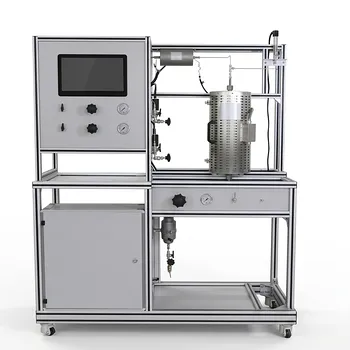
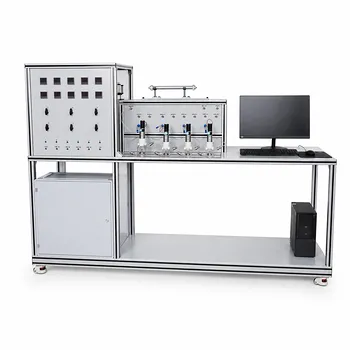
Deconstructing the unknown reactor cost is not guesswork—it’s a structured engineering problem. When standard pricing databases fail for a custom-designed chemical reactor, the most reliable approach is a detailed Work Breakdown Structure (WBS). This method dissects the reactor into basic, quantifiable sub-components—shell, jacket, nozzles, agitator—and assigns specific material quantities, machining steps, and labor hours. The result is a bottom‑up, defensible fabrication cost that researchers and pilot plant engineers can use to budget accurately and negotiate with custom manufacturers.
The core insight: A WBS transforms an opaque, one‑off build into a transparent sum of standard shop operations. By breaking the reactor into shell rolling, welding, and assembly tasks with known hourly rates and material prices, you build a fabrication cost estimate that is both auditable and accurate enough for budget approval. When some historical cost‑capacity data exist for similar custom equipment, an Equipment Model Library (EML) scaling approach provides a valuable complementary check.
The Challenge of Custom Reactor Costing
Why Standard Pricing Fails for Pilot Scale
Commercial costing databases are built around mass‑produced, standardized vessels. A pilot‑scale reactor—perhaps a glass‑lined, high‑pressure jacketed unit with a proprietary agitator—will rarely appear in those catalogs. Using a “near‑equivalent” standard price invites errors of 50 % or more, making project budgets unreliable and funding approvals precarious. The unique combination of materials, thermal requirements, and fabrication details demands a fundamentally different estimation strategy.
The WBS Method: Your Bottom‑Up Blueprint
The Work Breakdown Structure treats the reactor as a collection of discrete, shop‑floor tasks rather than a mysterious “black box” purchase. You start by defining every physical sub‑assembly: the cylindrical shell, the hemispherical head, the external jacket, each inlet nozzle, the manway, and the agitator mounting flange. For each, you calculate the raw material weight or area (e.g., kg of 316L stainless plate, m² of glass lining), then map the sequence of manufacturing steps—cutting, rolling, forming, welding, stress relieving, and testing. Finally, you assign realistic labor hours and machine‑hour rates to those steps. The sum is a direct fabrication cost that reflects the actual build effort.
Example Decomposition: From Shell to Nozzle
Consider a 50‑liter jacketed glass‑lined reactor. The WBS might look like this:
- Pressure vessel shell: Plasma cutting of plate, rolling into a cylinder (≈2 hours of skilled labor), long‑seam welding, and post‑weld dressing.
- Lower head and jacket: Press‑forming a dished head, fabricating a dimpled or half‑pipe jacket, and welding the jacket to the shell.
- Nozzles and reinforcements: For each of the 6–8 process nozzles, add 1–2 hours of labor for weld preparation, full‑penetration welding, and pad reinforcement.
- Agitator drive coupling: Machining a flanged top head to accept a dynamic seal, plus the cost of the seal itself. Each line item uses actual material prices (you can obtain plate and pipe quotes locally) and shop‑hour rates typical for the region’s ASME‑qualified fabricators.
Factoring in Labor and Machining Hours
A WBS is only as good as the time estimates that populate it. Experienced fabricators can provide ballpark figures: cutting and edge preparation for a 1 m² plate might take 0.5 hours; rolling and tack‑welding a shell of a given diameter another 2 hours. For a university team, these can be verified by consulting with a friendly local job shop or using published manufacturing engineering handbooks. The key is to separate man‑hours from machine‑hours and apply the appropriate burdened rate. This disciplined approach prevents the all‑too‑common practice of simply guessing a total “cost per kilogram,” which ignores the disproportionate cost of small, complex components like nozzles.
Scaling from Known Data: A Complementary EML Approach
When You Have Some Historical Reference Points
If your institution has built similar custom reactors in the past, even at a different scale, you can construct an Equipment Model Library (EML) correlation. By defining the reactor’s primary sizing parameter (e.g., internal volume, heat transfer area) and inputting the known cost and capacity for at least two previous units, you can derive a scaling relationship—often a logarithmic or power‑law curve. This provides a quick sanity check against the WBS and helps identify any gross over‑ or underestimation.
Applying Location and Time Adjustments
The WBS inherently uses local labor and material costs, but an EML built from historical data may reference a different region’s benchmark (e.g., U.S. Gulf Coast). To bring that older or foreign benchmark to your current site, use a Location Factor:
Local Cost = Benchmark Cost × (Current Local Factor / Base Location Factor).
If the factor data is from a past year, also adjust for exchange rate shifts. This step ensures that even a scaling‑based estimate reflects the economic reality of your fabrication shop, not a generic global average.
From Estimate to Budget: Understanding Accuracy Classes
The Role of Design Maturity
The precision of any fabrication cost estimate is tied to the level of engineering detail. At the conceptual stage with only a rough vessel sketch, expect ±30 % to ±50 % accuracy (Class 5). Once a Process & Instrumentation Diagram (P&ID) and major nozzle sizes are fixed, a Class 4 (±30 %) or Class 3 (±10–15 %) estimate becomes feasible. The WBS, when fed with detailed shop drawings and confirmed labor rates, can achieve Class 3 quality—sufficient for securing project funding. To push into Class 2 (±5–10 %), you would need firm vendor quotes and a finalized fabrication plan.
Why the WBS Moves You to Higher Accuracy
Unlike ratio or factoring methods that apply blanket multipliers, the WBS forces you to account for every operation. There is no hidden “contingency” black box that masks real cost drivers. Discrepancies become visible early—for instance, if your nozzle count doubles, the labor hours increase proportionally and transparently. This granularity reduces the risk of budget overruns when you eventually go out to bid.
Understanding the Trade‑offs
The Investment of Time and Effort
A rigorous WBS is not free. It requires a significant upfront engineering effort to create the bill of materials, sequence the manufacturing steps, and source accurate hourly rates. For a researcher with limited fabrication knowledge, this can be daunting. However, the alternative—signing a contract with a single vendor quote and no independent estimate—often leads to paying a large “uniqueness premium” that far exceeds the value of the time saved.
Risk of Missing Ancillary Costs
A WBS focused purely on vessel fabrication may overlook the cost of non‑destructive examination (NDE), pressure testing, surface preparation for glass lining (if done off‑site), or the agitator drive components that come from a separate specialist supplier. These items must be explicitly added as line items, or you risk a 15–25 % shortfall. Similarly, transportation of an oversized, fragile reactor can be a surprise expense that needs its own estimate.
The Danger of Ignoring Local Fabrication Realities
Even a perfect WBS is useless if the assumed shop rates do not match the actual fabricators you can access. A university often must use local, smaller shops that may lack automated equipment, pushing labor hours higher. Always validate your WBS with an in‑person conversation—showing a fabricator your breakdown often yields a friendly “tune‑up” of your time estimates in exchange for a fair bidding opportunity.
Making the Right Choice for Your Goal
The best costing method depends on what you already know and why you need the number.
- If your primary focus is a truly bespoke, one‑of‑a‑kind reactor with no comparable benchmark: Build a detailed WBS. Decompose every shell, nozzle, and welding pass, and gather local material prices and shop rates. This is your most defensible basis for negotiation.
- If you have reliable cost data from two or more similar custom reactors (e.g., different‑sized bioreactors from the same builder): Create an EML scaling relationship. Use the power‑law fit as a rapid cross‑check of your WBS and to forecast future variations.
- If you need only a quick feasibility estimate to explore a research concept: Start with a Class 5 scaling from a vaguely similar vessel, but explicitly label the uncertainty as ±50 %. Use that wide band to decide if the project is even worth pursuing.
- If you are preparing a funding proposal and need a budget‑quality figure: Invest the time to develop a Class 3 WBS estimate, supported by indicative vendor discussions. This will withstand scrutiny and protect your project from early cost overruns.
The moment you stop treating a custom reactor as a shopping‑catalogue item and start seeing it as a sum of tangible fabrication steps, you gain the control to budget with confidence.
Summary Table:
| Costing Method | Best Used For | Accuracy Level | Key Advantage | Key Drawback |
|---|---|---|---|---|
| Work Breakdown Structure (WBS) | Bespoke, one-of-a-kind reactors | Class 3 (±10–15%) | Highly detailed & transparent | Requires high engineering effort |
| Equipment Model Library (EML) | Similar custom reactors with history | Class 4–5 (±30–50%) | Quick scaling & cross-checking | Relies heavily on historical data |
Need a Reliable Custom Pilot Plant or Reactor Solution?
Estimating custom fabrication costs is challenging, but you don't have to do it alone. LABPARK provides high-quality Educational and Vocational Unit Operations Pilot Plants in chemical engineering, bioprocess & biotech, and environmental & water treatment for universities, research institutes, and enterprises. We deliver precise, custom-engineered systems tailored to your exact research specifications and budget.
Let our engineering experts help you design, scale, and budget your next project. Contact LABPARK today to request a custom quote and technical consultation!
Related Products
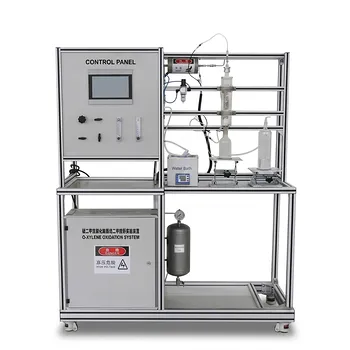
- O-Xylene Oxidation to Phthalic Anhydride Educational Unit Operations Pilot Plant
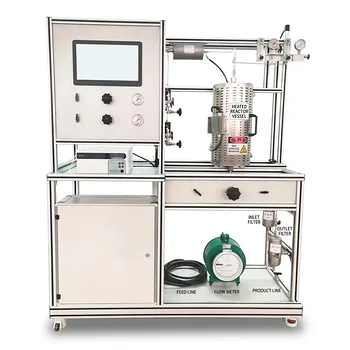
- Fixed-Bed Chemical Reaction and Gas Dust Tar Removal Unit Operations Pilot Plant
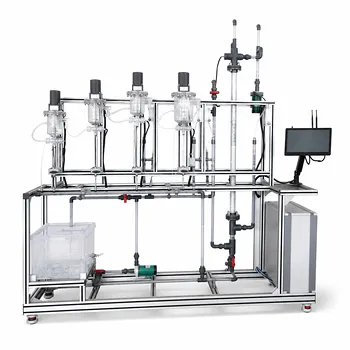
- Residence Time Distribution and Reactor Flow Characteristics Determination Educational Pilot Plant
- Tubular Reactor Flow Characteristics Determination Educational Unit Operations Pilot Plant
- 100L Continuous Loop Hydrogenation Educational Unit Operations Pilot Plant
People Also Ask
- What materials fit high-temp oxidation pilot plants? Key Hastelloy & Titanium Requirements
- Under what conditions can axial diffusion be neglected? Reactor Simulation Guide
- What limitations exist in high-temp pilot reactor design? Key Material & Safety Rules
- How are sensitivity functions applied to parameter estimation in chemical reactor pilot plants? Guide
- What pressure parameters ensure pilot plant safety? Analyze reactor profiles & gas evolution.