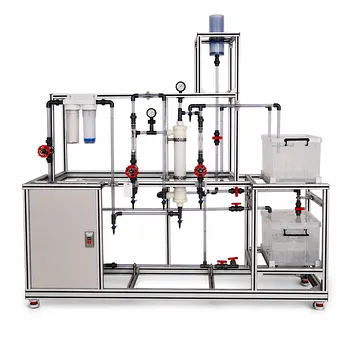
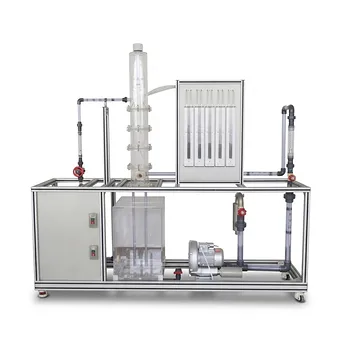
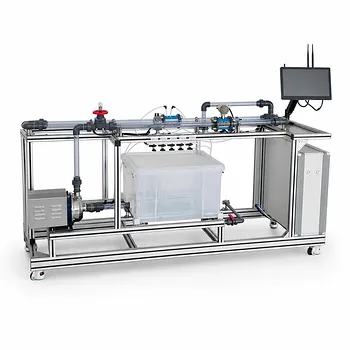
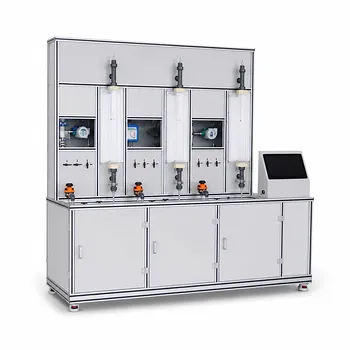
Quantitative chemical analysis doesn’t have to stop at the cuvette. The most effective way to bridge the gap between laboratory fundamentals and process engineering is to integrate inline or online spectrophotometers directly into pilot-scale unit operations. By applying the Beer-Lambert law in continuous flow loops, students move from static, batch-wise absorbance measurements to real-time concentration monitoring, connecting core chemistry principles directly to mass transfer, reaction kinetics, and industrial process control.
Many educators treat spectrophotometry as a bench skill that ends in the teaching lab. The real educational leap happens when you embed that same optical principle into a pilot plant’s fluid system—transforming a simple absorbance reading into a dynamic process variable that teaches students how chemical analysis becomes automation.
From Batch Cuvettes to Continuous Flow Cells
The Limitations of Manual Sampling
In a traditional chemistry lab, students mix reagents in a cuvette, insert it into a benchtop spectrophotometer, and record a single absorbance value at a fixed time. While this reinforces the Beer-Lambert law, it creates a disconnect: real chemical plants don’t stop to let a technician take a sample every few minutes. Students miss the direct link between instantaneous concentration data and the performance of continuous unit operations.
The Power of Inline Process Analytical Technology (PAT)
Integrating inline UV-Vis spectrophotometers, flow cells, or automated colorimetric analyzers into pilot plants changes the learning paradigm entirely. The sensor becomes part of the process piping, measuring absorbance—and thus concentration—continuously via the relationship (A = \kappa l c). This setup allows students to observe how concentration profiles shift in response to valve changes, flow rate adjustments, or catalyst activity, teaching them that analytical chemistry is not just a quality check but a real-time control tool.
How to Design the Integration for Maximum Learning
Choosing Between Online, Inline, and At-line Configurations
The term “integration” covers a spectrum. An inline spectrophotometer has a flow cell directly in the process line, providing the most immediate data. An online system uses an automated bypass or sampling loop that circulates fluid to a separate detector, mimicking industrial process analyzers. Even at-line manual quick samples run on a benchtop unit next to the pilot plant can be valuable if they replace slow cuvette prep with a dedicated flow-through cell. The deeper the integration, the more students grasp the engineering demands of sample conditioning, delay time, and sensor drift.
Critical Design Features: Flow Cells, Bypasses, and Automated Sampling
A pilot plant purpose-built for analytical integration should include optical flow cells or T-junctions that feed a UV-Vis dip probe. Analytical bypasses are especially powerful: a small side stream is diverted through the detector and returned to the main loop, protecting the sensor from particulate fouling and allowing real-time kinetic studies. In packed bed reactors or absorption columns, these bypasses let students measure concentration at multiple axial positions, directly observing conversion and mass transfer gradients.
Selecting the Right Wavelength and Chemistry for Your Process
The chemical system must be chosen so that a colored complex or an absorbing species forms in direct proportion to the concentration of interest. Classic undergraduate examples, such as the orange-red iron(II)-phenanthroline complex at 508 nm, work excellently in liquid-liquid extraction or complexation pilot runs. For catalytic reduction studies, a reaction like the nitrophenol-silver nanoparticle system can be monitored continuously as the yellow reactant disappears, linking absorbance decay directly to reactor kinetics.
Teaching Core Chemical Engineering Concepts Through Spectrophotometric Data
Mass Transfer and Absorption Columns
When students run an absorption column, they normally rely on titrations of exit streams. With an inline spectrophotometer placed at the column outlet or on a recirculation loop, they see CO₂ or dye concentration drop in real time as liquid and gas flow rates change. This immediate feedback lets them connect the Beer-Lambert law to mass transfer coefficients and height of a transfer unit (HTU), turning an abstract calculation into a live process trend.
Reaction Engineering and Kinetics in PBRs and CSTRs
In a continuous stirred-tank reactor or packed bed reactor, a spectrophotometer on the outlet stream instantly reveals conversion changes when students adjust space velocity or temperature. Pairing absorbance data with residence time distribution (RTD) analysis and catalyst pressure drop measurements helps students see that a single reactor performance chart is actually the summation of thousands of microscopic reaction events, all captured by the light beam passing through a small flow cell.
Environmental and Bioprocess Monitoring
Educational pilot plants focused on water treatment or bioprocessing can monitor chemical oxygen demand (COD) or biological growth using inline UV absorbance. This teaches students that the same Beer-Lambert principle they used to measure ferric iron in a cuvette now quantifies organic pollutants or cell density in a continuous bioreactor, connecting analytical chemistry to process sustainability and control.
Understanding the Trade-offs
Challenges of Inline Spectrophotometry
Inline integration is not a simple plug-and-play upgrade. Bubble formation, fouling of optics, and stray light in flow cells can introduce noise that isn’t present in a cuvette. Students must learn to distinguish between a real concentration change and a sensor artifact—an invaluable lesson, but one that requires careful curriculum design and troubleshooting time.
Maintenance and Calibration Realities
Continuous sensors drift. A pilot plant that includes spectrophotometers must also teach calibration routines, zeroing with blank solvents, and periodic cleaning of optical windows. This overhead might slow down the pace of experiments, but it replicates industrial reality: an uncalibrated online analyzer is worse than no analyzer at all.
Balancing Cost, Complexity, and Student Learning
A fully integrated PAT setup with fiber-optic probes and multiplexed analyzers can be expensive and may overwhelm students who are still grasping the basics. A simpler approach—using filtered bypass lines and an affordable UV-Vis flow cell—often delivers 80% of the pedagogical value at a fraction of the cost. The goal is not to build a mini-process plant, but to create a learning environment where the analytical method becomes a seamless part of the unit operation.
Making the Right Choice for Your Educational Goal
Your integration depth should match your learning objectives. The following strategies help you align hardware with curriculum.
- If your primary focus is teaching mass transfer fundamentals: Install a flow-through cuvette on a liquid absorption column outlet and use a simple dye-water system to visualize concentration decay in real time.
- If your primary focus is reactor engineering and kinetics: Integrate an online spectrophotometer on the outlet of a CSTR or PBR, using a well-characterized reaction like nitrophenol reduction to directly link absorbance to conversion and space velocity.
- If your primary focus is process control and automation: Use an automated analytical bypass with a colorimetric analyzer that sends absorbance data to a PLC, allowing students to close the loop and control feed pumps based on real-time concentration.
- If your primary focus is environmental or bioprocess education: Monitor COD or algal density with inline UV-Vis sensors, showing how the same optical principle scales from a cuvette assay to a continuous treatment system.
The power of the Beer-Lambert law doesn’t dim when you leave the benchtop—it becomes the bridge that turns a chemical engineering pilot plant into a true learning factory where analysis, reaction, and control merge into a single, data-rich experience.
Summary Table:
| Integration Type | Configuration | Key Benefit | Best For |
|---|---|---|---|
| Inline | Sensor directly in the process line | Immediate, zero-delay data | Rapid kinetics & mass transfer studies |
| Online | Automated bypass or sampling loop | Protects sensor from process fouling | Mimicking industrial PAT systems |
| At-line | Benchtop flow cell near the pilot plant | Low cost and simple calibration | Basic educational labs & manual testing |
Bring Industrial PAT to Your Lab with LABPARK
Bridge the gap between benchtop chemistry and process automation. LABPARK provides premium Educational and Vocational Unit Operations Pilot Plants in chemical engineering, bioprocess & biotech, and environmental & water treatment for universities, research institutes, and enterprises. Our systems are engineered to easily integrate inline analytical tools, allowing your students to master the Beer-Lambert law in dynamic, real-time flow environments.
Ready to upgrade your lab's educational impact? Contact LABPARK today to customize your pilot plant setup!
Related Products
- Rising and Falling Film Evaporation Educational Unit Operations Pilot Plant
- Educational Unit Operations Pilot Plant for Intraparticle Diffusion Effective Factor Measurement
- Residence Time Distribution and Reactor Flow Characteristics Determination Educational Pilot Plant
- Natural Product Extraction Unit Operations Training Pilot Plant
- Multifunctional Membrane Separation Educational Pilot Plant with Ultrafiltration, Nanofiltration, Reverse Osmosis
People Also Ask
- How do educational unit operations pilot plants bridge theory and design? Bridge the Engineering Gap
- How do educational unit operations pilot plants address safety and waste management when scaling up?
- How is the heat transfer area calculated for an evaporation unit operations pilot plant during experimental design? Guide
- How to select educational evaporator pilot plants for thermal & scaling solutions? Complete Guide
- What are the structural characteristics & applications of rising-falling film evaporators in unit operations training?