Incorporating select nanoparticles into a glassy polymer matrix to create a mixed‑matrix membrane is the most direct way to simultaneously elevate hydrocarbon flux and selectivity. By adding materials like fumed silica or nanosized silica to high‑free‑volume polymers such as PMP or PTMSP, you physically disrupt the dense chain packing. This modification enlarges the free volume elements, which boosts the diffusion of larger permeating molecules while still maintaining or improving the size‑sieving discrimination that drives selectivity. Pilot‑scale testing then becomes the essential proving ground where these lab‑scale gains are validated for durability, scalability, and real‑world multi‑component separation performance.
The core challenge is overcoming the classic permeability‑selectivity trade‑off inherent to pure glassy polymers. The most reliable strategy is to fabricate nanocomposite mixed‑matrix membranes that tailor the free volume architecture. However, for maximum selectivity enhancement—especially when using molecular sieve fillers—the polymer phase permeability must be carefully matched to the filler’s transport properties. In pilot plants, researchers must marry this material design with rigorous operational monitoring to confirm that the performance leap survives under dynamic, long‑term conditions.
The Underlying Mechanism: How Nanoparticles Disrupt Chain Packing
The Free Volume Connection
Glassy polymers separate gases largely through solution‑diffusion. Permeability depends on both the solubility and the mobility (diffusivity) of a penetrant within the rigid, non‑equilibrium matrix.
When you disperse nanoparticles like fumed silica into a glassy polymer such as PMP, the rigid particles prevent the polymer chains from packing as efficiently as they would in a pure film.
Simultaneous Boost: Flux and Selectivity
This disruption increases the average size of the free volume elements—the transient voids between chains that allow gas molecules to jump.
For many hydrocarbon pairs (e.g., butane vs. methane), this larger free volume disproportionately accelerates the transport of the larger, more condensable species. The result is a rise in both the absolute flux and the butane/methane selectivity, as demonstrated in pilot‑scale studies. The mechanism relies on amplifying the diffusivity difference between the components, not just solubility effects.
Selecting the Right Nanoparticle and Optimizing Dispersion
Non‑Porous vs. Molecular Sieve Fillers
Your choice of nanoparticle dictates the dominant transport mechanism.
- Non‑porous nanoparticles (fumed silica, nanosized SiO₂): They disrupt packing and increase free volume, which can lift flux and selectivity if the size‑sieving character of the polymer is enhanced.
- Porous molecular sieves (zeolites, MOFs): They add a selective adsorption or molecular sieving pathway. However, if the continuous polymer phase is too permeable, the gases will bypass the filler, negating the selectivity benefit.
The Maxwell Model and the “3 Times” Rule
For molecular sieve‑based mixed‑matrix membranes, theoretical models help you avoid selectivity collapse. The Maxwell model predicts that maximum selectivity is achieved when the polymer permeability is roughly 3 times lower than the filler permeability.
If the polymer’s permeability is much higher, the overall membrane selectivity degrades toward the unfilled polymer’s value, wasting the filler’s potential. In glassy polymers that already have high permeability, this matching step is critical. You may need to select a slightly lower‑permeability matrix or a filler with exceptionally high transport rate to obey the rule, rather than blindly adding particles.
Preventing Agglomeration
A poorly dispersed filler creates interfacial voids or dead‑end channels that ruin both selectivity and mechanical integrity. Pilot‑plant‑relevant fabrication must therefore use optimized mixing protocols, surface functionalization, or high‑shear processing to maintain a homogeneous dispersion at the target loading.
Testing Nanocomposite Membranes in a Pilot Plant Environment
Critical Parameters to Monitor
When you move from coupon testing to a pilot‑scale spiral‑wound or envelope module, you must validate membrane performance under variable feed pressure, temperature, and multi‑component gas mixtures.
Track the separation factor (α) continuously:
α = (y_A / y_B) / (x_A / x_B)
A higher α indicates that the enhanced selectivity seen in the lab persists in a flowing, dynamic system. At the same time, measure the absolute flux (permeate flow per unit area) to confirm that the free‑volume‑enhanced transport is not being throttled by mass transfer limitations.
Identifying Early Signs of Fouling and Aging
Glassy polymer nanocomposites are still susceptible to fouling and physical aging. In a pilot plant, a gradual drop in permeate flux at constant operating conditions is the classic signature. Build a protocol of periodic cleanings and module replacement into your test plan to decouple reversible fouling from irreversible matrix densification.
Validating Scalability
Pilot‑scale trials are the bridge to industrial reality. By testing modules with multiple membrane leaves, you assess whether the higher flux remains stable and whether the selectivity holds up when the active layer experiences realistic pressure drops, temperature gradients, and minor defects at the module scale.
Understanding the Trade‑offs and Practical Limitations
The Fouling Penalty
Even with enhanced initial performance, membrane fouling will degrade flux over time. In VOC recovery or hydrocarbon separation, condensable species can plasticize and swell the glassy matrix, temporarily boosting flux but ultimately leading to collapse of the free volume architecture. Regular monitoring of pressure drops helps you schedule cleaning before selectivity is lost.
Chemical Resistance and Lifespan
Many glassy polymers have limited tolerance to organic solvents and extreme pH. The embedded nanoparticles can improve chemical resistance slightly, but you must still evaluate the interaction between the feed stream and the polymer over hundreds of hours. Pilot plants allow you to quantify the membrane lifetime and the true cost of replacement.
The Permeability‑Selectivity Ceiling
Disrupting chain packing alone will not infinitely improve selectivity. The improvement depends on the intrinsic size‑difference between the gas molecules and the pore‑size distribution of the created voids. There is a material‑specific ceiling beyond which further loading only increases flux at the expense of selectivity due to forming non‑selective micro‑cracks.
Making the Right Choice for Your Research Goal
Your path to enhancing flux and selectivity in a glassy polymer pilot plant depends on what you aim to optimize.
- If your primary focus is maximum selectivity enhancement: Start with a low‑permeability glassy matrix and incorporate a high‑selectivity molecular sieve, ensuring by the Maxwell model that P_polymer ≈ (1/3) × P_filler. Validate the increase in α across the full pressure range of your pilot unit.
- If your primary focus is maximum flux while retaining good selectivity: Opt for non‑porous nanoparticles like fumed silica in a high‑free‑volume polymer (PMP, PTMSP). Focus on dispersion quality and target a loading that avoids agglomeration. In the pilot plant, watch for flux decline due to aging and adjust the initial over‑design accordingly.
- If your primary focus is long‑term operational stability: Prioritize chemical compatibilization of the nanoparticle‑polymer interface and include accelerated aging protocols in your pilot trials. Monitor both flux and selectivity trends over weeks, not hours, to distinguish reversible fouling from irreversible matrix collapse.
By combining a mechanistic understanding of free volume engineering with rigorous pilot‑plant validation, you can confidently push glassy polymer membranes beyond their traditional limits.
Summary Table:
| Membrane Strategy | Mechanism | Key Benefit | Pilot Plant Focus |
|---|---|---|---|
| Non-Porous Nanoparticles (e.g., Fumed Silica) | Disrupts chain packing to expand free volume | Simultaneous boost in flux & hydrocarbon selectivity | Monitor separation factor (α) and physical aging |
| Porous Molecular Sieves (e.g., MOFs, Zeolites) | Introduces selective adsorption & molecular sieving | High selectivity (requires polymer-filler permeability match) | Avoid gas bypass & maintain high-shear mixing |
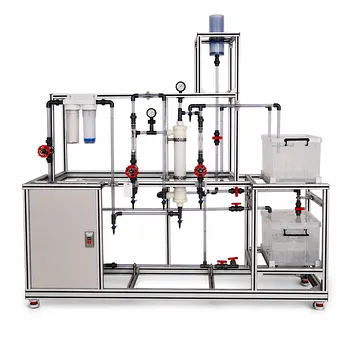
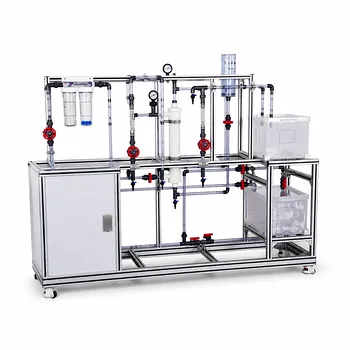
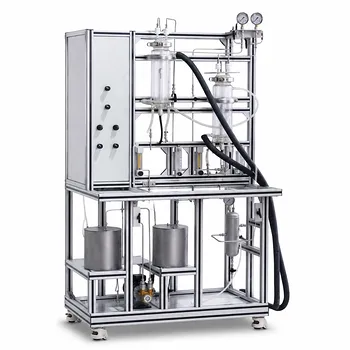
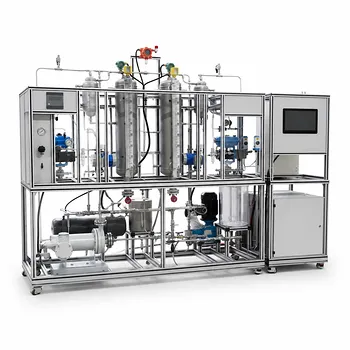
Are you looking to scale up your membrane separation research or optimize process engineering? LABPARK provides premium Educational and Vocational Unit Operations Pilot Plants in chemical engineering, bioprocess & biotech, and environmental & water treatment. Designed to help universities, research institutes, and enterprises bridge the gap between lab-scale discovery and industrial validation, our pilot systems offer the precise control and reliable monitoring you need to test new membrane materials under real-world conditions.
Contact LABPARK today to find the perfect pilot plant solution for your lab or training facility!
Related Products
- Multifunctional Membrane Separation Educational Pilot Plant with Ultrafiltration, Nanofiltration, Reverse Osmosis
- Ultrafiltration Membrane Separation Educational Pilot Plant
- Multi-Functional Membrane Separation Educational Pilot Plant for Unit Operations Lab
- Hollow Fiber Ultrafiltration Membrane Separation Educational Pilot Plant
- Photocatalytic Membrane Separation and Degradation Unit Operations Pilot Plant
People Also Ask
- Pervaporation vs. Vapor Permeation: Handling Suspended Solids in Membrane Pilot Plants
- How do PEI, PVDF, and PSU membranes compare in pilot plants? Find the best fit.
- What are the trade-offs of polymer vs inorganic membranes in teaching pilot plants? Key laboratory comparison.
- How can operators optimize operating conditions and cleaning protocols in membrane separation pilot plants to mitigate fouling?
- What are the advantages of membrane separation in pilot plants? Efficient Organic Vapor Recovery