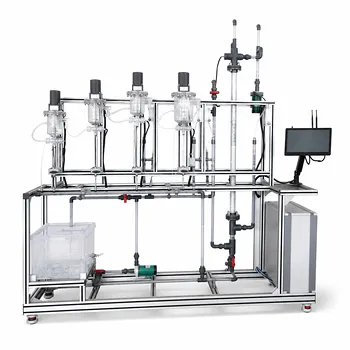
For routine control of absorption and caustic regeneration pilot plants, you can bypass difficult high‑pH electrode measurements entirely. Keep the preliminary scrubber in check with a simple pH watch, and manage caustic replenishment in the polishing scrubber using a straightforward titration to a thymolphthalein indicator endpoint—a method that sidesteps the instability and expense of measuring pH > 12 while still giving you the control you need.
High‑pH electrode measurements are notoriously unreliable in pilot‑scale setups, especially for educational or screening work. The robust alternative is a two‑pronged strategy: use conventional pH monitoring for the preliminary scrubber and a thymolphthalein‑based titration for the polishing scrubber. This approach simplifies daily operations, reduces hardware headaches, and gives perfectly adequate control over caustic depletion.
Why High‑pH Measurements Become a Problem in Pilot Plants
The Limits of pH Electrodes in Strong Alkali
Standard pH electrodes suffer from sodium error, junction potential drift, and rapid degradation when immersed in highly alkaline solutions (typically above pH 12). Recalibration becomes a tedious daily chore, and the readings you get are often too imprecise for reliable process decisions.
In a teaching or small‑scale research lab, you rarely have the luxury of dedicated high‑alkali electrodes with frequent maintenance protocols. The result? You spend more time babying the instrument than studying the absorption process.
The Hidden Cost of Measurement Complexity
For pilot plants that are meant to train operators or screen process conditions, measurement reliability is more important than extreme accuracy. A tricky electrode not only eats up time but also erodes confidence in the results, especially when students are involved.
What you actually need is a rugged, low‑maintenance control method that tells you when caustic is running low and prompts a regeneration or replenishment cycle—without relying on a fragile, often‑drifting signal.
How Titration Replaces High‑pH Electrode Monitoring
The Two‑Scrubber Pilot Plant Setup
Your typical absorption‑regeneration pilot line has two contactors: a preliminary scrubber (S‑1) that does the bulk of the hydrogen sulfide removal, and a polishing scrubber (S‑2) that ensures the outlet gas meets the target specification.
The control strategy can be split because the chemistry in each vessel is different. S‑1 operates with a large inventory of reactive species, while S‑2 is where the final fresh caustic demand must be met precisely.
Simplified Control of the Preliminary Scrubber (S‑1)
For S‑1, you don’t even need to leave the pH‑monitoring world—you just need to stay out of the high‑pH danger zone. Keep the scrubber liquid in Condition II or III (typically pH 8–11, depending on the sulfidity ratio) where a standard pH electrode works well.
This simple, stable measurement tells you whether the bulk absorption capacity is being maintained. If the pH drifts toward more acidic conditions, you know the scrubbing potential is dropping, and you can trigger a regeneration or schedule a liquor bleed.
When the Polishing Scrubber (S‑2) Demands Fresh Caustic
S‑2 operates at a much lower sulfur loading, and its pH can easily drift above 12 as you add fresh sodium hydroxide. That’s exactly the condition that gives pH electrodes fits.
Instead of wrestling with a high‑alkali electrode, you switch to a titration endpoint. The key insight: the amount of fresh caustic available in S‑2 is directly linked to the buffering capacity of the solution, and you can probe that capacity with a simple acid titration using an indicator that changes at a pH far below the problem zone.
The Star of the Show: Thymolphthalein Indicator
Thymolphthalein transitions from blue to colorless between pH 9.4 and 10.6. By titrating a sample of the S‑2 liquor with a standard acid to this endpoint, you’re essentially measuring the total alkalinity that is available for scrubbing—without ever having to measure pH 12 directly.
The procedure is rugged and forgiving. Even a student can titrate to the disappearance of the blue color consistently. The endpoint is sharp and the reagent consumption is cheap, making it ideal for daily or even shift‑wise control.
Interpreting Titration Results to Track Caustic Depletion
When you standardize the titrant and sample volume, the milliliters of acid needed to reach the thymolphthalein endpoint become a direct proxy for available caustic. As active sulfur species build up and consume hydroxide, the titration volume drops.
By also running a separate titration for active sulfur species (such as sulfides and thiosulfates), you can determine how much caustic has been “locked up” in side reactions. Together, these simple titrations give you a clear picture: when the available alkalinity falls below a preset threshold, it’s time to regenerate or replenish the caustic in S‑2. No high‑pH electrode required.
Understanding the Trade‑offs
Accuracy vs. Practicality
A thymolphthalein titration does not give you a real‑time continuous pH value—it gives a laboratory‑style spot measurement with a few minutes of lag. For routine control, this is rarely a problem; the process dynamics in a pilot scrubber are slow enough that a daily or shift‑based titration is sufficient.
However, you must accept that the endpoint lies at a lower pH than the actual scrubber operating condition. This means you are measuring total stoichiometric alkalinity, not the instantaneous free hydroxide ion activity. For screening and educational purposes, that’s an excellent trade‑off because it prevents over‑ or under‑dosing of fresh caustic without needing exotic equipment.
When Simplification Might Go Too Far
If you are performing high‑fidelity kinetic studies or trying to optimize mass transfer at extremely high pH (where the reaction shifts from a kinetic to an instantaneous regime), the simplified titration method may not capture the subtle changes in hydroxide activity that matter.
In those rare cases, you would still need a properly maintained high‑alkali electrode or a different analytical approach. But for at least 90% of pilot‑plant work, the simpler route is the smarter one.
Making the Right Choice for Your Pilot Plant
The best control strategy couples your monitoring method to your real goal.
- If your primary focus is education and operator training: Use the thymolphthalein titration as the gold standard. It teaches the chemistry of alkalinity, buffering, and caustic consumption while keeping the hardware affordable and maintenance‑free.
- If your primary focus is rapid process screening: Rely on the titration to give you a quick, reproducible metric of S‑2 caustic availability. You’ll spend less time troubleshooting electrodes and more time testing different operating conditions.
- If your primary focus is long‑term unsupervised control: Pair the manual titration with a simple, industrial‑grade pH probe in S‑1 and use the titration results to set regeneration schedules. The combination gives you the reliability of a titration‑based check without chasing the high‑pH ghost in S‑2.
Remove the high‑pH electrode from the equation, and you replace a constant source of frustration with a dependable, teachable method that lets you focus on what the pilot plant is really there for—understanding absorption and regeneration, not wrangling instruments.
Summary Table:
| Scrubber Parameter | Traditional Method (High-pH Electrode) | Simplified Alternative | Key Benefit |
|---|---|---|---|
| Preliminary Scrubber (S-1) | High-pH monitoring (prone to drift) | Standard pH monitoring (pH 8–11) | High stability, low maintenance |
| Polishing Scrubber (S-2) | High-alkali electrode (unreliable) | Thymolphthalein titration (endpoint pH 9.4–10.6) | Sharp endpoint, bypasses high-pH errors |
| Ideal Application | High-fidelity kinetic studies | Educational labs & process screening | Cost-effective, easy operator training |
Optimize Your Lab Operations with LABPARK
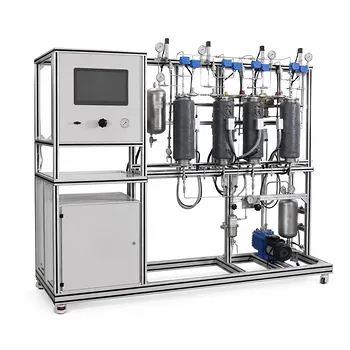
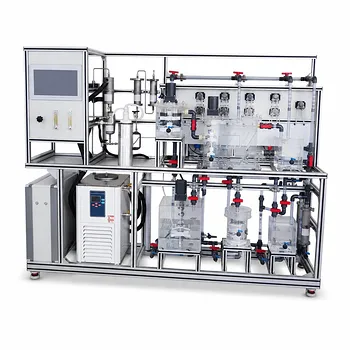
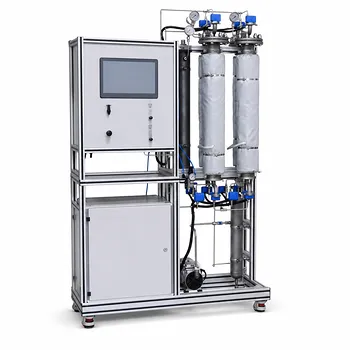
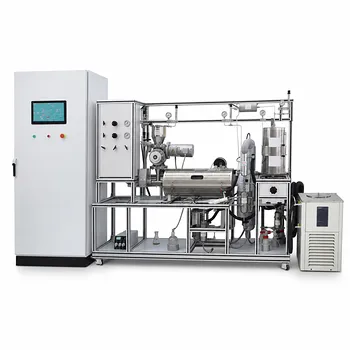
Are you looking to equip your lab with robust, low-maintenance training systems? LABPARK provides premium Educational and Vocational Unit Operations Pilot Plants in chemical engineering, bioprocess & biotech, and environmental & water treatment. Designed specifically for universities, research institutes, and enterprises, our pilot plants simplify complex processes to help your students and researchers focus on learning and innovation.
Simplify your process control and scale up your research efficiency—contact our technical experts today to find the perfect pilot plant solution for your institution!
Related Products
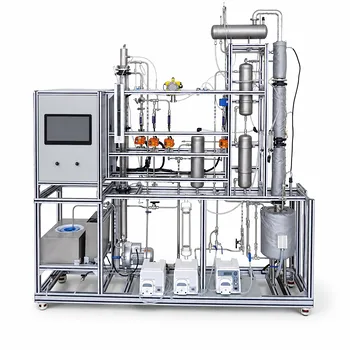
- Carbon Dioxide Absorption and Desorption Educational Pilot Plant for Carbon Capture Studies
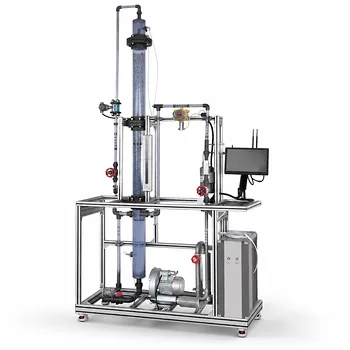
- Dual-Mode Gas Absorption and Desorption Unit Operations Training Pilot Plant
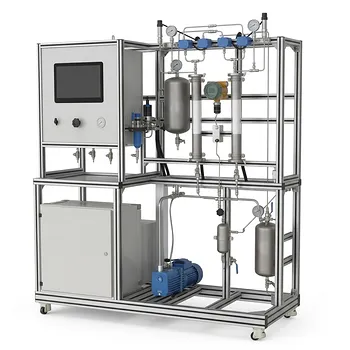
- Absorption and Desorption Educational Unit Operations Pilot Plant
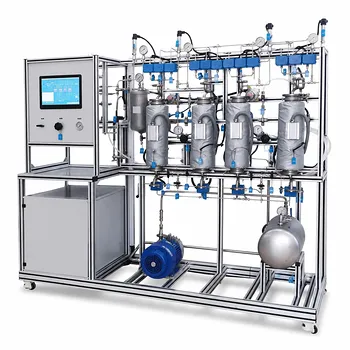
- Multimodal Absorption and Desorption Pilot Plant for Unit Operations Training
- Packed Bed Absorption Educational Unit Operations Pilot Plant
People Also Ask
- How does operating pressure influence the transition between absorption and desorption in a CO2 pilot plant?
- How do temperature variations affect CO2 transport models in pilot plants? Model vs Reality
- What unit operations are critical for CCUS training pilot plants? Build hands-on engineering expertise.
- How do electrolytes affect phase equilibrium in absorption pilot plants, and how to calculate it?
- Why is critical surface tension key in column internals? Optimize gas absorption pilot plant efficiency