Operators of chemical engineering pilot plant reactors gain precise, independent control over the molecular weight distribution (MWD) in step-growth polymerization by introducing monofunctional chain stoppers.
These agents, such as acetic acid in nylon‑6 production, cap the reactive chain ends and shift the average molecular weight to a lower, predetermined value without fundamentally altering the width of the distribution. By combining this stoichiometric lever with deliberate choices in reactor configuration and feed strategy, pilot plant operators can tailor polymer properties to match industrial targets or research objectives.
While high conversion is the natural driver of molecular weight in step-growth systems, chain stoppers provide the missing dial—they let you fix the maximum average chain length at full conversion, turning a variable outcome into a controlled parameter. This decoupling of conversion and molecular weight is the foundation of reproducible polymer formulation.
The Fundamental Limit of Conversion‑Driven MWD
In a pure step‑growth polymerization—where only bifunctional monomers react—the molecular weight is a direct function of how many functional groups have reacted. High‑performance materials demand long chains, but this is only achievable when conversion creeps extremely close to 1. There is no built‑in mechanism to halt growth early.
Why Conversion Alone is a Blunt Instrument
The average degree of polymerization rises hyperbolically with conversion. At 90% conversion, the typical chain is still short. You must push above 99% conversion to reach industrial molecular weights. This tight dependence means that small fluctuations in reaction time or temperature can cause large swings in product viscosity and mechanical properties.
The Runaway Viscosity Problem
As chains lengthen near full conversion, the reactor contents become highly viscous. In a pilot plant, this viscosity spike can stall agitation, hinder heat transfer, and lead to inconsistent product quality—especially in batch reactors where conditions evolve over time.
The Role of Chain Stoppers: Independent Control of Average Chain Length
Chain stoppers are monofunctional molecules that deliberately introduce a controlled imbalance into the reaction stoichiometry. By blocking one end of a growing chain, they set a mathematical ceiling on the molecular weight achievable at complete conversion.
How a Single Reactive Group Changes Everything
In a typical nylon‑6 polymerization, adding a small amount of acetic acid (a monofunctional carboxylic acid) provides a terminal group that can react with an amine end but cannot propagate further. This creates two populations of chains: those with two reactive ends (capable of continued growth) and those with one permanently blocked end. The stoichiometric ratio of the chain stopper to the bifunctional monomer determines the maximum number-average degree of polymerization at full conversion.
Shifting the Mean, Preserving the Shape
The key insight from the primary reference is what chain stoppers do not change. They shift the entire molecular weight distribution to a lower mean while maintaining the same statistical shape. The polydispersity remains characteristic of a step‑growth process; you simply truncate the high‑molecular‑weight tail before it appears, eliminating the risk of an unprocessable, ultra‑high‑viscosity product.
Pilot Plant Implementation: Precision Dosing and Feed Strategies
Translating stoichiometric control into a reproducible pilot‑plant procedure demands hardware that can meter these tiny, influential streams accurately.
Chemical Dosing Pumps and Multiple Feed Inlets
The supplementary references highlight that a well‑instrumented pilot plant should include precise chemical dosing pumps and multiple feed inlets. This configuration allows operators to introduce the chain stopper at a controlled, constant rate during propagation, rather than dumping it in all at once. By varying the feed rate, students and researchers can systematically study how the modifier concentration maps directly to the final average chain length and solution viscosity.
Preventing Localized Over‑Stopping
A slow, metered addition ensures the chain stopper is evenly distributed throughout the reacting mass. Poor mixing can create localized zones where too many chains are capped early, leading to a bimodal or skewed distribution that deviates from the desired statistical shape.
Broader Context: Reactor Configuration as a Secondary Control Lever
While chain stoppers provide the primary tool for shifting the average molecular weight, the choice of reactor configuration can independently alter the width of the distribution.
Denbigh’s Rule in Step‑Growth Systems
In a continuous stirred-tank reactor (CSTR), the mean residence time of a growing polymer chain is finite. For step‑growth polymerizations—where the chain lifetime is long relative to the residence time—a CSTR produces a broader MWD than an equivalent batch reactor. The continuous outflow acts as an effective termination mechanism, removing some chains early while others reside longer. If a pilot plant study needs to mimic the broad distributions found in certain continuous industrial processes, a CSTR is the appropriate configuration.
Batch Reactors for Narrower Distributions
A batch reactor, with its uniform residence time for all chains, yields a narrower MWD under otherwise identical conditions. When the research goal is to isolate the effect of chain stoppers without the added dispersion from flow dynamics, a batch setup offers a cleaner experimental baseline.
Understanding the Trade‑offs and Common Pitfalls
Chain stopper control is powerful but unforgiving of imprecision. Every molecule of chain stopper permanently blocks a reaction site, so small weighing errors translate into large molecular weight shifts.
The Danger of Over‑Stabilization
Too much chain stopper produces oligomers instead of high polymers. The product becomes a brittle, low‑strength material with little commercial value. Operators must validate the stoichiometric calculations with small‑scale trials before committing a full pilot batch.
Thermal and Mixing Integration
Because chain stoppers are often added as a liquid stream, their introduction can cause localized cooling or dilution. The reactor’s heating system must compensate to keep the reaction temperature high enough to maintain the equilibrium-driven conversion, especially in the long residence times typical of step‑growth processes.
Purity and Side Reactions
Impurities in the chain stopper or monomer feed can act as unintended chain stoppers. Pilot plant operators must track the total monofunctional impurities as part of the overall stoichiometric balance; otherwise, the true effective chain‑stopper concentration will exceed the intended value.
Making the Right Choice for Your Pilot Plant Goal
The ideal control strategy depends entirely on what you need the polymer to demonstrate or produce.
- If your primary focus is demonstrating precise, industrial‑style formulation control: Use a chain stopper at a calculated concentration to hit a target molecular weight at full conversion. Invest in a calibrated dosing pump and validate the average molecular weight via end‑group analysis or viscosity measurements.
- If your primary focus is studying the fundamental kinetics of step‑growth polymerization: Rely on fractional conversion as the sole molecular weight driver. Start with a perfectly balanced stoichiometry and stop the reaction at various conversion levels to map the relationship without the confounding variable of a chain stopper.
- If your primary focus is investigating the effect of reactor configuration on MWD breadth: Compare a batch run against a CSTR run under identical chain‑stopper and conversion conditions. Use the CSTR to intentionally broaden the distribution and show how residence time distribution acts as an additional control dimension.
- If your primary focus is teaching how to prevent runaway viscosity in a pilot plant: Introduce the chain stopper incrementally and measure the torque on the agitator. Correlate the drop in torque with the calculated reduction in average chain length, making the relationship between molecular weight and rheology tangible.
Chain stoppers transform step‑growth polymerization from a process dictated by equilibrium into a process dictated by design—and in a pilot plant, that means turning a chemical inevitability into an engineering choice.
Summary Table:
| Control Lever | Primary Mechanism | Impact on MWD | Ideal Reactor Setup |
|---|---|---|---|
| Chain Stoppers | Cap reactive chain ends stoichiometrically | Shifts average MWD lower; maintains shape | Batch (for calibration) |
| Reactor Type (CSTR) | Residence time distribution effects | Broadens the MWD | Continuous (CSTR) |
| Reactor Type (Batch) | Uniform residence time for all chains | Narrows the MWD | Batch |
| Dosing Control | Incremental feeding of modifiers | Prevents localized over-stopping | Automated Dosing Pump |
Optimize Your Polymerization Research with LABPARK
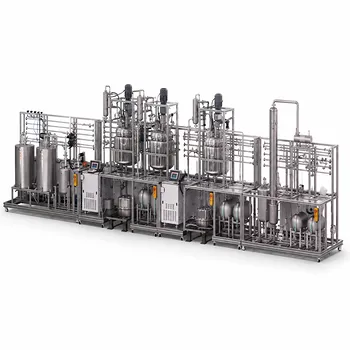
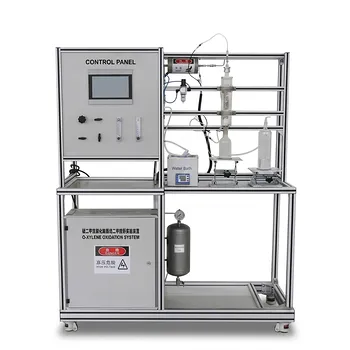
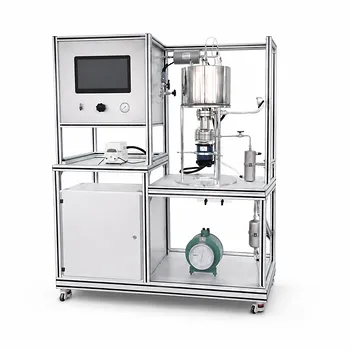
Are you looking to equip your lab or facility with precise reaction control systems? LABPARK provides premium Educational and Vocational Unit Operations Pilot Plants in chemical engineering, bioprocess & biotech, and environmental & water treatment. Designed specifically for universities, research institutes, and enterprises, our pilot plants enable hands-on training and advanced research in polymerization kinetics, MWD control, and reactor scaling.
Contact LABPARK today to discuss your pilot plant requirements and get a customized solution for your institution!
Related Products
- Fixed Bed Gas Solid Catalytic Reaction Educational Pilot Plant
- Multi-Reactor Educational Pilot Plant for Reaction Engineering Unit Operations
- Residence Time Distribution and Reactor Flow Characteristics Determination Educational Pilot Plant
- Fixed-Bed Chemical Reaction and Gas Dust Tar Removal Unit Operations Pilot Plant
- Tubular Reactor Flow Characteristics Determination Educational Unit Operations Pilot Plant
People Also Ask
- How do reactor pilot plants safely study gas-solid reactions? Master kinetics with thermal & flow control.
- How does the Mears criterion evaluate transport resistance? Key Guide to Intrinsic Kinetics
- Fluidized vs. Fixed Bed Reactors: Comparing Heat & Complexity in Pilot Plants
- Why is a multibed configuration necessary for exothermic reactions? Optimize your pilot plant trajectory.
- What are the differences between pseudohomogeneous and heterogeneous models in pilot plants?