Fiber-optic immunosensors are regenerated by washing with an analyte-free buffer, which allows the bound target to dissociate naturally while a fluorescent tracer re-binds to the antibody sites. This restores a clean baseline signal within a few minutes, enabling near-continuous monitoring. The critical compromise is between antibody affinity and reversibility: high-affinity antibodies deliver outstanding sensitivity but cling to the analyte, blocking fast regeneration. For pilot plants, you intentionally select moderate-affinity reagents and tune the flow format so the sensor can quickly reset after each measurement.
Core Takeaway: Rapid regeneration is achieved by controlling dissociation with a buffer flush and using moderate-affinity antibodies. You accept a slight trade in ultimate sensitivity to gain the reversibility needed for real-time, cyclic operation in bioprocess and wastewater pilot plants.
How Regeneration Works in Flow-Injection Systems
The Wash-and-Re-bind Cycle
In a flow-injection setup, the sensor surface is continuously bathed in sample or carrier buffer. Between measurements, a pulse of analyte-free buffer sweeps across the sensing element. The target analyte – no longer present in solution – begins to detach from the immobilized antibodies. Simultaneously, the fluorescent tracer molecules that were displaced during binding can re-associate, returning the baseline fluorescence to its original level. This cycle readies the sensor for the next sample without damaging the antibody layer.
Why Moderate-Affinity Is the Sweet Spot
The dissociation rate (how fast the analyte leaves the antibody) directly governs regeneration speed. High-affinity antibodies form extremely stable complexes that need minutes to hours to break apart, even in clean buffer. In a pilot plant, that delay kills the idea of continuous monitoring. A moderate-affinity fluorescent probe – or an antibody with a faster dissociation constant – can strip away within one to two minutes, giving you a fresh sensor surface every cycle.
The Affinity-Reversibility Trade-off, Unpacked
Sensitivity vs. Speed
Detection limit and regeneration speed sit at opposite ends of a seesaw. If you push for single-digit ng/ml sensitivity, you inherently lock the analyte onto the antibody longer, compromising reversibility. For pilot-scale wastewater or bioprocess streams where concentrations fluctuate dynamically, the ability to track trends quickly often outweighs the need for extremely low detection limits.
A Competitive Immunoassay Perspective
Many fiber-optic biosensors use a competitive format: a fluorescent analog competes with the target for antibody binding sites. When the real analyte arrives, it displaces the tracer, causing a fluorescence drop. Regeneration then requires the analyte to leave and the tracer to return. By designing a tracer with slightly lower affinity than the real target, you ensure the buffer wash can easily push the real analyte out and pull the tracer back in – a deliberate compromise that makes regeneration reproducible.
What You Sacrifice (and Why It’s Acceptable)
The main sacrifice is a slightly elevated detection limit – perhaps shifting from 1 ng/ml to 10 ng/ml. In environmental pilot plants targeting compounds like TNT, 8–10 ppb (parts per billion) is still well within regulatory and research relevance. You trade a sliver of paper sensitivity for the much larger prize of real-time contamination trend data without manual probe replacement.
Complementary Challenges in Pilot-Plant Integration
Matrix Interference and Robust Reliable Operation
Even a perfectly regenerated sensor can fail if the waste stream contains extremes of pH, high ionic strength, or toxic compounds. Buffer flushing alone can’t fix protein fouling or electrode drift. In pilot plants, you must pair regeneration chemistry with robust in-situ calibration protocols and, occasionally, a sacrificial pre-filter to protect the fiber tip. The goal is to preserve the antibody activity over hundreds of cycles.
Interfacing with Real Media
Wastewater and bioreactor sludge are far from the clean buffers of a lab. Particulates, grease, and variable flow can shear the fiber coating or confuse the optical signal. Sensors using evanescent wave technology read only the first ~100 nm from the fiber surface, which reduces bulk noise but still demands that the regeneration wash displace foulants. A successful continuous system will often incorporate a short, automated cleaning step (a mild detergent or chaotropic salt pulse) between analyte-free buffer rinses to extend sensor lifetime.
Common Pitfalls to Avoid
Obsessing Over the Lowest Possible Detection Limit
In a field environment, chasing the absolute lowest ng/ml usually backfires. The antibody-dissociation speed becomes the bottleneck, and you end up with a sensor that is essentially single-use. Accept that "good enough" sensitivity, coupled with fast regeneration, delivers the continuous data train that pilot plants actually need.
Neglecting Baseline Stability
Even with successful regeneration, the baseline can creep over hours due to antibody leaching or photobleaching. Implement automated baseline correction algorithms and periodic re-calibration checks—ideally triggered by the same flow-injection controller that handles the buffer wash.
Over-Rinsing or Aggressive Regeneration
A buffer wash is gentle, but some operators resort to low-pH glycine solutions or organic solvents to speed things up. Those can denature the antibody, ruining the sensor for good. Stick to the mildest protocol that achieves full dissociation within your allowed cycle time.
Making the Right Choice for Your Application
Based on what you need to monitor in your pilot plant, here’s how to calibrate your regeneration strategy.
- If your primary focus is tracking rapid concentration fluctuations: Choose a moderate-affinity antibody and a competitive immunoassay with a weakly-binding tracer. Regenerate with a short buffer flush (30–120 s) and accept a detection limit in the low ppb range.
- If your primary focus is detecting the lowest possible concentration in a stable stream: Use a high-affinity antibody but accept a slower regeneration cycle. Consider running multiple sensors in parallel so one is always being regenerated while another measures.
- If your primary focus is long-term unattended operation: Prioritize sensor robustness over sensitivity. Integrate automated buffer rinses, periodic baseline checks, and gentle cleaning pulses to manage fouling, even if that means a two- to three-minute regeneration window.
The clear path to feasible continuous monitoring in pilot plants is not to push sensor chemistry to its limit, but to deliberately build in the necessary chemical compromises that give you reliable, repeatable data cycle after cycle.
Summary Table:
| Monitoring Focus | Regeneration Strategy | Key Compromise / Trade-off |
|---|---|---|
| Tracking Rapid Fluctuations | Moderate-affinity antibody + short buffer flush (30–120s) | Higher detection limit (low ppb range) |
| Low-Concentration Detection | High-affinity antibody + parallel sensor setup | Slower regeneration cycle per sensor |
| Long-Term Unattended Operation | Gentle cleaning pulse + automated buffer rinse & baseline check | Slower 2–3 minute cycle time |
Optimize Your Bioprocess & Wastewater Systems with LABPARK
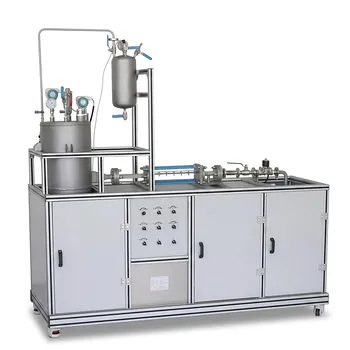
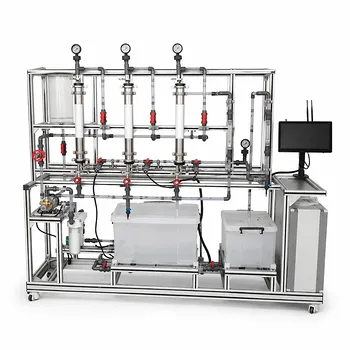
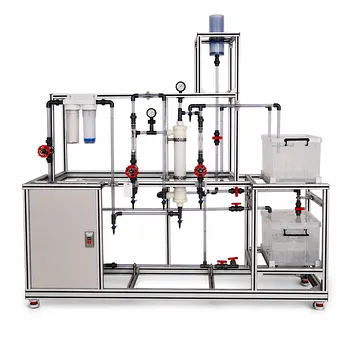
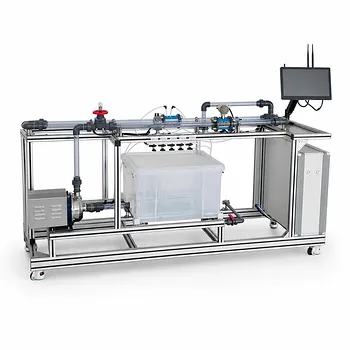
Successfully implementing real-time monitoring with advanced biosensors requires a robust, reliable pilot plant infrastructure. LABPARK provides state-of-the-art Educational and Vocational Unit Operations Pilot Plants in chemical engineering, bioprocess & biotech, and environmental & water treatment.
Tailored for universities, research institutes, and enterprises, our systems offer the perfect testing ground for sensor integration, process optimization, and hands-on training.
Ready to elevate your research and training capabilities? Contact LABPARK today to discuss your custom pilot plant requirements.
Related Products
- Cavitation Phenomenon Demonstration and Analysis Educational Unit Operations Pilot Plant
- Multifunctional Membrane Separation Educational Pilot Plant with Ultrafiltration, Nanofiltration, Reverse Osmosis
- Ultrafiltration Membrane Separation Educational Pilot Plant
- Orifice and Venturi Flowmeter Calibration Educational Pilot Plant for Fluid Mechanics Laboratory
- Constant Pressure Filtration Educational Unit Operations Pilot Plant
People Also Ask
- How do pilot plants teach U-tube manometers? Master Differential Pressure Calculations
- How to teach pump cavitation vs. gas binding? Interactive pilot plant teaching guide.
- What factors should be considered when selecting float valve types? F1 vs. V-4 vs. T-type Guide
- How does an FIA biosensor improve fermentation monitoring compared to HPLC? Speed & automation.
- What are key parameters for stable biosensor FIA in bioprocess training? Achieve optimal performance.