The secret to teaching pump failure modes isn't a complex equation—it's a simple contrast. Instructors can make the difference between gas binding and cavitation crystal clear by framing them as failures at opposite ends of the pump's operation: one happens when you start the pump without liquid, and the other while the pump is running. Use the pilot plant's transparent suction lines and pressure sensors to turn these abstract threats into visible, measurable events that students will never forget.
Gas binding is a startup failure caused by air in the casing that prevents the pump from priming, while cavitation is an operational failure where liquid vaporizes inside the pump and collapses, destroying the impeller. In a pilot plant, you can demonstrate the first by simply forgetting to prime, and the second by throttling a suction valve.
The Foundational Difference: Startup vs. Operation
Instructors must first anchor these concepts in when the problem strikes. This simple timeline instantly resolves half the confusion.
Two Failure Modes, One Common Pump
Imagine the pump has two distinct personalities. Gas binding is a cold-start problem. The moment the pump is switched on, if the casing is full of air, nothing happens.
Cavitation is a hot-running problem. The pump is already delivering liquid when the inlet pressure drops too low, triggering an internal vapor explosion.
The Physics in Plain Language
For gas binding, remind students that air is much lighter than water. A centrifugal pump’s impeller cannot generate enough centrifugal force with air to create a suction vacuum. It simply spins freely, unable to draw liquid in.
For cavitation, the liquid is present, but the impeller’s motion creates a local low-pressure zone. If that pressure dips below the liquid’s vapor pressure, the liquid instantly boils, forming bubbles that collapse violently when they hit higher-pressure regions.
Teaching Gas Binding with a Priming Demonstration
A hands-on lesson sticks forever. The pilot plant is ideal for showing exactly what happens when a pump is neglected.
The “Dry Start” Experiment
Instructors should start with a completely unprimed pump. The suction line is empty. The casing is air-filled. When students turn on the pump, the discharge gauge reads zero and no flow appears—the pump is air-bound.
This is a vivid lesson in the necessity of priming. The pump must be filled with liquid and the suction line must be free of air pockets before the motor is energized.
The Role of the Foot Valve and Liquid Seal
Show students the foot valve in the pilot plant’s suction line. Its job is to hold the column of liquid in the suction pipe when the pump stops. If this valve is leaking, the liquid drains back into the tank, reintroducing air.
Instructors can deliberately crack open a drain on the suction line before startup. The resulting failure demonstrates that even a small air leak can cause gas binding.
Teaching Cavitation with Pressure and Visualization
Cavitation is less intuitive, but pilot plant instrumentation makes it concrete.
The Pressure Drop That Boils Water
Begin by having students calculate the vapor pressure of water at the tank temperature. Then, point to the suction pressure gauge near the pump inlet.
Instructors can explain: “If this gauge reading falls below that vapor pressure number, the water here is no longer a liquid—it’s boiling.”
To trigger cavitation, partially close a valve on the suction line. The pressure gauge will drop dramatically. Soon after, students hear a sound like gravel rattling inside the pump. That’s the implosion of vapor bubbles.
Visualizing the Bubbles and the Damage
If the pilot plant has a transparent suction line, students can often see the bubble formation just before the noise starts. This visual connection between low pressure, vapor bubbles, and pump noise is a powerful teaching moment.
After the exercise, if possible, open the pump casing to show any pitting damage on the impeller from previous bouts of cavitation. Seeing real material erosion cements the lesson.
Leveraging Pilot Plant Features for Hands-On Learning
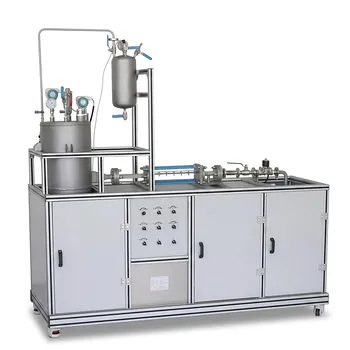
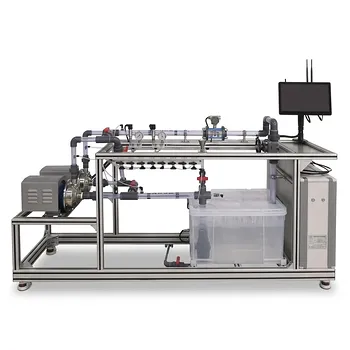
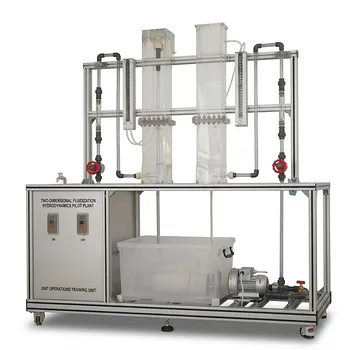
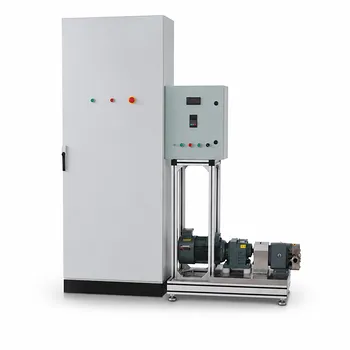
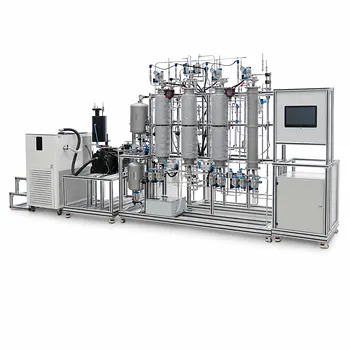
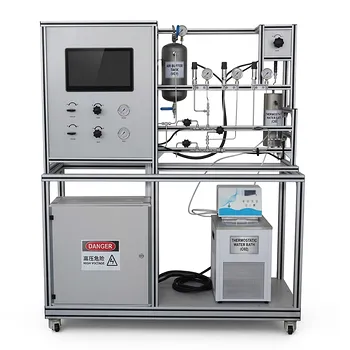
The educational unit operations plant is purpose-built for these comparisons. Its design should be actively exploited.
Transparent Lines as a Teaching Window
Transparent suction piping turns a black box into a live demonstration. Students can watch the fluid column for air pockets (gas binding) or for the sudden fog of vapor bubbles (cavitation). This visual feedback is far more effective than a lecture slide.
Pressure Sensors and Data Logging
Modern pilot plants often have electronic sensors. Instructors can task students with logging suction pressure and flow rate over time. Plotting the pressure trend as the suction valve is closed reveals the exact moment the system crosses the vapor pressure threshold, triggering cavitation.
This quantitative approach reinforces the theoretical relationship: high fluid velocity creates low local pressure.
Comparing a Flooded Suction Setup
The plant layout is probably designed with the tank elevated above the pump to provide a positive suction head. Instructors can explain that this flooded suction elevates the entire inlet pressure, making cavitation far less likely. Students can calculate the Net Positive Suction Head (NPSH) available and compare it to the pump’s required NPSH.
Common Pitfalls and Misconceptions to Address
Novice operators often misattribute symptoms. A clear discussion of boundaries prevents future errors.
Misconception 1: “No Flow Means Cavitation”
Students often think that if a pump makes noise but gives no flow, it must be cavitating. Clarify that cavitation usually occurs while some flow exists. A completely air-bound pump makes a quieter, higher-pitched whine, not the gravelly sound of cavitation. The discharge pressure gauge tells the story: near zero for gas binding, but fluctuating and lower-than-normal for cavitation.
Misconception 2: “Closing the Discharge Valve Prevents Cavitation”
Some think throttling the discharge reduces pump damage. In reality, throttling the discharge does not fix low suction pressure; it only masks the symptom by reducing flow. The root cause—low inlet pressure—remains.
The Trade-off of Large Suction Piping
While using larger-diameter suction pipes reduces frictional losses and helps prevent cavitation, it’s not a free solution. Larger pipes are more expensive and harder to lay out in a tight pilot plant. This introduces practical engineering trade-offs students must consider.
The Limits of Foot Valves
Foot valves prevent gas binding, but they can restrict suction flow if undersized or if debris catches in them. An overly aggressive foot valve can ironically lower suction pressure enough to promote cavitation. This nuanced interplay is a great discussion point for advanced learners.
How to Build an Unforgettable Teaching Module
The goal is to move beyond theory and into an intuitive, physical understanding that sticks.
- If your primary focus is creating a memorable first lesson: Start with the unprimed pump experiment. The dramatic failure of a dry start captures attention immediately and makes the concept of priming self-evident.
- If your primary focus is teaching the physics of phase change: Use the suction throttling demonstration while students monitor pressure gauges and listen for the cavitation rattle. Plot the pressure trend and map it directly to the liquid’s vapor pressure.
- If your primary focus is plant design and safety: Walk students through the elevation of the suction tank. Have them calculate the available NPSH and discuss why this layout choice is a fundamental safeguard against impeller damage.
- If your primary focus is troubleshooting skills: Create a blind test where you secretly introduce either an air leak or a suction restriction, and have students diagnose the problem solely by gauge readings, sound, and visual cues.
By making the difference between a silent, air-filled spin and a crackling, imploding liquid visible and audible, you transform a dry maintenance warning into a visceral lesson that stays with every future engineer.
Summary Table:
| Feature | Gas Binding | Cavitation |
|---|---|---|
| Timing | Startup failure (before pump primes) | Operational failure (while pump is running) |
| Root Cause | Air in casing prevents suction vacuum | Pressure drops below vapor pressure, boiling liquid |
| Key Symptoms | Zero flow, zero pressure, quiet spin | Fluctuating flow, gravel-like noise, impeller pitting |
| Prevention | Proper priming, functional foot valves | Elevating suction tank, maintaining sufficient NPSH |
Bring Fluid Dynamics to Life with LABPARK
Provide your students and researchers with a clear, hands-on understanding of complex fluid dynamics. LABPARK provides state-of-the-art Educational and Vocational Unit Operations Pilot Plants in chemical engineering, bioprocess & biotech, and environmental & water treatment for universities, research institutes, and enterprises.
Our systems feature transparent pipelines, precise sensors, and integrated data-logging capabilities designed to make abstract phenomena like cavitation and gas binding visible, measurable, and memorable.
Ready to upgrade your teaching and research capabilities? Contact LABPARK today to find the ideal pilot plant solution for your lab!
Related Products
- Cavitation Phenomenon Demonstration and Analysis Educational Unit Operations Pilot Plant
- Centrifugal Pump Performance Determination Educational Unit Operations Pilot Plant
- Two-Dimensional Fluidization Hydrodynamics Educational Pilot Plant for Unit Operations Training
- Absorption and Desorption Educational Unit Operations Pilot Plant
- Quantitative Dosing and Liquid Flow Control Educational Unit Operations Pilot Plant
People Also Ask
- How do pilot plants teach U-tube manometers? Master Differential Pressure Calculations
- What factors should be considered when selecting float valve types? F1 vs. V-4 vs. T-type Guide
- How does an FIA biosensor improve fermentation monitoring compared to HPLC? Speed & automation.
- What are key parameters for stable biosensor FIA in bioprocess training? Achieve optimal performance.
- What are the key cuvette maintenance precautions? Ensure Accurate Spectrophotometric Data