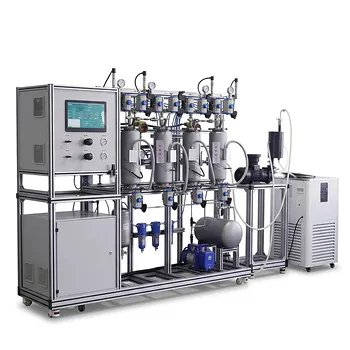
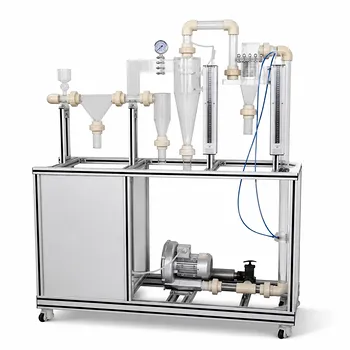
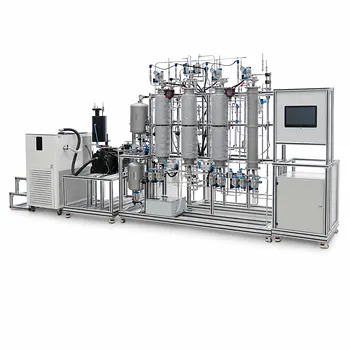
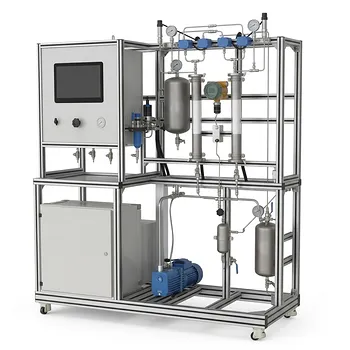
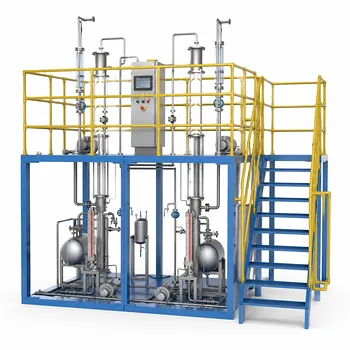
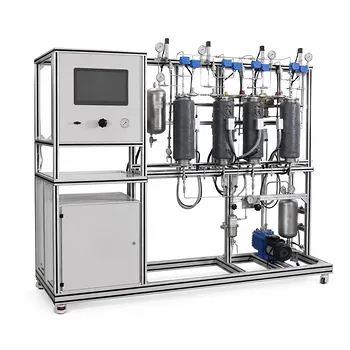
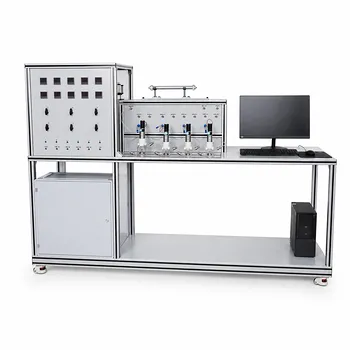
Hands-on pilot plants transform abstract separation theory into visceral, comparative understanding. Educational unit operations pilot plants allow students to physically operate both a sequential separation train and a front-end deethanization configuration using the same feed. This direct A/B comparison makes concrete the trade-offs in energy consumption, cut sharpness, and thermal fouling risk that differentiate these two routes for cracking gas separation.
The core insight is that pilot plants do not merely illustrate how each sequence works—they force students to wrestle with the real, consequential trade-off between the refrigeration load savings of front-end deethanization and its elevated fouling risk from high-temperature reboiler operation. Observing these phenomena firsthand builds the deep process intuition that simulations alone rarely deliver.
The Two Configurations at a Glance
The Baseline: Sequential Separation
Sequential separation is the technologically mature workhorse of ethylene plants. In this familiar arrangement, the demethanizer, deethanizer, and depropanizer follow a logical order after compression and chilling. It is highly adaptable to feedstock variations—a property readily demonstrated on a pilot plant by switching between light and heavy synthetic feedstocks and watching the column profiles respond without fundamental reconfiguration.
The Alternative: Front-End Deethanization
Front-end deethanization moves the deethanizer to the very beginning of the separation train, ahead of the deep chilling system. This strategy is most attractive for cracked gas with low heavy-component content. By removing C3+ components early, it reduces the mass flow sent to the cryogenic demethanizer, shrinking the refrigeration load of the deep chilling system. On a pilot plant, students can quantify this effect in real time by comparing the compressor power or coolant duty between the two configurations for the same feed.
How Pilot Plants Bring the Differences to Life
Measuring Energy Efficiency and Refrigeration Load
With multi-column pilot plants, students can log reboiler steam consumption and refrigerant compressor work for both sequences side by side. They observe directly that front-end deethanization shifts a portion of the separation load away from cryogenic temperatures, often yielding a measurable drop in overall refrigeration demand. Supplementing the primary comparison with a low-pressure demethanizer run further highlights energy trade-offs, as lowering the demethanizer pressure reduces the reboiler temperature needed in the deethanizer.
Tracking Component Split Sharpness
Pilot plants equipped with in-line analyzers or sample ports let students measure the actual component splits—for example, the leakage of C2s into the bottoms stream or the carryover of C3s overhead. Sequential separation’s adaptability to feed changes becomes evident when students alter the feed composition and watch the column maintain sharper cuts with minimal adjustment. In the front-end configuration, split sharpness can degrade more quickly if heavy components are present, teaching the importance of feed characterization directly.
Visualizing Thermal and Fouling Risks
This is where a physical pilot plant offers a singular advantage. In a front-end deethanization setup, the deethanizer reboiler operates at significantly higher temperatures than it would in a sequential train. Students can observe the temperature profile and then intentionally push the reboiler to conditions that promote diolefin polymerization. While a full-blown fouling event at pilot scale may take a different form, the measured temperature excursions, pressure drop trends, and even the onset of discolored bottoms demonstrate the fouling risk mechanism in a way no textbook can replicate.
Understanding the Trade-offs
A well-designed educational pilot plant doesn’t declare a winner; it exposes the inherent compromises. Front-end deethanization delivers real energy and capital savings on the cold end but demands a feed light in heavy, fouling-prone components. Sequential separation offers robustness and thermal safety at the cost of higher refrigeration duty. The pilot plant makes these trade-offs operational: students can deliberately introduce a spike of heavy dienes and see the fouling risk materialize in the front-end case, while the sequential arrangement absorbs the upset more gracefully.
Pilot-scale demonstrations also reveal limitations that inform real-world design. The kinetics of fouling at small scale may not fully replicate industrial severity, but the temperature thresholds that trigger fouling are immediately apparent. This teaches students to rely on experimental trends and then validate their conclusions with process simulation models, which the pilot plant data can calibrate.
Making the Right Choice for Your Teaching Goal
The value of an olefins separation pilot plant depends entirely on what you aim to illustrate. Use this guide to prioritize:
- If your primary focus is teaching fundamental distillation principles: Start with the sequential separation train. Its familiarity and forgiving nature create a clear, methodical canvas for studying heat and mass transfer, reflux ratio effects, and cut-point control without the distraction of extreme fouling behavior.
- If your primary focus is energy integration and optimization: Run comparative experiments between sequential and front-end deethanization, and extend them to low-pressure versus high-pressure demethanizer operation. Have students plot energy consumption against recovery to internalize the real cost of subambient separation.
- If your primary focus is operational safety and reliability: Demonstrate front-end deethanization under varying feed compositions, deliberately approaching thermal fouling thresholds. This teaches risk assessment, safe operating envelopes, and the economic consequences of unplanned shutdowns—lessons that are hard to convey through process simulation alone.
- If your primary focus is simulation model validation: Let students build steady-state models of both sequences, predict the energy use and separation profiles, and then confront those predictions with live pilot plant data. The gap between model and measurement builds lasting respect for the nuances that real hydraulics and thermodynamics introduce.
The true power of an educational pilot plant lies in making the unavoidable trade-offs between energy, robustness, and operability tangible—turning a list of pros and cons into a lived engineering judgment.
Summary Table:
| Feature | Sequential Separation (Baseline) | Front-End Deethanization (Alternative) |
|---|---|---|
| Refrigeration Load | Higher (cryogenic demethanizer handles full mass flow) | Lower (early C3+ removal reduces cryogenic load) |
| Fouling Risk | Lower (safer thermal profile in reboilers) | Higher (elevated reboiler temperatures promote fouling) |
| Feed Adaptability | High (easily handles light to heavy feed variations) | Low (best suited for feeds with low heavy-component content) |
| Primary Teaching Focus | Distillation fundamentals & cut-point control | Energy optimization & thermal risk assessment |
Bring Complex Chemical Engineering Concepts to Life
At LABPARK, we provide state-of-the-art Educational and Vocational Unit Operations Pilot Plants designed specifically for universities, research institutes, and enterprises. Our systems span critical disciplines including chemical engineering, bioprocess & biotech, and environmental & water treatment.
Why Partner with LABPARK?
- Bridge the Gap: Help students master real-world process dynamics, energy integration, and thermal fouling risks that simulations cannot fully replicate.
- Industry-Grade Equipment: Safe, robustly engineered pilot plants designed for hands-on, repetitive educational use.
- Tailored Configurations: Custom systems built to match your specific curriculum goals and research requirements.
Ready to elevate your laboratory training and research capabilities? Contact LABPARK today to request a quote!
Related Products
- Methane Cracking Educational Unit Operations Pilot Plant
- Multi-Component Gas Pressure Swing Adsorption Pilot Plant for Unit Operations Education
- Gas-Solid Heterogeneous Separation Demonstration Educational Unit Operations Pilot Plant
- Bench Scale Dual Column Gas Separation and Capture Educational Pilot Plant
- Fixed-Bed Chemical Reaction and Gas Dust Tar Removal Unit Operations Pilot Plant
People Also Ask
- How do ethane vs naphtha cracking influence teaching pilot plant analytical configurations? Key Design Guide
- How can flow-NMR be integrated with pilot plant reactors to monitor kinetics? A Complete Guide
- How do cracking temperature and residence time affect olefin yield? Pilot Plant Guide
- How are utility consumption rates integrated into chemical pilot plant economic evaluations?
- How should OSBL investments be estimated? Key Steps to Avoid Budget Overruns in Pilot Plant Projects