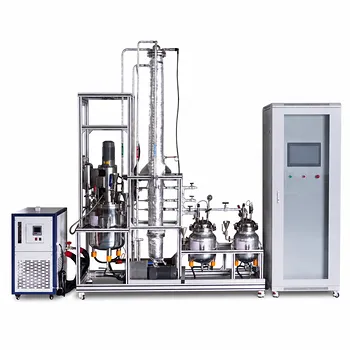
Simple calorimetry teaches the basics—pilot plants teach engineering. Chemical engineering unit operations pilot plants let students move far beyond a Styrofoam cup and a thermometer. They provide jacketed reactors, integrated temperature sensors, flow meters, and computerized data acquisition that capture the heat of neutralization and chemical reaction thermodynamics with industrial realism. In this environment, students perform live energy balances, calculate reaction enthalpy directly, and see how heat behaves when it must be managed at scale—not just measured in an insulated beaker.
Educational pilot plants don’t just confirm textbook formulas. They force students to confront heat loss, reactor heat capacity, non-ideal mixing, and dynamic control—transforming abstract thermodynamic principles into quantifiable, real-time engineering decisions.
Beyond the Simple Calorimeter
The Limitations of Lab-Scale Measurements
A standard chemistry lab measures heat of neutralization in a well‑insulated vessel with minimal heat loss. You record a small temperature jump, apply $q = m c \Delta T$, and calculate a clean enthalpy change. That approach teaches the core relationship but deliberately ignores the messy variables of process engineering.
In an insulated cup, heat lost to the surroundings and heat absorbed by the vessel itself are often negligible. The method works beautifully for validating Hess’s Law, but it gives no practice in handling dynamic heat transfer, fluid movement, or the thermal inertia of large metal reactors.
Scaling Up: Introducing the Pilot Plant Environment
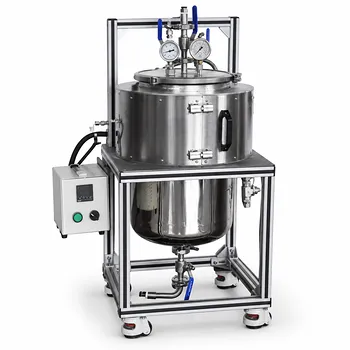
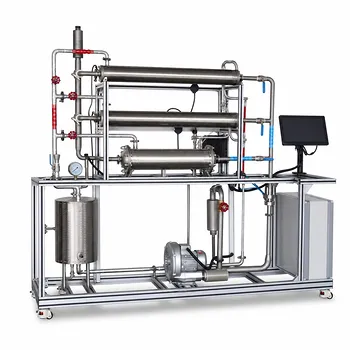
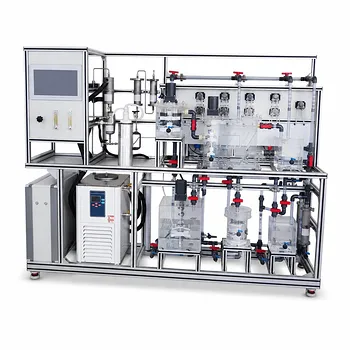
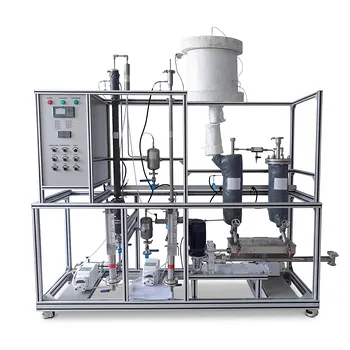
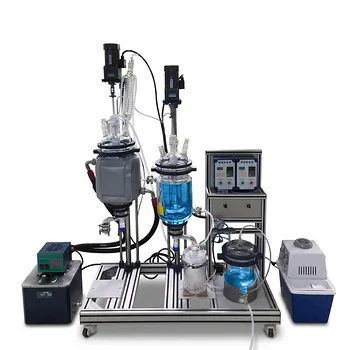
A chemical engineering unit operations pilot plant changes the game. These systems—often built around batch or continuous stirred-tank reactors (CSTRs)—replicate the physical scale, materials, and thermal constraints of production equipment. A pilot reactor typically includes a jacketed heating/cooling circuit, multiple temperature probes, and precise flow meters on feed and utility streams.
Because the reactor shell has significant mass and the jacket actively adds or removes heat, students can no longer assume all the reaction energy simply appears as a fluid temperature rise. Instead, they must monitor multiple streams and apply a dynamic energy balance to extract the true enthalpy of reaction.
How Pilot Plants Capture Heat of Neutralization
Real-Time Temperature and Flow Monitoring
Pilot plants are instrumented with high-resolution temperature sensors and digital data acquisition that log readings several times per second. When you start a neutralization—adding a known flow of acid to a base in a stirred tank—the system records inlet and outlet temperatures, jacket fluid temperatures, and internal reactor profiles simultaneously.
This data stream allows students to watch the thermal response evolve over time. It’s no longer a single peak temperature recorded by eye; it’s a continuous curve that reveals how quickly heat is generated, how fast the jacket can remove it, and whether the system approaches a steady thermal state.
Performing Dynamic Energy Balances
With live measurements, students can write and solve an energy balance for the reactor. For a batch neutralization, the balance tracks accumulation, reaction heat input, heat exchange with the jacket, and ambient losses. The enthalpy change (ΔH) of the neutralization is obtained not from a single temperature difference, but by integrating the entire thermal history while accounting for the heat capacity of the vessel.
This mirrors how a process engineer would verify a reaction’s heat of reaction during scale‑up. Students see that the calculated ΔH from the pilot plant matches the value predicted by Hess’s Law—but only after they correctly model the calorimeter constant of the steel reactor and the jacket’s heat removal rate.
Accounting for Real-World Heat Losses and Reactor Heat Capacity
A stirrer motor, metal baffles, thick glass-lined walls—all absorb and release heat. In a simple cup, that’s ignored. In a pilot plant, students must measure or estimate the reactor’s heat capacity and include it in the energy balance. They also identify and quantify ambient heat losses by running a calibration with a known electrical heater before the reaction.
This hands-on calibration teaches a critical skill: separating the reaction’s true thermal signature from the thermal inertia of the equipment. It’s the same challenge faced when commissioning a production reactor.
Direct Comparison with Theoretical Calculations (Hess’s Law)
Academic curricula use Hess’s Law to calculate reaction enthalpies from tables of formation enthalpies or from indirect pathways. A pilot plant lets students run the reaction and measure the same ΔH directly—then compare their value to the textbook number.
The resulting discussion is invaluable. Why is the measured value consistently 8% lower? The conversation moves from “did we make an arithmetic mistake?” to “what portion of the heat escaped through the unjacketed top flange, and how would we modify the reactor design to reduce that?” That’s engineering thinking.
Bridging Theory and Practice: Thermodynamics in Action
Observing Exothermic vs. Endothermic Profiles
Neutralization reactions are exothermic. In a pilot plant, students can program a temperature controller and watch the jacket switch from heating (to bring the reactants to temperature) to cooling (to remove surge heat). The rapid valve movement and the temperature curve’s overshoot are physical proof of the energy being released.
For endothermic reactions, students see the jacket struggle to supply enough heat to maintain isothermal conditions. The lag between heater duty and reactor temperature demonstrates heat transfer coefficients and driving force concepts in real time.
Linking Kinetics to Heat Release
Because pilot plants monitor concentration changes (through sampling or on‑line spectroscopy), students can correlate the rate of temperature rise with the reaction rate. For a simple neutralization, the instantaneous heat release is directly proportional to the reaction rate. By plotting $\lg(\text{concentration})$ versus time, they confirm the order and extract the rate constant $k$—and simultaneously check that the heat evolution profile fits the kinetic model.
This dual measurement ties together two pillars of chemical reaction engineering: thermodynamics provides the total heat of reaction, and kinetics dictates how fast that heat is released—a direct input for reactor design.
Understanding Mixing and Heat Transfer Dynamics
A magnetic stir bar in a beaker gives nearly perfect mixing. In a pilot reactor, impeller type, baffles, and fluid viscosity determine how quickly injected acid distributes and how evenly heat is removed. Students observe temperature gradients inside the vessel before uniform mixing is achieved.
By measuring local temperatures and varying the stirrer speed, they learn that the apparent heat of reaction can appear to drift if the vessel is not well mixed—a sobering insight for anyone who will later specify mixing systems for industrial reactors.
Understanding the Trade-offs
Cost, Complexity, and Safety Demands
Pilot plants are expensive to build, maintain, and operate. Each experiment consumes significantly more chemicals than a bench‑top calorimeter, and cleaning jacketed reactors between runs takes time. For a teaching lab, scheduling multiple groups on one pilot unit can be a logistical challenge.
The complexity also introduces failure points. A malfunctioning flow meter or a clogged jacket line can produce data that mystifies a student who has not yet learned to diagnose equipment problems. Without careful supervision, the experiment can become a lesson in frustration rather than thermodynamics.
The Risk of Superficial Data Collection
Advanced data acquisition creates a temptation to treat the pilot plant as a black box: press a button, export an Excel file, and copy the computed ΔH into a report. The deep learning happens only when students are required to write the energy balance themselves, challenge assumptions about heat loss, and manually verify the sensor calibrations. If the curriculum does not structure the exercise around problem‑solving, the pilot plant becomes a very expensive digital thermometer.
Making the Right Choice for Your Learning Goal
How you deploy a pilot plant depends entirely on what you want the student to walk away with.
- If your primary focus is reinforcing thermodynamic fundamentals: Use the pilot plant to measure ΔH and compare it to Hess’s Law calculations. Keep the procedure tight and the analysis focused on where the agreement breaks down due to real‑world losses.
- If your primary focus is teaching process engineering and scale‑up: Design the experiment around the energy balance and the calorimeter constant. Ask students to propose a jacket control strategy that would keep the reactor isothermal during a fast neutralization.
- If your primary focus is reaction kinetics and reactor design: Combine concentration and temperature data to decouple kinetics from heat transfer, and have students estimate the required jacket area for a 1000‑L production vessel.
- If your primary focus is developing troubleshooting and critical thinking: Intentionally introduce small heat losses or a slightly inaccurate sensor offset, and challenge students to identify the anomaly from the energy balance closure.
By aligning the experiment’s complexity with the learning objective, a pilot plant becomes far more than a demonstration—it becomes a rigorous tool that turns abstract thermodynamic calculations into measurable, controllable, and professionally relevant engineering skills.
Summary Table:
| Feature | Simple Calorimeter | Unit Operations Pilot Plant |
|---|---|---|
| Heat Loss | Ignored / Negligible | Quantified and modeled dynamically |
| Temperature | Single peak manual reading | Continuous real-time sensor logging |
| Thermal Inertia | Not considered | Reactor & jacket heat capacity included |
| Focus | Ideal textbook thermodynamics | Real-world process scale-up & control |
Bring Industrial Realism to Your Engineering Lab with LABPARK
Ready to elevate your training curriculum? LABPARK provides state-of-the-art Educational and Vocational Unit Operations Pilot Plants in chemical engineering, bioprocess & biotech, and environmental & water treatment. We help universities, research institutes, and enterprises bridge the gap between theoretical thermodynamics and real-world industrial operations.
Contact LABPARK today to find the perfect pilot plant solution for your laboratory!
Related Products
- Hot Filtration Educational Unit Operations Pilot Plant Laboratory System
- Three-Tube Heat Transfer Educational Pilot Plant for Unit Operations Training
- Comprehensive Multi-Modal Heat Transfer Unit Operations Pilot Plant for Engineering Training
- Dual Mode Heat Transfer Pilot Plant for Unit Operations Training
- Comprehensive Heat Transfer Coefficient Determination Educational Unit Operations Pilot Plant
People Also Ask
- How to Determine Specific Cake (r) & Filter Medium (Rm) Resistance Using Filtration Pilot Plant Data
- How to select solid-liquid separation equipment for pilot plants? A Step-by-Step Guide
- How can researchers identify and resolve filter medium blinding? Optimize Your Pilot Plant Runs
- Why Demo Constant-Rate to Constant-Pressure Filtration on a Pilot Plant? Key Practical Insights
- How do Buchner funnels & leaf filters differ in filtration scale-up? Key Differences Explained