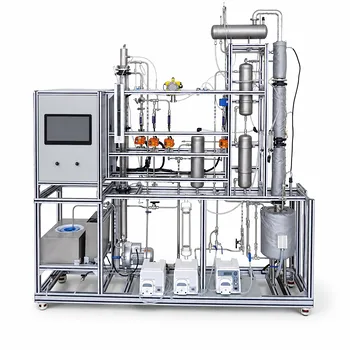
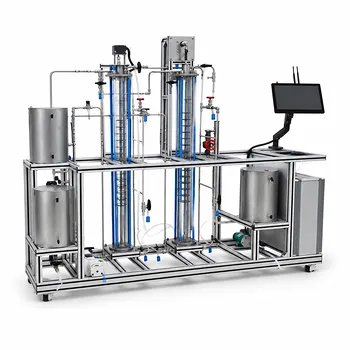
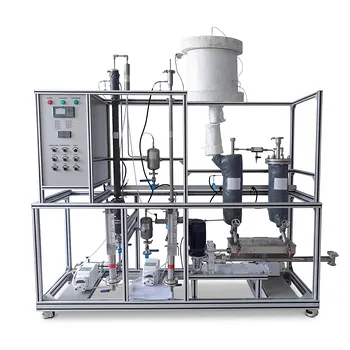
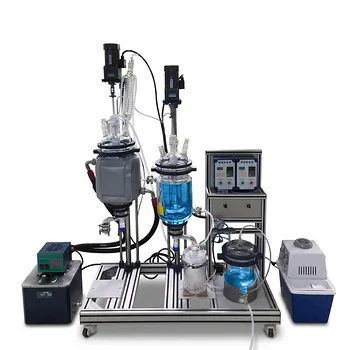
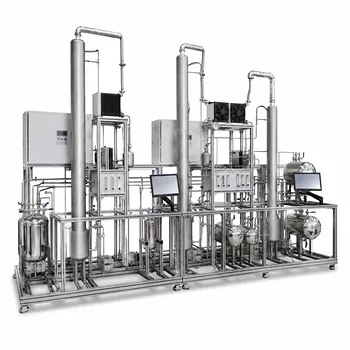
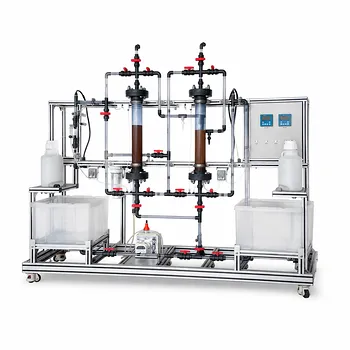
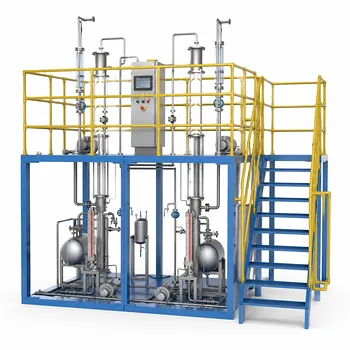
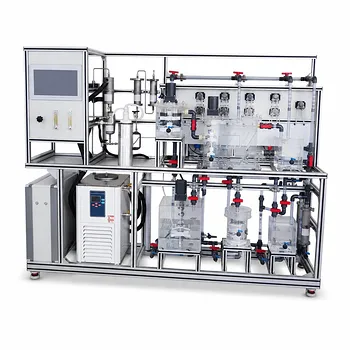
Solvent recovery is not just a downstream afterthought—it’s the central loop that makes waste minimization measurable, teachable, and designable. A chemical engineering unit operations pilot plant configured for this purpose brings together distillation, liquid-liquid extraction, feedback purification, and real-time energy monitoring to study how solvents can be recovered, purified, and reused within a closed-loop process. By operating these modules at pilot scale, researchers can determine optimal separation parameters, evaluate the energy-to-purity trade-off, and quantify how reducing the number of different solvents used shrinks the entire waste footprint.
The deepest insight from a properly configured pilot plant is that waste minimization is a design discipline, not a treatment fix. The plant becomes a sandbox for testing source reduction, feed pre-treatment, recycle integration, and energy-conscious separations—all of which show that the cheapest and cleanest waste stream is the one you never create.
Configuring a Pilot Plant for Solvent Recovery: Core Operations
The Separation Backbone: Distillation and Extraction
The foundation of any solvent recovery study is a modular separation train. At minimum, this means pilot-scale distillation columns and liquid-liquid extraction units plumbed into a continuous or batch recirculation loop.
These modules must be instrumented to capture temperature, pressure, flow, and reflux ratios at every stage. That data is what turns a simple separation into a quantifiable waste minimization study.
From the mechanical side, the plant typically integrates kettle-type reboilers, shell-and-tube condensers, packed absorption columns, and fractional distillation towers—all scaled down to pilot dimensions with heat transfer areas sized for small batches. Safe operating windows usually sit between atmospheric pressure and roughly 5–10 bar.
Closing the Loop with Auxiliary Purification
Recovery alone doesn’t guarantee minimisation. That’s why a well-configured plant inserts feed purification and protective adsorbent beds upstream of key steps. Passing raw solvent streams through filtration or adsorber cartridges removes trace impurities that would otherwise cause side reactions or degrade catalyst life.
This design directly reduces solid waste from deactivated catalysts and prevents the formation of hazardous byproducts that would demand later treatment.
Reactant Recycle Loops for True Source Reduction
Real waste minimization happens when unreacted material never leaves the system. By incorporating recirculation lines and surge tanks after separation units, the plant becomes a living model of a material-efficient process.
For instance, in an esterification setup, cyclohexane used as an entrainer is continuously separated from water and pumped back into the reaction zone. The wastewater extraction tower recovers organic acid salts, while a final wash and vacuum stripping sequence yields purified product and returns octanol to the feed side. These loops are where source reduction becomes tangible.
Understanding the Energy-Purity Trade-off
When Purer Solvent Costs More Energy
Pulling a solvent back to 99.9% purity sounds ideal—until you see the energy bill. Pilot plants uncover this trade-off directly by letting operators map reflux ratio against recovered solvent quality and energy input.
The most instructive configurations run side-by-side comparisons of atmospheric distillation, vacuum pressure swing distillation, and even vapor permeation. Each technology shifts the balance between thermal load, safety profile, and achievable purity in a way that a textbook cannot.
Manipulating Operating Parameters to Shift the Balance
Waste minimization isn’t a fixed recipe; it’s a response to flow rates, temperatures, and pressures. A flexible pilot plant allows the study team to intentionally alter these parameters and observe the resulting byproduct load and energy consumption.
For example, running a recovery column at slightly reduced pressure might lower the reboiler duty while still meeting a process’s purity threshold. That single operating change reduces both direct energy waste and the indirect waste associated with energy generation.
Common Pitfalls When Modeling Solvent Recovery at Pilot Scale
Oversimplifying the Solvent Mixture
Many industrial streams carry multiple contaminants, not just one model impurity. A pilot plant that studies only a binary mixture will produce recovery data that fails to scale. Always introduce realistic multi-component feeds—even if they simulate only the critical fouling species—to avoid false optimism.
Ignoring Secondary Waste Streams
A plant that demonstrates beautiful solvent recovery but generates a concentrated bottoms sludge or an off-gas stream has simply relocated the problem. Configurations must include downstream sampling points for all effluent streams, not just the recovered solvent, to teach that waste minimization must account for the entire mass balance.
Treating Scale-Down as a Perfect Miniature
Heat loss, residence time distributions, and material compatibility don’t scale linearly. Pilot plants often show optimistic energy numbers because surface area-to-volume ratios are higher. Good configurations include heat-loss compensation calculations and explicit discussion of how data translates to industrial scale to ground the learning in reality.
Making the Right Choice for Your Pilot Study Goal
The ideal configuration depends on what principle you most need the plant to teach.
- If your primary focus is teaching source reduction: Integrate feed purification, protective adsorbents, and a full reactant recycle loop. Visually trace every material stream and show students that the waste stream shrinks as the recycle rate rises.
- If your primary focus is comparing separation technologies: Set up a flexible distillation system that can switch between atmospheric, vacuum, and vapor permeation modes. Instrument it heavily to capture real-time energy use and solvent purity so the energy-purity trade-off becomes a measured number.
- If your primary focus is replicating an industrial solvent recovery train: Build the sequence of extraction, distillation, and polishing wash steps as a continuous chain with buffer tanks. Use a real multi-component mixture and require a complete mass balance as part of the exercise.
- If your primary focus is safety and environmental containment: Enclose all solvent vessels with vent condensers and vapour recovery systems. Configure the plant to demonstrate that waste minimization also includes preventing fugitive emissions.
A unit operations pilot plant, when thoughtfully configured, stops being a demonstration tool and becomes a design laboratory—proving that the most sustainable solvent is the one that never leaves the process.
Summary Table:
| Study Goal | Key Configuration Features | Waste Minimization Impact |
|---|---|---|
| Source Reduction | Feed purification, adsorbent beds, reactant recycle loops | Prevents byproduct formation & raw material waste |
| Energy vs. Purity | Distillation columns (atm/vacuum), real-time energy monitoring | Optimizes reflux ratios to lower thermal load |
| Industrial Replication | Continuous separation train (extraction, distillation, wash) | Recovers high-purity solvents from complex mixtures |
| Environmental Safety | Vent condensers, vapor recovery systems | Eliminates fugitive emissions & secondary waste |
Advance Your Engineering Research and Training with LABPARK
Are you looking to study advanced waste minimization and process scale-up? LABPARK provides state-of-the-art Educational and Vocational Unit Operations Pilot Plants in chemical engineering, bioprocess & biotech, and environmental & water treatment.
Specially designed for universities, research institutes, and enterprises, our modular systems enable hands-on learning of distillation, extraction, and closed-loop solvent recovery.
Contact LABPARK today to design the ideal pilot plant configuration for your laboratory!
Related Products
- Carbon Dioxide Absorption and Desorption Educational Pilot Plant for Carbon Capture Studies
- Solid Waste Pyrolysis and Refining Educational Pilot Plant for Unit Operations
- Comprehensive Liquid-Liquid Extraction Pilot Plant for Engineering Education
- Dual-Mode Rectification Pilot Plant for Practical Training Unit Operations
- Steam Methane Reforming Hydrogen Production and Purification Educational Pilot Plant
People Also Ask
- How does operating pressure influence the transition between absorption and desorption in a CO2 pilot plant?
- How do temperature variations affect CO2 transport models in pilot plants? Model vs Reality
- What unit operations are critical for CCUS training pilot plants? Build hands-on engineering expertise.
- How do electrolytes affect phase equilibrium in absorption pilot plants, and how to calculate it?
- Why is critical surface tension key in column internals? Optimize gas absorption pilot plant efficiency