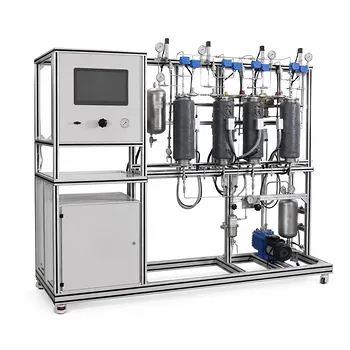
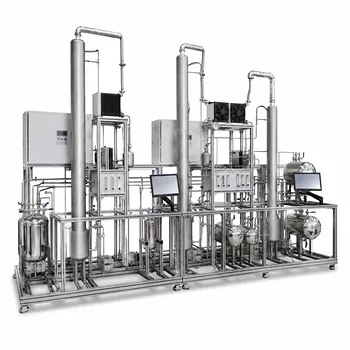
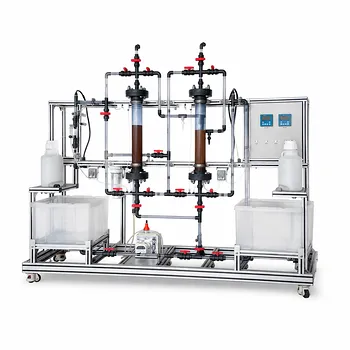
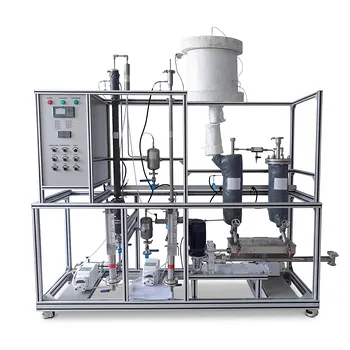
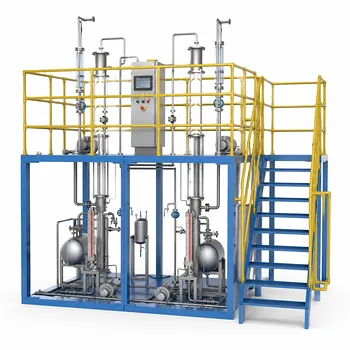
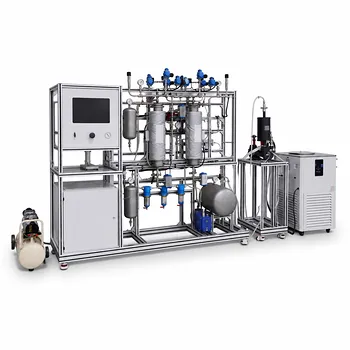
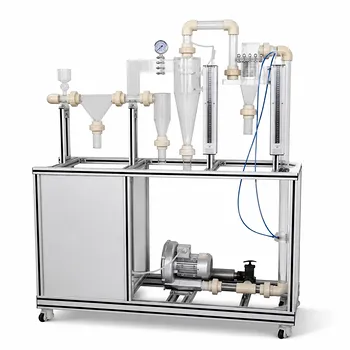
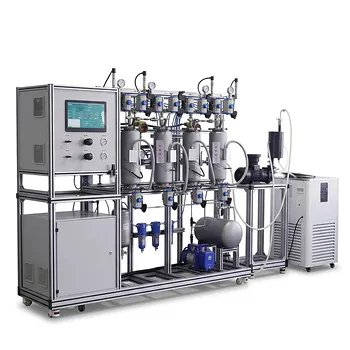
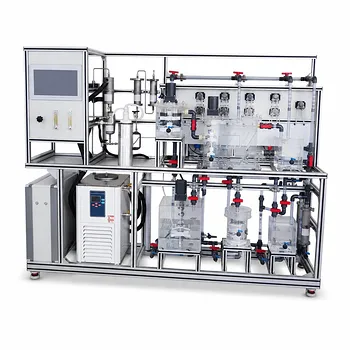
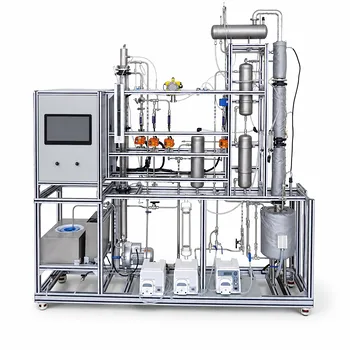
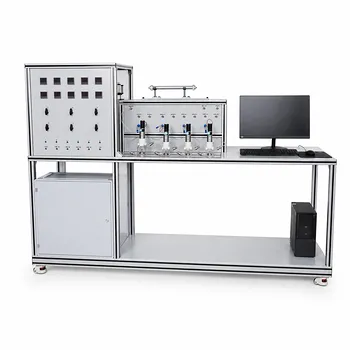
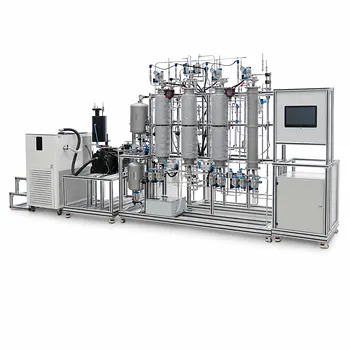
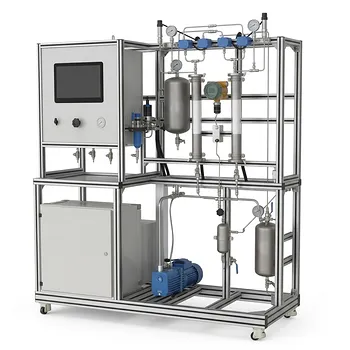
The fastest way to turn textbook theory into industrial intuition is to run a pilot plant yourself. Chemical engineering students and researchers can study acid gas removal and absorption by operating a gas purification pilot plant, where they manipulate solvent flow rates, temperature profiles, gas‑to‑liquid ratios, and column configurations to directly observe phase equilibria, reaction kinetics, and mass transfer efficiency in a controlled, real‑time environment.
A gas purification pilot plant transforms abstract mass‑transfer equations into tangible engineering insight. By physically controlling key variables and comparing different solvent systems, you can measure how absorption performance, energy consumption, and purification depth respond to real‑world constraints—bridging the gap between textbook principles and plant‑scale design.
The Core Unit Operations Inside a Gas Purification Pilot Plant
A typical acid gas removal pilot plant mirrors industrial gas cleaning trains but on a scale that invites hands‑on experimentation. Understanding its building blocks is the first step toward designing meaningful experiments.
The Essential Columns: Absorber, Prewash, and Regenerator
At the heart of the system are three column types. The prewash tower removes particulates and cools the incoming gas. The absorber is where the primary mass transfer occurs—acid gases like H₂S and CO₂ transfer from the gas phase into the liquid solvent. Finally, the regenerator (or stripper) releases the absorbed gases by applying heat or reducing pressure, readying the solvent for reuse.
This closed‑loop setup lets you investigate not just absorption efficiency but also the energy costs of solvent regeneration, a central concern in industrial gas treating.
Key Parameters You Can Control
Every experiment revolves around a handful of critical levers. You can vary solvent flow rate, gas feed composition, and temperature profiles across the columns. Most importantly, you adjust the gas‑to‑liquid ratio (G/L) to shift the driving force for mass transfer.
By changing these inputs and measuring outlet gas concentrations, you build direct, quantitative evidence of how column hydrodynamics and thermodynamics govern acid gas removal.
Probing Absorption Mechanisms Through Experimentation
The true value of a pilot plant arises when you run deliberate experiments that isolate physical phenomena. The following approaches turn the plant into a living laboratory for absorption unit operations.
Demonstrating Physical Absorption with Simple Solvents
Start with a system like CO₂‑water. Here, absorption follows Henry’s Law—the amount of gas dissolved is proportional to its partial pressure, with minimal heat effects.
Run the column at steady state and record inlet versus outlet CO₂ concentrations. You’ll see that absorption capacity is limited by physical solubility and strongly influenced by pressure. This experiment makes the concept of mass transfer purely by concentration difference concrete.
Unlocking Chemical Absorption with Reactive Solvents
Switch to a chemically reactive solvent, such as a dilute sodium hydroxide solution or an amine (MEA). Immediately, the outlet acid gas concentration drops far more than physical solubility predicts.
Measure the temperature rise along the column. The exothermic reaction between CO₂ and the amine provides direct evidence of reaction‑enhanced mass transfer. You can quantify how the reaction consumes dissolved gas, maintaining a near‑zero equilibrium partial pressure and dramatically increasing the driving force for absorption.
Using Modular Columns to Visualize Mass Transfer Limits
Many pilot plants offer adjustable bed heights or the ability to connect two absorption columns in series. By changing the number of theoretical stages, you can demonstrate how contact volume and residence time impact removal efficiency.
Run the same gas‑liquid system with one column, then with two. The measured improvement in outlet purity verifies the concept of staging and the role of mass transfer unit height (HTU/NTU methods) in a way no simulation can replicate.
Monitoring Temperature and Concentration Profiles
Install thermocouples and sampling ports at multiple points along the absorber. With a reactive solvent, you’ll see a distinct temperature bulge—the point where reaction heat balances with heat losses.
Mapping the temperature profile and correlating it with concentration samples helps you understand non‑isothermal absorption and how reaction kinetics interact with mass diffusion, a subtlety often lost in idealized classroom models.
Understanding the Trade‑offs
No pilot plant exercise is complete without confronting the practical compromises that shape industrial choices. Acknowledging these builds engineering judgment.
Safety and Utility Demands of Different Solvent Families
Amine‑based chemical absorption operates at moderate pressures (near atmospheric) and modest temperatures (20–40 °C absorption, >105 °C regeneration). This makes it the preferred choice for educational laboratories, as it avoids high‑pressure hazards and cryogenic cooling costs.
Physical solvents like chilled methanol (Rectisol) or Selexol excel at high pressure (2–5 MPa) and very low temperature (−54 °C for methanol). Demonstrating these processes requires expensive, explosion‑proof refrigerated systems. While such plants teach valuable lessons about pressure‑swing regeneration and Henry’s Law, the operational complexity and cost often restrict their use to well‑funded research facilities.
Balancing Student Safety with Research Depth
For teaching labs, the goal is clear: maximize learning while minimizing risk and downtime. An amine‑based pilot plant running on a synthetic flue gas mixture offers high pedagogical value—students see reaction‑enhanced absorption, regeneration, and energy penalties firsthand without exposure to hazardous pressures.
Researchers pushing into novel solvents or high‑pressure syngas cleanup will need more specialized equipment. The trade‑off is that more industrially‑realistic conditions raise utility demands and safety protocols, requiring dedicated supervision and longer experimental turnaround.
Making the Right Choice for Your Lab
The experimental strategy you adopt depends entirely on your primary learning or research objectives. Use these goal‑driven guidelines to focus your pilot plant work.
- If your primary focus is teaching fundamental mass transfer and unit operations: Start with a modular, amine‑based absorption system. Run water‑CO₂ experiments for physical absorption, then switch to a reactive solvent to demonstrate reaction‑enhanced rates and measure temperature bulges. Connect columns in series to visualize the impact of staging.
- If your primary focus is process optimization for industrial acid gas removal: Design a matrix of experiments varying L/G ratio, solvent concentration, and regeneration temperature. Measure acid gas slip, solvent degradation rates, and regeneration energy to build a realistic picture of operating cost versus outlet purity.
- If your primary focus is exploring novel solvents or extreme process conditions: Use the pilot plant’s flexible material compatibility to test alternative amines or physical solvents. Focus on breakthrough curves, foaming tendency, and long‑term corrosion effects—data that directly informs scale‑up decisions.
A well‑designed pilot plant does more than confirm theory; it forces you to confront the real‑world constraints that define successful process engineering.
Summary Table:
| Column Type | Primary Function & Mechanism | Key Experimental Parameters |
|---|---|---|
| Prewash Tower | Cools incoming gas and removes particulates. | Gas flow rate, inlet gas temperature |
| Absorber | Transfers acid gases (CO₂, H₂S) from gas to liquid phase. | Solvent flow, G/L ratio, temperature profile |
| Regenerator | Releases absorbed gases via heat/pressure to reuse solvent. | Reboiler temperature, solvent regeneration energy |
Bring Industrial-Scale Learning to Your Laboratory with LABPARK
Are you looking to bridge the gap between classroom theory and real-world chemical engineering? LABPARK provides state-of-the-art Educational and Vocational Unit Operations Pilot Plants across chemical engineering, bioprocess & biotech, and environmental & water treatment.
We assist universities, research institutes, and enterprises in building advanced, safe, and highly interactive training environments. Our gas purification pilot plants allow students and researchers to safely manipulate solvent chemistry, analyze mass transfer dynamics, and master gas absorption unit operations with industrial-grade accuracy.
Ready to elevate your engineering curriculum or accelerate your research? Contact us today to discuss your project requirements!
Related Products
- Fixed-Bed Chemical Reaction and Gas Dust Tar Removal Unit Operations Pilot Plant
- Bench Scale Carbon Dioxide Capture Educational Unit Operations Pilot Plant
- Green Anhydrous Ethanol Purification Extractive Distillation Unit Operations Training Pilot Plant
- Electrolyte Distillation Purification and Formulation Educational Pilot Plant
- Ion Exchange Water Purification Educational Pilot Plant for Engineering Unit Operations
People Also Ask
- When to transition from PID to adaptive control in pilot plants? Key process indicators.
- How do deviations in estimating latent heat impact pilot plant thermal systems? Avoid hardware mis-sizing.
- Why Compare Predicted and Experimental Excess Enthalpy? Key to Accurate Pilot Plant Scale-up
- How to study gasification in pilot plants? Compare exit gas composition & efficiency
- Why Use PTFE & Hastelloy in Chemical Pilot Plants? Prevent Corrosion & Ensure Safety