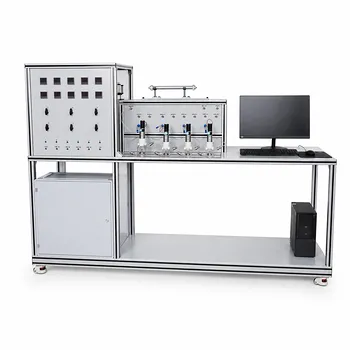
Back-suction—or suck-back—can be prevented in pilot-plant gas absorption setups by combining a physical safety barrier with a deliberate operational sequence. Specifically, install a buffer bottle or a funnel trap placed just at the liquid–gas interface as a vacuum break, and always vent the system to atmosphere or disconnect the gas line before you stop the gas feed or heat source. This two‑pronged approach prevents the destructive liquid backflow that occurs when highly soluble gases dissolve rapidly into the absorbent.
The core insight: Back-suction is a pressure-driven event, not a mystery. A properly sized trap and a disciplined shutdown procedure eliminate the partial vacuum before it ever pulls liquid into your hot reactor or sensitive upstream lines. The technical challenge is small, but the consequences of ignoring it—ruined catalysts, broken glassware, safety incidents—are enormous.
Understanding the Root Cause of Back-Suction
In a pilot plant, gas absorption often involves a scrubbing liquid and a highly soluble gas like ammonia or sulfur dioxide. When the gas dissolves almost instantly at the interface, it creates a momentary but powerful local negative pressure. This vacuum is what pulls the absorbent backward into the system.
The Physics of Rapid Dissolution
Imagine a gas stream bubbling into a liquid. If the gas is highly soluble, a large fraction of each bubble disappears in milliseconds, leaving behind a void. The liquid rushes inward to fill that void.
In a closed or restricted system, this inward rush translates directly into a pressure drop that can exceed the static head of the liquid column downstream. The result is a reverse flow, or suck-back, that can travel all the way to the gas source.
Why Pilot Plants Are Especially Vulnerable
Laboratory and pilot-scale setups often use narrow tubing, small liquid holdups, and sensitive upstream components (reactors, catalysts, or analyzers). A small volume of sucked-back liquid can cause disproportionate damage—from thermal shock to poisoning a precious catalyst bed.
Additionally, pilot plants are frequently operated with manual or semi-automated controls. A moment’s inattention during a shutdown sequence can trigger an event that would never happen in a fully automated, large-scale unit with redundant protections.
Prevention Methods That Actually Work
The prevention strategy must address both the physical vacuum formation and the human factors. A robust solution layers a passive hardware safeguard with a procedural lockstep.
Install a Physical Vacuum‑Break Trap
The most reliable defense is a simple buffer device that introduces an intentional, pressure‑equalizing leak before the liquid can reach the critical area. Two common implementations work well:
- Buffer bottle: A sealed vessel placed between the absorber and the upstream equipment. Its gas volume acts as a cushion. If a vacuum forms, the bottle’s pressure drops first, and as long as its volume exceeds the potential suck-back volume, liquid merely rises into the bottle without reaching the hot reactor. Size the bottle to hold at least 1.5 times the maximum expected backflow volume.
- Funnel trap at the liquid‑gas interface: An inverted funnel or a wide‑mouth tube positioned just above the absorbent surface. The stem extends down into the liquid to the desired submergence depth (typically 5–10 mm). When suction begins, the liquid level rises in the funnel stem, but as soon as it uncovers the funnel mouth, air rushes in and breaks the vacuum. This self‑regulating design provides an immediate, passive vacuum break.
Follow a Strict Safe‑Shutdown Sequence
Hardware alone does not guarantee safety if the operator can bypass it. The operational sequence must be treated as an absolute rule.
The cardinal rule: Never shut off the heat source or the gas feed before breaking the sealed path to the absorber. Instead, execute these steps in order:
- Vent the system to atmosphere. Open a valve that connects the gas line upstream of the absorber directly to the atmosphere (or to a low‑pressure vent header). This equalizes the pressure and eliminates any driving force for suck-back.
- Disconnect the gas delivery line. Physically separate the absorber’s inlet from the reactor or gas source if a simple vent valve is not available. An even better practice is a three‑way valve that simultaneously stops flow to the absorber and vents the process side.
- Only then turn off the heating or gas generation. By the time you cut the main energy input, the path has no sealed connection to the absorbing liquid, so no vacuum can be transmitted.
Design the Absorption Vessel with Adequate Buffering Volume
Even with traps and procedures, the absorber itself should offer a first line of defense. A vessel that is too small offers no room for error.
Ensure the absorber’s gas headspace and liquid capacity can accommodate a sudden reverse flow without immediately reaching the gas inlet. A good guideline is to maintain a freeboard volume of at least 3-5 % of the total vessel volume and to position the gas inlet sufficiently above the maximum liquid level. This extra space absorbs the initial surge before the dedicated trap activates.
Understanding the Trade‑offs
No solution is perfect in every context. Objectively weighing the downsides lets you choose the combination that fits your pilot plant’s constraints.
- Buffer bottles add dead volume and potential leak points. They increase the wetted surface area and can become a source of contamination if not cleaned regularly. In highly toxic or corrosive service, a glass buffer bottle may also introduce a breakage risk.
- Funnel traps depend critically on a stable liquid level. If the absorbent level fluctuates significantly during operation, the vacuum‑break function might be delayed or fail. They also require regular inspection to ensure the funnel mouth remains clear and correctly submersed.
- Operational sequences rely on human discipline. In a busy pilot‑plant environment, skipping steps is the most common root cause of suck-back incidents. The procedure must be documented, trained, and physically enforced (e.g., with interlock‑capable valves where possible).
- Oversizing the absorption vessel adds cost and takes up bench space. It is rarely a standalone fix; it works best as a backup layer underneath a primary trap.
Making the Right Choice for Your Pilot Plant
Your specific goals will dictate which combination of these methods takes priority. Adapt the following recommendations to your safety profile and operational philosophy.
- If your primary focus is maximum passive safety with minimal operator intervention: Install both a buffer bottle and a funnel trap in series. Size the bottle for the worst-case backflow, and set the funnel submergence to a shallow depth that triggers early vacuum breaking.
- If your primary focus is simplicity and low cost for a temporary or teaching setup: Use a single funnel trap with a clearly marked liquid level. Pair it with a rigid shutdown SOP that physically vents and disconnects before any heat is removed.
- If your primary focus is protecting an extremely valuable or sensitive upstream reactor: Do not rely on a single trap. Combine a generously sized buffer bottle with an automated three‑way valve interlocked to the gas supply. The valve vents the line immediately upon loss of power or flow, removing the human error variable entirely.
A back-suction event is not just an inconvenience; it signals that a driving force existed and found a path. Eliminate that path with the right hardware, and never let a shutdown order override the sequence that protects your pilot plant.
Summary Table:
| Prevention Method | Operating Principle | Pros | Cons |
|---|---|---|---|
| Buffer Bottle | Acts as a vacuum cushion to catch backflow | High safety margin; protects reactors | Adds dead volume & potential leaks |
| Funnel Trap | Positioned at interface to break vacuum | Self-regulating, simple & passive | Sensitive to liquid level changes |
| Shutdown SOP | Vent & disconnect lines before stopping gas/heat | Cost-effective; no extra hardware | Relies strictly on operator discipline |
Enhance Pilot Plant Safety with LABPARK
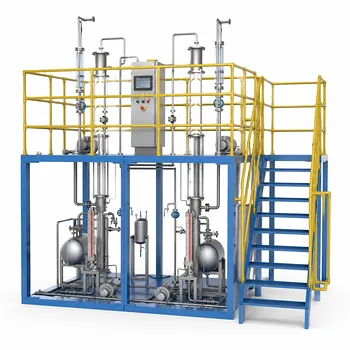
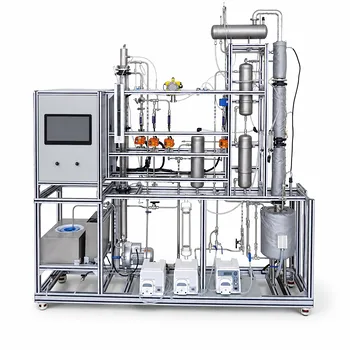
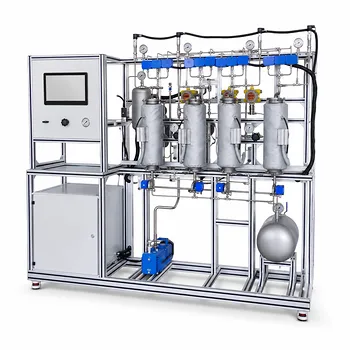
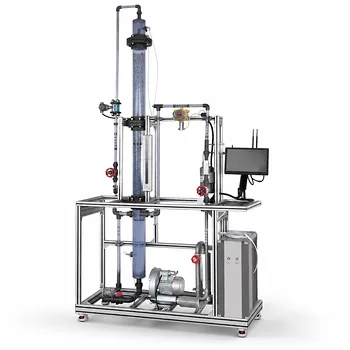
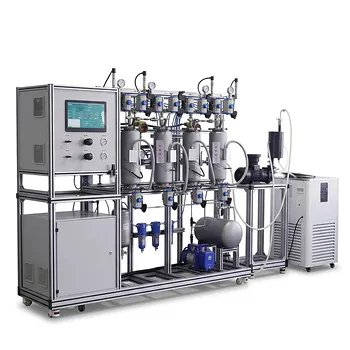
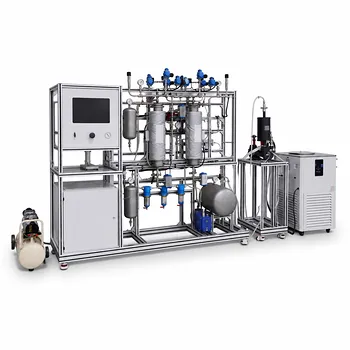
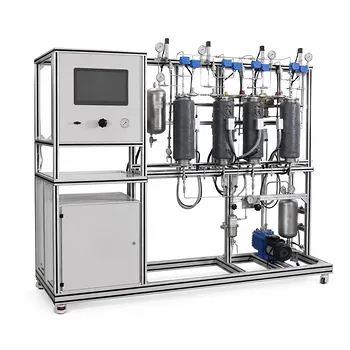
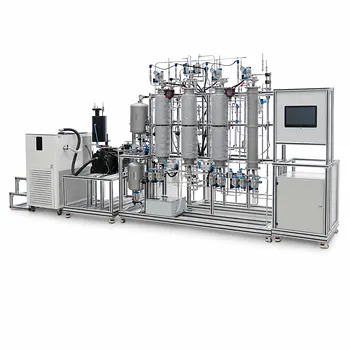
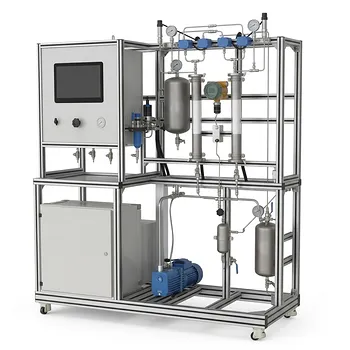
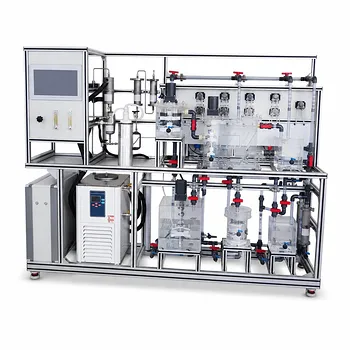
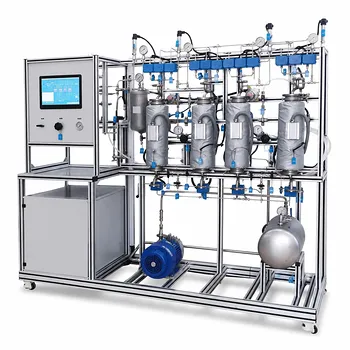
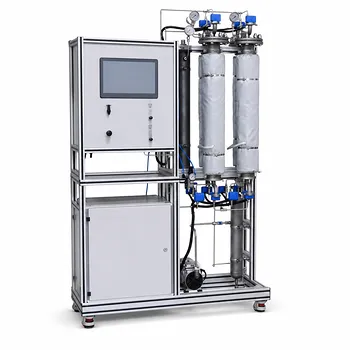
Preventing operational hazards like back-suction requires robust equipment design. LABPARK delivers premium Educational and Vocational Unit Operations Pilot Plants for chemical engineering, bioprocess & biotech, and environmental & water treatment. Engineered for universities, research institutes, and enterprises, our systems prioritize process safety and operational reliability.
Need to secure your lab operations? Contact us today for customized pilot plant solutions!
Related Products
- Dual-Mode Gas Absorption and Desorption Unit Operations Training Pilot Plant
- Carbon Dioxide Absorption and Desorption Educational Pilot Plant for Carbon Capture Studies
- Carbon Dioxide Adsorption and Capture Educational Unit Operations Pilot Plant
- Absorption and Desorption Educational Unit Operations Pilot Plant
- Packed Bed Absorption Educational Unit Operations Pilot Plant
People Also Ask
- How do two-film & penetration theories apply to gas absorption pilot plant teaching? Key pedagogical insights.
- How does partial pressure behavior influence gas absorption pilot plants? Master Mass Transfer
- How is the direction and driving force of mass transfer determined in a gas absorption unit operations pilot plant?
- Why does increasing flow fail to enhance absorption in fast chemical reactions? Pilot Plant Insights
- What are the limitations of Henry's Law in gas absorption pilot plants? Avoid critical lab errors.