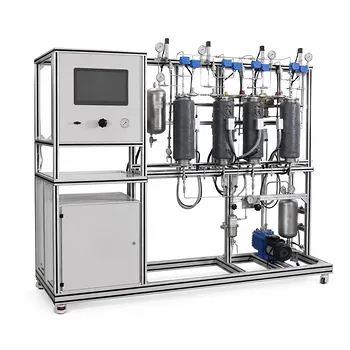
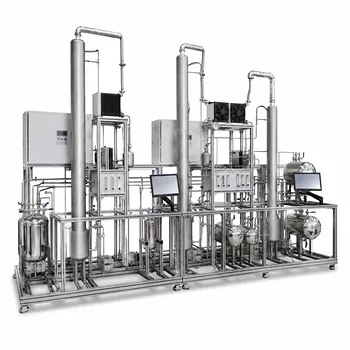
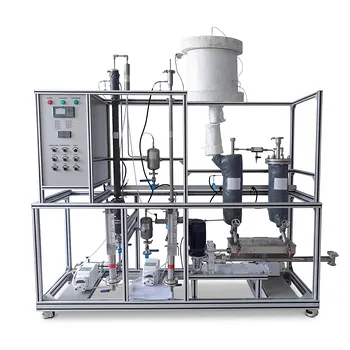
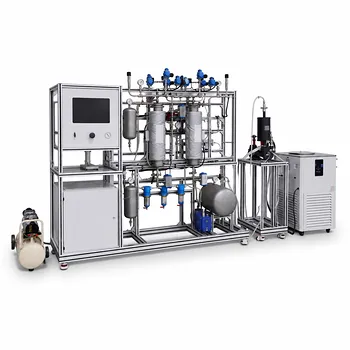
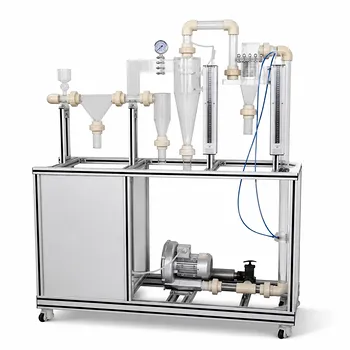
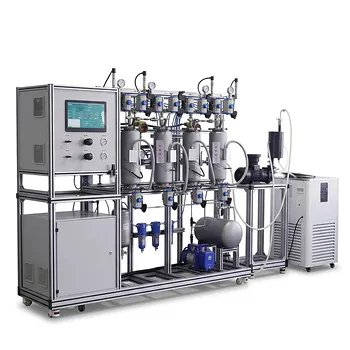
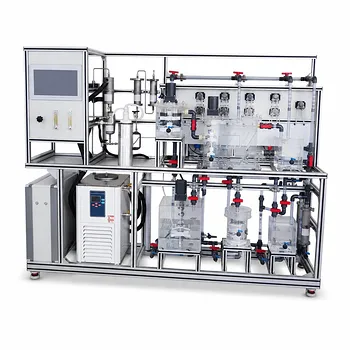
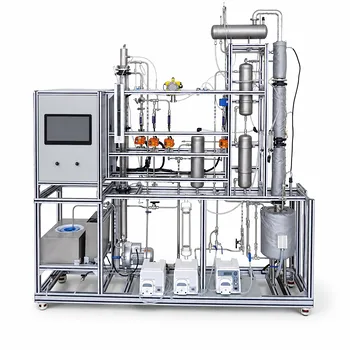
Amine-based gas sweetening is the industry workhorse for removing acid gases, but its real-world performance depends on variables no textbook can fully capture.
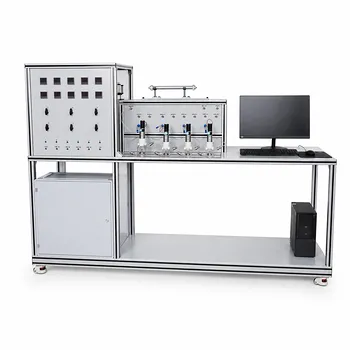
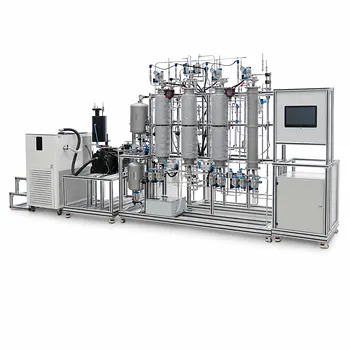
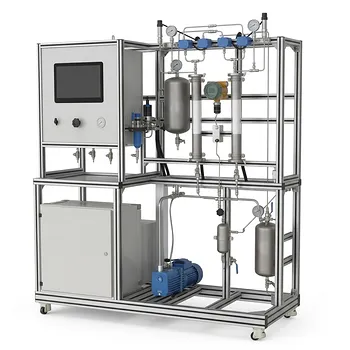
A chemical engineering pilot plant bridges that gap by replicating the continuous amine absorption–regeneration loop under realistic conditions. It allows you to flow sour gas through a packed or tray absorber column where a lean amine solution chemically binds CO₂ and H₂S, then moves the rich solvent to a steam-heated stripper to release the acid gases and regenerate the solvent. By directly manipulating and measuring solvent circulation rate, gas flow, temperature profiles, pressure drops, and regeneration energy, you gain practical insight into removal efficiency, mass transfer limitations, and the true cost of gas purification.
A pilot plant transforms the theoretical amine sweetening process into an observable, tunable system. It reveals how operational parameters like the liquid-to-gas ratio and reboiler duty dictate separation performance, energy consumption, and long-term solvent stability—insights you can’t get from a simulation alone.
How an Amine Pilot Plant Mirrors Full-Scale Operations
The Continuous Loop: Absorption to Regeneration
The heart of the demonstration lies in a closed circuit that mimics an industrial gas sweetening unit.
In the absorber column, sour gas enters at the bottom and contacts counter-currently flowing lean amine solvent.
CO₂ and H₂S undergo chemical reactions—forming thermally reversible bonds—while the sweet gas exits the top.
The now rich solvent flows through a lean/rich heat exchanger and enters the top of the stripper column.
Steam from a reboiler reverses the reactions, driving off the acid gases overhead.
The regenerated lean solvent is cooled and returned to the absorber, completing the loop.
Why Run the Process at Pilot Scale?
Bench-scale glassware cannot replicate the hydraulic and mass transfer realities of industrial columns.
A pilot plant—with column diameters of a few inches and packing or real trays—lets you observe flooding, foaming, and maldistribution firsthand.
It also provides a platform for sampling both gas and liquid phases to determine acid gas loading and approach to equilibrium, data essential for process design.
Key Operational Parameters You Can Analyze and Optimize
Solvent Circulation Rate and Gas Flow (L/G Ratio)
The liquid-to-gas ratio is your most direct lever on sweetening performance.
Increasing the solvent circulation rate raises the column’s capacity for acid gas removal, improving sweet gas purity—but it also increases pumping costs and can promote excessive carryover.
The pilot plant lets you map the actual removal efficiency as a function of L/G, revealing the point of diminishing returns.
Temperature Profiles in Absorber and Stripper
Absorption is exothermic and favored by lower temperatures; the absorber’s temperature bulge tells you where most mass transfer occurs.
In the stripper, the reboiler temperature controls the thoroughness of solvent regeneration.
A pilot plant allows you to measure thermal energy input (steam flow) and correlate it with the lean amine acid gas loading, directly quantifying the energy penalty of deeper regeneration.
Pressure Drops and Column Hydraulics
Differential pressure across the absorber and stripper provides an immediate picture of column hydrodynamics.
An unexpectedly high pressure drop may signal the onset of flooding or foaming, while a very low drop suggests under-utilized capacity.
By deliberately varying gas and liquid loads, you can identify the flood point and benchmark mass transfer efficiency at different operating turndowns.
Solvent Lean and Rich Loading
Routine liquid sampling during a pilot run lets you measure the concentration of acid gases in both the lean and rich amine streams.
These loading values (moles acid gas per mole amine) quantify the driving force for absorption and the effectiveness of regeneration.
Plotting rich loading against operating conditions helps you see when the absorber is approaching its equilibrium limit, guiding solvent circulation rate adjustments.
Regeneration Energy (Reboiler Duty)
Steam consumption in the stripper reboiler is the dominant operating cost of an amine unit.
The pilot plant directly measures this thermal energy requirement—typically expressed as MJ per kg of acid gas captured.
You can then vary the reboiler duty, observe changes in lean loading, and find the energy-efficient sweet spot that still meets your outlet gas specification.
Understanding the Trade-offs and Potential Pitfalls
Removal Efficiency vs. Energy Cost
There is no free cleanup.
Pushing to single-digit ppm CO₂ or H₂S levels demands either high solvent circulation (more pumping) or very deep regeneration (more steam).
The pilot plant transforms this economic tug-of-war into a clear, data-driven trade-off curve you can use to select the most cost-effective operating point.
Solvent Degradation and Corrosion
Real amine systems are chemically aggressive.
In a pilot plant, you will see evidence of thermal and oxidative degradation—color change, solids formation—and may encounter corrosive conditions if acid gas loadings are mismanaged.
Observing these phenomena early teaches you the need for solvent reclaiming, additive management, and appropriate metallurgy—lessons often absent from steady-state models.
Mass Transfer vs. Equilibrium Limitations
Not every separation problem is equilibrium-limited.
Some acid gas reactions are kinetically slow, especially for CO₂ in certain amines, making mass transfer rate the controlling factor.
A pilot plant allows you to calculate overall mass transfer coefficients (Kᵧa) and determine whether you need taller packing, different internals, or a promoter to accelerate reaction kinetics.
How to Apply This to Your Project
Your specific learning or research goal will dictate which parameters to emphasize, but the pilot plant’s flexibility supports them all.
- If your primary focus is process design and scale-up: Use the pilot data to validate rate-based simulation models, derive mass transfer and hydraulic coefficients, and predict the diameter and height of full-scale columns with confidence.
- If your primary focus is energy optimization: Manipulate reboiler duty and solvent circulation rate while measuring acid gas slip and rich loading; then map the energy-performance curve to identify the true cost of each incremental percent of removal.
- If your primary focus is operational troubleshooting: Deliberately induce upset conditions—inject a foaming contaminant, vary the inlet gas composition, choke the reboiler—and develop robust control strategies and standard operating procedures.
- If your primary focus is educational demonstration: Make the invisible visible through real-time gas analyzers, temperature scans, and liquid sampling, turning abstract concepts of vapor-liquid equilibrium and chemical absorption into tangible, hands-on experience.
By bridging the gap between theory and industrial reality, the amine pilot plant equips you with the operational wisdom to optimize any gas purification challenge.
Summary Table:
| Key Parameter | Measurement / Description | Operational Impact |
|---|---|---|
| L/G Ratio | Liquid solvent flow rate relative to gas flow | Balances removal efficiency against pumping costs and carryover. |
| Temperature Profiles | Thermal bulge in absorber; reboiler heat | Dictates reaction kinetics, mass transfer zones, and regeneration depth. |
| Pressure Drop | Differential pressure across columns | Indicates hydraulic health; signals flooding, foaming, or under-utilization. |
| Reboiler Duty | Thermal energy input (MJ per kg of acid gas) | Controls lean solvent loading; represents the primary operating cost. |
Elevate Your Chemical Engineering Training with LABPARK
Bridge the gap between textbook theory and industrial practice. LABPARK designs and manufactures premium Educational and Vocational Unit Operations Pilot Plants in chemical engineering, bioprocess & biotech, and environmental & water treatment. Specially engineered for universities, research institutes, and enterprises, our robust pilot plants allow students and researchers to safely analyze mass transfer, optimize column hydraulics, and master gas purification processes firsthand.
Ready to enhance your curriculum or research capabilities? Contact us today to request a customized quote for your facility!
Related Products
- Fixed-Bed Chemical Reaction and Gas Dust Tar Removal Unit Operations Pilot Plant
- Bench Scale Carbon Dioxide Capture Educational Unit Operations Pilot Plant
- Green Anhydrous Ethanol Purification Extractive Distillation Unit Operations Training Pilot Plant
- Electrolyte Distillation Purification and Formulation Educational Pilot Plant
- Ion Exchange Water Purification Educational Pilot Plant for Engineering Unit Operations
People Also Ask
- When to transition from PID to adaptive control in pilot plants? Key process indicators.
- How do deviations in estimating latent heat impact pilot plant thermal systems? Avoid hardware mis-sizing.
- Why Compare Predicted and Experimental Excess Enthalpy? Key to Accurate Pilot Plant Scale-up
- How to study gasification in pilot plants? Compare exit gas composition & efficiency
- Why Use PTFE & Hastelloy in Chemical Pilot Plants? Prevent Corrosion & Ensure Safety