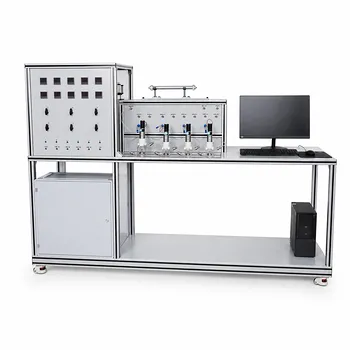
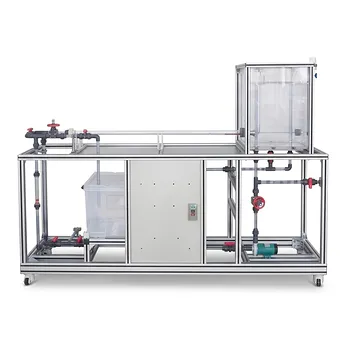
No—the dynamic operation of a reverse-flow reactor (RFR) does not introduce excessive control complexity for educational and vocational training pilot plants. In practice, operating procedures for startup, shutdown, and setpoint adjustments are comparable in ease of control to those of a standard steady-state flow-tube reactor. The perceived complexity of transient states is largely theoretical and has minimal impact on hands-on training, making the RFR a highly manageable platform for teaching advanced reaction engineering.
Although RFRs operate under periodic, non-steady conditions, their practical control demands are no more burdensome than those of a conventional steady-state reactor. The inherent thermal stability of the RFR actually simplifies certain operational aspects, while its compact, high-efficiency design offers a rich, hands-on environment for demonstrating process intensification without overwhelming students or instructors.
The Surface Need vs. The Deep Need
Your question targets control complexity, but that surface concern often masks a deeper one: Will this reactor be a practical, safe, and effective teaching tool, or will it become a maintenance burden that distracts from learning? The answer clarifies both. The control system is straightforward, and the reactor’s dynamic nature becomes a pedagogical asset, not a liability.
Why RFR Control Seems Intimidating—and Why It’s Not
The Source of the Complexity Myth
The periodic flow reversal of an RFR is inherently transient. Unlike a steady-state tube reactor that settles into a single operating point, an RFR continuously cycles between two flow directions. This might suggest the need for advanced, adaptive control algorithms.
But in an educational setting, the control objective is typically much simpler: maintain safe temperatures, stable flow rates, and consistent cycle timing. All are achievable with standard PID-based hardware and simple programmable logic controllers (PLCs). There is no need for online multi-variable optimisation.
How Practical Operation Mirrors a Steady-State Reactor
Standard operating procedures—lighting the burner, ramping up flows, adjusting feed composition—remain fundamentally the same. The primary addition is a timed valve-switching sequence, which is no more complex than programming a backwash cycle on a filter.
During normal run conditions, the RFR actually self-stabilizes thermally. The regenerative heat exchange containing peak temperatures within the catalyst bed reduces sensitivity to inlet fluctuations. This thermal “flywheel” effect often makes the RFR easier to control than a steady-state unit wrestling with a cold inlet zone that can quench the reaction.
The Real-World Control Simplicity of an RFR Pilot Plant
Startup and Shutdown Are Routine
In a CPOM pilot plant, for instance, the RFR is first heated with a clean fuel mixture. Once the catalyst zone is ignited, the system is switched to the process feed and reversal begins. Shutdown involves a controlled cooldown through reduced fuel or inert purge—procedures nearly identical to those of a conventional reactor.
No specialised control theory is required to train operators. Undergraduate students and vocational trainees routinely manage these sequences after one supervised session.
The Only Additional Element: Cycle Timing
The cycle period (typically a few seconds to a few minutes) is governed by a timer that actuates a set of valves. The control logic is a simple state machine. Modern lab‑scale automation platforms—often the same ones used for steady-state reactors—handle this without additional complexity.
Intrinsic Safety Through Thermal Containment
Because the RFR contains the high-temperature wave within the catalyst bed, reactor shell and exit temperatures remain low. This passive safety characteristic means less aggressive over-temperature trips and fewer cooling system demands, reducing the control system’s burden for protective interlocks.
Educational Benefits That Justify the Slight Increase in Complexity
Demonstrating Process Intensification in Action
RFRs unlock a step-change in performance. Compared to steady-state operation, CPOM in an RFR can show a 20–30% improvement in CO yield and up to a 60% improvement in H2 yield. Throughput can be at least tripled. These are not marginal gains—they vividly illustrate how smart thermal integration changes the game.
This gives students a direct, memorable experience with intensified processes, far more impactful than theoretical discussions alone.
Visualizing Transient Thermal Regeneration Principles
The RFR’s moving thermal wave is a dynamic, observable phenomenon. By placing temperature sensors along the reactor axis, students can see the heat front shift direction in real time. This turns the abstract concept of regenerative heat exchange into a tangible, data-rich experiment.
Such hands-on learning aligns with vocational training goals, where process intuition is built through interaction with real equipment.
Compactness and Cost-Effectiveness for Lab Settings
The high thermal efficiency of an RFR means a smaller catalyst bed and less external heating, resulting in a compact footprint. For a training facility with limited bench space, this is a practical advantage. The simpler heating demand also reduces the control loop count for furnace or preheater elements.
Understanding the Trade-offs and Common Pitfalls
No reactor design is without its challenges. Acknowledging them builds trust and enables proper planning.
Learning to Interpret Transient Data
Steady-state reactors produce constant concentration and temperature profiles. In an RFR, the outlet composition varies over a cycle. Students must learn to work with cycle-averaged data. This is a valuable analytical skill but requires an additional 30–60 minutes of training to avoid confusion.
Valve and Actuator Wear
Flow reversal valves cycle tens of thousands of times over a campaign. In a teaching plant, they should be high-cycle-rated components. This is a maintenance consideration, not a control complexity, but it must be budgeted for. The control system simply commands “open/close” signals—it does not require special monitoring algorithms.
Startup Optimization Requires Operator Familiarity
While routine startup is straightforward, achieving the optimum operating point (maximum yield, stable thermal wave) requires a few iterations. This is a teaching opportunity: instructors can involve students in setting cycle frequency and feed rates, turning what could be a “complexity” into a structured exercise in experimental design.
Making the Right Choice for Your Training Goal
Your decision should hinge on what you want your learners to take away.
- If your primary focus is basic steady-state reactor engineering: A standard flow-tube reactor offers the simplest path to teaching conversion, selectivity, and mass balances without the overlay of transient behavior.
- If your primary focus is advanced process intensification and thermal management: An RFR delivers exceptional learning value with only a marginal increase in control system complexity—far less than many perceive.
- If your primary focus is vocational hands‑on equipment operation: An RFR is ideal; it mimics industrial cyclic processes (like regenerative thermal oxidizers) while remaining safe and easy to operate, building confidence in dynamic systems.
- If your primary focus is minimizing initial setup time and complexity: Start with a steady-state system, then consider upgrading to RFR as a capstone module—control retrofits are minimal because the core hardware is similar.
The perceived control barrier is largely a myth. By embracing the RFR’s dynamic nature, you equip your trainees with the kind of practical, forward-looking skills that modern industrial processes demand.
Summary Table:
| Comparison Feature | Steady-State Flow-Tube Reactor | Reverse-Flow Reactor (RFR) |
|---|---|---|
| Control Logic | Single-point PID loop control | PLC state machine for valve switching |
| Thermal Stability | Sensitive to feed temperature shifts | Self-stabilizing thermal "flywheel" effect |
| Key Learning Value | Basic kinetics & mass balances | Process intensification & transient states |
| Safety Profile | Active cooling & over-temp trips | Passive containment within catalyst bed |
Upgrade Your Process Engineering Lab with LABPARK
Are you looking to teach advanced process intensification without the burden of overly complex control systems?
LABPARK provides state-of-the-art Educational and Vocational Unit Operations Pilot Plants across chemical engineering, bioprocess & biotech, and environmental & water treatment. We help universities, research institutes, and enterprises deploy safe, rugged, and pedagogically rich training platforms that make dynamic chemical processes easy to teach and understand.
Ready to elevate your training capabilities? Contact LABPARK today to request a catalog or custom system design.
Related Products
- Internal Circulation Gradient Free Catalytic Reaction Educational Pilot Plant
- Residence Time Distribution and Reactor Flow Characteristics Determination Educational Pilot Plant
- Gas Phase Mixing and Residence Time Distribution Determination Educational Unit Operations Pilot Plant
- Fluid Reynolds Number Demonstration Educational Unit Operations Pilot Plant
- Multifunctional Membrane Separation Educational Pilot Plant with Ultrafiltration, Nanofiltration, Reverse Osmosis
People Also Ask
- Why is thermal management a major challenge in methane oxidative coupling? Reactor Solutions for Pilot Plants
- How to determine contact-time distribution in a catalytic reactor pilot plant? Master chemical tracer methods
- Why is a multibed configuration necessary for exothermic reactions? Optimize your pilot plant trajectory.
- Fluidized vs. Fixed Bed Reactors: Comparing Heat & Complexity in Pilot Plants
- Why Control WHSV & Residence Time in Catalytic Reactor Pilot Plants? Optimize Yield