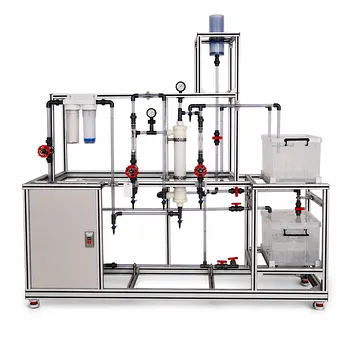
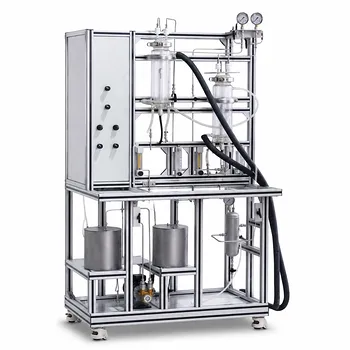
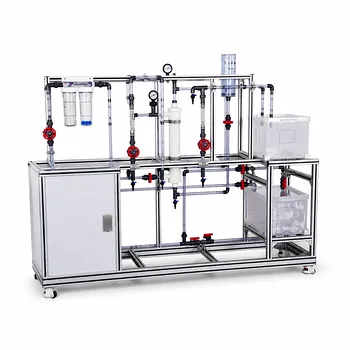
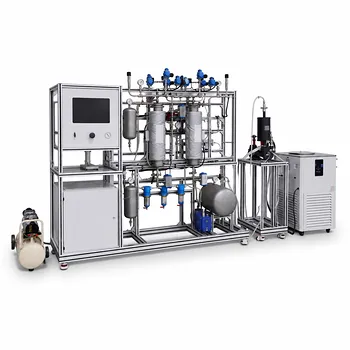
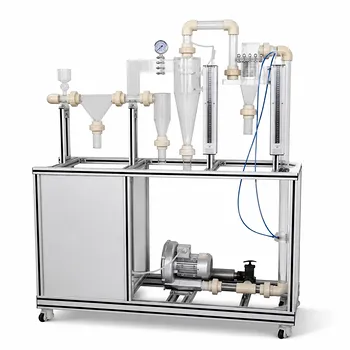
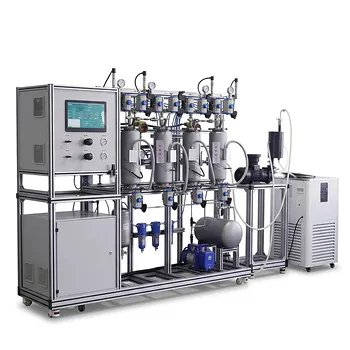
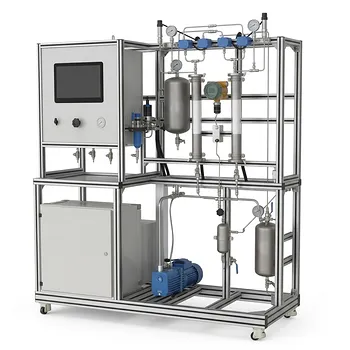
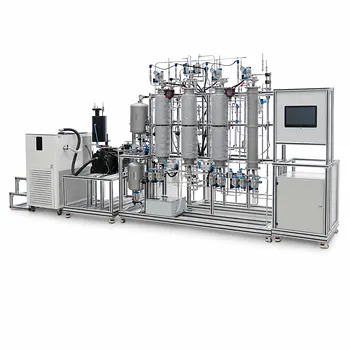
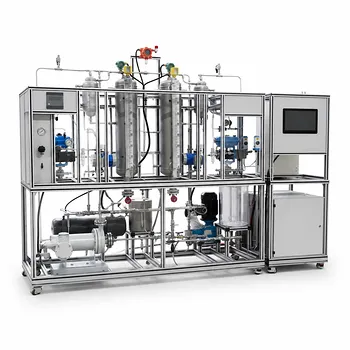
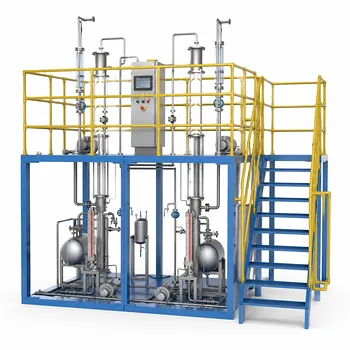
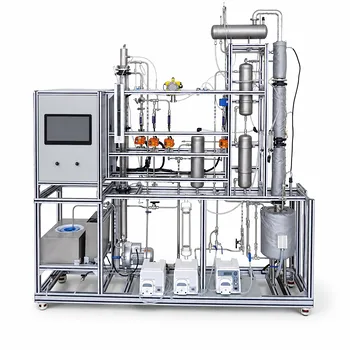
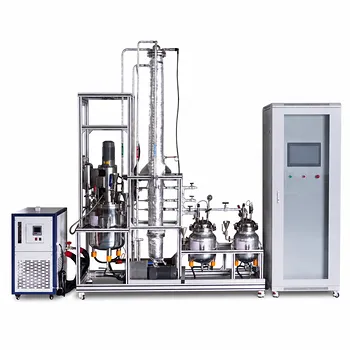
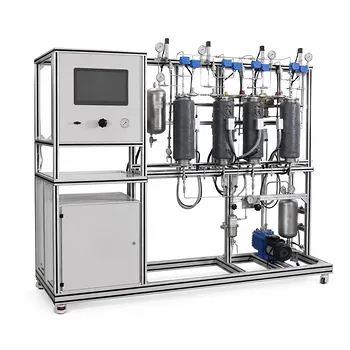
Organic polymer membranes are the primary material class in educational gas separation pilot plants, while inorganic palladium alloys fill a specialized role for ultrapure hydrogen production. These pilot systems are used to demonstrate a range of industrially critical unit operations, including natural gas dehydration, hydrocarbon dewpointing, olefin/paraffin separation, and – expanding beyond the core list – hydrogen recovery from refinery off-gases and carbon dioxide capture. This dual material landscape allows students to study everything from general transport mechanics to high-selectivity niche processes.
The core takeaway: Organic polymers (polysulfones, polyimides, polyetherimides) dominate because their processability and selectivity let educators demonstrate a broad suite of gas separations under safe, controllable lab conditions. Palladium alloy membranes are reserved for showcasing ultrapure hydrogen generation, offering a case study in extreme selectivity and higher-temperature operation. The unit operations selected for a pilot plant directly shape which industrial principles students can internalize.
The Dominant Material Class: Organic Polymer Membranes
Why Polymers Are the Educational Standard
Organic polymers offer an unmatched combination of sufficient gas selectivity and ease of processing. They can be cast into hollow‑fiber or flat‑film modules quickly and cost‑effectively, which is essential for a teaching environment where modules may be replaced or compared frequently. Their versatility also means a single polymer platform can demonstrate multiple separation tasks.
As a result, students can investigate gas permeability, selectivity, and the impact of operating parameters without the extreme temperatures or material safety concerns that come with many inorganic alternatives.
Key Polymer Families Found in Pilot Plants
Polysulfone‑silicone composite membranes are prolific because they provide robust mechanical strength and good separation factors for light gases. Researchers often incorporate them to study hydrogen recovery and natural gas upgrading.
Polyetherimide (PEI) and polyimide‑based membranes bring high thermal stability and intrinsic selectivity for light gases like helium, hydrogen, and CO₂. Their asymmetric structure makes them ideal for demonstrating concentration polarization, compaction under high pressure, and stage‑cut manipulation.
Less common but equally instructive are sulfonated polyimides and poly(phthalazinone)‑based materials, which can illustrate how chemical modification of the polymer backbone alters transport properties and plasticization resistance.
Real‑Time Operational Insights with Polymer Modules
Educational pilot plants are often instrumented to let users adjust feed pressure, temperature, and flow rate while monitoring permeate-side pressure and active membrane area. With polymer membranes, students can observe physical compaction of composite films and how boundary layers influence selectivity in real time, directly connecting theoretical models to practical limitations.
The Specialized Inorganic Option: Palladium Alloys
Ultrapure Hydrogen Generation on a Small Scale
Palladium alloy membranes are used in commercial hydrogen production because they are virtually impermeable to all gases except hydrogen, delivering product purity often exceeding 99.999%. In a pilot plant setting, even a small palladium module can demonstrate this extreme selectivity and the interplay between temperature, hydrogen partial pressure, and permeation flux.
This single demonstration links materials science, thermodynamics, and safety design, since palladium‑alloy membranes require elevated temperatures and careful hydrogen handling. It serves as an eye‑opening contrast to the more permissive polymer barriers.
Unit Operations Demonstrated in Gas Separation Pilot Plants
Natural Gas Dehydration
Using water‑vapor‑selective polymer membranes, students simulate the removal of moisture from raw natural gas. They control feed humidity and pressure to observe how dew point depression varies with stage cut and membrane area, a direct analog to field operations that prevent pipeline corrosion and hydrate formation.
Hydrocarbon Dewpointing
Here, heavier hydrocarbons are stripped from a gas stream to prevent liquid dropout during transport. Pilot‑plant modules with selective polymer films let students manipulate temperature and pressure to target the rejection of C₃+ components, mirroring the operational windows used in gas processing plants.
Olefin/Paraffin Separation
Separating ethylene from ethane or propylene from propane – a cornerstone of the petrochemical industry – can be demonstrated using facilitated‑transport or glassy polymer membranes. Students analyze how differences in molecular size and solubility yield separation factors and how process parameters shift the trade‑off between recovery and purity.
Hydrogen Recovery from Purge Streams
Polymer membranes (especially polysulfone‑silicone composites) recover hydrogen from refinery or ammonia plant off‑gases. In the pilot plant, a mixed feed containing H₂ alongside CH₄ or N₂ is passed through the module, allowing students to calculate recovery rates, purity, and the economic tipping point for such a pressure‑driven process.
Carbon Dioxide Capture
Polyimide‑based membranes separate CO₂ from flue gas or raw natural gas. This unit operation connects to decarbonization and natural gas sweetening. By varying feed CO₂ content and permeate pressure, students explore how membrane area and selectivity influence capture cost, a powerful bridge to modern climate‑tech challenges.
Understanding the Trade-offs in Educational Pilot Plants
Polymer Versatility vs. Selectivity Ceilings
Polymer membranes are easy to use and replace, but they exhibit a well‑known permeability‑selectivity trade‑off. Students quickly learn that a material ideal for one separation (e.g., CO₂/CH₄) may fail for another (e.g., O₂/N₂) without modification. This limitation becomes a core teaching point about material selection and process optimization.
Palladium Alloy Performance at a Cost
Palladium modules demonstrate ultimate hydrogen purity, but they require high temperatures, are sensitive to sulfur and carbon monoxide poisoning, and are expensive. Educators must therefore weigh whether the added complexity justifies the pedagogical value, or whether it is better to simulate the concept with polymer models and case studies.
Fidelity to Industrial Processes
Educational pilot plants deliberately simplify flowsheets and safety systems. While this lowers the barrier to understanding, it can mask real‑world problems like feed pre‑treatment, seal degradation, or long‑term compaction. Effective courses pair hands‑on demonstrations with troubleshooting scenarios to bridge that gap.
Making the Right Choice for Your Curriculum
The best material and unit operation selections depend on the learning outcomes you want to achieve.
- If your primary focus is building fundamental knowledge of gas transport: Use widely available polysulfone or polyimide hollow‑fiber modules to run natural gas dehydration or dewpointing experiments. Their predictable behavior makes it easier to isolate the effects of pressure, temperature, and flow.
- If your goal is to showcase extreme selectivity and high‑purity requirements: Incorporate a palladium alloy module for hydrogen recovery. The contrast with polymers teaches the value and hidden costs of near‑perfect separation.
- If you want to align the lab with modern industrial challenges: Configure the pilot plant for CO₂ capture or olefin/paraffin separation. These unit operations require students to grapple with economic trade‑offs and process integration, skills that are immediately transferable to the field.
- If you are limited by budget or safety infrastructure: Stick with polymer modules and use detailed simulations or virtual experiments to augment coverage of inorganic membranes and high‑temperature operations.
A deliberately chosen pair of membrane class and unit operation turns a simple separation bench into a miniature chemical plant, embedding an intuitive grasp of real‑world membrane technology that stays with students long after the course ends.
Summary Table:
| Membrane Class | Key Features & Advantages | Demonstrated Unit Operations |
|---|---|---|
| Organic Polymers (Polysulfone, Polyimide, PEI) | Cost-effective, easy to process, versatile, safe lab operation | Natural gas dehydration, hydrocarbon dewpointing, olefin/paraffin separation, CO2 capture, H2 recovery |
| Palladium Alloys (Inorganic) | Extreme selectivity (>99.999% purity), high-temperature operation | Ultrapure hydrogen generation and recovery from purge streams |
Empower Your Engineering Students with Hands-On Labs
Bring textbook theory to life with state-of-the-art educational equipment. LABPARK provides premium Educational and Vocational Unit Operations Pilot Plants in chemical engineering, bioprocess & biotech, and environmental & water treatment for universities, research institutes, and enterprises.
Whether you want to demonstrate membrane gas separation, water purification, or bioreactor kinetics, our custom pilot plants offer students industry-grade experience under safe, controllable conditions.
Ready to upgrade your laboratory curriculum? Contact us today to request a catalog and discuss your custom system requirements!
Related Products
- Multifunctional Membrane Separation Educational Pilot Plant with Ultrafiltration, Nanofiltration, Reverse Osmosis
- Ultrafiltration Membrane Separation Educational Pilot Plant
- Multi-Functional Membrane Separation Educational Pilot Plant for Unit Operations Lab
- Photocatalytic Membrane Separation and Degradation Unit Operations Pilot Plant
- Hollow Fiber Ultrafiltration Membrane Separation Educational Pilot Plant
People Also Ask
- Isotropic vs. Anisotropic Membranes: How to Choose the Best Pilot Plant Modules
- How do membrane pilot plants demonstrate synthetic vs biological membrane advantages?
- What are the main types and mechanisms of membrane fouling? Optimize Your Pilot Plant Operations
- How do membrane separation pilot plants differ from traditional filtration and extraction? Key Mechanisms
- How can operators optimize operating conditions and cleaning protocols in membrane separation pilot plants to mitigate fouling?