Structural knowledge is not an academic luxury—it is an engineering necessity. Understanding the intricate crystal structures of macromolecules like insulin or therapeutic proteins directly shapes how bioprocess pilot plants design their purification and formulation steps. By decoding the three-dimensional arrangement of thousands of atoms, engineers can pinpoint the exact conditions—pH, temperature, precipitant concentration—that coax a protein into a highly pure, stable crystal while preserving its biological function.
Bioprocess pilot plants rely on crystallization as a key purification step, and the crystal structure of the target molecule is the blueprint for that process. Without this structural insight, optimizing yield, purity, and activity becomes a blind guess, risking product failure during scale-up.
Why Crystal Structure Knowledge Drives Bioprocess Success
Crystallization: The Gatekeeper of Purity and Stability
Downstream processing in pilot plants frequently uses crystallization to isolate therapeutic proteins and enzymes. The process is not merely about forming solid particles—it’s about building a highly ordered lattice that excludes impurities. The molecule’s own architecture dictates how it packs into that lattice, defining the saturation point, nucleation rate, and final crystal quality.
Decoding the Crystal Lattice to Set Process Parameters
X-ray diffraction, rooted in Bragg’s equation, reveals the macromolecule’s unit cell dimensions and symmetry. These structural data directly translate into process parameters. For example, insulin’s tendency to form zinc-stabilized hexamers means the precipitant type and concentration must precisely match the lattice’s requirements. A pilot plant engineer uses this knowledge to adjust pH and temperature so the protein crystallizes at high yield without forming amorphous aggregates.
Hydrogen Bonds: The Fragile Foundation of Function
Proteins and DNA hold their functional shapes through delicate hydrogen bonds that stabilize alpha-helices and double-helix structures. The crystal structure maps exactly where these bonds lie, highlighting regions vulnerable to shear forces, thermal fluctuations, or pH shifts. In a pilot plant, that map becomes a safety guide—operators set tight limits on agitation speed and sterilization temperatures to prevent denaturation and maintain biological activity.
Understanding the Trade-offs
The Perils of Over-Optimizing for Yield Alone
Pushing crystallization conditions for maximum throughput can backfire. A slight overshoot in precipitant concentration might speed up nucleation but create small, inclusion-filled crystals that trap contaminants or lose activity. The crystal structure helps define the thermodynamic sweet spot, but chasing yield above that point often sacrifices product quality.
Bridging the Gap from Lab Bench to Pilot Plant
Conditions that produced perfect crystals in a microliter-scale experiment can fail in a 10-liter pilot vessel. Mixing dynamics, heat transfer, and surface-to-volume ratios change the effective supersaturation. Structural knowledge allows the team to anticipate these shifts—maintaining the correct local environment for the protein’s sensitive hydrogen bond network is essential, even if global parameters must drift.
The Cost of Ignoring Long-Term Stability
A crystal that looks pristine after filtration may slowly lose activity over weeks if trace pH variations or residual shear have partially unfolded the molecule. The structure reveals the native fold and its degradation pathways, enabling a stability-focused formulation strategy that extends shelf life, a critical economic factor for biopharmaceuticals.
Applying Structural Insight to Your Pilot Plant Operations
Begin by making the crystal structure a central reference document for your scale-up team. Use it to guide every major process decision.
- If your primary focus is maximizing yield: Use the unit cell’s solubility boundaries to operate at the edge of the metastable zone, where supersaturation drives rapid nucleation but orderly growth.
- If your primary focus is achieving ultra-high purity: Exploit the unique lattice contacts shown in the structure to select precipitants that favor the target crystal habit over impurities, turning crystallization into a selective polishing step.
- If your primary focus is preserving biological activity: Map every hydrogen bond and hydrophobic patch in the structure, then set hard operational limits on shear, temperature, and pH excursions to keep the molecule in its active conformation.
- If your primary focus is seamless scale-up: Bring the crystallographic data to your scale-down model. Use it to equate the microenvironment within the pilot plant’s larger volume to the conditions that produced robust crystals at bench scale.
By embedding structural understanding directly into your pilot plant’s control strategy, you convert complex atomic arrangements into reliable, repeatable manufacturing outcomes.
Summary Table:
| Structural Feature | Process Parameter Affected | Operational Benefit |
|---|---|---|
| Unit Cell & Symmetry | Precipitant concentration, pH, & temp | High purity & ordered lattice growth |
| Hydrogen Bond Map | Shear limits, agitation, & heat limits | Prevents denaturation & activity loss |
| Solubility Boundaries | Supersaturation & seeding points | Maximizes yield, avoids aggregation |
| Native Fold Data | Formulation & downstream storage | Extends product shelf life |
Elevate Your Biotech Training and Research with LABPARK
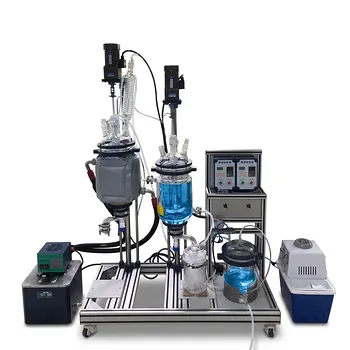
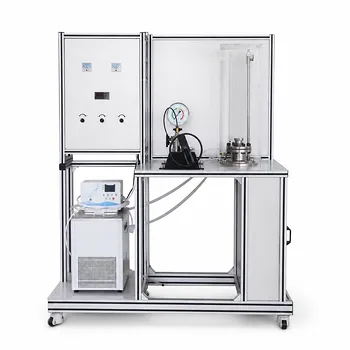
Transitioning complex macromolecular research to pilot-scale operations requires precise control. LABPARK provides premium Educational and Vocational Unit Operations Pilot Plants in chemical engineering, bioprocess & biotech, and environmental & water treatment for universities, research institutes, and enterprises.
Our systems help you master crystallization, preserve hydrogen bonds, and optimize purification processes. Contact us today to find the perfect pilot plant solution for your facility!
Related Products
- Multi Functional Membrane Crystallization Educational Unit Operations Pilot Plant
- Potassium Salt Thermal Dissolution and Crystallization Separation Educational Unit Operations Pilot Plant
- Multifunctional Membrane Separation Educational Pilot Plant with Ultrafiltration, Nanofiltration, Reverse Osmosis
- Multi Functional Catalytic Reaction and Reactor Evaluation Educational Unit Operations Pilot Plant
- Educational Compression Refrigeration Performance Determination Unit Operations Pilot Plant
People Also Ask
- Why is precise temperature control critical in crystallization pilot plants? Key to Scale-Up Success
- Control Crystallization Pilot Plant Secondary Nucleation: 4 Key Adjustments
- What key factors should be considered when configuring a crystallization unit operations pilot plant?
- How Crystal vs Amorphous Solids Guide Crystallization Pilot Plant Objectives
- What are the benefits of integrating online PAT tools like ATR-FTIR into crystallization unit operations pilot plants?