It’s not a bug, it’s a feature. The Kern method remains a staple in unit operations laboratories precisely because it ignores bypass and leakage streams. Its deliberate simplification turns a complex shell-and-tube exchanger into a manageable learning tool, letting students establish a solid baseline for heat transfer and pressure drop before they graduate to more intricate flow-fraction models.
While the Kern method’s inability to model flow maldistribution makes it unsuitable for final industrial design, its pedagogical value is unmatched. It teaches the fundamental interplay of geometry, flow, and thermal performance without overwhelming novices, serving as the cognitive scaffold for computer-aided methods like Tinker or Bell-Delaware.
The Pedagogical Power of Simplification
Building Intuition Through Manual Calculation
The Kern method operates on nominal clearances—single, representative geometric values rather than the detailed flow paths of a real exchanger. This abstraction allows students to perform every step by hand, reinforcing how shell-side velocity, Reynolds number, and heat transfer coefficient connect.
Manual calculation forces an intimate understanding of the underlying physics. When students see an equation’s terms change, they immediately see why pressure drop or duty shifts, building intuition that later becomes a mental check against software results.
From Hand Calculations to Computer Models
The method’s simplicity provides a safe, low-stakes environment to learn the core relationships before computational complexity is layered on. In lab courses, students first predict performance with Kern, then compare it to measured data or to more advanced simulation outputs.
By design, the Kern method does not separate the shell-side flow into bypass (C), leakage (A, E), and other streams. This “deficiency” becomes a teachable moment: it clarifies what advanced models do differently and why those extra flow paths matter in industrial units.
The Role of the Kern Method as a Baseline
Establishing a Reference Point for Validation
Every pilot-plant or laboratory measurement needs a benchmark. The Kern method supplies that anchor. Because it is simple and deterministic, students can quickly compute an expected value and then investigate deviations, instead of being lost in the noise of an unvalidated complex model.
A baseline calculation turns data analysis into a detective exercise. If Kern underpredicts pressure drop, students know to look for unexpected bypassing or leakage—insights that the method itself didn’t compute but still helped uncover.
Demystifying Complex Software Outputs
Once students have internalized the Kern baseline, they can approach a Bell-Delaware or Tinker model with critical eyes. They already know the order of magnitude for heat transfer and pressure drop; they can spot when a flow-fraction model gives a non-physical result or a badly calibrated input.
This progression preserves a student’s analytical confidence. They no longer treat a software tool as a black box; they use it as an accelerator on a foundation they already understand.
Limitations That Become Learning Opportunities
Explicitly Teaching the Concept of Flow Maldistribution
The very thing the Kern method omits—bypass and leakage paths—becomes the subject of the next lesson. Instructors can point to the Kern result and say, “This assumes perfect flow following the ideal tube bundle path. In reality, fluid takes shortcuts.”
That contrast makes the topic of maldistribution tangible. Students grasp not only that it happens, but how much it can skew performance when they later quantify Paths A, C, E, and F with a Bell-Delaware tool.
Highlighting the Need for Advanced Methods
Because the Kern method overpredicts heat transfer in many industrial configurations (due to unmodeled bypassing), it teaches an essential engineering lesson: all models are wrong, but some are useful for specific purposes. This humility about model limitations is as critical to an engineer’s mindset as any design equation.
When students later defend a more complex method in design projects, they can articulate why it is needed—citing exactly which flow paths the Kern method missed—rather than blindly following a syllabus.
Understanding the Trade-offs
Simplicity vs. Accuracy
The Kern method trades accuracy for transparency and speed. In a one-day lab experiment, the time saved on calculation is reinvested in running multiple experimental conditions or troubleshooting instrumentation. The learning gain from those extra experiences often outweighs the precision lost to the simplified flow model.
However, this trade-off only works when the goal is education, not industrial specification. No practicing engineer would sign off on a large-scale exchanger design using Kern alone—but that is a separate goal from a laboratory course.
Speed vs. Fidelity
A manual Kern calculation might take 20 minutes; a full Bell-Delaware run demands specialized software and careful input. The low barrier to entry allows students to iterate quickly, testing different baffle cuts or shell diameters by hand. That rapid exploration cements conceptual learning far better than a single, perfectly accurate simulation.
Crucially, the method’s speed keeps the cognitive load on thermal-hydraulic principles, not on navigating a user interface or debugging input files.
Making the Right Choice for Your Learning Goal
After understanding what the Kern method offers and where it falls short, tailor its use to your specific objective.
- If your primary focus is mastering heat exchanger fundamentals: Use Kern exclusively until you can perform a sizing and rating by hand and explain every step. The method’s limitations will teach you what else matters.
- If your primary focus is preparing for industrial design roles: Start with Kern to build a baseline, then quickly transition to Bell-Delaware or HTRI software. Use Kern as a sanity check on all software results.
- If your primary focus is evaluating lab data or pilot plant performance: Compute a Kern prediction first. Treat any systematic deviation as a signature of bypass or leakage that you can then investigate with more detailed flow-fraction models.
The Kern method endures because it builds the mental model of a heat exchanger that every good engineer carries into the control room, the design meeting, and the simulation software alike.
Summary Table:
| Feature | Kern Method | Advanced Methods (e.g., Bell-Delaware) |
|---|---|---|
| Calculation Mode | Manual & conceptual (approx. 20 mins) | Software-dependent & input-heavy |
| Flow Modelling | Ignores bypass & leakage paths | Models specific flow fractions (Paths A, C, E, F) |
| Primary Purpose | Classroom teaching & baseline validation | Industrial design & precise rating |
| Key Learning Value | Builds core physical intuition and relationship insights | Teaches complex flow maldistribution and design accuracy |
Bridge the Gap Between Theory and Practice with LABPARK
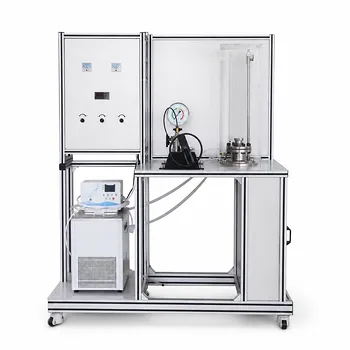
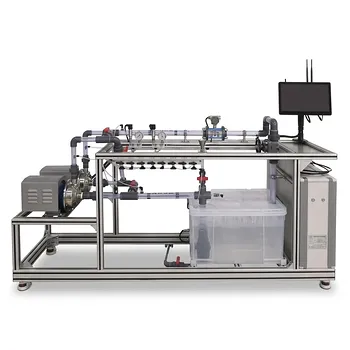
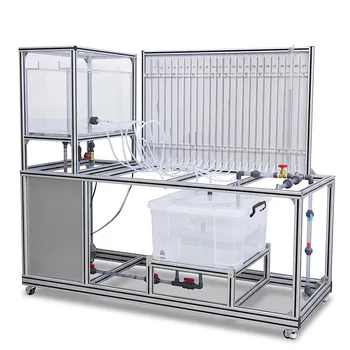
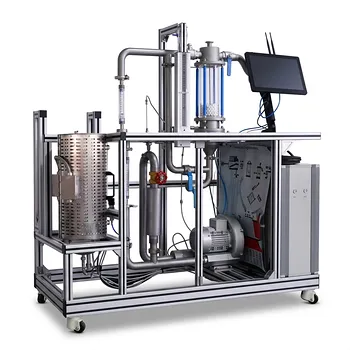
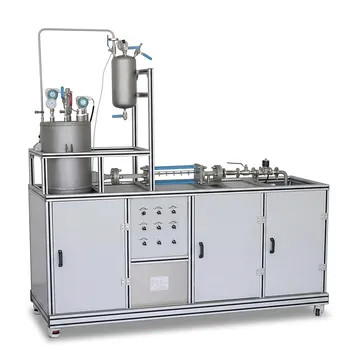
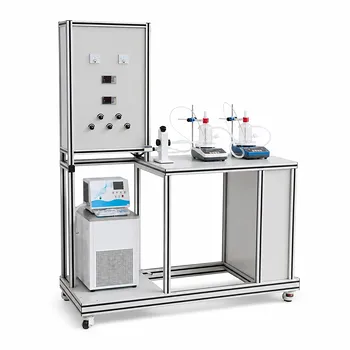
Equip your students, researchers, and engineers with the ultimate hands-on learning tools. LABPARK provides high-quality Educational and Vocational Unit Operations Pilot Plants across chemical engineering, bioprocess & biotech, and environmental & water treatment fields.
Designed for universities, research institutes, and enterprises, our pilot plants translate mathematical models—from basic Kern calculations to complex flow simulations—into practical, real-world engineering expertise.
Contact LABPARK today to discover how our customized pilot plant solutions can elevate your educational and research capabilities!
Related Products
- Multi Functional Catalytic Reaction and Reactor Evaluation Educational Unit Operations Pilot Plant
- Educational Compression Refrigeration Performance Determination Unit Operations Pilot Plant
- Comprehensive Heat Transfer Coefficient Determination Educational Unit Operations Pilot Plant
- Rising and Falling Film Evaporation Educational Unit Operations Pilot Plant
- Continuous Batch Extractive Distillation Educational Pilot Plant
People Also Ask
- What reaction engineering principles are shown in a catalytic reactor pilot plant? SO2 Oxidation Guide
- How does feed gas flow rate affect catalytic RFR yields? Optimize Pilot Plant Performance
- Why is FTIR integration in catalytic pilot plants important? Real-Time Student Insights
- How to analyze active metal distribution & identify catalyst poisoning in pilot plants? Expert Diagnostic Guide
- How to study catalyst poisoning & regeneration? Master catalytic reaction life cycles.