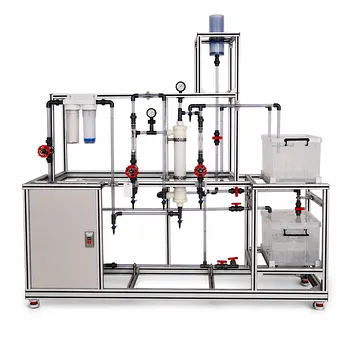
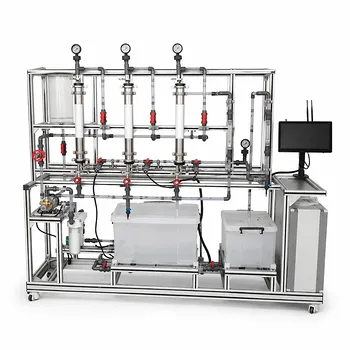
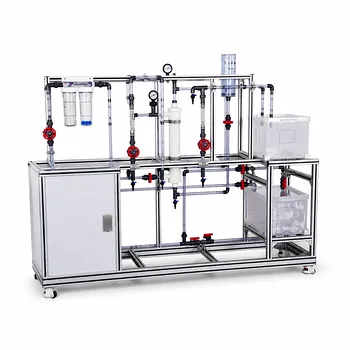
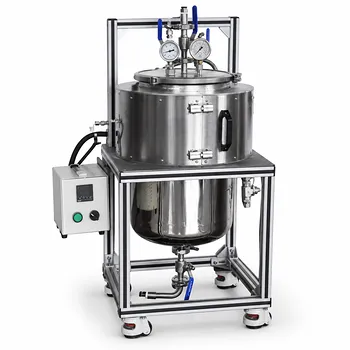
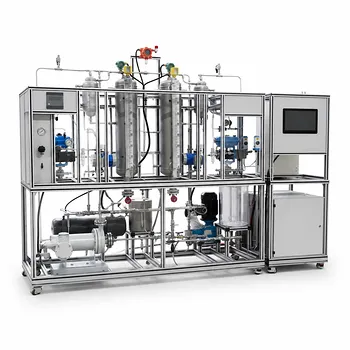
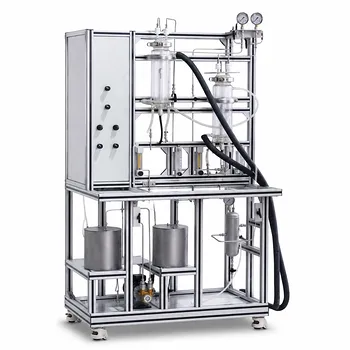
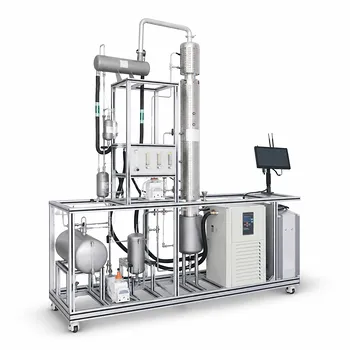
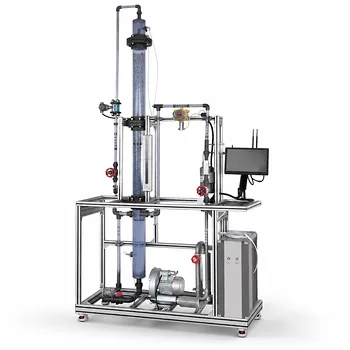
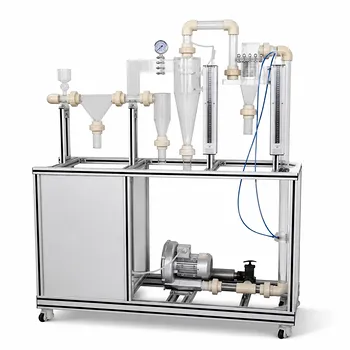
Understanding the “why” behind a pilot plant’s design is the first step to unlocking its full training potential. Integrating membrane filtration into bioprocess and fermentation pilot plants is fundamentally about replacing outdated, manual harvesting methods with automated, scalable, and high-yield separation processes. For students and researchers, this integration provides irreplaceable hands-on experience in operating the same membrane-based downstream processing techniques—like cell harvesting and enzyme concentration—that drive modern industrial biotechnology.
While the immediate goal is to teach critical separation steps like cell removal and product concentration, the deeper value lies in creating a holistic training environment. Integrating membrane filtration allows pilot plants to replicate the real-world challenges of fouling, energy management, and process automation, transforming theoretical knowledge into actionable skills for a sustainable bioeconomy.
The Fundamental Reason: Streamlining Harvesting and Product Concentration
The primary driver for adding membrane filtration to a fermentation pilot plant is to modernize how we recover valuable products. Traditional manual methods are labor-intensive and often yield inconsistent results, which is unsuitable for both modern industry and high-level training.
Automating Cell and Biomass Separation
In the production of enzymes or antibiotics, the first critical step after fermentation is separating the cells or biomass from the liquid broth. Membrane systems automate this once manual and time-consuming task.
This allows students to move from a textbook understanding to operating a true industrial process. They gain practical experience in running a continuous, high-yield cell harvesting loop, learning how parameters like transmembrane pressure and cross-flow velocity directly impact the efficiency of a clarification step.
Concentrating Heat-Sensitive Biological Products
Many high-value bioproducts, like therapeutic enzymes, are extremely sensitive to heat. Thermal concentration methods, such as evaporation, can easily destroy their activity.
Membrane filtration operates without a phase change and typically at ambient temperature, making it the safe, low-energy alternative. In a pilot-plant setting, researchers can watch this principle in action, concentrating a fragile enzyme solution while preserving its functional structure, a lesson in product integrity that no simulation can replicate.
Beyond Harvesting: Building a Comprehensive Downstream Processing Skillset
Integrating a single membrane unit operation is just the starting point. The real training benefit explodes when it becomes a platform for studying the entire downstream workflow with all its interconnected complexities.
Creating Hybrid Filtration Cascades for Real-World Purity
Industrial purification rarely relies on a single membrane type. Pilot plants allow for the configuration of hybrid systems—using microfiltration (MF) for initial clarification, followed by ultrafiltration (UF) for concentrating target proteins, and even nanofiltration (NF) for demineralization.
This integrated setup teaches a critical lesson in process economics: a well-chosen pre-filtration step protects more expensive downstream membranes from rapid fouling. For trainees, it’s a direct, measurable lesson in how multi-stage design is essential to meet stringent purity standards for biopharmaceuticals.
Quantifying the Energy and Quality Advantages
One of the most powerful training outcomes is the ability to prove why membranes have replaced traditional methods. Pilot plants become a laboratory for comparative analysis.
Students can directly measure and confirm the energy savings of a pressure-driven process versus energy-intensive thermal distillation. They can also demonstrate that membrane separation does not require chemical reagents or external additives, ensuring the final biological product remains uncontaminated—a critical concept for good manufacturing practice.
The Versatility to Simulate Diverse Industries
A single membrane filtration skid isn't just for microbes. The same pilot plant can be configured to demonstrate juice clarification (MF), whey protein concentration from dairy by-products (UF), or juice concentration (RO), showing students the technology’s cross-sector relevance.
This versatility breaks down silos in education, allowing a bioprocess student to grasp core principles that are immediately transferable to food processing or wastewater treatment, preparing them for the multifaceted modern bioeconomy.
The Automation and Sensor Technology Edge
Membrane filtration is ideally suited for intelligent control because its key performance indicators—flow, pressure, and permeability—are highly sensor-friendly. This transforms a simple separation unit into an advanced module for process analytical technology (PAT).
Simulating Smart Manufacturing with Real-Time Feedback
Modern pilot plants are equipped with sensors that monitor real-time changes in feed quality and transmembrane pressure. An automated system can then dynamically adjust backwashing intervals or cross-flow velocity based on this live data.
For vocational training and research, this provides hands-on experience in process control and data acquisition. Students learn not just how to run a machine, but how to program a feedback loop, prevent membrane damage through predictive action, and implement energy conservation strategies by running equipment only at optimal efficiency.
Understanding the Trade-offs: The Challenge of Fouling
An objective, complete education cannot ignore the primary operational hurdle in membrane filtration: fouling. A pilot plant that never fouls teaches a dangerously incomplete lesson.
The Inevitable Decline and How to Study It
Fouling leads to a continuous decline in permeate flux and can alter a membrane's selectivity. The critical training value is found in intentionally inducing and then managing this phenomenon.
With a pilot plant, researchers can study how feed viscosity and osmotic pressure limit the maximum achievable concentration factor. It is the only safe space to test aggressive cleaning protocols, optimize chemical usage, and calculate the true economic impact of membrane replacement before any of these decisions become a costly mistake at an industrial scale. This troubleshooting experience is arguably the most valuable skill a pilot-plant trainee can acquire.
Making the Right Choice for Your Goal
How you integrate and operate a membrane filtration unit should directly align with the primary learning or research objective.
- If your primary focus is industrial readiness for students: Prioritize automated, multi-stage hybrid systems that simulate a 24/7 manufacturing environment, emphasizing process control and troubleshooting.
- If your primary focus is research on product quality and activity: Focus on ambient-temperature, single-pass concentration steps and rigorously document the proof of no thermal degradation against a control sample to validate the preservation of biological activity.
- If your primary focus is sustainable and cost-effective process design: Structure the coursework around measurable outputs, having trainees directly compare the energy consumption, waste generation, and water usage of membrane processes against traditional thermal or chemical methods.
The true power of a pilot plant isn't just in the hardware, but in the realistic, failure-tolerant learning environment it creates for the next generation of bioprocess engineers.
Summary Table:
| Feature / Operation | Industrial & Training Benefit | Core Educational Outcome |
|---|---|---|
| Cell Harvesting | Replaces manual methods with automated clarification loops | Hands-on control of transmembrane pressure & cross-flow velocity. |
| Concentration | Protects heat-sensitive products (enzymes) at ambient temp | Verification of biological activity preservation & energy savings. |
| Hybrid Cascades | Combines MF, UF, and NF for multi-stage purification | Understanding of process economics and downstream protection. |
| PAT & Automation | Integrates sensors for real-time monitoring and feedback | Practical experience in smart manufacturing and process control. |
| Fouling Study | Safely simulates membrane fouling and cleaning protocols | Critical troubleshooting skills and chemical maintenance optimization. |
Elevate Your Practical Training with LABPARK Pilot Plants
Are you looking to provide students and researchers with realistic downstream processing experience?
LABPARK offers state-of-the-art Educational and Vocational Unit Operations Pilot Plants in chemical engineering, bioprocess & biotech, and environmental & water treatment. Specially designed for universities, research institutes, and enterprises, our systems simulate real-world challenges—such as membrane fouling and automated process control—to build actionable engineering skills.
Contact LABPARK today to find the perfect pilot plant solution for your lab!
Related Products
- Ultrafiltration Membrane Separation Educational Pilot Plant
- Multifunctional Membrane Separation Educational Pilot Plant with Ultrafiltration, Nanofiltration, Reverse Osmosis
- Hollow Fiber Ultrafiltration Membrane Separation Educational Pilot Plant
- Multi-Functional Membrane Separation Educational Pilot Plant for Unit Operations Lab
- Multi Functional Membrane Crystallization Educational Unit Operations Pilot Plant
People Also Ask
- Pervaporation vs. Vapor Permeation: Handling Suspended Solids in Membrane Pilot Plants
- How do PEI, PVDF, and PSU membranes compare in pilot plants? Find the best fit.
- How do membrane pilot plants demonstrate synthetic vs biological membrane advantages?
- Why Use a Membrane Separation Pilot Plant vs. Lab Testing? Avoid Costly Scale-Up Failures
- Isotropic vs. Anisotropic Membranes: How to Choose the Best Pilot Plant Modules