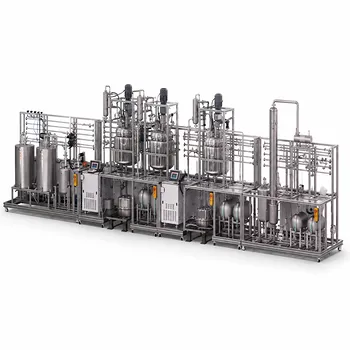
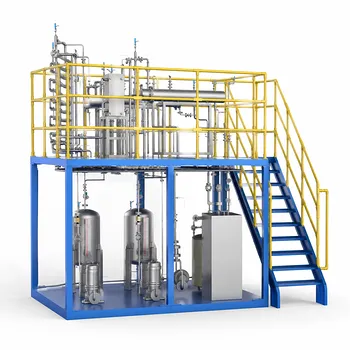
Material compatibility isn’t a mere checkbox in a spec sheet—it’s the defining factor that separates a safe, scalable process from a catastrophic failure. In unit operations pilot plants, it is a critical learning objective because these systems use industrial materials of construction—glass‑lined steel, stainless steel, Hastelloy C, tantalum—that must maintain mechanical integrity under aggressive process streams for extended periods. This hands‑on experience forces trainees to confront real‑world interactions that laboratory glassware never reveals, such as static ignition risks, hidden corrosion, seal leaching, and cross‑contamination between process and utility fluids, directly guiding equipment selection during scale‑up training.
The deep lesson of material compatibility is that what works in a glass beaker can destroy a production reactor. In a pilot plant, students learn to select materials not just for chemical inertness at a single point in time, but for long‑term resilience under process conditions—preventing leaks, degradation, and unsafe interactions that would otherwise derail a commercial scale‑up.
Why Material Compatibility Becomes a Survival Skill at Pilot Scale
The Leap from Glass to Industrial Reality
Laboratory‑scale experiments overwhelmingly use borosilicate glass, which is transparent, inert to most chemicals, and forgiving over short contact times. Training pilots break that illusion. They expose students to the reality that industrial equipment operates continuously and often with fluids that are chemically aggressive, thermally cycling, or electrostatically hazardous.
The primary reference highlights specific dangers that never appear in a beaker: heptane can create a static discharge hazard in glass equipment, and acids that seem harmless in a flask can attack Hastelloy C over weeks. Without direct pilot‑plant exposure, an engineer might blindly specify the wrong material, compromising both safety and the economics of the entire scale‑up.
Process Streams as a System, Not Just a Reactant
A critical insight trained in pilot plants is that the “process stream” is never a single chemical—it is a mixture of reactants, solvents, impurities, and even trace catalysts that change over time. The interaction between that stream and the equipment goes beyond simple corrosion. Students learn to evaluate:
- Polymer leaching from seals and gaskets into the product, which can contaminate pharmaceutical batches.
- Reaction of process fluids with heat‑transfer fluids inside jackets and condensers, leading to dangerous pressure build‑up or toxic by‑products.
- Accumulated stress corrosion cracking at welds and crevices that only becomes visible after hundreds of hours of operation.
This systemic view is impossible to teach with paper charts; it demands the physical feedback of a pilot plant.
How Material Selection Shapes Scale‑Up Training
Building an Engineering Mindset Around Failure Prevention
Scale‑up training in a pilot plant is not about memorizing a table of compatible materials. It is about developing a failure‑first mindset. Trainees learn to ask: “What will this fluid do to the equipment over a 6‑month campaign, and how will that affect purity, operator safety, and equipment lifespan?”
For example, the primary reference stresses the risk of process fluids interacting with the jacket and condenser heat‑transfer fluids. A scale‑up engineer must anticipate that a pinhole leak in a stainless‑steel coil could mix a thermal oil with a reactant—a scenario that demands material selection robust enough to withstand both fluids simultaneously. That level of cross‑contamination thinking is instilled through hands‑on pilot‑plant troubleshooting.
Translating Material Knowledge into Equipment Specifications
Pilot plants guide equipment selection by making abstract data tangible. When students see pitting on a Hastelloy flange after an acidic run, or witness the cloudiness in a sight glass caused by seal degradation, they internalize why a datasheet’s “A” rating for compatibility is insufficient. They learn to supplement it with:
- Temperature‑dependent corrosion rates, not just ambient‑temperature compatibility.
- The effect of flow velocity on erosion‑corrosion in piping.
- Galvanic coupling risks, especially when dissimilar metals meet in pumps and valves.
- Fabrication and weldability constraints, which often push engineers toward 316L stainless over a more corrosion‑resistant but harder‑to‑fabricate alloy.
This practical skill set allows them to write procurement specifications that prevent the kind of field failures that cause 90% of scale‑up delays.
The Hidden Risks That Pilot Plants Expose
Static, Leaching, and Other “Invisible” Failures
The primary reference pointedly mentions static risks with heptane in glass and polymer leaching from seals. These are not catastrophic corrosion events; they are silent process killers. Heptane’s low conductivity makes glass a static accumulator that can ignite a vapor cloud. In a pilot plant, trainees learn to replace a glass section with conductive glass‑lined steel or add grounding straps—decisions a lab chemist would never consider.
Similarly, seal leaching might not cause a mechanical failure, but it can introduce impurities that ruin a high‑value API. Trainees learn to select perfluoroelastomer seals (like Kalrez) over standard EPDM when even parts‑per‑billion contamination is unacceptable. This level of discrimination is born from observing real pilot‑plant deposits on a seal face.
The Heat‑Transfer Fluid Interface
One of the most dangerous, and least intuitive, material compatibility issues is the interface between the process and the heat‑transfer system. A jacket fluid like Syltherm might be perfectly compatible with stainless steel on its own, but if a process chemical diffuses through a gasket, the mixture can become highly corrosive. The primary reference underscores this by noting the need to evaluate consequences of process fluids interacting with jacket and condenser heat‑transfer fluids.
During scale‑up training, students learn to select materials for the “worst‑case mixture” scenario and to monitor for pH changes or pressure anomalies in thermal fluid systems. This directly informs equipment selection: a glass‑lined reactor might be chosen not because the process alone requires it, but because the risk of a jacket breach makes carbon steel too risky.
Understanding the Trade‑offs
Performance vs. Economics and Manufacturability
No material is perfect. Tantalum resists almost everything but costs a fortune. Hastelloy C‑276 handles strong acids but is difficult to machine and weld. Glass‑lined steel offers universal chemical resistance and visibility, but is vulnerable to thermal shock and mechanical impact. In a pilot‑plant curriculum, students confront these real‑world trade‑offs head‑on.
They learn that while a Hastelloy C reactor might survive a highly corrosive step, its high fabrication cost and long lead time could delay the entire project. That forces the question: can a cheaper 316L stainless vessel be used with a corrosion inhibitor? Or can process conditions (lower temperature, shorter residence time) be adjusted to avoid the worst degradation? These are not purely chemical questions; they are engineering economics questions that shape equipment selection at scale.
Safety, Transparency, and Mechanical Integrity
Educational pilots must also balance teaching value with student safety. Supplementary references stress that transparent sections like glass columns are invaluable for visualizing flooding, weeping, and wetting. But these sections must be compatible with the process chemicals and safe at operating pressure. A distillation column with a glass section handling flammable solvents must be electrically bonded and shielded. The material selection thus becomes a negotiation between pedagogic visibility and intrinsic safety.
Similarly, pressure‑bearing equipment requires certified relief devices. If a student selects a glass vessel for a pressure reaction because of chemical inertness, they must then grapple with the fact that glass has low tensile strength and needs special protective design—a lesson that directly informs the ultimate selection of a steel pressure vessel for commercial scale‑up.
Making the Right Choice for Your Scale‑Up Design
Armed with the foundational lessons of material compatibility from pilot‑plant training, engineers can approach equipment selection as a deliberate risk‑management process. The following goal‑oriented strategies emerge:
- If your primary focus is handling highly corrosive acids or halides: Prioritize glass‑lined steel or tantalum for wetted parts, accept the higher capital cost and thermal shock constraints, and strictly control jacket fluid chemistry.
- If your primary focus is minimizing upfront cost for a non‑corrosive organic pilot campaign: Use 304 stainless steel for tanks and piping, but devote resources to static grounding and monitoring seal condition—cost savings there will prevent a later fire or contamination.
- If your primary focus is early‑stage process development with unknown fluid compositions: Select Hastelloy C‑276 or similarly high‑alloy materials for reactions, and use PTFE‑lined piping to buy chemical flexibility while you iterate, knowing that machining and welding lead times will demand early vendor engagement.
- If your primary focus is training students in visual hydrodynamic observation: Incorporate glass sections only after verifying chemical compatibility and static‑discharge risks; always pair them with conductive grounding and secondary containment, and teach the inherent safety trade‑offs of transparency versus pressure integrity.
- If your primary focus is protecting a heat‑transfer fluid loop from cross‑contamination: Specify double mechanical seals or welded shell‑and‑tube exchangers, and design the system so that a leak would force an immediate pressure decay alarm, preventing the undetected mixing that the pilot plant exposed.
Mastering material compatibility in the pilot plant does not yield a single “correct” material. It yields the engineering judgment to anticipate how process, equipment, and time interact—and to choose the construction that keeps that interaction a safe, controlled one.
Summary Table:
| Material | Key Characteristics | Main Risks & Considerations |
|---|---|---|
| Glass-Lined Steel | Universal chemical resistance | Vulnerable to thermal shock & impact |
| Stainless Steel (316L) | High strength, easy to fabricate | Stress corrosion cracking under acids |
| Hastelloy C-276 | Superior resistance to strong acids | High cost and difficult fabrication |
| Tantalum | Extreme chemical inertness | Extremely high capital cost |
| Borosilicate Glass | Visual transparency for training | Static discharge risk, low pressure limit |
Bridge the Gap from Lab to Industry with LABPARK
Equip your students and researchers with the practical knowledge to tackle real-world engineering challenges. LABPARK provides state-of-the-art Educational and Vocational Unit Operations Pilot Plants in chemical engineering, bioprocess & biotech, and environmental & water treatment for universities, research institutes, and enterprises.
Our systems are built with industry-standard materials to help trainees master critical skills like material compatibility, static safety, and process scale-up in a safe, controlled environment.
Ready to elevate your training programs and prepare the next generation of engineers? Contact us today to explore our customized pilot plant solutions!
Related Products
- Carbon Dioxide Hydrogen Methanol Synthesis Educational Unit Operations Pilot Plant
- Multi Pump Fluid Transport Process Piping Unit Operations Training Pilot Plant
- Natural Product Extraction Unit Operations Training Pilot Plant
- Multi-Modal Distillation Unit Operations Training Pilot Plant
- Multi-Reactor Educational Pilot Plant for Reaction Engineering Unit Operations
People Also Ask
- How do temp & pressure affect methanol synthesis pilot plants? Optimize equilibrium and catalyst performance.
- Why is a purge system necessary when operating a gas recirculation loop in a methanol synthesis pilot plant? (Guide)
- Why do modern methanol pilot plants operate at lower pressures? Catalyst & Feed Requirements Explained
- What are the operational requirements for catalyst activation? Safe Methanol Pilot Plant Operation
- Why is the chemical plant startup schedule crucial? De-risk scale-up with pilot plants.