The single most consequential number in a biotechnology pilot plant’s cooling system design is not a temperature setpoint or a flow rate—it is the predicted metabolic heat load. For aerobic fermentations, microbial growth releases a significant heat of reaction that must be continually removed to maintain the narrow temperature window required for optimal enzyme activity and cell viability. An enthalpy balance estimates this heat generation by calculating the difference between the heats of combustion of the substrate consumed and the biomass plus product formed. That calculation directly dictates the cooling water flow rate and heat exchanger surface area required. Without it, you are guessing at the thermal backbone of your entire process.
In a bioprocess pilot plant, enthalpy balance estimation takes the abstract biology of growth and converts it into the concrete engineering specifications for cooling duty. It is the essential, defensible link between a cell’s metabolism and the real-world equipment that keeps it alive, enabling precise heat exchanger sizing, correct utility specification, and prevention of thermal runaway—the difference between an optimized scale-up and a preventable failure.
Why Bioprocesses Demand Such Aggressive Cooling
The Inefficient Engine of Aerobic Growth
Microorganisms are remarkably wasteful energy converters. Only about 40–60% of the energy in the substrate is captured in new cells and products; the remainder is irrevocably dissipated as heat. In a high-cell-density culture, this metabolic furnace can push heat generation rates to several tens of kilowatts per cubic meter, rivaling a small industrial burner.
Connecting Heat to a Measurable Combustion Difference
The most robust way to estimate that heat is through a combustion-based enthalpy frame. You treat the bioreactor as an energy-balanced box: the heat of combustion of the incoming glucose (or other carbon source) is pitted against the heats of combustion of the harvested biomass and any extracellular products. The missing enthalpy—the non-conserved portion—is the net heat release that must be scrubbed out by the cooling system. For a student or engineer in a pilot plant, this principle demonstrates the core chemical engineering reality that scale-up is thermal-scale-up.
From Biological Data to the Engineering Hardware
Translating Heat Generation into Cooling Water Demand
Once you know the volumetric heat production rate (in kJ/L·h or W/L), the step to cooling water flow rate is immediate. Using the simple relationship Q = ṁ·Cp·ΔT, the enthalpy balance gives Q directly. You then select a coolant inlet temperature and a safe approach temperature, and the required water flow emerges. This is not a rule-of-thumb exercise; it is a first-principles calculation that prevents dangerous under- or over-sizing.
Sizing the Heat Exchanger: The Geometry of Survival
With the cooling duty fixed, the necessary heat transfer area becomes a straightforward function of the overall heat transfer coefficient and the log mean temperature difference. An enthalpy balance that underestimates the metabolic heat yields a heat exchanger that is physically too small—leading to temperature drift, growth inhibition, and potentially complete culture loss. The cascade is irreversible, and the root cause is a failure to correctly estimate the enthalpy load at the very start.
Harnessing Real-Time Sensor Data for Dynamic Balances
In a physical pilot plant, temperature and pressure are the most straightforward variables to measure continuously. The same enthalpy principle can be expressed in terms of heat capacity (Cp) and the temperature derivative, allowing students and researchers to calculate real-time energy changes directly from temperature probes and pressure gauges. This turns a static design balance into a live monitoring tool for thermal efficiency and process health.
Understanding the Trade-offs and Hidden Pitfalls
The Fuzziness of Combustion Data for Complex Media
When using a defined medium with pure glucose, the heat of combustion is a crisp textbook value. But in industrial pilot plants, undefined components like corn steep liquor or molasses introduce uncertainty. You are forced to rely on correlations or approximate elemental compositions, and the resulting enthalpy balance carries a margin of error that must be accounted for in the design safety factor.
The “Extra” Heat Sources You Must Not Forget
The enthalpy balance as described covers metabolic heat, but a real bioreactor has additional contributors. The agitator shaft power dissipated into the liquid adds a mechanical heat load, often 1–5% of the total, and evaporation from the headspace removes latent heat. Neglecting these terms produces a cooling system that runs hotter than predicted, especially in high-agitation processes.
Static Design vs. Transient Process Behavior
A single-point enthalpy balance gives you a design duty at one moment—typically peak growth. Microbial kinetics are dynamic; oxygen limitation, substrate exhaustion, or induction of product formation can cause the heat generation to spike or crash. A robust pilot-plant configuration therefore marries a correctly sized base heat exchanger (from the steady-state balance) with a responsive control loop that modulates coolant flow based on real-time broth temperature.
Making the Right Choice for Your Pilot Plant
How you apply enthalpy balance estimation depends heavily on your specific context and risk tolerance.
- If your primary focus is scaling up a well-characterized host (e.g., E. coli for recombinant protein): Start with literature-derived stoichiometric heat yields for that organism on your planned medium. Refine the coefficient in the pilot plant using on-line temperature and flow data to close the energy balance accurately.
- If your primary focus is a novel strain with uncharted metabolism: Invest in laboratory-scale calorimetry or respirometry before designing the pilot cooling system. Even a small batch measurement of heat output per gram of cell dry weight will transform your enthalpy estimate from a guess into a design input.
- If your primary focus is absolute safety and thermal runaway prevention (e.g., a temperature-sensitive product or a hazardous organism): Overdesign the heat exchanger by a verified 20–30% margin above the calculated peak duty, and implement a cascaded control architecture that can increase coolant flow without delay when the broth temperature deviates from setpoint.
The ultimate purpose of an enthalpy balance is not to fill a lab report with numbers—it is to ensure that the living engine inside your bioreactor never creates more heat than your cooling system can politely remove.
Summary Table:
| Key Factor | Engineering Impact | Critical Consideration |
|---|---|---|
| Metabolic Heat Load | Dictates required coolant flow rate | Highly dynamic; shifts rapidly during peak growth phases |
| Heat Exchanger Sizing | Determines necessary heat transfer surface area | Underestimation leads to temperature drift and culture loss |
| Additional Heat Inputs | Adds mechanical load (1–5% from agitation) | Agitation and evaporation must be factored into the total balance |
| Medium Composition | Affects heat of combustion calculations | Complex media introduce uncertainties requiring design safety margins |
Optimize Your Scale-Up with LABPARK Pilot Plants
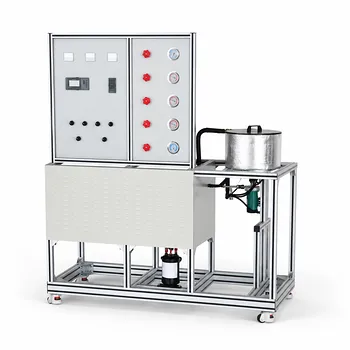
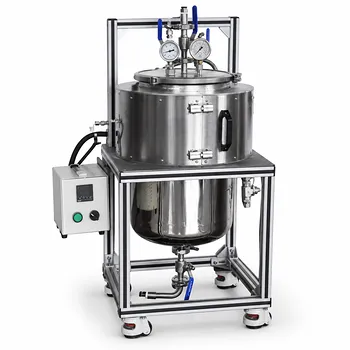
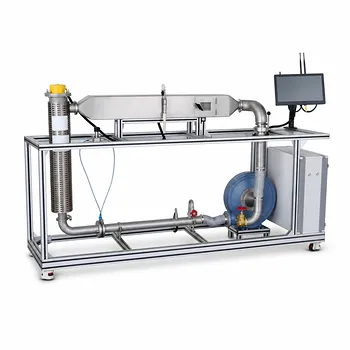
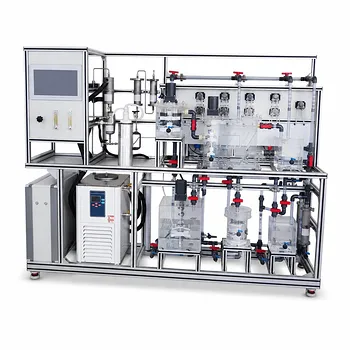
Achieving precise thermal control in bioprocess scale-up starts with robust, educationally designed equipment. LABPARK provides state-of-the-art Educational and Vocational Unit Operations Pilot Plants in chemical engineering, bioprocess & biotech, and environmental & water treatment.
Specially tailored for universities, research institutes, and enterprises, our systems enable students and engineers to master enthalpy balances, dynamic thermal control, and process scale-up in real-world scenarios.
Ready to enhance your training capabilities and prevent process failures? Contact us today to discuss your custom pilot plant configuration!
Related Products
- Educational Compression Refrigeration Performance Determination Unit Operations Pilot Plant
- Hot Filtration Educational Unit Operations Pilot Plant Laboratory System
- Circulating Wind Tunnel Drying and Convective Heat Transfer Coefficient Determination Educational Pilot Plant
- Multi-Functional Drying Educational Unit Operations Pilot Plant
- 100L Continuous Loop Hydrogenation Educational Unit Operations Pilot Plant
People Also Ask
- Why Switch Unit Operations Flow Configurations? Impact on Experimental Measurements
- Why is distinguishing between elastic and plastic deformation critical? Prevent tablet capping.
- How is unsteady-state flow analyzed & taught? Master Transient Systems in Unit Ops
- What are the differences between set-point, servo, and program control? Master unit operations training.
- How to use pilot plants to estimate gas compression costs? Master scale-up economics.