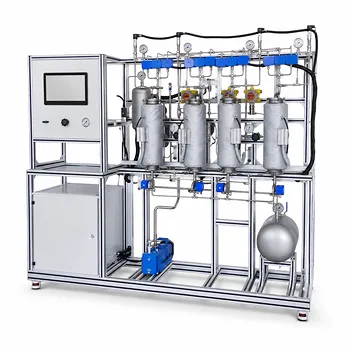
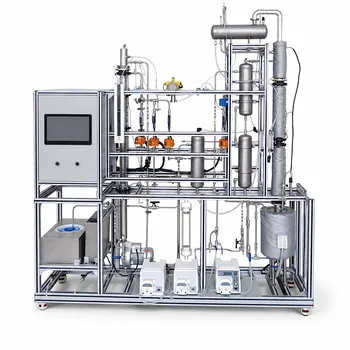
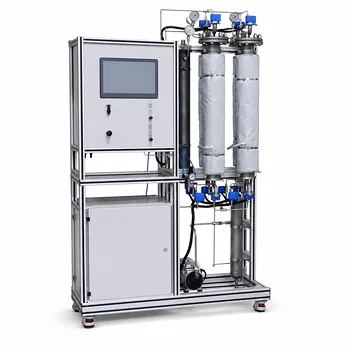
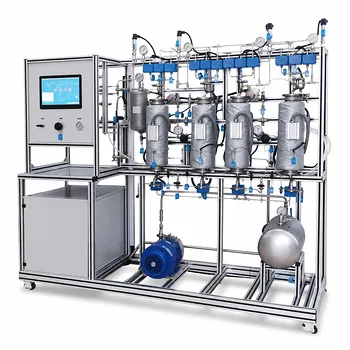
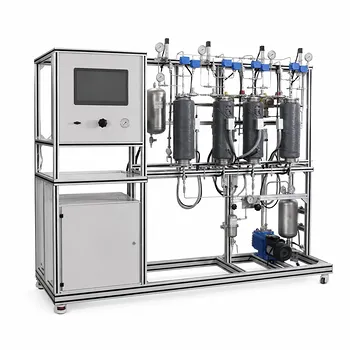
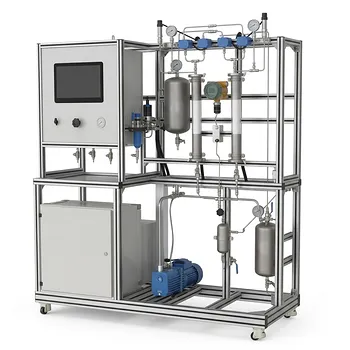
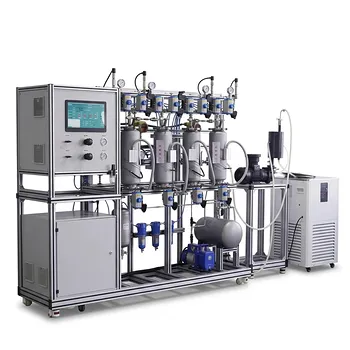
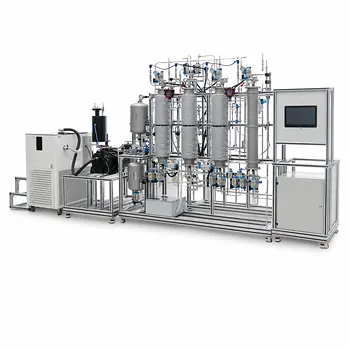
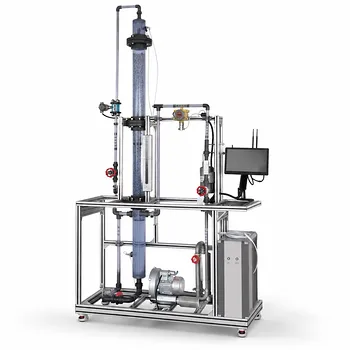
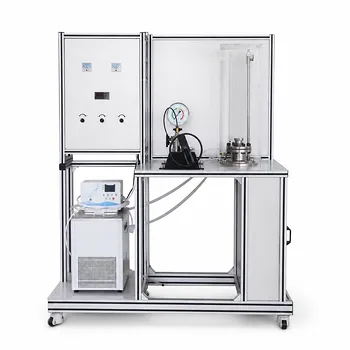
Activated carbon adsorption is critical because it protects product quality, biological performance, and downstream process reliability by removing residual disinfectants and trace organic contaminants from process water. Chlorinated municipal water is microbiologically safer, but free chlorine, chloramines, and chlorination by-products can affect flavor, inhibit enzymes, and damage sensitive production strains. Activated carbon beds provide a practical pretreatment step that reduces these contaminants before the water enters a bioprocess or food manufacturing operation.
The central value of activated carbon is controlled contaminant removal. It converts chemically treated incoming water into a more process-compatible stream, while also providing a measurable unit operation for studying adsorption kinetics, mass transfer, and breakthrough behavior.
Why Incoming Water Requires Treatment
Chlorination Creates a Process-Water Conflict
Municipal water is routinely disinfected to control microbial hazards. That benefit does not automatically make the water suitable for direct use in food or bioprocess manufacturing.
Residual chlorine and related disinfectant compounds can react with ingredients, enzymes, microorganisms, and process equipment. Their effects may appear as off-flavors, reduced biological activity, altered chemistry, or inconsistent product performance.
Product and Biological Systems Are Sensitive
Food products are particularly sensitive to compounds that influence taste, aroma, color, and oxidation reactions. Even trace contaminants can matter when they interact with sensitive formulations or become concentrated during processing.
Bioprocesses have an additional vulnerability: living cells, enzymes, and microbial strains can be disrupted by oxidizing disinfectants. Removing those compounds helps maintain the intended biological conditions before inoculation or reaction.
How Activated Carbon Protects the Process
High Surface Area Enables Contaminant Capture
Activated carbon contains an extensive network of pores that creates a high internal surface area. As water passes through the bed, suitable dissolved compounds accumulate on the carbon surface through adsorption and related surface reactions.
This makes the carbon bed effective for reducing free chlorine, residual disinfectants, and many trace organic contaminants. Chlorine removal commonly involves both adsorption and chemical reduction at the carbon surface, so performance depends on the carbon type and operating conditions.
The Bed Acts as a Protective Barrier
Installed upstream of sensitive process steps, activated carbon reduces the contaminant load before water contacts product, enzymes, cells, or other critical materials. It therefore functions as a protective barrier rather than merely a polishing device.
The treatment can improve process consistency by reducing variation in the quality of incoming water. It also lowers the likelihood that disinfectant residues will cause failures that are difficult to trace back to the water supply.
It Supports More Reliable Product Quality
In food manufacturing, removing residual disinfectants helps protect flavor and other sensory characteristics. In bioprocessing, it helps preserve the activity and viability of biological systems that depend on controlled chemical conditions.
Activated carbon does not guarantee product quality by itself, but it addresses a significant and preventable source of chemical interference.
Why It Matters as a Unit Operation
Adsorption Performance Can Be Measured
Activated carbon treatment is not an invisible input-water assumption. It is a defined unit operation whose performance can be monitored and evaluated.
Pilot plants can be used to measure contaminant removal, adsorption capacity, pressure behavior, and the progression of a treatment cycle. These measurements support rational equipment sizing and operating decisions.
Breakthrough Determines Useful Bed Life
A carbon bed initially removes contaminants effectively, but its capacity is finite. As adsorption sites become occupied, contaminants eventually begin to appear in the treated-water outlet, a condition known as breakthrough.
The breakthrough curve shows how outlet concentration changes with time or treated bed volumes. It provides the basis for deciding when a bed must be regenerated, replaced, or otherwise serviced.
Mass Transfer Zones Control Utilization
Adsorption does not occur uniformly throughout the entire bed at once. A mass transfer zone moves through the carbon as contaminants transfer from the water to the adsorbent.
Understanding this zone helps engineers determine how much of the bed is being effectively used and how operating conditions affect treatment capacity. It also explains why a bed can appear to be functioning normally until outlet contamination rises relatively quickly near the end of its service life.
Kinetics Affect Real-World Treatment
Equilibrium capacity alone does not define performance. Flow rate, contaminant concentration, contact time, water temperature, carbon properties, and competing compounds influence how quickly adsorption occurs.
Studying fixed-bed adsorption kinetics therefore helps bridge the gap between laboratory capacity tests and actual process-water treatment.
Understanding the Trade-offs
Activated Carbon Is Not a Sterilization Step
Activated carbon is primarily used for chemical contaminant reduction. It should not be treated as a replacement for validated microbial control, sterilization, or final water disinfection where those controls are required.
A carbon bed can also become a site for microbial growth if it is poorly operated or left stagnant. System design, sanitation, monitoring, and downstream microbial controls remain necessary.
Chloramine Removal May Require Special Attention
Free chlorine is generally easier to remove than chloramines. If the incoming water supply uses chloramine disinfection, standard carbon selection and contact time may not provide adequate removal.
The treatment system must therefore be matched to the actual disinfectant residual, not assumed to work based only on the word “chlorinated.”
Carbon Capacity Is Finite
Once the relevant adsorption sites are consumed, contaminant removal declines. Operating a bed beyond its validated service life can allow disinfectants or organic compounds to pass into the process stream.
Routine monitoring and a defined replacement or regeneration schedule are essential. Relying only on elapsed calendar time is weaker than using water-quality measurements and treated bed volume.
Pretreatment and Filtration Still Matter
Suspended solids can clog the bed, increase pressure drop, and reduce effective contact with the carbon. Oils, high organic loads, or other fouling materials can also consume capacity prematurely.
Upstream filtration and appropriate water-quality control help preserve hydraulic performance and extend useful carbon life.
Making the Right Choice for Your Goal
Activated carbon should be designed as part of a complete process-water treatment train and validated against the contaminants that actually threaten the application.
- If your primary focus is food product quality: Use activated carbon to reduce residual disinfectants and trace organics that could affect flavor, aroma, color, or formulation chemistry.
- If your primary focus is bioprocess performance: Verify disinfectant removal before water contacts sensitive cells, strains, enzymes, or biological reaction systems.
- If your primary focus is treatment reliability: Establish monitoring for outlet contaminant concentration, pressure drop, flow, and treated bed volume, with defined breakthrough and changeout criteria.
- If your primary focus is pilot-plant research: Use fixed-bed studies to characterize adsorption kinetics, mass transfer zone development, and breakthrough curves before scaling the process.
- If your primary focus is microbial control: Treat carbon as a chemical polishing step, then provide separate validated controls for sanitation and microbiological quality.
When correctly selected, operated, and monitored, activated carbon adsorption provides the chemical protection that makes process water dependable for sensitive food and bioprocess applications.
Summary Table:
| Key area | How activated carbon helps |
|---|---|
| Contaminant removal | Reduces free chlorine, disinfectants, chloramines, and trace organics |
| Food manufacturing | Helps protect flavor, aroma, color, and formulation chemistry |
| Bioprocessing | Protects cells, enzymes, and microbial strains from oxidizing residues |
| Process reliability | Provides measurable control of flow, pressure drop, bed volume, and outlet quality |
| Pilot research | Enables studies of adsorption kinetics, mass transfer zones, and breakthrough curves |
| Operating limits | Requires pretreatment, monitoring, sanitation, and separate microbial controls |
Design a More Reliable Process-Water Treatment System
Need to protect sensitive food products, enzymes, cells, or microbial cultures from disinfectant residues and trace organic contaminants? Contact LABPARK to discuss an Educational or Vocational Unit Operations Pilot Plant tailored to your goals.
LABPARK provides pilot plants for chemical engineering, bioprocess and biotech, and environmental and water treatment applications. Universities, research institutes, and enterprises can use our systems to evaluate activated carbon selection, contact time, adsorption capacity, breakthrough behavior, pressure performance, and scale-up requirements before full-scale implementation.
Related Products
- Carbon Dioxide Adsorption and Capture Educational Unit Operations Pilot Plant
- Carbon Dioxide Absorption and Desorption Educational Pilot Plant for Carbon Capture Studies
- Low Concentration Carbon Dioxide Capture Pressure Swing Adsorption Educational Pilot Plant
- Carbon Dioxide Capture and Utilization Educational Pilot Plant for Unit Operations
- Bench Scale Carbon Dioxide Capture Educational Unit Operations Pilot Plant
People Also Ask
- How does operating pressure influence the transition between absorption and desorption in a CO2 pilot plant?
- How is moisture removal managed in an adsorption unit operations pilot plant? Dew Point Control Guide
- How do physical vs chemical adsorption impact pilot plant design? Key operational & regeneration strategies.
- How does slow equilibrium in polymer solutions affect adsorption pilot plants? Key Design & Operating Strategies
- What are the key differences between PSA and TSA? Choosing the Right Adsorption Pilot Plant