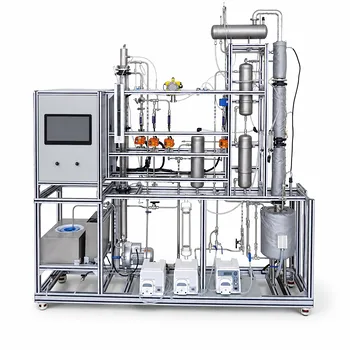
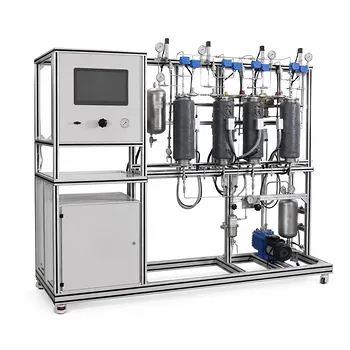
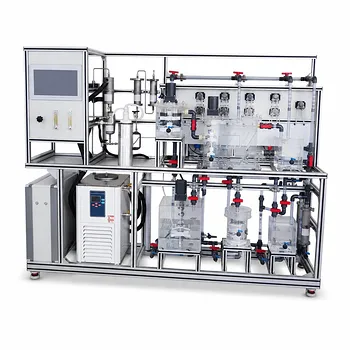
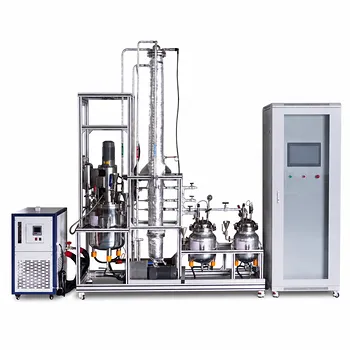
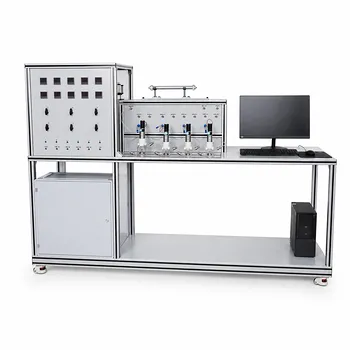
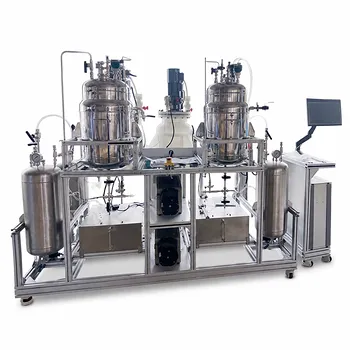
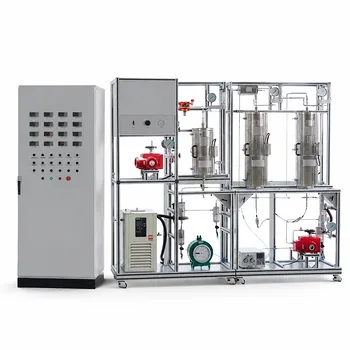
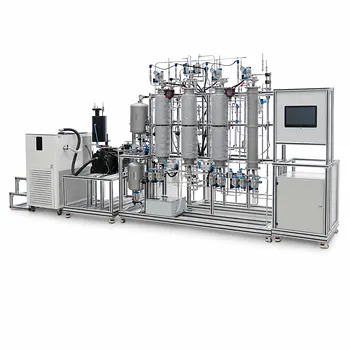
The most efficient path to stringent VOC recovery isn't a single technology, but a calculated sequence of them. A hybrid configuration combining absorption, membrane separation, and adsorption is preferred for pilot units because staging these processes is the most economical strategy to achieve high recovery rates while controlling operating costs. Each unit operation is strategically deployed to handle a different concentration range, working in concert to prevent any single stage from being overwhelmed, which allows the entire system to reliably meet ultra-low emission standards.
The core problem is economic: purifying a gas stream to the final 1% is exponentially more expensive than capturing the initial 99%. A hybrid pilot plant demonstrates how a staged absorption-membrane-adsorption approach solves this by letting each technology operate in its optimal performance window, creating a far more resilient and cost-effective process than any single unit could offer.
The Engineering Logic of a Staged Approach
A single separation technology faces an impossible economic trade-off when dealing with the full spectrum of a VOC-laden gas stream. A hybrid configuration systematically solves this by dividing the problem into manageable parts. The sequence—absorption, then membrane, then adsorption—is a deliberate engineering choice driven by the diminishing concentration of VOCs and the increasing cost of removal.
The Role of Absorption: Capturing the Bulk
The absorption stage is the workhorse for the initial, high-concentration task. A lean liquid solvent scrubs the incoming gas, absorbing the bulk of the recovered hydrocarbons efficiently and cheaply.
This step dramatically reduces the VOC load on the downstream, more sensitive equipment. It’s the most logical first line of defense because it handles large volumes of condensable or soluble organics with a well-understood, robust process. Without this stage, the subsequent membrane or adsorption units would be quickly saturated, making the entire process operationally unviable.
The Role of Membranes: Selective Enrichment
As the gas exits the scrubber, it enters a hydrocarbon-selective membrane separation stage. Here, a vacuum on the permeate side drives the separation, splitting the stream into a lean retentate and an enriched permeate that can be recycled back to the absorber.
The key advantage of this step is its modular simplicity and lower operating cost, particularly for mid-range concentrations where distillation or condensation would be energy-intensive. Using thin-film composite membranes with rubbery polymer layers, these units offer a powerful selectivity for VOCs over nitrogen—often ranging from 10 to over 100. This precision surgery removes specific compounds, protecting the final stage from being overloaded by fluctuating loads.
The Role of Adsorption: Final Polishing
The lean retentate from the membrane unit still contains trace VOCs that must be removed to meet the strictest environmental emission standards. This is where pressure swing adsorption (PSA) acts as the final polishing guard.
The PSA unit is designed to handle the lowest concentrations with high precision. The system’s clever integrated design uses the pressure from the membrane process to enhance adsorption and the vacuum to support regeneration of the adsorption beds. This ensures that only a clean, compliant gas stream is released, while the captured, concentrated VOCs are returned for recovery.
Engineering Resilience into the Pilot System
The true genius of a hybrid pilot unit is not just its steady-state performance, but its ability to handle the unpredictable nature of real-world processes. This configuration is inherently built for resilience, making it an ideal platform for research and demonstration.
Handling Real-World Process Fluctuations
Industrial gas streams are rarely constant; flow rates and VOC concentrations often fluctuate wildly. Integrating a membrane module upstream of the adsorption unit is a specific retrofitting strategy that acts as a dynamic buffer.
The membrane stage shaves concentration peaks, preventing catastrophic overloading of the adsorption beds during upset conditions. This strategic load-leveling enhances the overall processing capacity and ensures the system consistently meets stringent emission requirements without operator intervention, all while protecting the capital investment in the downstream adsorption units.
Facilitating Multi-Stage Research and Optimization
For an educational or research pilot plant, a single-step process offers limited learning. A hybrid system allows students and researchers to experiment with critical process variables.
A two-stage membrane design, for example, can recirculate a portion of the gas to reduce product loss to around 2.6%. In a full hybrid setup, the opportunities for study are vast: they can model recycle loops, optimize yield versus purity, and perform system-wide mass balances. This transforms the pilot plant from a simple demonstration into a powerful tool for designing realistic process scale-ups, from small dryers to full-scale terminal loading facilities.
Understanding the Trade-offs
A decision for a hybrid configuration is a decision to manage complexity for superior performance. The primary drawbacks are the increased initial capital expenditure and the higher level of operational expertise required compared to a single-unit operation.
While the operating costs are optimized across the system's lifetime, the control logic to manage the interplay between absorption liquid flow, membrane pressure, and PSA cycle times is intricate. A single-stage membrane system is simpler but often suffers from a stark trade-off between product loss and purity. The hybrid system accepts this added complexity to virtually eliminate that compromise, providing a richer, more realistic challenge for a research environment that mirrors true industrial problem-solving.
Making the Right Choice for Your Pilot Goals
Your decision to use a specific configuration should be driven by your primary objective. The hybrid system is not a one-size-fits-all answer but a targeted solution for specific challenges.
- If your primary focus is maximizing economic efficiency and VOC recovery for a scalable process: Implement the full absorption-membrane-adsorption sequence. This is the definitive strategy to achieve six-sigma level emission control by letting each technology operate at its economic sweet spot.
- If your primary focus is creating a flexible research platform to study process interactions: A multi-stage hybrid plant with integrated recycle loops is essential. It provides the hands-on capability to investigate dynamic responses, optimize complex mass balances, and understand system-wide resilience.
- If your primary focus is managing a highly variable gas stream in an existing facility: A retrofitted membrane unit installed before your adsorption beds is the most impactful first step, directly targeting the problem of concentration peaks and capacity limitation.
The most sophisticated solution isn't the one with the most parts, but the one where every part is strategically positioned to do its specific job perfectly within a unified system.
Summary Table:
| Stage | Unit Operation | Core Function | Target VOC Concentration |
|---|---|---|---|
| 1. Bulk Capture | Absorption (Scrubber) | Scrubs the bulk of hydrocarbons using a lean solvent | High |
| 2. Selective Enrichment | Membrane Separation | Enriches VOCs via selective permeability and recycles them | Mid-Range |
| 3. Final Polishing | Pressure Swing Adsorption (PSA) | Removes remaining trace compounds to meet emission standards | Trace / Low |
Elevate Your Research and Training with LABPARK Pilot Plants
Are you looking to demonstrate complex, multi-stage chemical engineering processes like hybrid VOC recovery? LABPARK provides premium Educational and Vocational Unit Operations Pilot Plants in chemical engineering, bioprocess & biotech, and environmental & water treatment.
Tailored for universities, research institutes, and enterprises, our pilot plants help you:
- Model realistic industrial process scale-ups and recycle loops.
- Optimize dynamic variables, mass balances, and system resilience.
- Prepare the next generation of engineers with hands-on, industry-grade systems.
Contact LABPARK today to customize a pilot plant solution that fits your educational and research goals!
Related Products
- Carbon Dioxide Absorption and Desorption Educational Pilot Plant for Carbon Capture Studies
- Fixed-Bed Chemical Reaction and Gas Dust Tar Removal Unit Operations Pilot Plant
- Bench Scale Carbon Dioxide Capture Educational Unit Operations Pilot Plant
- Dual-Mode Gas Absorption and Desorption Unit Operations Training Pilot Plant
- Fluidized Bed Gas Solid Catalytic Reaction Educational Pilot Plant
People Also Ask
- How does operating pressure influence the transition between absorption and desorption in a CO2 pilot plant?
- How do temperature variations affect CO2 transport models in pilot plants? Model vs Reality
- What unit operations are critical for CCUS training pilot plants? Build hands-on engineering expertise.
- How do electrolytes affect phase equilibrium in absorption pilot plants, and how to calculate it?
- Why is critical surface tension key in column internals? Optimize gas absorption pilot plant efficiency