The five essential physical tablet attributes to monitor are hardness, friability, thickness, weight uniformity, and disintegration time. In pharmaceutical process engineering lab courses, these are the non-negotiable checks performed immediately after compression. They form a critical feedback loop that connects the compression machine settings and formulation choices directly to patient safety and manufacturing viability.
While each attribute serves a distinct purpose—ranging from mechanical strength to dose accuracy—their value lies in how they interact. Monitoring them together reveals the fundamental tension in tablet design: optimizing one almost always forces a compromise on another. True process understanding begins when a student can navigate these trade-offs intelligently.
The Five Pillars of Tablet Physical Quality
These aren’t just boxes to tick. Each attribute answers a specific, practical question about the tablet’s future life, from the moment it leaves the press to the moment it reaches the patient.
Hardness: The Mechanical Backbone
Hardness measures the force required to break a tablet. It’s a direct indicator of the tablet’s ability to survive shipping, handling, and blistering without cracking.
But hardness isn’t just about breakage. A tablet that is too hard can become resistant to disintegration, leading to dissolution failure in the body. The real lesson for students is that hardness sits at the crossroads of durability and therapeutic performance.
Friability: The Test of Endurance
Friability measures weight loss when tablets are subjected to rolling and abrasion. It simulates the real-world stress of coating pans, bottling lines, and transport vibrations.
A high friability value signals that the tablet edges may chip or erode. This compromises not just appearance, but dose uniformity if fragments are lost. It’s a direct predictor of how cleanly a batch will run on downstream packaging equipment.
Thickness: The Gatekeeper of Packaging
Thickness is the least discussed but most operationally critical dimension. Packaging lines—blister packs, bottles, count-fill systems—are designed for a specific tablet height window.
A tablet that is too thick simply won’t fit. A tablet that is too thin may rattle, break, or jam machinery. For students, correlating fill depth and compression force with thickness teaches the mechanical translation of the press settings into a finished product.
Weight Uniformity: The Guarantor of Dose Accuracy
Weight variation directly reflects dose content uniformity. In a well-mixed powder blend, each milligram of weight corresponds to a precise amount of active pharmaceutical ingredient.
Testing weight uniformity is a rapid, non-destructive check of the compression process’s control. Large weight swings point to inconsistent die filling, which can be traced back to poor powder flow or problematic feeder settings. It’s a powerful diagnostic for formulation behavior.
Disintegration: The Key to Therapeutic Performance
Disintegration time marks the moment the tablet breaks apart in fluid. It’s not dissolution—but it’s the essential prerequisite. If a tablet won’t disintegrate, it can’t release its drug.
This test brings the formulation into sharp focus. The disintegrant type and concentration, the hardness level, and even the moisture content of the granulation all converge here. Students see firsthand that a physically perfect tablet can fail this test if the internal structure is wrong.
Understanding the Trade-offs
No attribute exists in a vacuum. The most valuable learning moment in a lab course comes when students see the interconnected consequences of their decisions.
Hardness vs. Disintegration. The classic conflict. Increasing compression force to eliminate friability and boost hardness often crushes pores, slows water penetration, and extends disintegration time beyond acceptable limits. Finding the sweet spot is the art of formulation.
Weight Uniformity vs. Flow. Achieving tight weight uniformity demands consistent die filling. If the powder blend flows poorly, the press may need to run slower or a glidant must be added—which itself can alter hardness and disintegration.
Thickness vs. Hardness. Adjusting the fill depth to hit a target thickness changes the densification path. A thicker tablet may be actually softer if the compression cycle doesn’t fully compact the core. Students must learn to decouple these two controls.
Ignoring these trade-offs leads to a fragile, unrealistic optimization of just one metric. The true goal is a balanced profile that satisfies all handling and compliance requirements simultaneously.
Making the Right Choice for Your Lab Curriculum
The specific emphasis you place on each attribute should align with what you want your students to internalize.
- If your primary focus is on mechanical durability: Center the curriculum around hardness and friability. Have students build a “compression profile” by varying force and measuring the resulting strength, then draw the correlation to breakage during simulated shipping tests.
- If your primary focus is on patient safety and therapeutic efficacy: Prioritize weight uniformity and disintegration time. Use poorly flowing blends and disintegrant-deficient formulations to trigger failures, making the link between powder properties and clinical risk explicit.
- If your primary focus is on manufacturing readiness: Incorporate thickness as a key process control point. Combine it with packaging equipment run simulations, demonstrating how dimensional drift can halt an entire production line.
A well-designed lab course uses these five attributes not as a checklist, but as a lens through which the entire tablet development process is understood. Mastery begins when a student stops asking “did it pass?” and starts asking “why did this specific combination of parameters produce this specific profile?”
Summary Table:
| Attribute | What It Measures | Why It Matters / What It Prevents |
|---|---|---|
| Hardness | Force required to break a tablet | Prevents shipping damage; ensures dissolution |
| Friability | Resistance to surface abrasion/chipping | Prevents chipping during coating and packaging |
| Thickness | Physical height of the tablet | Avoids jamming packaging lines (blisters/bottles) |
| Weight Uniformity | Variation in weight across tablets | Ensures accurate active drug dosage |
| Disintegration | Time taken to break apart in fluid | Prerequisite for drug dissolution and clinical efficacy |
Elevate Your Process Engineering Labs with LABPARK
Are you looking to equip your academic or research facility with industry-grade testing and processing systems?
LABPARK provides state-of-the-art Educational and Vocational Unit Operations Pilot Plants in chemical engineering, bioprocess & biotech, and environmental & water treatment. We help universities, research institutes, and enterprises bridge the gap between theoretical formulation and practical manufacturing reality.
Prepare your students and researchers for real-world compliance and process optimization—contact us today to discuss your lab equipment needs!
Related Products
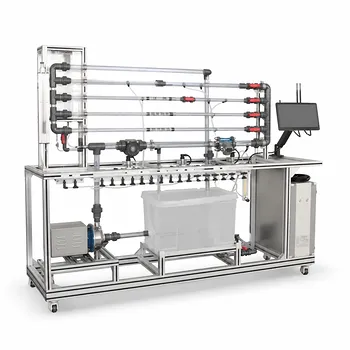
- Fluid Friction Resistance Determination Educational Unit Operations Pilot Plant
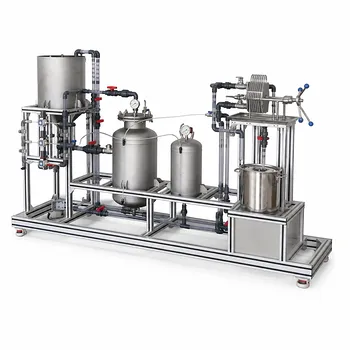
- Constant Pressure Filtration Educational Unit Operations Pilot Plant
- Multi Functional Catalytic Reaction and Reactor Evaluation Educational Unit Operations Pilot Plant
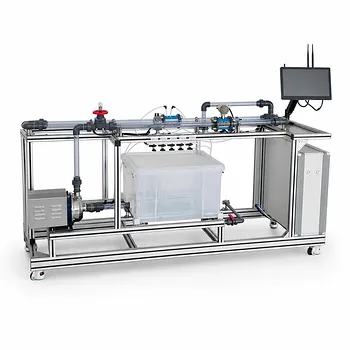
- Orifice and Venturi Flowmeter Calibration Educational Pilot Plant for Fluid Mechanics Laboratory
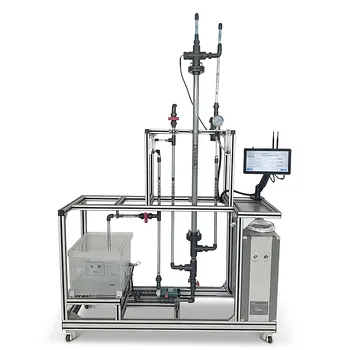
- Tubular Reactor Flow Characteristics Determination Educational Unit Operations Pilot Plant
People Also Ask
- How do pilot plants teach U-tube manometers? Master Differential Pressure Calculations
- How do pilot plants demonstrate siphon pressure variations? Visualizing Bernoulli's Energy Balance
- How to demonstrate laminar entry length, pipe diameter, and Reynolds number in pilot plants? Practical lab steps.
- What are the differences between open channel and pipe flow? Pilot Plant Guide
- How does the Navier-Stokes to Stokes flow transition benefit chemical engineering pilot plant students?