For gas-liquid reactions in a pilot stirred tank, the volumetric mass transfer coefficient (kₗa) can be estimated using empirical correlations that explicitly account for the liquid composition—chiefly, whether the medium behaves like pure water or like an ionic solution that suppresses bubble coalescence. The most widely applied tool is the Van’t Riet correlation, which provides distinct sets of parameters for these two regimes. For pure water, kₗa = 0.026 · (P_g/V_l)^0.4 · u_g^0.5. For ionic solutions, which create smaller, more stable bubbles, the parameters shift dramatically to kₗa = 0.002 · (P_g/V_l)^0.7 · u_g^0.2. This simple, power‑based relationship lets researchers quickly gauge mass transfer rates at pilot scale and understand how changing from water to a salt‑laden process fluid will alter the reactor’s performance.
Core Takeaway: The volumetric mass transfer coefficient in a stirred pilot reactor is not a universal constant—it is a strong function of both operating conditions and liquid chemistry. The Van’t Riet correlation gives you a fast, engineering‑grade estimate that distinguishes between coalescing (water‑like) and non‑coalescing (ionic) systems. For definitive data, you pair that estimate with a direct experimental measurement, such as a pressure‑decay test, to lock in the true kₗa for your specific reactor geometry, agitator, and liquid.
The Van’t Riet Correlation: Your First-Principles Estimator
Why Liquid Chemistry Matters for Bubble Size
In a pure water system, bubbles readily coalesce as they rise, leading to a smaller average interfacial area, a.
When salts or other electrolytes are present, the ions form a protective layer around bubble surfaces, preventing coalescence. The result is a cloud of much smaller bubbles and a dramatically different sensitivity to power and gas flow.
How the Equation Encodes Coalescence Behavior
The Van’t Riet correlation, kₗa = b₀ · (P_g/V_l)^m · u_g^n, handles these two physical worlds through its empirical constants.
- For non‑coalescing (ionic) liquids, the exponent m jumps to 0.7, making kₗa highly responsive to agitator power input. Meanwhile, the gas velocity exponent n drops to 0.2, because finer bubbles are less dependent on sparging rate.
- For coalescing (pure water) liquids, the power exponent is a milder 0.4, and kₗa shows a stronger sensitivity to superficial gas velocity (n = 0.5).
These parameter sets capture the physics without requiring a full bubble‑size distribution model.
Applying the Correlation in a Pilot Plant
To use the correlation, you need three measured or calculated quantities: the gassed power input P_g (watts), the liquid volume V_l (m³), and the superficial gas velocity u_g (m/s, based on the empty tank cross‑section).
Simply plug in the parameters that match your liquid—water‑like or ionic—and obtain an immediate kₗa estimate in s⁻¹.
Experimental Validation: The Non‑Reactive Gas Uptake Method
Why Direct Measurement Overrides Estimates
Correlations are built from idealized, well‑mixed systems. In your pilot reactor, the actual kₗa can be influenced by sparger type, baffle configuration, headspace pressure, and trace impurities that alter surface tension.
A pressure‑decay test gives you a configuration‑specific kₗa that you can trust for subsequent process decisions.
Step‑by‑Step Procedure
- Degas the solvent under vacuum with the agitator running to remove all dissolved gases.
- Stop the agitator, pressurize the headspace with the test gas (e.g., hydrogen, nitrogen) to a target pressure, and close the inlet valve.
- Restart the agitator while continuously recording headspace pressure with a fast‑response transducer.
The pressure decreases as gas dissolves, and the rate of decay follows a first‑order mass transfer law.
Extracting kₗa from the Pressure Decay Curve
The standard first‑order expression for a closed system is:
ln[(P_i − P_f)/(P(t) − P_f)] · (P_f − P₀)/(P_i − P₀) = (kₗa) · t
where P_i is the initial pressure, P_f the final equilibrium pressure, P₀ the solvent vapor pressure, and P(t) the pressure at time t.
The slope of the left‑hand side plotted against time yields the volumetric mass transfer coefficient.
Critical Experimental Checks
- Temperature equalization: The gas and liquid must be at identical temperatures before agitation starts; otherwise a thermal pressure recovery will corrupt the reading.
- Mass‑transfer‑limited conditions: Ensure the dissolution rate, not sensor lag or valve dynamics, controls the pressure trace. If necessary, run a fast chemical reaction or use a high catalyst loading to force mass transfer to be the bottleneck.
Extending to New Liquids with the Fair Scaling Method
From Water to Your Process Solvent
When you cannot run a full uptake test, or you need to quickly compare several candidate solvents, the Fair method provides a rational scaling.
The relation is: (kₗa)_system = (kₗa)_air‑water · (D_L,system / D_L,water)^0.5
The liquid‑phase diffusion coefficient D_L captures the molecular mobility of the dissolving gas in each solvent. Even a rough estimate of D_L (via Wilke‑Chang or other correlations) can adjust a water‑based kₗa to a new organic or mixed‑solvent system.
When to Use Scaling vs. Direct Measurement
Scaling is powerful for screening, but it assumes the bubble size distribution remains unchanged. If the new fluid contains surfactants, is highly viscous, or radically alters surface tension, the correlation will drift. In those cases, perform at least one pressure‑decay test in the actual solvent to calibrate the scaling factor.
Understanding the Trade‑offs
Correlation vs. Measurement
- Van’t Riet gives an immediate, zero‑cost estimate, but it cannot capture vessel‑specific details like sparger placement or baffle geometry.
- Pressure‑decay tests deliver the true, local kₗa, but they require careful degassing, temperature control, and a fast pressure sensor.
Coalescing Assumptions Are Not Always Clear‑Cut
Real process fluids often sit between the two extremes. A dilute ionic solution at low salt concentrations may still exhibit partial coalescence, giving a kₗa that lies between the two correlation predictions.
When kₗa Alone Is Not Enough
Even with an accurate kₗa, you must couple it with the reaction kinetics to calculate the Damköhler number (Da).
Da = (reaction rate) / (mass transfer rate). A Da > 1 confirms that mass transfer governs the overall rate, making your kₗa measurement the central parameter for scale‑up. In reaction‑controlled regimes (Da < 0.1), the reactor’s mass transfer capability may be less critical.
Making the Right Choice for Your Goal
Choose your approach based on your primary objective in the pilot plant.
- If your primary focus is rapid screening of agitator speeds and sparge rates: Use the Van’t Riet correlation with the appropriate liquid‑type parameters. It will quickly map out the kₗa landscape for your feasibility studies.
- If your primary focus is generating data for a specific scale‑up campaign: Conduct a non‑reactive gas uptake test in your actual process solvent. The resulting kₗa curve is tailored to your reactor geometry and ensures accurate prediction of the commercial unit.
- If your primary focus is comparing multiple potential solvents without running a full campaign: Start with the Fair scaling from a known water‑air kₗa, and then validate the estimate with one pressure‑decay test in the most promising solvent to lock in the accuracy.
The volumetric mass transfer coefficient is not a fixed property of your pilot plant—it is a response that you actively shape and measure for every new liquid system. By pairing a regime‑aware correlation with a definitive experimental protocol, you turn kₗa from an unknown into a practical, scalable design parameter.
Summary Table:
| Method | Type | Inputs Required | Key Advantage | Limitation |
|---|---|---|---|---|
| Van’t Riet Correlation | Empirical | Power input ($P_g/V_l$), gas velocity ($u_g$), liquid type | Fast, zero-cost initial estimation | Ignores vessel-specific geometry |
| Pressure-Decay Test | Experimental | Headspace pressure over time | Highly accurate, vessel-specific | Requires degassing & sensors |
| Fair Scaling Method | Theoretical | Diffusion coefficient ($D_L$), water-air $k_La$ | Fast comparison of new solvents | Assumes bubble size stays constant |
Optimize Your Scale-Up with LABPARK Pilot Plants
Are you looking to achieve precise mass transfer control in your chemical or bioprocess research? LABPARK provides state-of-the-art Educational and Vocational Unit Operations Pilot Plants in chemical engineering, bioprocess & biotech, and environmental & water treatment.
Designed specifically for universities, research institutes, and enterprises, our modular pilot systems help you accurately model and control critical parameters like $k_La$, ensuring smooth transition from lab bench to commercial production.
Contact our engineering team today to discover how LABPARK can elevate your research and training capabilities!
Related Products
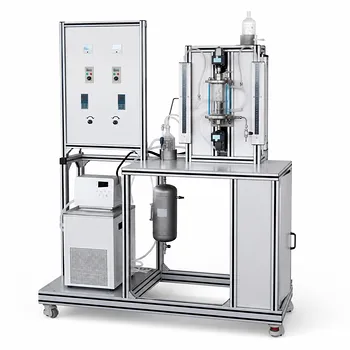
- Dual-Drive Stirred Gas-Liquid Mass Transfer Coefficient Determination Pilot Plant
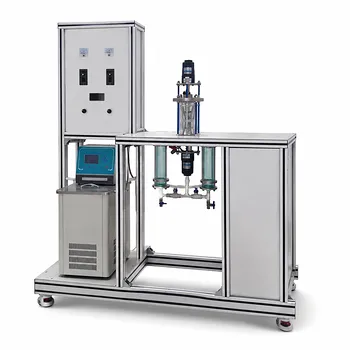
- Multi Functional Catalytic Reaction and Reactor Evaluation Educational Unit Operations Pilot Plant
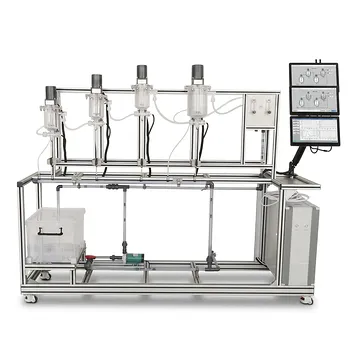
- Multi-Stage Stirred Tanks in Series Residence Time Distribution and Mixing Performance Determination Educational Pilot Plant
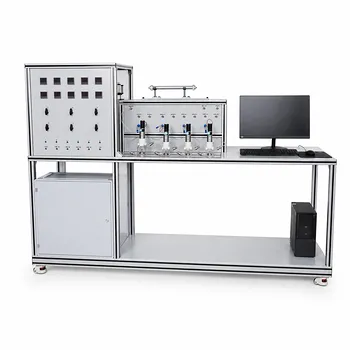
- Multi-Reactor Educational Pilot Plant for Reaction Engineering Unit Operations
- Micro-Scale Gas-Solid Catalytic Reaction Educational Pilot Plant
People Also Ask
- How does column packing affect absorption intensification, and how is it evaluated experimentally?
- Why Compare Membrane-Reservoir Models with Pilot Plant Data? Ensure Successful Process Scale-Up
- Why is pilot plant gas absorption lower than isothermal model predictions? Interfacial heating explained.
- Which interphase forces dominate gas dispersion in stirred reactors? Master Gas Holdup Models
- What key factors influence the rate of diffusion in liquids? Optimize Mass Transfer Pilot Plant Design