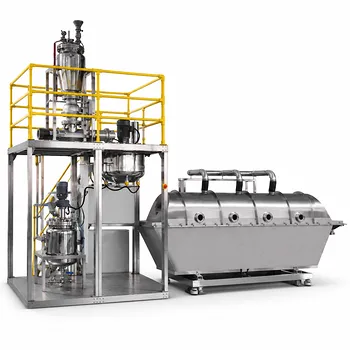
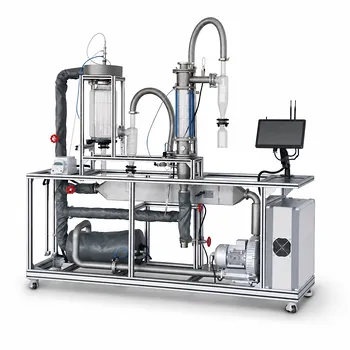
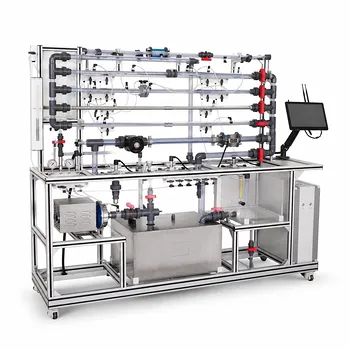
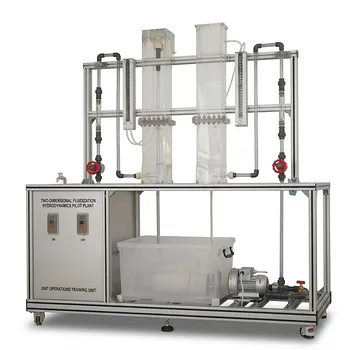
The time value of money is not a peripheral detail—it is the central lens through which a long-term educational asset must be evaluated. For a university or research institute procuring a unit operations pilot plant, you must replace static payback periods and simple ROI with a discounted cash flow (DCF) analysis. This means projecting the plant’s multi-year future cash inflows—from research grants, reduced external lab fees, or vocational training revenue—and converting them to a single present value (PV) using the formula PV = FV / (1 + i)^n. Only when the total present value of all future benefits exceeds the full upfront investment does the procurement become a value-creating decision.
Ignoring the timing of cash flows can make a financially unviable pilot plant appear attractive. The correct approach is to build a rigorous DCF model that discounts all projected cash flows back to today’s value. This ensures that the long-term educational and research returns genuinely justify the substantial initial capital outlay—something no static metric can guarantee.
Why Traditional Metrics Fall Short for Pilot Plants
Unit operations pilot plants are decades-long assets, not short-term experiments. Metrics that ignore when money flows in and out can lead to flawed procurement choices.
The Illusion of the Simple Payback Period
The payout time, or cash recovery period, divides the initial fixed investment by annual cash flow. While quick to calculate, it treats a dollar received in year 10 the same as a dollar received in year 1. This completely masks the opportunity cost of capital. For an educational pilot plant generating revenue gradually over 10 to 15 years, a simple payback period might show an acceptable number, yet the investment could still destroy value because future cash inflows are worth far less in today’s terms.
Static ROI Hides the True Cost of Waiting
A static return-on-investment calculation ignores the project’s entire lifespan and the compounding effect of time. It fails to account for the reality that a dollar today can be invested and grow. Without discounting, you cannot compare the pilot plant's returns against alternative uses of the institution’s budget, such as funding scholarships or other lab equipment with faster payoffs.
The Foundation of Sound Decision-Making: Discounted Cash Flow Analysis
Discounted cash flow analysis forces you to map out all costs and benefits across the plant’s life and then translate them into a single, time-adjusted decision metric.
Projecting the Cash Inflows
Begin by identifying the specific incremental cash the pilot plant will generate or save. For educational facilities, these are often:
- Research grant allocations tied directly to the plant’s use
- Reduction in laboratory outsourcing fees, as work moves in-house
- Vocational training fees charged to industrial partners or continuing education students
- Intangible educational value, which must be monetized with clear, conservative assumptions (e.g., improved graduate outcomes attracting higher enrollment)
Project these year by year, keeping estimates grounded in the institution’s real operating history.
Mapping the Full Spectrum of Costs
The initial investment for a university-scale pilot plant goes far beyond the base equipment price. A cash flow model that captures the true Year 0 cash outflow must include:
- Inside Battery Limits (ISBL) and Outside Battery Limits (OSBL) fixed capital
- Design and engineering fees, which on small projects can run as high as 30% of the combined ISBL+OSBL investment (versus only 10% for large industrial plants)
- A contingency reserve of at least 10% of fixed capital to cover material price swings, scope adjustments, and installation labor
These costs determine your starting point. Only after the full upfront cash liability is accurate can discounting provide useful signals.
Choosing an Appropriate Discount Rate
The discount rate (i) must reflect the institution’s opportunity cost of capital. For a university, this might be the long-term endowment return rate, the average cost of borrowed funds, or a hurdle rate set by the board to filter capital projects. If the pilot plant is seen as a higher-risk endeavor (due to uncertain research funding), a higher discount rate is warranted.
Calculating Net Present Value (NPV)
With cash flow projections in hand, apply the formula to each year’s net cash flow (inflow minus any operating or maintenance outflows):
PV = FV / (1 + i)^n
Sum all discounted cash flows and subtract the full initial investment. A positive NPV means the pilot plant adds value in today’s money. Even in a non-profit setting, NPV is the best single metric to compare the plant against other funding priorities.
Understanding the Trade-offs and Limitations of DCF
DCF analysis is powerful, but its strength is only as good as the assumptions that feed it. Procurement specialists must navigate several pitfalls.
Estimation Risk in Educational Environments
Pilot plants often depend on volatile research grant income and hard-to-predict savings. Overly optimistic revenue projections can artificially inflate NPV. Mitigate this by running multiple scenarios (base, conservative, optimistic) and stress-testing with a higher discount rate. A single point estimate is fragile.
The Trap of Neglecting the End-of-Life Cash Flow
One might be tempted to add a salvage value as a terminal cash inflow. For unit operations pilot plants, scrap or resale value typically falls below 10% of the initial ISBL investment. When discounted back from 15 or 20 years in the future, this amount becomes negligible in an NPV calculation. In most cases, it can be safely excluded without distorting the decision.
The Disconnect Between Financial Precision and Educational Value
Some benefits, like enhanced departmental reputation or student learning quality, resist simple monetization. A DCF model must acknowledge them qualitatively. If a pilot plant’s NPV is borderline negative but the unquantified educational impact is substantial, the institution may still choose to invest—but it will be making a conscious, informed trade-off rather than relying on a misleading metric.
Making the Right Choice for Your Institution’s Goal
Adopting a DCF mindset transforms pilot plant procurement from a budget request into a strategic investment decision. Use these goal-specific lenses to guide your analysis.
- If your primary focus is fiscally disciplined capital allocation: Insist on a DCF model with conservative cash inflow estimates and a discount rate reflecting the true cost of capital. A positive NPV should be a strict gate.
- If your primary focus is maximizing long-term research capacity: Use DCF to compare different pilot plant configurations (e.g., modular vs. custom) over a 15-year horizon, then supplement the numbers with a qualitative scorecard for research impact.
- If your primary focus is administrative transparency and donor confidence: Present a multi-scenario DCF analysis. Demonstrating that the project withstands pessimistic assumptions builds trust far more effectively than a simple payback number.
Ultimately, incorporating the time value of money into capital budgeting transforms the procurement conversation from “Is this equipment needed?” to “Does the value of this asset, measured over its full life and adjusted for risk, justify the funds it consumes today?” That is the standard every long-term educational investment deserves.
Summary Table:
| Evaluation Metric | Financial Focus | Core Limitation for Pilot Plants |
|---|---|---|
| Simple Payback | Speed of initial capital recovery | Ignores the time value of money and cash flows beyond the payback window. |
| Static ROI | Average annual return percentage | Fails to account for compounding interest and the opportunity cost of capital. |
| Net Present Value (NPV) | Total time-adjusted value in today's terms | Highly dependent on the accuracy of long-term grant and revenue projections. |
Optimize Your Lab Procurement with LABPARK
Are you planning to invest in new educational or research infrastructure? LABPARK provides state-of-the-art Educational and Vocational Unit Operations Pilot Plants in chemical engineering, bioprocess & biotech, and environmental & water treatment. We assist universities, research institutes, and enterprises in maximizing their capital efficiency and long-term investment value with reliable, high-performance equipment tailored to your budget constraints.
Contact LABPARK today to discuss your next pilot plant project and receive a customized technical proposal!
Related Products
- Multi-Reactor Educational Pilot Plant for Reaction Engineering Unit Operations
- Polymerization Granulation and Pellet Processing Educational Unit Operations Pilot Plant
- Multi-Functional Drying Educational Unit Operations Pilot Plant
- Comprehensive Fluid Mechanics Educational Unit Operations Pilot Plant
- Electrolytic Hydrogen Production Educational Unit Operations Pilot Plant
People Also Ask
- How do educational unit operations pilot plants address safety and waste management when scaling up?
- How do educational unit operations pilot plants bridge theory and design? Bridge the Engineering Gap
- Why Compare Predicted and Experimental Excess Enthalpy? Key to Accurate Pilot Plant Scale-up
- How to study gasification in pilot plants? Compare exit gas composition & efficiency
- Why Use PTFE & Hastelloy in Chemical Pilot Plants? Prevent Corrosion & Ensure Safety