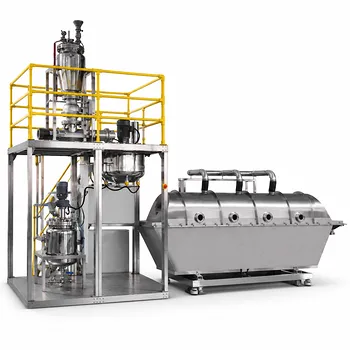
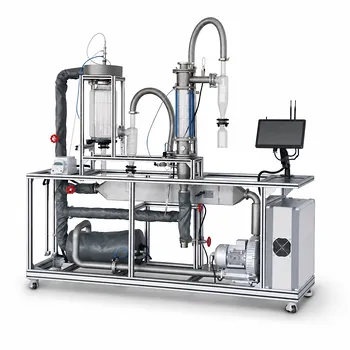
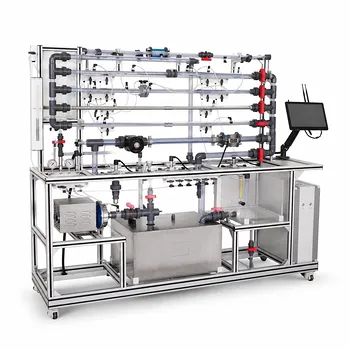
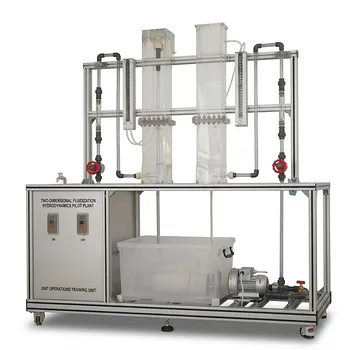
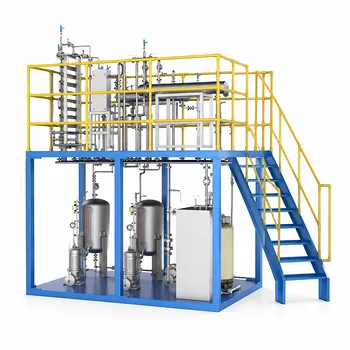
Contingency is not a guess—it’s a statistically grounded buffer that protects your educational pilot plant investment from inevitable cost creep. For new unit operations pilot plants in educational or vocational settings, the contingency budget is calculated as a percentage of the total fixed capital investment—specifically the sum of Inside Battery Limits (ISBL) and Outside Battery Limits (OSBL) costs. The baseline minimum recommendation is 10% of that combined figure. This cushion is then evaluated by mapping it to a confidence level: at 10%, you achieve roughly a 98% probability that the final project cost will not overshoot your estimated budget by more than 6.5%, assuming a normal distribution of cost variances. For highly customized or technically uncertain pilot plant designs, the prudent range extends all the way to 50% of ISBL plus OSBL, because design fees on small-scale academic setups are disproportionately high and the unknowns are larger.
Core Takeaway: A 10% contingency on total ISBL+OSBL fixed capital offers a razor-sharp, statistically validated safety margin for well-defined educational pilot plants. When the process is novel or the equipment is bespoke, you must calibrate that number upward—sometimes dramatically—to ensure the budget realistically absorbs design fees, material volatility, and scope drift that are inherent in small-scale, one-off installations.
How the Contingency Calculation Works
The Baseline: 10% of ISBL + OSBL
Inside Battery Limits (ISBL) covers the core process equipment—reactors, distillation columns, heat exchangers, and their direct instrumentation. Outside Battery Limits (OSBL) includes utilities, structural support, and site preparation. The capital cost estimate for both determines your base. A minimum 10% contingency is then applied to this sum. This isn’t an arbitrary rule; it’s derived from cost engineering models that tie contingency to estimate accuracy and risk appetite.
Translating the Percentage into a Confidence Level
When you apply a 10% contingency, you’re effectively saying, “I will add this amount to my base estimate so that even if costs rise more than predicted, my total budget still covers them.” Under a normal distribution of possible cost overruns, a 10% cushion yields a 98% confidence level that the final investment won’t exceed the originally estimated budget by more than 6.5%. In practical terms: if your base estimate is $100,000, a $10,000 contingency means you have near-certainty that the real bill won’t top $106,500. Any overrun above that becomes highly improbable.
When the Baseline Applies—and When It Doesn’t
The 10% figure assumes a Class 1 or Class 2 estimate. That means the process technology is fully defined, P&IDs are complete, equipment is specified, and vendor quotes are firm. For pilot plants that replicate known unit operations with off-the-shelf components, this is often achievable. But educational pilot plants frequently involve novel teaching setups, customized skids, or unproven sensor integrations. In those cases, the confidence level plummets, and the contingency must rise.
Evaluating the Adequacy of Your Contingency
Map It Against Project Maturity
The earlier the estimate, the larger the unknowns. A conceptual design stage might warrant 30–50% contingency, while a finalised design with binding quotes can safely drop to 10%. Educational projects often compress the design phase, increasing uncertainty. Always ask: “Are the equipment specifications locked, or could a professor modify the scope mid-build?” If the answer is “yes,” pad the contingency.
Account for Disproportionate Design Costs
Unlike massive industrial plants where design fees hover around 10% of ISBL+OSBL, small-scale educational pilot plants see design fees up to 30% of that same base. Custom piping, control system integration, and safety reviews don’t scale linearly. These fees aren’t part of contingency, but they inflate the base on which contingency is calculated—and tight design-phase budgets often bleed into unforeseen construction scope, making a higher contingency vital.
Reassess as Material and Labor Risks Evolve
Stainless steel, copper, catalysts, and specialized labor can swing by 15–20% within a procurement window. Your contingency evaluation must include a current market scan. If you’re budgeting in a volatile steel market or in a region with skilled welder shortages, the 10% floor becomes dangerous. Increase the contingency to the 20–30% range to absorb procurement shocks.
The Unique Nature of Educational Pilot Plants
Why “Small” Doesn’t Mean “Simple”
A vocational training distillation column or a biotech fermenter may be physically smaller than an industrial counterpart, but its control narrative, safety interlocks, and documentation needs are often equally complex. Custom sensors, transparent vessel sections for pedagogy, and rapid prototyping add cost creep that generic estimating tools miss. The primary reference’s 10% baseline presumes full definition; supplementary evidence shows that highly customized academic rigs can demand up to 50% to cover last-minute pedagogical adjustments.
The Long-Term Investment Angle
Capital for a pilot plant isn’t just a one-time expense—it’s a multiyear asset generating research and training value. Evaluating contingency also means linking it to lifecycle value. A cost overrun that delays commissioning by six months destroys grant-funded cash flows and stalls student projects. So, while a 10% contingency statistically protects against cost overrun, a slightly larger buffer (15–20%) can also protect against schedule overrun by preventing budget freezes mid-construction. Think of it as insurance for your discount rate calculations.
Understanding the Trade-offs
The Risk of Under-Contingenting
A too-lean contingency (say, 5%) on a custom pilot plant leaves you with a high probability of a funding shortfall. If a $80,000 estimate yields a $88,000 actual bill, that $8,000 gap can halt a university project entirely, as supplementary grants are rare. The statistical lens says your confidence drops well below 80%, a gamble most department heads won’t accept.
The Opportunity Cost of Over-Contingenting
Padding the budget by 50% on a well-understood setup can make your proposal uncompetitive during internal funding reviews. A seemingly bloated contingency can signal poor planning. The key is granular justification: show reviewers that the percentage is tied to a defined Class of estimate and a documented risk register of scope changes, materials, and labor.
Common Pitfalls to Avoid
- Treating design fees as contingency: These are separate. Confusing them inflates your base and distorts the statistical logic.
- Applying 10% blindly: Without verifying estimate maturity, you might underfund a prototype.
- Ignoring OSBL: Utility tie-ins for steam, instrument air, or vent lines often get under-scoped. Make sure OSBL is robust before calculating contingency on it.
- Static evaluation: A contingency set at project initiation must be revisited at each design freeze stage, drawing down the percentage as certainty increases.
Making the Right Choice for Your Budget
Use your estimate class, technical novelty, and market conditions to pick a contingency that balances risk and fiscal credibility.
- If your primary focus is a highly defined, off-the-shelf pilot plant: Start with a 10% contingency on total ISBL+OSBL. This gives you a 98% confidence that overruns won’t surpass 6.5%, keeping your budget tight and defensible.
- If your primary focus is a customized, first-of-its-kind teaching rig: Set the contingency between 20% and 50%, reflecting high technical uncertainty and the disproportionate design costs inherent to small-scale, one-off builds. Update this downward only after vendor-qualified drawings are approved.
- If your primary focus is a multi-year grant-funded project where schedule is as critical as cost: Use 15–20% contingency and pair it with a clear risk register. This buffer absorbs both price volatility and minor scope drift that could otherwise delay semester-aligned research milestones.
Budgeting for an educational pilot plant is a calculated equilibrium between statistical confidence and real-world chaos—set your contingency accordingly, and you turn a financial unknown into your most reliable project ally.
Summary Table:
| Pilot Plant Type / Stage | Recommended Contingency | Confidence Level | Key Risk Factors & Drivers |
|---|---|---|---|
| Standard / Class 1-2 Estimate | 10% | ~98% (max 6.5% overrun) | Well-defined off-the-shelf equipment, firm vendor quotes |
| Standard Rigs with Schedule Risks | 15% – 20% | High | Materials price volatility, utility integration, schedule drift |
| Highly Customized / Bespoke Rigs | 20% – 50% | Variable | High design fees (up to 30% of ISBL/OSBL), novel technology |
Secure Your Project Budget with LABPARK
Building a new training facility requires balancing budget accuracy with educational value. LABPARK provides high-quality Educational and Vocational Unit Operations Pilot Plants across chemical engineering, bioprocess & biotech, and environmental & water treatment.
Designed specifically for universities, research institutes, and enterprises, our pilot plants combine robust pedagogical design with reliable cost structures. We help you navigate complex design fees, utility integrations, and equipment customization to ensure your project stays on track and within budget.
Ready to design a pilot plant that fits your curriculum and budget? Contact the LABPARK team today for expert guidance and customized quotes.
Related Products
- Multi-Reactor Educational Pilot Plant for Reaction Engineering Unit Operations
- Polymerization Granulation and Pellet Processing Educational Unit Operations Pilot Plant
- Multi-Functional Drying Educational Unit Operations Pilot Plant
- Comprehensive Fluid Mechanics Educational Unit Operations Pilot Plant
- Electrolytic Hydrogen Production Educational Unit Operations Pilot Plant
People Also Ask
- How do educational unit operations pilot plants address safety and waste management when scaling up?
- How do educational unit operations pilot plants bridge theory and design? Bridge the Engineering Gap
- Why Compare Predicted and Experimental Excess Enthalpy? Key to Accurate Pilot Plant Scale-up
- How to study gasification in pilot plants? Compare exit gas composition & efficiency
- Why Use PTFE & Hastelloy in Chemical Pilot Plants? Prevent Corrosion & Ensure Safety