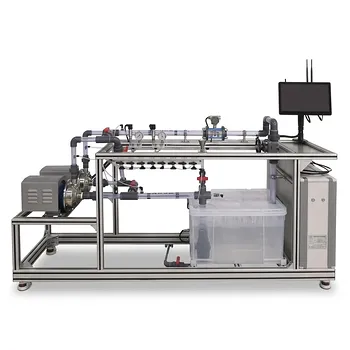
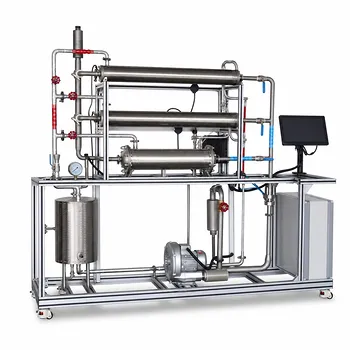
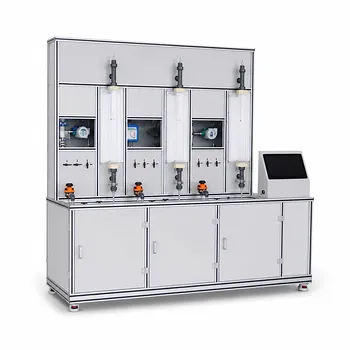
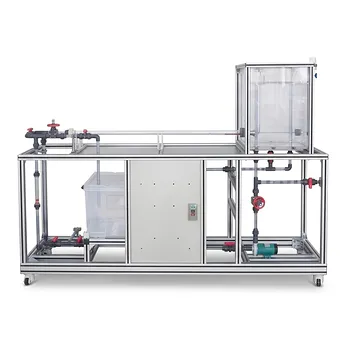
The decision between analog and digital panel meters is not just a cosmetic choice—it fundamentally shapes how students interact with, learn from, and trust their experimental data. Digital display meters eliminate the guesswork of analog scales by showing direct numeric values, free from parallax errors and mechanical wear, while enabling automated data logging and computer integration. These capabilities transform a vocational pilot plant from a demonstration rig into a precise, analyzable learning platform that mirrors modern industrial control rooms.
For educational and vocational pilot plants, the core advantage of digital meters lies in their ability to turn raw process signals into unambiguous, loggable data—building student confidence, reducing reading errors, and preparing learners for the fully digitized industrial environments they will encounter in their careers.
The Learning Advantage: How Digital Displays Improve Comprehension
The primary goal of a teaching pilot plant is to build correct intuition about process variables. Analog meters can inadvertently teach bad habits, while digital readouts reinforce accuracy from day one.
Eliminating Human Reading Errors
Analog meters require students to estimate a needle’s position between tick marks, introducing parallax error—a misreading caused by viewing the needle from an angle. Digital displays show a single, exact number, removing that ambiguity entirely. In a vocational setting, this means instructors spend less time troubleshooting "strange results" that are actually just misreadings, and more time on the underlying physics.
Instant Clarity with Numeric and Unit Displays
A digital meter can display the measurement unit (°C, bar, L/min) directly alongside the value, anchoring the correct dimension in the student’s mind. There is no need to remember multiplier settings or count tiny divisions. This direct numeric feedback accelerates the learning loop: a student adjusts a valve and immediately sees the quantified effect as a digital number, reinforcing cause-and-effect relationships cleanly.
Auto-Ranging and Self-Calibration Eliminate Setup Confusion
Many digital instruments automatically select the correct measurement range, sparing students the frustration of a pegged or barely-moving needle due to a wrong range switch. Built-in self-calibration routines also reduce the risk of systematic errors creeping into lab results. For a vocational school maintaining dozens of stations, this means less manual re-calibration by technical staff and more consistent data across student groups.
Bridging Education and Industry: Data Acquisition and Automation
Modern plants are overwhelmingly digital. A pilot plant must prepare students for this reality, and analog meters with no output signal create a wall between the physical experiment and the data analysis that follows.
Seamless Data Logging Without Manual Transcription
Digital panel meters convert the sensor signal directly into a digital value that can be transmitted to a computer. Instead of students copying down needle positions every 30 seconds—an error-prone and tedious task—every data point is captured automatically. The focus shifts from scribbling numbers to analyzing trends, spotting anomalies, and understanding process dynamics, which are the real educational objectives.
Computer Integration and SCADA Readiness
A digital meter can communicate via standard protocols like Modbus, Profibus, or simple analog retransmission to a PLC or SCADA system. This turns the pilot plant into a small-scale industrial control system. Students can monitor the entire process on a single screen, export data to spreadsheets, and even implement safety interlocks. Analog meters simply cannot provide the signal outputs needed for this type of control engineering education.
Precision and Reliability in the Lab Environment
Pilot plants vibrate, cycle through temperatures, and are operated by novices. The physical robustness and accuracy of the instrumentation directly affect the consistency of the educational experience.
Higher Accuracy and Faster Response
Digital meters offer measurably better resolution (often down to 0.1% or better) than standard analog panel meters. Their faster update rates also capture transient behaviors—like a sudden pressure spike—that a damped mechanical needle might smooth over completely. This fidelity is essential when students are trying to calibrate PID loops or observe the effect of a step change.
No Moving Parts, No Mechanical Drift
A D’Arsonval analog movement relies on delicate springs, pivots, and coils that can be knocked out of calibration by a hard bump or degrade over time. Digital meters have no such mechanical vulnerabilities. In a lab where equipment is moved, re-paneled, or subjected to enthusiastic student adjustments, the long-term maintenance cost and downtime are dramatically lower, and the readings remain trustworthy year after year.
Understanding the Trade-offs: When Analog Still Offers Value
While digital meters are superior for most educational pilot plant goals, an honest assessment requires acknowledging the scenarios where an analog indicator can be a complementary tool—or even a deliberate choice.
The “Trend at a Glance” Limitation
A digital display presents a static snapshot. To understand whether a temperature is rising or falling, the student must read the number, remember it, and compare it mentally to the previous reading. An analog needle’s angular position and movement provide an instantaneous, intuitive sense of direction and rate. For a level indicator or a main header pressure that needs constant peripheral monitoring, a hybrid approach (digital data with an analog-like bar graph on the display, or a strategically placed analog backup) can be ideal.
The False Precision Trap
A digital meter displaying “4.527 bar” can mislead an untrained student into believing the measurement is accurate to three decimal places when the sensor may only be reliable to one. A coarse analog scale inherently communicates the approximate nature of the reading. Good teaching practices must accompany digital instruments, explicitly addressing measurement uncertainty and significant figures to prevent this misinterpretation.
Cost and Power Dependency
Digital meters, especially advanced models with data outputs, are more expensive upfront than a simple moving-coil analog meter. They also require a stable power supply and can be blank or erratic during a power outage, whereas a self-powered analog meter (like a thermocouple indicator) may still function. For a pilot plant simulating an emergency shutdown, that characteristic can be valuable.
Making the Right Choice for Your Educational Goals
Your selection should flow directly from what you want students to learn. Use the following goals to guide the instrumentation mix on your console.
- If your primary focus is teaching fundamental process physics and cause-and-effect: Choose digital meters for their clear, exact numeric feedback. Complement them with explicit lessons on significant figures to neutralize the false-precision risk.
- If your primary focus is data analysis, report writing, and control loop tuning: Digital meters with communication outputs are non-negotiable. The ability to log data automatically and integrate with a SCADA system transforms the quality of the learning exercise.
- If your primary focus is simplicity, extreme budget constraints, or a purely demonstrative “look-and-feel” plant: Analog meters can suffice, but only if you intentionally trade off accuracy, data logging, and maintenance durability. Reserve them for circuits where trend recognition is paramount and precision is secondary.
- If your primary focus is preparing students for the modern industrial workplace: The plant console should mirror what they will encounter—digital displays with digital communication. Analog-only panels risk teaching obsolete interface paradigms that are vanishing from real control rooms.
Ultimately, a well-designed educational pilot plant leverages the data integrity of digital meters while consciously managing their few pedagogical pitfalls, creating a truthful and future-ready learning environment.
Summary Table:
| Feature | Digital Display Meters | Traditional Analog Indicators |
|---|---|---|
| Reading Accuracy | Exact numeric values; eliminates parallax errors | Subject to estimation and parallax errors |
| Data Integration | Supports automated logging, Modbus, & SCADA | Manual transcription only; no signal outputs |
| Maintenance | No moving parts; zero mechanical drift | Delicate mechanical parts; prone to wear |
| Trend Intuition | Requires mental comparison (unless bar-graph equipped) | Instant, intuitive visual sense of rate and direction |
Upgrade Your Lab with Modern Control Solutions from LABPARK
Are you looking to design or upgrade your training facilities? LABPARK provides state-of-the-art Educational and Vocational Unit Operations Pilot Plants tailored for universities, research institutes, and enterprises. Our systems span key engineering disciplines, including:
- Chemical Engineering
- Bioprocess & Biotechnology
- Environmental & Water Treatment
By integrating advanced digital control consoles, SCADA readiness, and industry-standard instrumentation, we help you deliver hands-on, future-ready learning experiences.
Contact LABPARK today to discuss your project requirements and receive a customized technical proposal!
Related Products
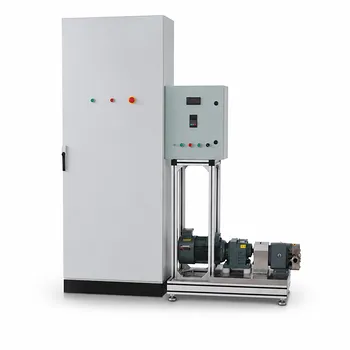
- Quantitative Dosing and Liquid Flow Control Educational Unit Operations Pilot Plant
- Continuous Batch Extractive Distillation Educational Pilot Plant
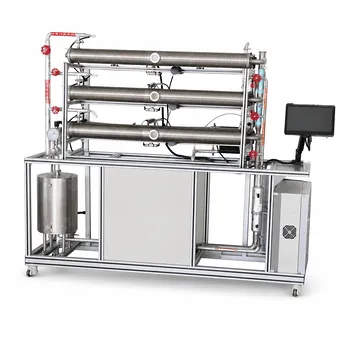
- Three-Tube Heat Transfer Educational Pilot Plant for Unit Operations Training
- Multi-Functional Special Distillation Educational Pilot Plant
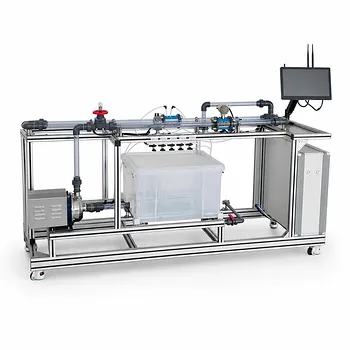
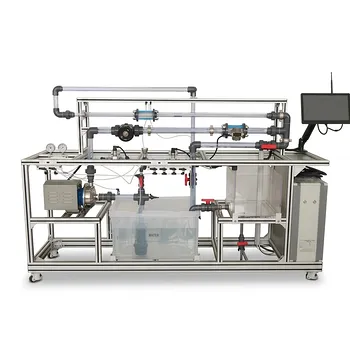
- Orifice and Venturi Flowmeter Calibration Educational Pilot Plant for Fluid Mechanics Laboratory
People Also Ask
- How do educational unit operations pilot plants bridge theory and design? Bridge the Engineering Gap
- How do educational unit operations pilot plants address safety and waste management when scaling up?
- Why is the attenuation path length (lA) critical when positioning pressure sensors in a fluid flow unit operations pilot plant?
- How do conservation equations guide fluid flow pilot plants? Key Scale-Up Principles
- What are the key differences in process analytics requirements from R&D to production?